Showing posts sorted by date for query obi-wan. Sort by relevance Show all posts

Saturday, August 8, 2026

We Agree: Star Wars: The Mandalorian and Grogu

2026, Jon Favreau (Chef) -- download

Kent.

OK, here I go back into blockbuster land, as they begin popping up on my pirate sites. Oh, did I say that out loud?

In 2019 Favreau did what no one was truly expecting -- got a live-action "Star Wars" TV show off the ground, and made it good. Actually, great. It came out at the end of a series of very divisive theatrical movies, and I include The Rise of Skywalker. This is the first proper movie since that series of, arguably failures, ended. And it was a box-office flop. I never saw it in the cinema, but my forays into those dark abodes are no longer an indicator of anything.

Kent says it well.

I enjoyed the movie... but... I enjoyed the movie like I would enjoy binge watching a season of The Mandalorian, and that's kind of the experience the film brings. It doesn’t feel right.

I watched this for the first time, at home, on the TV, and yet I feel that somewhat of a let-down feeling. As I am wont to say, it's fine. But in only saying that, I am once again kind of pissed off. While I understood I never held the spin-off movies to the same level, what I wanted from this was for Favreau and Filoni to translate their special love of "Star Wars" from the small-screen to the Big Screen experience. I didn't get that; I just got a ... longer episode with more budget?

My mind was a bit muddled coming into this movie. Having just come off some relatively recent rewatches of Ahsoka and Obi-Wan, as well currently ongoing rewatches of Ep. VII and VIII, my brain is lost in the time stream. As I understand it, we are coming into this story post-Ep. VI, just after the events in Ahsoka and Skeleton Crew. So, the New Republic is still in control, the First Order hasn't visibly risen yet, and yet remnants of the Empire are still everywhere. And so, the New Republic has tasked The Mandalorian (Pedro Pascal, Wonder Woman 1984; Brendan Wayne, Lateef Crowder), and his side-kick Grogu, with hunting down these remnants. 

The movie opened with a bounty. Its a snow planet, or at the very least, the place on the planet in the mountains, with snow. Imperial walkers, snow troopers, colluding Imperial warlord and toadies. Its all fun and exciting, but then we swing to the opening credits and .... huh. Sure, I like Ludwig Göransson as much as the next person, and his score is probably most exciting "Star Wars" music since the original movie, but this overly bombastic version, meant for a cinema with big speakers, does not fit well with the "American base in the Vietnam war" style opening. By itself, the scene is wonderful, but they should have saved the big sounds score for... the end? I am thinking the score should have been a more sly version, low key and anticipatory.

Why are planets in "Star Wars" always a single biome?

Bounty Hunters are always "bring em in alive, or bring em in dead, I still get paid" and that is pissing off Colonel Ward (Sigourney Weaver, Alien), who needs the intel a living "Imp" can provide. And yet, despite her annoyance, she coaxes Mando into another job, offering him a newly refurbed Razor Crest, since his last one was blown to smithereens. The problem is that he will have to work with the Hutts, particularly The Twins, who took over Jabba's demesne after his death, and while Boba still rules on Tatooine as Daimyo. The Twins want Mando to rescue Rotta (Jeremy Allen White, The Bear), Jabba's son, from a crime boss named Coin. You might recall that Rotta was known to Ahsoka as "Stinky".

This was my first hint that maybe my super duo might not translate well to the Big Screen, even if I am watching on the Small Screen. The mismatched score, the smaller stakes. Sure, other (cinematic) movies do small stakes all the time, but this is "Star Wars" and following a successful stint on TV, I wanted Big Stakes, not just the rescue of a previously referenced side character, with some complications in tow. Maybe I wanted a gateway into the next (previous) trilogy? Grumblings of the First Order? Shadowy foreshadowing? Some big success for The Rebels-turned-New-Republic-Policing?

But again, what I did get was fine and all. 

Fun things. The transposition of the original movie's holochess into "real life" was smirk inducing, but also... weird? Are these monsters/beasts or are they people? I mean, one was wearing a vest, but some were pretty horrific looking. Also, that whole town was really really well designed, visually. Can't wait for a food influencer to recreate the sandwich Mando was about to be served. 

And the practical effects / stop motion segment as Grogu and the Anzellans (once again, all voiced by Shirley Henderson, Okja) band together to rescue Mando. I swear, I could see the strings on their tiny ship. And the fight between Mando and mega-droids was very very Ray Harryhausen. A whole lot of fun, but also.... jarring and out of place.

Less enthused. The Grogu sitting around in his mud hut (not Hutt) waiting for Mando to heal. Its like they needed to fill a required allotment of Grogu being cute. Also, by now, Mando knows he's not a pet, knows he's not a "child" so.... what's with all the pet / toddler references? The time that had to pass for Mando to get better should have had more impact.

If I had seen this in the cinema, I am no longer convinced if I would have been less annoyed, having had a Big Screen Experience, no matter the film's satisfaction level (remember, we "enjoyed" watching Madam Webb and The Flash), or more annoyed, given expectations vs reality. I am much more annoyed by the box office turnout, and the impact it will have on future Favreau / Filoni projects.

Tuesday, May 26, 2026

Star Wars: The Mandalorian and Grogu

 2026, d. Jon Favreau - in theatre

Has there ever been a TV show that had a theatrical movie continuing its character's journeys where the movie was effectively self-contained and new-audience accessible, plus felt like a proper movie and also did very well at the box office? (Like, I know the Sex and the City films and the Downton Abbey films were pretty big commercial hits, but were they accessible for new audiences? And the Firefly continuation Serenity was perhaps the most accessible, but it failed to draw much of a new audience).

I bring this up, because coming out of The Mandalorian and Grogu, the first Star Wars movie to hit theatres in 7 years, my brain was wracked with thoughts trying to figure out what was the dividing line between a TV show and a movie. With this film, the line is so blurry as to be almost imperceptible as a line.

In 2019, when The Mandalorian hit tv screens, and the first notes of (3-time Oscar winner) Ludwig Göransson's Morricone-inspired score whistled out, shivers went up my spine. We were finally getting live action Star Wars on our TV, and money was being spent so as to make it cinematic quality. The line was already starting to blur. And between three seasons of The Mandalorian, and other shows like The Book of Boba Fett, The Acolyte, Obi-Wan Kenobi, Andor, and Skeleton Crew, within 7 years live-action Star Wars on our TV screens had eclipsed the runtime of all the theatrical Star Wars feature films released over almost 50 years.

Disney needed Star Wars and Marvel to launch and hook subscribers to its Disney+ service, and it worked, but at the same time, the rapid expansion of the franchise(s) diluted both of them, fatiguing the audience on the MCU, and also losing their nerve when it came to making new Star Wars for the big screen. So many Star Wars movie projects were announced that never materialized - a new trilogy from Rian Johnson, a trilogy from the Game of Thrones guys, a Kathryn Bigelow Top Gun-but-with-X-Wings movie, a Boba Fett film, an Obi-Wan film, something from Taika Waititi and so many more.

That a cinematic sequel to The Mandalorian would be the first return to the big screen for Star Wars (with billion-dollar filmmaker and creator of the titular Mandalorian Jon Favreau at the helm) seemed like such a safe bet, that it made sense why Disney would choose that path. The only problem is it's too safe of a bet that it's not all that exciting.

Leading up to The Mandalorian and Grogu's release I failed to muster any real energy for the film. The trailers were fine but revealed nothing about the plot, and, frankly, looked like more of the same from the TV show...a show I loved, need I remind you. 

If you're of a certain age, you will know what it's like to sit in a theatre, have that 20th Century Fox fanfare blast at you, the screen go dark, and the title card "A Long Time Ago, In A Galaxy Far, Far Away..." hit your eyes, and the jarring horn blast of John Williams' legendary score punch you so hard in the gut that you uncontrollably yelp with surprise and excitement. Any time you watch a Star Wars film, that horn blast will transport you back to the theatre and raise that uncontrollable sense of excitement.


Unfortunately Göransson's The Mandalorian and Grogu theme, as amazing as it is, when the pulsating duh-dunn kicks in, well...it transports me back to sitting in front of my TV screen in 2019 (and, even more unfortunately, the pandemic-era seasons of the show). This is not something you want out of the theatrical experience, to be reminded of sitting in front of your TV. And I coudn't shake that feeling through The Mandalorian and Grogu's 2 hour and 14 minute run-time.

I enjoyed the movie... but... I enjoyed the movie like I would enjoy binge watching a season of The Mandalorian, and that's kind of the experience the film brings. It doesn’t feel right.

It's a very segmented movie, one that feels episodic not cinematic, even though it is telling one complete story.

The film opens with a big action sequence prologue, sort of James Bond-style (credit to critic Alonso Duralde for pointing out the somewhat Bond-ian nature of this film), that finds Din Djarin and his baby-Yoda adopted (50-year-old) son Grogu hunting down an Imperial warlord on an ice planet. It starts out like scenes that we've seen in The Mandalorian before, Mando moving through the shadows, exterminating Stormtroopers with ruthless efficiency, but it escalates into something fairly big, with Mando taking on a trio of AT-ATs.

And throughout the fim, yes, there are elements that felt intimately familiar, and not too dissimilar to what we saw on TV, but there were also the flourishes that announced itself as a big-screen motion feature, such as the Mandalorian entering the head of the Imperial Walker and navigating his way into the back of it, eliminating all the imperials within in heated gunplay and fighting, and then retreating back out through the head, all in a one-shot. For a Star Wars nerd like me, moving through the interior of an AT-AT is just something I've been wanting to see most of my life. Things like that make the galaxy of Star Wars feel that much more tangible.

Mando is now an contracted agent for the New Republic, with Sigourney Weaver as handler of his assignments. His new assignment is to meet with the siblings of deceased crime lord Jabba the Hutt. They alone seem to hold the whereabouts of a specific Imperial warlord that fallen off the radar. We get to see swampy Nal Hutta, the home planet of the Hutts, as well as the structures they live in and the gross living conditions they have.  the tour into the belly of the Hutt twins' "palace" borders on stomach-churning...all that writhing ("mommy, what are the slug-people doing?" "They're just eating dear.")l. One longs for the arid dryness of Tattoine. At least the sand looked clean.

The Hutts will give Mando the information he seeks, but first he must rescue their nephew, Jabba's son, Rotta the Hutt. He "fell into a bad crowd" and has been taken captive on a remote planet outside the New Republic's jurisdicion. There he finds Rotta is a champion pit-fighter, and if you've ever wondered what a jacked-up Hutt looks like, well wonder no more. Rotta, I'm guessing by design, looks like a beefcaked version of Jabba from the Star Wars: A New Hope Special Edition, where the CGI Jabba looked nothing like the Jabba from Return of the Jedi.


I won't step through all the beats of the film but lest to say, Mando frees Rotta, gets the Targeted imperial warlord, and returns home with his little green boy to relax. And that's the half-way point. But he's crossed the Hutts and they want their revenge. This time Mando gets kidnapped by a bounty hunter, and it's up to Grogu and some tiny friends (the Anzellans, a diminutive race that were the only good thing to come out of The Rise of Skywalker) to rescue him.

There's surprisingly, a long quiet stretch in this third act that is far from boring, but also far from feeling like a big Star Wars feature film. This kind of quiet interlude isn't necessarily unwelcome or by default un-cinematic, but it feels like a moment The Mandalorian TV show would permit itself in an 8-episode season versus slowing the pace of a feature film down to a crawl for 20 minutes.  Once this sequence resolves, it's a propulsive escalation back into Star Wars feature film territory, and despite my glee at many moments of this it just never quite felt big enough.

Star Wars films are space opera. There's "fate of the galaxy" at stake in every one of them, even Solo to some degree. But The Mandalorian and Grogu is contained, constrained. There's only "the job" and while "the job" gets complicated, and then backfires on our hero, there's little more else to it. This isn't a personal quest for Din Djarin or Grogu, and so there's no real arc for these characters. Where our heroes are at the beginning is where our heroes are at the end, except Grogu, I guess, has proven himself a bit more resourceful than we thought (they definitely leveled up the Grogu puppetry here, to an impressive extent)

It's an incredibly small cast for a Star Wars film, with Mando and Grogu, Mando's mission buddy Zeb Orrelios, Sigourney Weaver's Ward, the Hutt twins, Embo the bounty hunter, the Blofeld-esque warlord (Jonny Coyne), the Anzellans (all voiced magnificently by Shirley Henderson), a food vendor capably voiced by Martin Scorsese, and a kindly catfish-man Grogu meets in the swamp. 

My muted anticipation for The Mandalorian and Grogu had me hoping it would find some space operatic reason to exist. Something large and consequential in the lore of the Galaxy to make for a worthy big screen entry. At the same time I worried that the logic of a bounty hunter being part some sweeping space opera would put the character out of place. I also worried that a Mandalorian movie would get too lost in Star Wars lore, especially given that Zeb is a main character from the Star Wars: Rebels cartoon, Embo is a featured character from The Clone Wars series, the Hutt Twins first appeared in The Book of Boba Fett (a cold shiver went up my spine a the thought of Boba Fett cropping up in this movie, which he mercifully does not), and Rotta the Hutt's first appearance was in The Clone Wars animated movie that kicked off the series.  Thankfully, none of these characters requires any prior familiarity to enjoy their appearance here, there is that.

Overall The Mandalorian and Grogu looks pretty good. It looks big budget, certainly bigger budget than the TV show, for which the Volume digital backdrop was created and used heavily. Having just watched Mortal Kombat II, a very Volume-dependent film, I couldn't detect any obvious volume usage here.  The limits to Volume use on the various Star Wars TV shows seems lifted here, and it's nice to see characters move through much larger spaces (or even confined spaces that seem like sets, not digital backdrops).

Göransson is one of my favourite film and television score composers working today. He typically brings a lot of creativity and innovation to his scores, experimenting with sounds but to the benefit of whats on screen. His scoring for The Mandalorian tv show was integral to that show's success, to the point that I feel the third season of the series, though it has its faults in story structure, is mainly let down by Göransson's absence. His return here, then, is very welcome, and yet, unfortunately, it doesn't feel like trademark Göransson . It's rehashing the themes from the show and he doesn't seem to have escalated the sounds to something grander, although there are stadout segments where Göransson does shine, mostly when he deviates from the style of music he's otherwise been working with.

In the end I think that there was no winning with this film. Despite being quite entertaining, it doesn't go big enough to feel like the Star Wars cinematic experience we know, and therefore can't do much but disappoint. I can't help but think that, perhaps, the decision to bring the series to the big screen was the wrong choice for Star Wars' return to cinemas.

Tuesday, May 21, 2024

1-1-1-KsMIRT: May I have another...

K'sMIRT is Kent's Month in Reviewing Television, where each month (or mebbe twice each month?!?) I step through the TV series I completed watching each month in the 1 Great-1 Good-1 Bad format.  These are shows I finished (or was finished with) in the past few weeks.  

This month:

Ripley Season 1(?) - Netflix 
Sugar Season 1- AppleTV+ (8 episodes)
X-Men '97 Season 1- Disney+ (13 episodes)
Extraordinary Seasons 1 & 2 - Disney+ (8 episodes each)
Star Wars: The Bad Batch Season 3 - Disney+ (15 episodes) 
Star Wars: Tales of the Empire - Disney+ (6 episodes)

---
Ripley
 Season 1(?) (8 episodes)

The What 100: A new adaptation of Patricia Highsmith's novel The Talented Mr. Ripley, set in the 1950s, finds small-time New York con artist Thomas Ripley sent to Italy to try and convince Dickie Greenleaf, son of a shipping magnate living the life of leisure, to return home to his parents. When Tom presents himself, Dickie finds Tom curious and brings him into his life. Tom becomes entranced by both Dickie and his lifestyle, and eventually takes both for his own. But some people find Tom totally suss....

(1 Great) Holy crap does this show every look capital g Gorgeous. Shot in black and white, every single scene is lit perfectly to accentuate the light and the shadows. The night scenes have a particularly ethereal quality to them, with a backdrop of light seemingly far in the distance that makes everything so crisp. Or the scenes of Ripley on a ferry between Italian islands, the images of the water are mesmerizing in their inky blackness. Plus the costuming is such finely tailored Italian 1950's leisure wear, and oh, those Italian villa settings, even all those stairs. It's all just so sumptuous.  I don't have a background in Fellini or the other Italian new wave directors who seemingly inspire so many filmmakers to venture into black-and-white endeavours in the country, but I've never seen it look this good. It's all around a pretty good series, but the filmmaking, the style, the look is what makes it so worthwhile.

(1 Good) I've read the book and seen, a few times, the 1999 Matt Damon-starring version of this story. I don't know that the story needed to be padded out to the roughly 8-hour running time of this show, but it all still works. It's what I'd call "patient television", or even "patient cinema" as it is extremely cinematic. It is a change of pace, it is methodical, it is very interested in composing a scene and living within it for as long as possible. What the pacing does is really ratchet up the tension as we know, very very early, that Tom Ripley is a fraud, not a good guy, and that sense of danger that Maude senses in him is what attracts Dickie to be around him (and us to watch him). He is an cunning parasite, Mr. Ripley is, and, what's more, he's not particularly that charming. He truly is an off-putting person (Andrew Scott, despite playing a character at least 10 years younger than his actual self, inhabits the role and is brilliant in his very controlled mannerisms) and yet, the amazing feat of the show is how it makes you both despise him and root for him at the same time (it's something inherent in the story but still a challenge to pull off). You know a person like that needs to be stopped, he needs to be found out, and yet, you also want him to get away with it. You want him to develop, to become more appealing, to become almost superpowered in his ability to get away with things. It's a nasty trick to play on an audience. 

(1 Bad) I would have to say that it is, indeed, too long. Especially since the tone of the series, which is really foreboding and intense for the first four episodes, starts to lean into Highsmith's jet black humour in the second half. Both Dakota Fanning and Johnny Flynn are really good in their roles (Fanning, particularly, as Dickie's girlfriend Maude, is so great at making Maude so average as to be inoffensive, but her spot-on distaste for Tom somehow makes her very unlikable...it's a crazy tightrope she walks flawlessly) but the show ignites when Maurizio Lombardi playing Inspector Ravini arrives in episode six and it's the very flame that the show was clearly missing all along. It really needs to compress the first half to get to Ravini faster.  The pacing won't be to everyone's liking, and may be the reason many bow out, but wow is it ever a rewarding series.

META: We watched the first two episodes in a row, then watched the next five week-to-week, because I really couldn't take the intensity of pacing more than one episode at a time.  That is, until Ravini came on the scene.  I am 100% on board for more Andrew Scott as Ripley if Netflix should consider further seasons adapting the other novels, but, man, oh man do they ever need to spin off Lombardi's Ravini into his own series. What a charm machine that guy is with a sense of humour so dry you need to apply lotion afterwards.

---
Sugar
 Season 1 (8 episodes)

The What 100: Henry Sugar is a private detective who finds missing people. He is brought on board a case where a Hollywood mogul's granddaughter has gone missing. She was an addict in the past and had disappeared before, but this time is different, her grandfather says. So why does the rest of her Hollywood Elite family not seem to care, and in fact seem to be working against Sugar's investigations? 

(1 Great) I have to say, I think Henry Sugar is a wonderful character. The first episode of the show I was absolutely floored by how decent a human being Sugar is. He's just the most grounded person, a guy who connects with people, who looks them in the eye, and listens when they talk. He thinks in film noir, as if they're his frame of reference for life, but as much as he admires movies, they sort of teach him how not to behave. Sugar's last resort is violence, and more than anything tries to avoid it, but when he must, well...he certainly can inflict it. Colin Farrell has gone from being someone I reluctantly appreciated for his talent to someone I greatly admire for it. He is such a deep performer, one of the best of his generation, quietly so.

(1 Good) The tone of the series is modern noir, and it works within that milieu quite well, until....

(1 Bad) The ending, if you were ever in doubt, has Sugar finding the missing girl. But with the investigation seemingly wrapped, there's still one thread left untugged. And once Sugar starts tugging on that thread, the show starts falling apart for me. It's the end of the series and things should have wrapped up, but no, they have to start connecting the case to something much more personal to Sugar and it is so ham-fisted how they just smush in the setup for a second season. It was perfectly poised to have a sweet ending with a sense of closure, but they blow it wide open with a Kool-Ade Man level of energy busting through the wall that the show did not need at all.

META: Neither good, nor bad, at least for me, was the secret revealed in the sixth episode. I was forewarned by another TV critic (ha! like I'm a TV critic) that such a twist was coming, and so I was prepared for it. In fact I had already sussed out the twist by I think episode two, or three at latest.  As such I wasn't surprised, nor put off as many people had been. The clues were all there.  It's not a successful reveal and I definitely understand why viewers were kind of repulsed by it. But frankly I found the sort of Shyamalan-esque twist in the finale much, much more off-putting. 

One other really off-putting aspect of the series is its woozy handheld camera style that leads to some really abrasive edits and whole sequences which are kind of repulsive to watch. I really greatly dislike this style of film and/or television production, and when paired with that ending, I'm not really looking forward to any more of the show, despite liking the character.

---
X-Men '97
 Season 1 (13 episodes)

The What 100: X-Men was a cartoon that ran five seasons from 1992 through 1997. X-Men '97 picks up where it left off, as if it were the very next season of the series. Charles Xavier is dead, and mutantkind has received a sudden burst in sympathy because of the sacrifice he apparently made. Cyclops is burdened with running the school (which isn't really operating as a school) and leading the X-Men. He's being a total whiny baby about it. He was plotting a life away from both with pregnant Jean and now he's stuck, and upheaval after upheaval follow.

(1 Great) Episode 5 has an absolutely Earth shattering moment of undeniably nuclear superhero animation proportions that left I, along with many other fanboys and fangirls with their jaws on the floor. It was a brassy storytelling move that will probably upset any children that might find their way to this continuation of a 90's kids' programme.

(1 Good) I really hated the animation of the old X-Men series. It was taking Jim Lee, Whilce Portacio, Marc Silvestri, and Rob Liefeld's very detailed and line-heavy art and designs and trying to simplify it to repeatable animation with clunky and disastrous results. I found it borderline unwatchable. But this series, the animation is so much cleaner, crisper, tighter, and the action sequences are so dynamic with a touch of anime thrown in.  At times you can tell different animation studios were handling chores of different sections of the episode as certain segments get so much more dynamic than others.  I even think the animators for the first episode or two tried to replicate the clunkiness of the old series and ease into the newer animation style.

(1 Bad) Holy crap does this series ever burn through storylines at a breakneck speed. It doesn't spend any time lingering on any event or plot for much longer than an episode. It feigns interest in the idea that these stories have some sort of impact on the characters, but it never explores them to any satisfactory degree. It's all American animation shorthand and platitudes. It's like it's trying to race through the past 25 years of X-Men stories from the comics as fast as they possibly can, like they need to get through them all or they're doing something wrong.  What has made the X-Men such a popular entity for 60-ish years isn't the action, but the characters and their evolution as a result of the drama and the melodrama. I'm not sure this show captures that effectively.

META: As I said, I really couldn't stand the old cartoon. Lady Kent and I, for a lark, watched a random selection of episodes of the series one evening, and after maybe five or six episodes, around two hours worth, we tapped out. What we liked the most were the episodes that didn't really feature the X-Men at all, the ones where the story detours into a different era and focuses on characters other than the main ones.  The main cast of this series, to me, are an utter drag.  I find Cyclops, Jean and Xavier to be insufferable characters, and I roll my eyes at almost every spoken line of dialogue they have. 

The vocal performances are, somewhat, stuck with what came before by and large, and I always disliked the voice work on the old show. Comparing the voice work of X-Men to the Bruce Timm animated DC series (Batman, Superman, Justice League, Batman Beyond) is like comparing pop music to elevator music. Both are made by skilled professionals, but one has a power the other just does not. One had Andrea Romano as casting director, and the other did not. The voice work here is not terrible, but it's not great either.

Is this better than the old X-Men series? Absolutely. But did I enjoy watching it...? I found it to be a curiosity. I turned in week to week to puzzle over the decisions made and the many, many, many opportunities lost for dramatic interest. Yes, the action is pretty wild (and so fast-paced!), but I found myself yelling at the TV far more often than clapping with excitement or joy.  A hearty "not for me".

---
Extraordinary
 Seasons 1 & 2 (8 episodes each)

The What 100: It seems everyone in London (and maybe on the planet) was granted superpowers...well, almost. Jen is one of the few who either does not have a power, or it has not revealed itself. She is roommates with her best friend, Carrie who can channel dead people (including Jen's father), and Carrie's boyfriend Kash who can turn back time a brief amount. Demure Carrie is trying to establish some authority in her life, while unemployed Kash wants to start a superhero team. Then they take in a stray cat, whom, for reasons, they dub Jizzlord, who turns out to be an amnesiac shapeshifter.  Season 2 delves into Jizzlord's past, Kash and Carrie (ha!) start new lives, and Jen goes to therapy.

(1 Great) In a time of superhero fatigue, something like Extraordinary comes along to remind you of the pliability of superpowers as a storytelling vehicle. Not being beholden to any specific property, or shared universe, or expectations allows the show to just do what it will. And what it does is character-based comedy with a few very sharp bits of personal and interpersonal drama. But there's also the sly bit of world building that circles it, that shows all the weird side hustles that people set up using their powers, and the way that some other jobs, and dating, and relationships with friends and family and whatnot change as a result. It's a show that's not afraid of being foul or gross but also has a pretty deep heart as well.  So, what's great is this show. Not perfect, but greatly enjoyable.

(1 Good) I really like all the performers on here, most of whom I'm unfamiliar with (though Jen's mom is played by Derry Girls' Siobhan McSweeney, and her dad is voiced by Father Ted's Ardal O'Hanlon) but it should be Carrie performer Sofia Oxenham who gets the first spotlight. The character of Carrie is so mousy, reserved and unassuming that it's easy to dismiss Oxenham's performance, but when she channels the dead, often a very specific person for a legal case at her law firm, her whole mannerisms change to the nature of the character, and it is transformative. It's not showy at all which is what makes it so effective. The first big spotlight is a Halloween episode where she channels a 1950's cinema sexpot who then completely takes over Carrie's body, but there's usually a new example each episode.

(1 Bad) I honestly have no complaints about the show. They even get most uses of superpowers right (at least right enough for a comedy program). I guess if anything I just want more of it. Two seasons of 8 episodes each was just too easy to consume.

META: There's so much to like about this show, but it does character development very well. There is definite growth to every main character of the show from the first episode to the end of the second season. The story arcs are pretty fun and they're more full-bodied in the second season. Jizzlord's ____ entering the picture leads to a lot of wild sitcom moments, while Jen's therapy visits in the second season are conceptually very stimulating.  Jen is a difficult person, which can be off-putting to some when starting the but it is a series that's endeavouring to show her potential to be better, while still letting her darker nature get the better of her for comedic effect.

Each season also ends with a pretty ripping cliffhanger. The first season was easy enough to deal with as we already had the second season on tap. The second season, though, is a big "woah" and we're going to have to wait for...whenever it is a new season is coming (not likely until next year, boo).

Also, I love to just say Jizzlord in Máiréad Tyers's Irish accent, just at random for no reason... "jizz-lahrdh".

---
Star Wars: The Bad Batch
 Season 3 (15 episodes) 

The What 100: Omega has been captured by the Imperials, in the same protected facility as Crosshair. Together they escape, but now she is perhaps the most hunted person in the Galaxy and nowhere is safe. Crosshair and his Batch 99 brothers have an uneasy reunion, and reestablishing trust proves hard. The team's objective is to keep Omega safe, but Omega insists that they find the uncharted planet of Tantiss and go back to the facility to rescue all the other imprisoned clones and force sensitive children that are there.

(1 Great) I have to say that the coda of The Bad Batch season 3, episode 15, was maybe my favourite moment of the series. It's not just that it takes a jump forward in time to show a few of our surviving characters where they are when the Rebellion against the Empire is in full swing, but it let me know that I really care about these characters, and really wanted to know what happens to them in the Star Wars time line going forward and what role they may have played in, or around future events than depicted elsewhere in the series.  I think the path for the 99 crew did run its course, those soldiers deserve their rest, but Omega has become such a unique, creatively cunning and talented character that she should definitely have a place retrofitted for her in later Star Wars adventures.

(1 Good) I think Star Wars, in the wake of Marvel's success, fell a bit to hard into the self-referential, shared-universe side, and in the process many of its stories and series lost site of the trees that make up the forest. The first season of The Bad Batch maybe traded a bit too much on being a Clone Wars spinoff, but certainly this, it's third and final season, it found its lane where it really had a story to tell and an objective it wanted its characters to achieve.  Even with a cameo from Governor Tarkin or Assajj Ventress, they're not overshadowing the overall story or character journey, but flow into them and help them progress.  Even if the backdrop of this show was around cloning and potentially tying into the stories of The Mandalorian  or even The Rise of Skywalker it never got specific about it, it never fully tied those threads together, because it wasn't what it was ultimately for. 

(1 Bad) This was the tightest scripted season of The Bad Batch, much like how Star Wars: Rebels got increasingly tighter as it progressed through its four seasons. If anything I think this season is the tightest of any of the Star Wars animated series so far, which just makes me wonder why the prior seasons needed to be so much looser, why Filoni has this strong desire for so much table setting that's as much navel gazing as it is establishing characters or environments.  So, the "bad" is not really about this season, but what it reveals about prior seasons and Dave Filoni's show construction in general.

META: There needs to be a Rebels prequel movie that doubles as a Bad Batch crossover

Why is the Bad Batch action figure situation such a shit show? Hunter and Crosshair were the first Bad Batch figures released in The Black Series back in the early pandemic times, in a wave that was short shipped due to such disruptions. I eventually got a Hunter (thanks to GZ for finding it for me at an American convention) and I had to settle for Crosshair in his second release Imperial costume. Then the other Bad Batch lads (and Omega) were seemingly everywhere, easy enough to get. But then newly designed costumes for season 2 came out only as Wal-Mart exclusives except Omega who was available everywhere. The hell was that all about?
And with the Vintage Collection, they released a Hunter figure last year...and that's it. It's baffling to this toy nerd how they decide these things.

---
Star Wars: Tales of the Empire
 (6 episodes) 

The What 100: Star Wars: Ahsoka villain Morgan Elsbeth gets an origin story set during the Clone Wars when the Night Sisters were massacred. Then Morgan finds herself tested by Admiral Thrawn, before landing in place where we found her in The Mandalorian Season 2. Plus, former Jedi turned rogue assassin turned convict, Barriss Offee is recruited to the fledgling Inquisitorus, where she has to fight to the death other disillusioned Jedi to earn her place. But she finds the job she is tasked with well beyond what was called for, and seeks her own form of redemption.

(1 Great) I know not everyone has been as hot on the Inquisitors as I have (as many as stuck on the idea that Vader himself tracked down every remaining Jedi or force sensitive creature and killed them), but I've been a fan ever since they debuted in Rebels. I've been trying to track who all the Inquisitors are (as I know there are at least 14 brothers and sisters) and this Barriss Offee tale just provides more insight into them and their culture, but, like Reva in Obi-Wan Kenobi doesn't necessarily mean they are all completely Dark Side force users, and many have their own motivations. I can't say I was itching to find out what had happened to Barriss after the events of Season 5 of the Clone Wars, but I really, really, really like her journey here. In fact, I think Episode 6 of this series (the third in Barriss' arc) is an incredible piece of Star Wars storytelling, right up there with some of the best animated stories Filoni has produced. Kevin Kiner (with Sean and Deana Kiner), of course, doing stellar work as always.

(1 Good) I like this Tales of the... "series" as a construct. Tales of the Jedi came out in 2022, highlighting Ahsoka and Dooku but was less structured than this. Here it's taking a smaller-exposure character and using three quick (less than 15 minutes each) episodes to step them through their journey from either what happened after we last saw them, or what their journey was before we found them.  It works so well, an improvement upon Tales of the Jedi for sure.

(1 Bad) Because of timelines, Tales of the Jedi felt more disconnected, where Tales of the Sith seems more closely tied to The Clone Wars and The Mandalorian (and Rebels), but it just highlighted that these Tales of the... stories so far have mainly been playing in the Filoni-verse of Star Wars characters (Dooku being the only character to begin life as a live action). I would like to see Original Trilogy and Sequel characters get the treatment.

META: Why is this only 6 episodes covering these two characters? Why not 12 episodes covering four characters, or 18 episodes covering six characters? I would love that they do this with...well, any character of any significance. Give us a Lobot story or a 4-LOM story or a Balen Skol story or a Pelli Moto story or a Holdo story, or. or. or.... It's enough for these tertiary characters to just give them a little spotlight like this, ones that can both help with character building and galaxy building.

Sunday, May 19, 2024

3 Short Paragraphs (Or Not): Ghostbusters: Frozen Empire

2024, Gil Kenan (City of Ember) - download

Kent really didn't like the "first" movie. I was OK with it, as I am accepting we are now past the age of the "try something different" requel and squarely in the "pander to the masses" requel era.  I recently rewatched the first, knowing this was coming out, and thought, "You know, I actually kind of like this." Once I divested myself of comparisons and annoyance at retreading already covered ground, its actually a rather fun movie. And again I admired the way the young McKenna Grace handled the very neuro-atypical Phoebe, even more so in second viewing.

Record scritch.

Unfortunately, the now 17 year old McKenna Grace, whose IRL presence is a mix of pop star & IG star, does not so easily transform back into a now 15 year old Phoebe. There is this weird sense of uncanny valley, like she was badly tucking her blonde locks up under the uber-curly wig. I get she is supposed to stay awkward and what is more awkward than an awkward teen, but something was just .... off. AI generated awkward off.

Beyond that, similar to my original watch of the "first" movie, this one left me mainly in the "meh" realm. Sure, it had some fun bits and exciting bits, and the pandering references to the original Ghostbusters movie(s) were OK, but nothing made me gleefully giggle or go, "Oooooooo...." in reaction to something fantastical. Maybe it will improve with subsequent viewings?

So, three years later, the new ghostbusting team is actually a proper ghostbusting team headquartered in NYC, so yeah, in the firehouse. I was hoping for a few more nods to the ... 2016 interim (??) Ghostbusters (also occasionally subtitled Answer the Call) movie, but that's apparently only in my headcanon, as two minutes of research reminds me it was truly a reboot, not set in the same universe, so not even referenced here.

Said Headcanon: Patty was Winston's "niece" (not by blood, just a family friend she considered an uncle) and now that ghostbusting team works for Zeddemore's company of ghostbusting researchers.

The team seems to be surviving it as ghostbusters, got a bit of celebrity but also the ire of the new mayor of NYC, one Walter Peck (William Atherton, Die Hard), yeah that asshole EPA guy from the first first movie. Once again he doesn't seem to be grateful pesky ghosts are being busted, and once again he is annoyed by their use of nuclear devices to hunt & store ghosts. He's not wrong to be worried. Once again, something is up in the world and the almost full ghost containment tank is bursting at its seams. Also, a doofus (Kumail Nanjiani, Obi-Wan Kenobi) shows up with an evil artifact, something connected to his late grandmother and connected to an ancient, otherworldly demon of ice.

Of course, said demon gets released and only the Ghostbusters can stop him/it. Its as much a nod to the original sequel as it is anything. And at this point, I realize I don't really have much to say about the plot of the movie, as it is almost only ectoplasm, its so thin. Essentially the realize that the doofus's grandmother was a legendary protector of the world against the demon, and have to convince him to use his emerging powers to help them. The demon itself is only released when Phoebe meets a cute ghost girl (Emily Alyn Lind, The Babysitter), begins a budding friendship/romance only to be betrayed. Once demon is released, he freezes NYC until the Ghostbusters defeat him.

Meta-Questions! There is a scene where the icey cloud comes rolling in from the waters to freeze people on the beaches... well, no not exactly, this is PG level movie so ... everyone escapes? You would think that freezing an entire city would lead to thousands of deaths, especially considering the ice spikes everywhere. Anywayz, the meta is that this is likely the third time this scene has been done. Prior to this, in GeoStorm and in Kong x Godzilla where icey danger from the waters forces beach goers to run. These two movies have much more deadly consequences. I wonder what's going on in CGI world that they all fell in love with that scene, and I am not going to dig deep enough to discover that maybe the same team did all three scenes?

More meta! Is that actually the original Podcast (Logan Kim, The Walking Dead: Dead City)?!?! How the heck did that kid go from weird, frizzy headed goof to that gangly teen in only ... checks wikipedia ... four years. OK, that says something about my age. That is the exact time in life when people literally evolve from one being to another: ages 12 to 16.

Final meta. Ghosts. Some are human, some are monstrous. Many are in between. Why? What makes for a perfectly human looking ghost vs Slimer? I am feeling Ray (Dan Aykroyd, Pixels) should have something to say about that.

Again, I am feeling I need a rewatch already in order to say anything of value about this movie... no not value, as I have realized that as I churn out more of these posts on an almost regular cadence, that I am not trying for "quality of posting" nor really "quantity of posting" more just getting out what is in my head onto screen. I have embraced the blogging, for better or definitely for worse, and now in accepting, the fate of the blog suffers.

Its also a commentary on your mind of late. Nothing is very often coherent. I mean, you started that last paragraph saying one thing and ... SQUIRREL !!

Tuesday, March 19, 2024

Go-Go-Godzilla #32: Godzilla, King of the Monsters (2019)

Director: Michael Dougherty
Year: 2019
Length: 132 Minutes

The Gist: Monarch Dr. Emma Russell has invented a device dubbed the "Orca" that can emulate sounds of the Titans. Not only that, it can manufacture the sound of an Alpha Titan. This could be useful in non-violently warding off Titans who are coming close to populated centers. It's certainly useful when Mothra hatches in larval form and staves off an attack on one of Monarch's many, many massive Titan research compounds. Only an extremist faction interferes, kidnapped Russell and her daughter, and are using the Orca to awaken more kaiju around the world. These extremists want the Titans to return to dominance of the Earth and put man in its rightful place in the food chain.

Monarch needs the help of Emma's ex-husband, ex-Monarch something-something Dr. Mark Russell to help locate the Orca (and his family, I guess). Mark has been out in the wilderness studying animal behaviour and avoiding dealing with his feelings over the death of his son in the 2014 disaster in San Francisco.

Using the Orca's unique signature they trace them to Antarctica, where the extremists are setting Monster Zero, aka King Ghidorah free from his icy cage. History speaks of Ghidorah, an alien titan who, only through to good graces of Godzilla back in cave-drawing times, was put in his place.

Emma later awakens Rodan within a volcano, which endangers an entire village at the base. Monster Zero arrives and nearly kills Rodan, just as Godzilla arrives. The US Military have a new weapon, the Oxygen Destroyer (no explanation necessary?) which they hope will destroy both creatures at once. Unfortunately Ghidorah survives and Godzilla is near fatally wounded. The creature swims off and disappears.

The Monarch team, tracking Godzilla, discover the much theorized wormholes to a middle Earth (which Monarch: Legacy of Monsters implies the organization has known about for decades, so why is this one such a surprise?) and set off in a submersible where Dr. Serizawa sacrifices himself to set off a nuke to help big G recuperate faster. It's a success.

Godzilla returns to take on Ghidorah, while Mothra runs interference on Rodan. Mothra defeats Rodan, but is barely able to help against Ghidorah. She sacrifices herself to infuse Godzilla with her radiation which supercharges him, and he is able to defeat Ghidora.  The humans do some human stuff to make it seem like they matter including Emma using the Orca to distract Ghidora and sacrificing herself to give Godzilla a few precious seconds in the fight.

The age of Titans has arrived.

Godzilla, Friend or Foe:
Fearsome friend, and force of nature.

The Samesies:
The monster fighting is a big budget CGI version of what we used to see in the Showa era, where Godzilla would be up against a bigger, badder foe or two, and he would get help from another kaiju. This is fairly common Godzilla filmstuff.

Mothra, bless her, is ever the ineffective defender of the earth. She tries her best, but, like Obi-Wan Kenobi, is more powerful in her death than in life. She bestows her life force on Godzilla. This is not new either.

Monarch isn't the first time the Godzilla films have tried to build an agency around tracking Godzilla or other Kaiju, and it's not even the first one to carry through an entire series (there was the group Miki the psychic girl belonged to in the Heisei era).  Just like with the various JSDF and multinational organizations of the prior films, I wish there was more lore to Monarch in the foreground of these films but it's mainly a place to center human characters and exposition around (sounds pretty familiar to Godzilla). Monarch is not *really* explored as an agency until the Legacy of Monsters series on AppleTV+ (which may or may not be loaded with contradictions in the movies).

Rodan leaves sort of a devastating sonic boom and wind wake in its trail that truly made no sense in the suitmation films, and makes just as little sense here, but it's visualized more effectively. 


The Differences:
This is the most bloated of all the Godzilla films, and it really feels it. 

If this were a Toho film, it would probably be revealed that Charles Dance's extremist factions were actually aliens in disguise tricking Emma Russell into joining their side. But no, just boring, thinly caricatured humans doing evil in their misguided quest of zealotry.

Anyone worth caring about?
This tries to establish family drama around a giant monster fight film, and does not succeed. I dislike Vera Farmiga as an actor (I'm sure she's a lovely person), and she's in prime unlikable form here. I also dislike Kyle Chandler as an actor, and he's just as unlikable as Farmiga in this (but I'm sure he's a nice guy too). They're both gratingly pious as characters, and the fact that they both seem like bitter people makes them direly un-fun to watch. Chandler's Mark steps into Monarch like he owns the place, and begins dominating the conversation like he's the only smart guy in room and that his daughter is the only important thing in the world when millions are at risk every second the Titans are on the loose. Farmiga's Emma never seems to waver in her conviction to side with Dance's extremists, so she's a total villain, but you can tell Farmiga wants you to be sympathetic towards her, but I just can't muster any sympathy.

The worst part is, we could have had Ken Watanabe's Serizawa and Sally Hawkins' Dr. Graham be the creators of the Orca, and have bonds with the kaiju and have a very personal rivalry with Dance's Monarch defector, but they kill Hawkins off unceremoniously, sideline Serizawa as perhaps the most important person in Monarch, and don't give Dance any characterization at all.  

Watanabe and Hawkins would have been easily likeable leads, and they could have beefed up the military tracking of Dance (giving O'Shea Jackson Jr. more to do), and leaned into Dance's role as more of a Bond-villain (rather than a big nothing).

I haven't even talked about Millie Bobbie Brown. I like her in this, but her character is extraneous. It really tries to find something for her to do in the third act but it seems empty.  The story uses her as the motivating factor for the two characters who we don't care about, and at one point one of the tertiary military characters says about Mark and Emma, "If these two were my parents, I would have run away too". Yes, run far, far away.

The Message:
Humans have fucked up the earth, we need gigantic radioactive creatures to set it right.

Rating (out of 5 Zs): ZZz
Honestly, I really hated this when I first saw it. I was very, very, very mad at it. But this time around, I liked it a lot more, save for the Farmiga/Chandler of it all, which is pretty much 2/5 of the film.  The kaiju fights are awesome, I love the expanding of the lore, and there's a lot of intriguing (but ultimately underserved) secondary characters to keep the thing afloat.  I think watching this armed with all the recently acquired Godzilla history helped in consuming it as well. All the nods being made to Godzilla history help make this film make more sense.  I mean, they really, truly, totally, undercut the heaviness of the Oxygen Destroyer, and its significance from the original Gojira, which just shows how underbaked this script was.

Sleepytime Factor:
No sleeping in this one, but much eyerolling everytime Farmiga or Chandler were on screen.


Saturday, February 17, 2024

KWIF: Past Lives (+2)

 KWIF=Kent's Week in Film

This week:
Past Lives (2023, d. Celine Song - AmazonPrime)
Nimona (2023, d. Troy Quane, Nick Bruno - Netflix)
Plus One (2019, d. Andrew Rhymer, Jeff Chan - Netflix) 

---

Between watching films like Anatomy of a Fall and Maestro, the new Mr. & Mrs. Smith series on AmazonPrime, and hearing the neighbours yelling at each other through the walls nearly every day, for, oh, the past four years, I feel like I've gotten more than my fill of intense, unhappy relationships.  It's bad for the mindset to have too much of that in one's life, even peripherally.

Celine Song's Past Lives is kind of a bittersweet tonic to such sequences of relationship animosity. It's an ode to individualism as well as to love. It's an incredibly mature, thoughtful look at relationships and shows people who are capable of self-awareness and managing their emotions.

Na Young and Hae Sung grew up together in Seoul. By the time they were twelve they were intensely competitive with one another in school, but also incredibly attached. Just as they're starting to explore feelings for each other, Na Young is ripped away as her family emigrates to Canada. No word of a lie, but their last moment with each other is one of the most beautifully composed visual metaphors in cinema, thanks to a perfectly scouted location.

Twelve years later, Na Young, now Nora (Greta Lee), is an aspiring playwright, while Hae Sung (Teo Yoo) has wrapped up mandatory military service and looks to the next phase of his life. But he's not forgotten a piece of his past, and he reaches out through a series of connections on Facebook to find Nora, who, curious herself, reaches out in return. Their connection is as immediate as if they had never left it, only the attraction is much more adult and the emotions much more understood. Alas, a half a world away, and half a day's difference makes a relationship hard to sustain... and what's more, Nora is finding it distracting from her goals, from what she wants to achieve. With no hope of Hae Sung coming to New York and no time for her to make a trip to Soeul, she presses "pause" on whatever is happening between them. And they both go about their lives.  

I think one of the more difficult things in film and television storytelling is making video calling interesting to watch, but Song here really gets so much out of how her actors behave towards the camera (and just off camera). There's so much to be said about what we see on the screen within a screen, but then there's what we see in the scene that the characters don't see of each other...physicality, gestures... and then there's the missed connections, which, somehow, are just heartbreaking.

Another 12 years pass. Nora is married to another writer,  Arthur (John Magaro), and they have, what I think can be said is a very practical partnership. When Hae Sung, recently reconnecting with Nora, comes to New York to visit, there is clearly a rekindling happening between them, a palpable attraction that hasn't gone away in the 24 years since they were last able to touch each other. What results is a Before Sunrise-esque level of engagement, talking candidly about what life has been like, and what life could have been like in different circumstances. Arthur is not ignorant of the connection they share, he's not oblivious to the cliches of storytelling where he's the odd-man-out, but at the same time, there's a reality that all three players are fully aware up. No one is upending their lives just for some idea of "love".

The way the characters engage with each other, with openness and honesty that is both given and received, is absolutely refreshing. There's no real drama in Past Lives, there's no romantic cliches of "true love conquers all", there's just a heavy concrete slab of reality at the foundation of this movie, and in Nora's character. She is a realist, and despite whatever emotions come with Hae Sung, she has so many more emotions tied elsewhere that would be uprooted to be with him.

Despite the almost wet blanket scenario and absence of high drama, it's a very romantic movie. It is a movie about love, and it's never a bad time to be in the presence of love.

But it's also a movie about what it means to feel complete, and love is only a piece of it. Why do people cheat on their partners or leave their family behind to run off with a new fling? It's often got nothing to do with the other person and everything to do with themselves...they're chasing external happiness. 

Hae Sung, for his part, can't let go of Nora because he's not found happiness with himself. He's still chasing a feeling he felt long ago in someone else, rather than trying to find that feeling inside.  

--This is the last film of the Best Picture Oscar Nominees that I had yet to see, and this is the first time in a long time, perhaps ever, I've seen all Nominees prior to the ceremony. Last week I ranked the nominees in my preferential order (not who I think will win, just my preference), and I think Past Lives would fall into that middle pack with The Holdovers, Oppenheimer, and American Fiction, where any of these four films could swap places in the 3-6 slot. But I still like Anatomy of a Fall and Poor Things well above them all.--

---

I like the idea of the Annupurna/Netflix feature Nimona, based on the graphic novel series by ND Stevenson, much more that I think I enjoyed Nimona.

The film starts with a bit of an overcomplicated history lesson voiceover describing how the mystical land and society was built around protecting itself from monster then jumps a thousand years in the future to find a techno-medi-evil terrain where a young street kid was taken in by the queen to be educated as part of the land's fabled knighthood, a position usually reserved for the elite families of the city. 

Ballister Boldheart is about to be knighted, bucking tradition, but during the ceremony he is framed for murdering the queen and goes on the run. He is found by Nimona, an energetic changeling who looks only for companionship from a fellow outcast. The pair have to battle both class structures and intolerance to uncover the truth of the Queen's death, as well as, perhaps, change some minds about changelings being the monsters this society has been so afraid of for generations.

Without really any fanfare, Nimona is a young adult fantasy-adventure that features queer characters as its leads.  Ballister was in a romantic relationship with Ambrosius Goldenloin, the champion knight, until Ambrosius cut his arm off when he thought Ballister murdered the Queen.  Nimona is trans-coded, and while the character is pronouned "she" throughout, Nimona kind of bucks the idea of even being gendered, or classified as any sort of form.  

I love that aspect of the film, that it so effortlessly includes these characters without ever awkwardly making a point about it, but at the same time, it's the entire subtext of the movie if you're looking for it. Unfortunately the setting of the film did absolutely nothing for me. The societal structure, the visual design, the meta-cross of fantasy and techno-future...I just didn't find it appealing. 

But the final act turned into a real emotional rollercoaster and really got me in the gut and got the tears flowing. The climax raises the stakes to a very surprising and intense level, and its resolution is a thing of absolute beauty.  I may not have been enthralled by the first two acts leading up to it, but it pays off really nicely. Riz Ahmed as Ballister and Chloe Grace Moretz both deliver really great voice performances as well. It's not a better film than Across the Spider-Verse in this year's Best Animate Picture Oscar race, not The Boy and the Heron, but it shouldn't be dismissed as so many Netflix originals often do.

Toasty's take...we agree.

---

After finishing the aforementioned Mr. & Mrs. Smith series starring Donald Glover and Maya Erskine, this indie romcom starring Erskin and The Boys Jack Quaid popped up prominently on Netflix. I had never heard of the movie, so, as I do, I promptly took a gander at Letterboxd to see how the cinemaphiles had rated it, and they liked it, singling out Erskine as the film's key draw.

I had seen Erskine around over the years, including the recent Obi-Wan Kenobi series, but she wasn't that prominently featured (I haven't yet watched her comedy series Pen15). So Mr. & Mrs. Smith is my first big exposure, and wow...what an impact.  I'll get to that review later this coming week.  But with the Letterboxd recommendation of more wonderful Erskine business, Plus One became a must-watch.

Erskine plays Alice, who gets into an arrangement with her buddy, Ben (Quaid) to be each other's dates to the many weddings each has to attend that summer.  They're just friends to start,  she even acts as his wingman for a time, and there's not an ounce of romantic chemistry between them at first, but the friend chemistry is wholly palpable. But you can't spend that amount of time with one another in fancy dress, loaded with alcohol, surrounding by sweeping sentiments of love, and not, perhaps, get swept up in it.

But how do they know it's real?  I came to the movie for Erskine, but Quaid is a very likeable presence and the ostensible lead of the film (it really does focus more on Ben's life and POV than Alice's). Where Alice has recently gone through a break-up at the start of the film, Ben seems kind of terminally alone. He's the last of his friends who is single by the time the summer wedding season gets into full swing, and when he looks at his twice-divorced father (Ed Begley Jr.) who just proposed to a woman half his age, Ben thinks he understands why.  So when he gets together with Alice, and, more surprisingly Alice is all-in on the relationship, it's Ben who starts to get shaken by what they have.

In a way, Plus One follows a pretty similar formula to beloved Kent household favourite Holidate so there was something comfortable about the structure, though the timeframe of the relationship is sort of compressed over a few summer months as opposed to a whole year. Still, changing venues, different people surrounding the characters, and the device of leading each wedding "chapter" off with the best man or bridesmaid speech (and highlighting all the different tropes of said speeches) was terrific. 

Erskine is the standout here. She's a bundle of aggressive energy, with a sincerity and vulnerability that temper the aggressiveness into charming. As she'd proven in Mr. & Mrs. Smith, she's a versatile and gifted actress, comedic or otherwise, and I expect we'll be seeing an increasing amount of her over the next couple of year. Quaid has more of his mom Meg Ryan's charm than his dad's sort of smarm, which makes him kind of perfect for a romcom lead. He's not the stereotype of the romcom lead, but he is a guy you definitely root for to get his shit together.  It's charming.

Saturday, October 21, 2023

31 Days of Halloween: The Boogeyman

2023, Rob Savage (Host) -- Disney

Finding it hard to get back into the watching/writing of things, after a week-ish in Las Vegas and a return with ... something that was likely The COVIDs, but could have just been the existential dread of returning to The Work. We ended up just powering through Goosebumps and a few episodes of our highly anticipated Mike Flanagan series for the season, The Fall of the House of Usher. We had started watching this movie just before I left, but because The Peanut Gallery was going to be alone in the apartment while I was gone (kittens don't count; they will let monsters eat you) the idea of watching a movie about a monster under the bed was not going to be helpful. So, pause.

We rather liked Savage's first feature length entry into this genre, Host, and probably will seek out his shorts. This one fits into a sub-genre of the season that I was interested in exploring, the 'urban legend / summoned monster' in particular. This was specifically about the monster under the bed, the shadowy creature in the closet, the peering pair of glowing eyes in a dark hall, i.e. the thing of traditional nightmares. And it was adapted from a Stephen King short story, so as long as he didn't do a cameo, it was bound to be decent.

We begin with Lester Billings (David Dastmalchian, The Last Voyage of the Demeter) blundering his way into an appointment with therapist Will Harper (Chris Messina, Birds of Prey). All of Billings kids have died and while people are kind of blaming him, he is blaming a creature, a thing of nightmares that one of his children drew a creepy picture of. Billings is a broken man, someone who shouldn't be invited into your home, and before Harper can eject him, he finds him in his late wife's studio, seemingly having hanged himself.

Harper and his family are still barely recovering from his wife's death. The children are traumatized and Will is kind of lost, falling into his work, not able to supply the same support to his children as he does to his patients. The Billings thing just makes the situation worse.

And then youngest daughter Sawyer (Vivien Lyra Blair, Obi-Wan Kenobi) sees it. Of course she does, as all young children see the monster, are its most likely victim. And of course it takes a while for anyone to believe her, especially not her angry sad older sister Sadie (Sophie Thatcher, Prospect). Until she does.

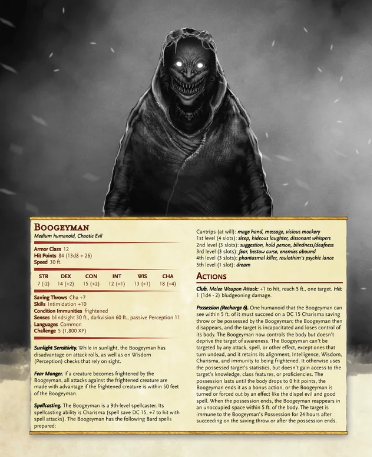
This is one of the movies where I envision the classic Monster Hunter appearing, someone with the skill & knowledge to hunt down legendary things, and slay them. In fact, the first thing I did was Google to see if anyone had done D&D Stats for such a creature. Disappointed there weren't more. The movie does treat it as a creature instead of a supernatural entity of legend, in the vein of "if it can bleed, it can die." And the parents not being able to see the creature, until they accepted their children were not lying, and then could. Not quite in the way that The Grimcutty handled it, but more in the way the creature avoided adults, jumping from shadow to shadow, obsessing on the children, until it was time to kill the parents.

Wednesday, October 4, 2023

Ahsoka Season 1

 2023, d. Dave Filoni, Steph Green, Peter Ramsey, Jennifer Getzinger, Geeta Vasant Patel, Rick Famiyuma - 8 episodes
Series written and created by Dave Filoni


I'm in too deep on this one. I can't see the forest for the trees.

I love Ahsoka as a character. She is my favourite in the entire pantheon. So I am already biased.

Star Wars Rebels, the Dave Filoni-created animated series, of which this is a sequel to, is perhaps my favourite Star War of all the Star Wars. I'm really, really in the pocket for this one.

This series also picks at threads of Star Wars: The Clone Wars, the series where Ahsoka originated as Anakin Skywalker's padawan.  The Clone Wars was made with Filoni as showrunner under the direct guidance of George Lucas. You might say that Filoni was Lucas' padawan, but instead of having a silly side braid, he had a big ol' Stetson on his head.  I'm a fan of The Clone Wars too, so this show, right here, just sings to me with an alluring siren call that I cannot resist.  

I loved it, every damn minute, even when I wanted to start picking at things, my brain would justify away any of those nitpicks. You're not going to ruin this for me, brain.

I cannot put myself in the place of an outsider on this one. I cannot establish a "casual Star Wars viewer" perspective. I know too much. I feel too much. I get the warm fuzzies every time I see Ahsoka, Sabine, Hera, Chopper, Ezra, and Thrawn on screen. These are important characters to me. They are also Filoni's babies, so they are treated and handle with both respect and love.

I have no idea what it's like to be a viewer encountering these characters for the first time. Will this show make any sense? Will people who don't already love these characters care at all about them?

If I'm to criticize -- which, as we've established, my brain is fighting me on -- it's that this series is, perhaps, misnamed. Ahsoka is the focal character of maybe one episode but otherwise it's almost more of Sabine's journey, than Ahsoka's. If I'm to further quibble, the sub-plot for Hera was a little too thin for my liking, and erratically paced. Like other Star Wars series and the way they handle tertiary characters, I think maybe Hera here wasn't given enough to do, nor enough characterization for the newbies.

Filoni's experience has largely been writing for and directing animation. He's recently had his hand in a few episodes of The Mandalorian, but it is a different beast.  In animation there are short cuts that get taken in storytelling, acceptable short cuts that maybe don't work as well (or can't happen at all) with live productions. But at the same time, the D+ experience allows him more liberty, not constrained to 20-ish minutes, which means he can add in some breathing room.

The main complaint I've been hearing about Ahsoka is indeed the pacing. Many find it slow or arduous, and that some scenes feel unnecessary or like "stalling".  I rewatched Obi-Wan Kenobi recently and this kind of roundabout pacing is pretty egregious there, full of a lot of sequences that are just filling out the episode order with stuff happening. Nothing in Ahsoka, to me, felt like stuff happening. Everything seemed to largely have a point, whether it was exploring/enhancing/developing character, world/galaxy building, or advancing plot. Nothing in Ahsoka, unlike every other live action Star Wars Disney+ show (except Andor) makes me pull out my hair saying "why did they do that!" or "that wasn't needed!".  I could see Obi-Wan Kenobi or The Book of Boba Fett re-edited and condensed into a 2-to-2.5 hour film. With Ahsoka I'm pretty happy getting everything I got.

But perhaps it comes to expectations.... For me it's wanting to spend time with the characters, not powering through plot. But if you don't know these characters, you're probably wanting the plot to accelerate and to draw out the characters in the process, which it does, but in its own time.

If you're a Star Wars nerd and following the behind-the-scenes, there was definitely some ambiguity about what exactly Ahsoka is.  Is it a mini-series? Is it an ongoing series? Is it the set-up for a film/film series. These questions became even more pressing by the end of Episode 7, when it seems like the Series isn't even close to wrapping anything up.  Episode 8, however, seems to be the set up for a second season, given where our characters wind up.

---
Characters and Performers

Rosario Dawson as Ahsoka. I love Ashley Eckstein's vocal performance in the cartoons, and yes, she will always be the primary Ahsoka in my head, but in bringing this character to live action she needs the starpower of Rosario Dawson, and, frankly, there's no other choice. There was a lot of talk early in the season if Dawson's Ahsoka is too muted, too underplayed, but to me we're seeing a character who has, for lack of a better term, seniority. If she was, say, 14 when she became Anakin's padawan at the start of The Clone Wars, that's almost 10 years until Order 66, 20 years to Battle of Yavin, another 6 or 7 to the Battle of Endor, another 6 or 7 to where this show picks up. That put the character at, liberally, 55. The math might not be exact, but she's been doing her thing for a long, long time, and I think that's what Dawson brings to it, that sense of experience.

Natasha Liu Bordizzo as Sabine. What I realized when trying to figure out if I liked Bordizzo's portrayal was that I don't think Sabine was the most well defined character in Rebels. This gives Filoni and Bordizzo a lot of room here, and I really enjoyed the character's journey. She's a very charismatic performer.  It did drive me mad that Sabine left her jetpack behind, though. I really liked the combination of Jedi/Mandalorian fighting, but it took too long for the character to really find the balance (it wasn't specifically a part of her training, which it should have been). I figure Sabine to be pushing about 30 here, but she still seems young and impetuous. Can't take the rebel out of a Rebel, I guess.

David Tennant as Huyang. This droid has been helping Jedi craft their lightsabers for centuries, and he appeared in a Clone Wars arc way back when. How he came to be aide to Ahsoka isn't clear, but a sassy droid is always welcome. Tennant brings both charm and pithiness to the character which serves him well as a figure who is way older than anyone else around him.

Mary Elizabeth Winstead as Hera. Maybe my favourite Rebels character (besides Ahsoka), and here, it feels like Winstead didn't exactly do her homework. Granted, she is (by my count) about a dozen years older, has been both a single parent and a general, with all the responsibilities those demand, so if she does act a bit more steadfast then it does make some sense. I don't dislike Winstead in the role I just don't think, as written in this show, there's enough of the character.

Diana Lee Inosanto as Morgan Elsbeth. Returning from Ahsoka's first appearance in The Mandalorian, Morgan Elsbeth is revealed to be a part of the Night Sisters which ties her in with some deep Clone Wars lore. She's a witch. Inosanto doesn't seem like the most natural performer, but then she's still far less stilted than most of the main players of the Prequels, so there's that. When she finally gets to show off some stunt fighting (her background is as a stunt performer) she's incredible.

Ray Stevenson as Baylan Skoll. The breakout character of the show, and the most heartbreaking aspect of it all. Stevenson passed away between the filming and its release, and it's clear by the series end that the story of Baylan Skoll was just beginning. Stevenson brings a sense of power and calm, danger and familiarity to the role. He just feels like he's been a part of this universe for a long time. There's so much more to explore with the character, and it's the way the final episode closes with him that hits the hardest that there's definitely another season planned. As much as it pains me to say it, Skoll will have to be recast.  There's not another Stevenson out there... but maybe someone like Liam Cunningham (Davos from Game of Thrones) as my wife suggested. He's not as physically imposing, but seems in the right tenor.

Ivanna Sakhno as Shin Hati. Balen Skoll's apprentice is as much a mystery as Balen himself. Where Balen is clearly an ex-Jedi, he's training Shin both as a Jedi disciple but also letting emotion control her like a Sith. That both wield orange blades indicates sort of a not-quite-Sith penchant. Sakhno does a lot with a little with Shin. She doesn't have many lines, and she's mainly emoting, but doing so very effectively.

Lars Mikkelsen as Grand Admiral Thrawn. Thrawn comes to us from the first expansion of the Star Wars universe in 1992, when the first "official follow-up" novel, Heir To The Empire by Timothy Zahn, was released.  For a generation of us, Thrawn is the biggest deal Star Wars character that the masses have never heard of.  Back when Thrawn was originally announced for Rebels Lady Kent and I wondered who the best possible performer for Thrawn would be, and settled on Mads Mikkelsen.  Sadly, Star Wars used up their dose of Mads on Rogue One, so brother Lars was a very curious, very apt substitute. Mikkelsen's vocal performance for the character in Rebels was note perfect, and probably even better than I could have hoped.  It's a little off-putting seeing Mikkelsen as Thrawn in live action, because Thrawn is so much about demeanor...cold, calculating, reserved... but you expect a cinematic big bad to be much more grandiose. Mikkelsen delivers 90% of the performance in his slithering hiss of a voice and it's just as perfect as it ever was. Physically he's even more reserved. Thrawn barely moves, generally standing Grandpa-style with his hands behind his back. We know from the books Thrawn is a dangerous physical adversary, and while that's not what the role's calling for (yet), he doesn't exactly cut an imposing profile. But that voice...it really is all you need to make the character work, and Mikkelsen works it.

Eman Esfandi as Ezra Bridger. I was worried that Ezra was going to become a maguffin for the series, but those worries were unfounded. As well, the fact that 75% of the show rests on the balance of Sabine finding Ezra, it puts a lot of weight onto both the character and actor to deliver.  And boy does Esfandi deliver. The show comes alive when he joins.  Ezra was the plucky youth on Rebels and while he's no longer a youth, he's still full of pluck. He's basically survived in a whole other galaxy far, far away on his own (with a little help from his shelled friends) which has brought a maturity to him, but he's still the fun, excitable character we knew. Once Sabine is reunited with him, the two of them together really drew out the old Rebels vibes.

---

Yes, toys of that please

Part of the Star Wars experience for me is toys. They are symbiotically linked in my mind. I cannot watch Star Wars without thinking about toys, little plastic representations of the awesomeness on screen.

Andor, Obi-Wan Kenobi, and The Book of Boba Fett weren't what you'd call "toyetic" shows. They didn't feature a lot of new characters, costumes, aliens, spaceships or set-pieces that just screamed to be replicated and played with (even Boba Fett riding a ranco was...meh). They felt...recycled. Ahsoka is so, so different. There are so many new characters, vehicles, and surroundings (and great variant takes on existing versions thereof) that I want recreated in toy form. It seemed like every other new scene had something amazing.  Tops of them all is Ahsoka in her blue space suit. Coolest damn thing ever. Thrawn's Troopers, too cool. Ahsoka's spaceship, yes please.  The hyena steeds? Yes. The crustacean natives? YES! A flipping purrgil? SURE! Even in the last 10 minutes of the season, out pops a new weapon the likes we've never seen in Star Wars (or have we?) and it filled me with a giddy glee.

---

Music

Kevin Kiner did all of the music for The Clone Wars, Rebels, and The Bad Batch.  While Ludwig Goransson made a decisive impact on Star Wars soundtracks with The Mandalorian, it could, and should be argued that Kiner is the heir apparent to the franchise post-Williams. Kiner's The Clone Wars work during its original run was underwhelming, but starting with Rebels his work started to find its only paths to follow, ones that didn't adhere to the traditional orchestral score John Williams established. It was the Season 7 revival of The Clone Wars that solidified his genius for me, a real synth and tone-fuelled soundscape that borrows from Tangerine Dream far more than Williams. Kiner has also been working with Clint Mansell on the Doom Patrol series for the past 5 years, and you can feel Kiner finding more and more grooves to inhabit as a result of that partnership.  His score here is great. It's not his most ear-capturing work, but it works really really well.

---

The Future

Again, I'm oozing bias over here, but I think Ahsoka was a rousing but not exactly flawless success. I definitely want so much more.  Nothing's been announced outside of a tentative Thrawn-related crossover that would bridge Ahsoka, Boba Fett and Mando in one theatrically released film.  But there's so much groundwork laid here that it's not just a film's worth, but instead at least another season's worth, or maybe not even a second season, just, you know, part 2 of this one.  It isn't a complete production, and if it didn't satisfy fully, then it definitely whetted the appetite.