Showing posts sorted by date for query dungeons and dragons. Sort by relevance Show all posts

Sunday, June 7, 2026

KWIF: Masters of the Universe (+1)

 KWIF=Kent's Week in Film. The "birthday week" now comes to a close, ending with my most anticipated movie of the year, but also accompanied by so much apprehension. I came here to review movies and eat cake, and I'm all out of cake.

This Week:
Masters of the Universe (2026, d. Travis Knight - in theatre)
Backrooms (2026, d. Kane Parsons - in theatre)    

---

Masters of the Universe, the toy line, debuted in 1982. I was 6 years old. My introduction to He-Man and company was probably the TV commercials, but my obsession most likely started with issue 47 of DC Comics Presents in which Superman and He-Man teamed up against Skeletor on Eternia, the homeworld of the Masters of the Universe. I was immediately obsessed. I was as obsessed with "MOTU" (as it's known in the fan community) as I was with Star Wars and DC superheroes.

The toy line would receive more comics series from both DC and Marvel in the next few years, there would also be a fan magazine, and yes, billions of dollars in toy sales of ridiculously over-muscled broad-and-squat characters with ridiculous names like Stinkor (he stinks of patchouli), Extendar (his limbs extend), and Buzz-off (he's a wasp-man). There was an immensely popular cartoon that had two seasons with over 60 episodes each, as well as a holiday special and a spin-off series with He-Man's sister, She-Ra. 

In 1987, infamous schlock purveyors Cannon Films produced a Masters of the Universe live action movie, which, it's absolutely fair to say, was a disappointment to everyone at the time. Cannon sunk over $20 million into the film -- a sizable budget for them, but not nearly big enough to do the property justice -- and so most of the film takes place on Earth with a paltry few characters form MOTU's vast lore appearing, and the majority of the film focusing on Courtney Cox's teenage orphan and her boyfriend. It was a huge slap in every child's face that we had a He-Man movie that did not center on He-Man and felt nothing like what we knew about the property.  As well, the cartoon had ceased making new episodes almost two years prior, and public attention to the property was flagging something fierce. Toys were not selling like they used to. By 1988 the line was basically dead.

MOTU has been rebooted a bunch of times since, and the fan community is immensely supportive of the property, it's just not a huge community.  Likely in the tens of thousands, rather than millions like, say, Transformers or Star Wars.  Even the 1987 film has since become kind of a camp classic, and I personally enjoy it far more as an adult than I ever did as a kid. Still, I've always wished for a proper He-Man movie, and for the past 20 years (at least) there have been teases, over and over again, with false starts at nearly every major studio. It felt like it was never going to happen...and now it has... and... for the most part, it seemed to be what I had been waiting for, a big-budget ($200 million dollar) production that understands both how ridiculous the property is while also understanding why it's so beloved to the die hards.


Director Travis Knight came from the world of animation (as head of Laika and director of Kubo and the Two-Strings) and directed the best Transformers movie of the lot in Bumblebee, an impeccable 1980's-styled adventure in an Amblin pastiche. I had the utmost confidence that he could make a good He-Man movie. The ideal was that it would be as good as Bumblebee, or share the tone of Dungeons & Dragons: Honor Among Thieves, and that it would be a good introduction to MOTU to a whole new generation, and not just a movie for 50 year olds who can't let go of their childhood.

It genuinely pains me to say that Masters of the Universe is a highly flawed movie. It delivers on being a live-action He-Man movie in ways my inner man-child cannot deny... I had warm fuzzies in my belly often, and squealed in glee more than a few times throughout, but it's still not he MOTU movie of my dreams, and that makes me sad.

The film opens with operatic voices in harmony, "AH-AH"-ing to pulsating synths that made me think a vintage ABBA song was about to play... and the guitars kick in, and I got goosebumps. Composer Daniel Pemberton mixes in his score these elements of 70's Euro-disco with 80's guitar-rock and enlisted Queen's Brian May to provide the guitar riffs. It is most suitably epic and triumphant. If you reach back to the epic rock soundtracks of the 1980s - Queen's Highlander, Toto's Dune, Tangerine Dream's Legend - this is reaching, achieving, and in some cases surpassing those grandiose scores, while also paying homage to them (it borrows at least one track from Highlander - "Princes of the Universe"). It has a few needledrops, which are kind of on the nose in-the-moment, and yet also tone-perfect for the type of film this is, and The Darkness provides the title song "Masters of the Universe".  I was not expecting this acoustic assault, but it was so incredibly welcome, and helped elevate the film where it otherwise would fall a little further down.

The film has an extended prologue, where we meet Adam, Prince of Eternia, as a child. He's forced by his father to partake in battle training, but he's not much of a fighter. The other children in training pick on him, and Duncan (Idris Elba, Luther), the king's Man-At-Arms, is a heavy-handed trainer, though he does find ways to encourage and inspire the hapless young prince. The King, however, wants toughness, strength and determination out of his son, and is willing to traumatically embarrass him to do so. It's a tough prologue when so much of it talks about "being a man" and what that entails, and all of it has to do with strength and being a fighter. This had me perplexed as to what the messaging of the film was to be...(Pemberton plays a piano riff of "Boys Don't Cry" over one scene). It almost seemed to be promoting toxic masculinity.  

The palace is attacked by the forces of Skeletor (Jared Leto, The Little Things) and Adam is sent through a portal off to Earth, his mother's homeworld, alone, with only the fabled "Sword of Power" (there's an even earlier prologue attempting to explain just what power this sword has) to accompany him, which he promptly loses. We smash cut to 15 years later and Adam (Nicholas Galatzine, The Sheep Detectives) is an awkward, soft-spoken dork who works in HR, and has been obsessed with his past life on Eternia. He knows the Sword is his way back, and has been searching for it for a long time. When he finally finds it, it alerts his home world and a literal Beast-Man comes after him, but so too does his old friend Teela (Camila Mendes, Riverdale)

These two stretches of film account for about 40 minutes at the top of the film, and while both are called back to and play a part later in the film, they are each waaay too long. The stretch on Earth feels particularly tedious, especially as there's a nonsensical gym sequence where Adam has a nonsensical conversation with another guy working out who just happens to be Dolph Lundgren, the portrayer of He-Man in 1987. I'm not against fan-service. I'm a fan, I like to be serviced, but subtly. This scene stops the movie dead in its tracks for about 2 minutes, as Lundgren gives the young man advice, which ONLY makes sense in a Meta context, and then what little weight was had in the delivery is undercut by a dumb joke.

And that's a major flaw of this film, it's incessant need to undercut itself with dumb jokes. It's the "Marvel-model" of filmmaking that had played itself out by the time the pandemic hit, so there's no excuse as to why the script is resurrecting it here. Cut out half of these moments where the script undercuts itself with humour and you have a much better, tighter film.

This is, of course, the product of multiple screenwriters contributing to many, many drafts over the years. Four screenwriters are credited here, and it's hard not to blame all the film's weaknesses on the script.  Because, Knight's direction is pretty rock solid. The action sequences all play out quite well, with the super-powers of these characters, or the fighting skills of others all being utilized in really fun ways and not feeling super generic, or, in that sometimes Marvel way of it just being CGI characters blasting each other with laser beams. 

The film really starts moving when Beast-Man and Teela show up. The energy just starts to crackle and these characters are really well translated from toy/animation/comics-to-screen. Mendes' reveal on screen is particularly captivating, as she exudes strength, confidence and charm that I never would have expected from her CW background. She looks and feels like a movie star, and I hadn't expected that from her or this film. 

Teela brings Adam back to Eternia, but not one he remembers. It's been under Skeletor's thrall for 15 years and things have not gone well. Adam's return with the Sword has exposed the Eternian resistance and Skeletor's forces attack, but in the process, Adam turns into He-Man and a new hope for the people of the land raises... except that even with all that power, Adam is still Adam, and his first avenue is hope and optimism and looking for the best in people... but the lesson he needs is that sometimes fighting is necessary to protect the people you care for. Diplomacy is always Adam's first choice (he was always pretty good at human resources) but now he has the power (and, honestly, "the power" basically represents confidence here) to stand up and fight, and to get back up when knocked down.

Knight's path to becoming an accomplished director was not a hard one. His dad is Phil Knight, the billionaire founder of Nike. The animation studio Travis heads was bought for him by his father. But to his credit, Knight worked at his craft, and clearly has both an aptitude and a talent for directing and storytelling. One can look at him as being perfect for telling the story of Adam, of a young man (of privilege) who doesn't necessarily live up to his father's (or anyone's) expectations, and feels lost, only to find his true calling and, while not without its hurdles, excel at it.  It's not fully the story we need, but Knight found a way to make this story personal to him, and it does elevate it slightly.


It keeps coming back to the script, though. It fumbles its exploration of masculinity pretty badly. It takes a shot at it, but it doesn't just miss the target, it doesn't even know where the target is. With all the writers involved, it's like nobody thought to consult an expert, to get it right.  

But what it does get right... and it's so weird to say this... is Skeletor. Jared Leto, buried under a blue-skinned body suit, and a CGI skull with beady-red lazer-pointer eyes, is mercifully unrecognizable, and nails the assignment. Leto as a performer is sometimes insufferable, and allegations made about his off-screen behaviour makes one like him even less, but this... he got this. Skeletor is an evil, cackling villain of no redeeming virtue, and unapologetic about it. He's also freaking funny, as funny as he is intimidating, which serves to simultaneously make him more and less intimidating if that makes any sense. It's a camp performance, but one that works perfectly for both the character and the film. Alison Brie (Freelance), who plays Evil-Lyn, Skeletor's mistress and aide, and shares the most screentime with him, is a gifted comedic actress, but even she has a difficult time keeping up with Leto. It's clear she's attempting to match his tone, but only is able to get there half the time.

There are many characters from the toys and cartoons and lore that pop up in this film, and it's a bevvy of delights. It tickles me to see Fisto, Ram-Man, Mekanek, Spikor, Tri-Clops, Trap-Jaw. Roboto, Battle Cat, and so many more, alongside vehicles like the Sky-Sled, Roton, Talon Fighter and more in this picture, not to mention playsets like Castle Greyskull and Snake Mountain. What a damn treat. I was giddy in seeing it all and only wanted more. 

As there were delights, there were also let-downs, but Nicholas Galatzine was not one of them. His squeaky-voiced Adam, with posture seemingly learned from studying Christopher Reeve's Clark Kent, does exactly the job it needs to do, and when he transforms into He-Man, he still effectively conveys being Adam inside a muscle-bound barbarian's body, but also shows the character levelling up emotionally. Really, really solid job.

I could go on about the ups and downs of this movie and the wild roller-coaster of emotions I went on watching it. In the end, it's fine, but sadly, fine isn't what the property needed if it were going to be resuscitated for a new generation.  That was my greatest hope for it, that this would a super strong movie enjoyable by kids and adults alike and so exciting and entertaining and undeniable that there would be millions of children clamouring for action figures instead of phone screens. I guess we'll have to wait for Toy Story 5 to do that.

---

Kane Parsons' 9-minute Backrooms (sometimes The Backrooms) short film from 2022 currently sits with an astonishing 83 million views on Youtube. Backrooms is not just a single short, but a series of shorts made in the past few years , but none of the follow-up twenty or so videos come close to hitting that number of views (most of them have between 3 and 18 million views, which is still quite impressive). What's not so astonishing is that a studio was willing to gamble on a modestly-budgeted feature derived from the Backrooms series given the impressive numbers it's pulled...no, the astonishing thing is that the studio, in this case A24, was willing to take a chance on the feature with Parsons at the helm.

The video series itself was not the original invention of Parsons, but a product of message board groupthink in the creepypasta horror subgenre, and the idea of "backrooms" itself became its own sub-subgenre.

I wasn't familiar with any of this until very recently. But, to watch Parsons' original short, which is somewhat recreated in the prologue to the film, it owes as much to first-person shooter video games as it does to whatever developed out of message board forum. It's visceralness comes from being in an unfamiliar, relatively barren indoor space that is just an expanse of seemingly limitless corridors. There are objects in the corridors that could best be described as "random", while the hallways themselves lack any sense of logic, as the attaching corridors might be through a crevice or a hole in the floor, or a tunnel in the wall accessible only by ladder, or a doorway in the ceiling.  And the lighting is spotty, with most corridors being difficult to see fully... you never know what awaits you as you pass through a doorway, or turn a corner, or step into the shadows. (The fantastic TV series Severance was partially inspired by the conceit of "backrooms", and the spinoff sub-subgenre of "liminal spaces" inspired the video game and subsequent film Exit 8 which I reviewed last week.)

The Blair Witch style shaky cam intro to the film is as effective as it is discombobulating.  I never have a good physiological reaction to this kind of footage, so mercifully it was an in-universe video cassette of camcorder footage being watched by someone, and didn't last past the first 10 minutes.

Following this sequence we meet Clark (Chiwetel Ejiofor, Serentity). He is a failed architect who now runs a failing furniture store and is seeing a therapist, Mary Kline (Renate Reinsve, The Worst Person in the World) following his separation from his wife. What is clear from their sessions is that Clark is full of entitlement and rage, and isn't very interested in truly exploring the source of his emotional discontent.

Clark has been living in his sparsely-stocked furniture store since the separation and experiencing eerie and strange issues with the electricity in the store. The lights will flicker and blink, turning off or on all on their own, while the television will shut off or randomly show video from inside the backrooms that we saw in the opening sequence.  When checking the breaker panel one night, Clark discovers a soft spot in fabric of reality... he touches the wall and his hand passes through. He steps into the wall and comes out in a dingy yellow carpeted and wallpapered environment that seemingly doesn't end. He later describes to Mary this reality as being like a drawing of a dog, but as if someone who had never seen a dog were told what a dog looks like, and then drew their conceptualization of a dog. Everything is off.

Clark spends days exploring the space, even though there seem to be dangers present. Perhaps because he's a (failed) architect, or perhaps because there are things familiar to him in this space, he is quite obsessed with this topsy turvy alt-reality that defies any logic.  He recruits his young assistant manager (Lukita Maxwell, Shrinking) and her videographer boyfriend (Finn Bennett, True Detective: Night Country) to help him with research, and, naturally things go awry.

Outside of it all, Clark has triggered a video camera within the space, and it's being monitored by Phil (Mark Duplass, Safety Not Guaranteed) who wonders who the hell this guy is. Clark's description of this space triggers memories, traumas and nightmares in Mary of her childhood. Are they connected?

Backrooms is a horror movie, but it's also a science fiction and pscyhological thriller. It's not always scary, but it is tonally pretty intense. What is most effective about the film, and baked into the "backrooms" and "liminal spaces" sub-subgenre, is the surreal perversion of reality. Things that look almost familiar, almost like something we should recognize, but aren't quite accurate. Exploring a space like this is like venturing through a nightmare, there's nothing grounding this experience and it could take you literally anywhere one's mind can conceive.

Eventually the film reaches a point where it starts offering some answers, and the worst thing you can do in horror is demystify the threat, to explain it all away. It's frustrating not having answers, but it's less scary when you do.  Backrooms' answers, well, they aren't truly answers. There's more going one than what we know at first, but as one veil is pulled back, there are only more questions.

The audience is left to find their own answers in the information provided to them, and the information is as much there to confound as it is to illuminate. My take is that this endless reality is subconscious memory made manifest, but not of any individual. The more time you spend within, the more the realm taps into your subconscious memory, particularly the darkness you trap away, your fears, anxieties, regrets and repressed impulses. It's a theory, anyway.

I liked this movie a whole damn lot, and it's part of this year's horror explosion of fresh talent that is redefining the box office and what audiences want, what excites them, what they're looking to escape to. Twisted reflections of reality, apparently. Parsons, a teenager when he created Backrooms, is now 20 and has directed one of the biggest movies of the year, and capably so. He'd been refining this idea for four years, so it's no wonder he was so capable and assured in shooting this, but time will tell if he has the capacity for telling any stories beyond Backrooms.  I'm keen to find out.

Monday, March 9, 2026

ReWatch: The Time Machine

2002, Simon Wells (Balto) -- Netflix

The problem with having a movie blog that is over almost 15 years old is that I am not always sure I have already written about an older movie. This is most undoubtedly a "rewatch" as I know I saw it before but I do recall it being so bad, I never felt the need to rewatch, but I wondered if I had already succumbed to curiosity, like I did this time. Yes, my memory is that fallible these days.

I might need a tag "wait was it really that bad ?" 

This was a terrible movie. It is still a terrible movie. It is Hollywood spectacle for the sake of spectacle and doesn't even try to make a lick of sense. Part of my brain went down the silly path of "they weren't very smart back then" postulating that the Purple Suit brain was even less formed back in the early 2000s than it is now. Its like looking at a medieval painting and marveling at how unsophisticated they were in manners of artistic ability. But no, there have always been silly, terrible, badly made movies, with budgets, and there always will be. Besides, despite what my 20sumthin coworkers say, "the early 2000s" was not that long ago.

Its 1899 and Dr. Alexander Hartdegen (Guy Pearce, The Rover) is a college professor in New York City... so, four years after HG Wells published his novel on time travel. As with all Funny Professors, Hartdegen is socially awkward and would rather work on weird gadgets and scientific theories than interact with people, who have boiled down to his house main, his friend & fellow teacher David Philby (Mark Addy, Game of Thrones) and his latest fiancée Emma (Sienna Guillory, Meg 2: The Trench), a woman who finds his weirdness and forgetfulness charming. He intends on marrying her but on the night he proposes to her, she is killed by a Central Park mugger. 

Dr Alex becomes obsessed with Changing the Past. He isolates himself from everyone and works on one of the prettiest renditions of The Time Machine in cinematic history -- a big steampunk thing of brass tubes and shaped glass. But Time Travel doesn't help, as no matter how much he alters events so she isn't killed by the mugger, she is killed somewhere else by something else. The past is rigid. So, he decides to go into The Future to see if they have figured out why you cannot change the past.

He makes a brief pitstop in 2030, where he talks to an AI Librarian (learning about the HG Wells novel, nudge nudge wink wink; Orlando Jones, The Good Lord Bird) and then pops over to 2037 they have Blown Up the Moon (!!!). Then he bumps his head and ends up in 802,701. In this Far Future, everyone is brown and primitive. I cannot decide if this is just being faithful to the novel or low-key racist or scientifically likely. Anywayz, when, almost a million years ago, they Blew Up the Moon it pretty much ended civilization as we know it. Except for AI Librarians who not only have really good batteries but also storage & display media built to last a million years -- yeah, uh huh.

Anywayz, the lovely primitive cliff dwellers, Eloi, are being attacked and taken on regular cycles by the cave-mannish Morlocks. Despite being obsessed with saving Emma, only months before, Alex sees pretty primitive Mara in her revealing skirt and friendly ways and.... googley eyes! He's also suddenly less socially awkward, which is made even weirder by the fact he has been pulled out of Victorian times into a birds next hanging off the side of a cliff. Then, one day, on a visit to the Eloi wind vanes that don't serve any real purpose, the Morlocks attack, jumping out of the sand, grabbing Eloi and jumping back into the sand. This effect makes no sense. As said, not much of the movie doesn't. But its exciting and I guess follows a Rule of Cool ?

Do they burrow? Are there looser sand pockets? Do they have psionic mole abilities to push sand out of their way? Why does it fill back in after they jump in/out?

Anywayz, underground Alex discovers two things: the Morlocks eat Eloi and there are Über-Morlocks, evil white-skinned, intelligent and telepathic Morlocks that still look human... somewhat. They control the other Morlocks and keep them from eating every last Eloi, which would deplete the food supply.  I guess there are no other animals worth eating? Anywayz, Mr Über-Morlock (Jeremy Irons, Dungeons & Dragons), who is the best cinematic depiction of Elric of Melnibone I have seen (Google it) explains to Alex that the reason he cannot change the past is because The Time Machine was invented because of Emma's death, so it cannot bring him to a place where he could undo itself. Timey Wimey Grandfather Paradox shit. 

Then Alex and Mr. Über-Morlock fight it out, send The Time Machine into an even FURTHER future where Alex sees the Morlocks ruling over a (even more) broken Earth. He kills Mr. Über-Morlock and then goes back to Mara (note: only saving her, all other Eloi are Morlock Snacks) and decides to live Happily Ever After in the The Future. He blows up The Time Machine.

Huh? There are still hungry Morlocks, even if Exploding Time Machine energy wiped a good amount of them away. And there are other Über-Morlocks, just not in this region. I guess this was lame franchise attempts? 

I am sure there is a "How Did This Get Made?" episode of a podcast or treatise on the production of this movie somewhere on YouTube or in a (gasp!) print magazine. No matter how far we come, as Hollywood evolves we will always have incredibly terrible Hollywood Spectacles that are made the way they are for one reason or another. And I will probably end up watching them, and probably more than once. THAT is the bigger question.

Tuesday, September 23, 2025

3 Short Paragraphs (Or Not): Red Sonja

2025, MJ Bassett (Solomon Kane) -- download

I cover my love of Conan the Barbarian in my posts about those movies, both the original and the later one. I haven't rewatched the "original" Red Sonja (1985, Richard Fleischer) since the days of VHS - it was not very good, even in comparison to the others. This movie is not a remake of that, nor is it connected to the (other) attempt(s) at remakes, based on Gail Simone iconic adaptations which were going to be helmed by Robert Rodriguez, Bryan Singer and a few others. Obviously those properties never came to life. Bassett claims to draw upon the 70s Roy Thomas Marvel Comics source material for this movie, but that's a little disingenuous considering that the entire image of Red Sonja that we know today is that image -- the original Red Sonja by Robert E Howard was not even a Conan character. And she doesn't even do that well, because, well... a big breasted warrior in shiny bikini armour would not go over well, except in passing commentary on it.

I think you're wrong. I think it would go over VERY well. Hell knows that there are probably a thousand butt hurt reviews out there about how "woke" this movie is and how disappointed she is not a back-sore Amazon of a woman. And considering how much the trolls are taking over much of the USA, it won't be long before they control all media.

This is not a very good movie, but as I have said before, Swords & Sandals movies rarely are. So, I judge them by how much eye-rolling I end up doing, and how my genuine investment in the movie there seems to be. This is not one of those numerous "straight-to" fantasy movies that sit on Amazon's "if you like X, try Y" category -- those are generally made by fans of the genre but with very little skill, experience or budget, more akin to fan films with lofty ideals. There was a time, say back in the 1980s, when I would have jumped on every single one of these movies with gleeful abandon, completely ignoring their faults, my imagination filling in every gap & failing with wild head-canon. Alas, I can only watch these movies with a bit of tempered respect & irony now. THIS movie is a cut above those, but not by far.

And I really enjoyed Bassett's other Robert E Howard property, "Solomon Kane", which probably deserves another rewatch & post.

Like all good Conan-not-Conan movies, we start with a tribal society being invaded by an outside force. I hesitate to call either "barbarians" as we know that Sonja is supposed to be Hyrkanian, and we are supposed to reserve that word for the tribal people from the far north, i.e. Conan's people. Sonja loses grip on her ... little brother (?) or at least some young boy she is supposed to take care of, and she sees her mother killed. She flees into the forest and ... many many years later she is an adult and still looking for any signs of her people. Based on how easy it is to find them later, she didn't do a very good job of looking.

In the books and comics, the Hyrkanians were horse riding folk who lived on the steppes. This is exhibited by Sonja (Matilda Lutz, Revenge) being really really close to her horse. Not that close. Sonja's people are depicted like most fantasy movies do these days -- no matter what "culture" their tribe is supposed to represent, they are a mix of whatever extras live near the shoot. This is not "accurate" but is a far sight better than the days when EVERY single tribe's depiction was all (very white) British folk. But my original point is that nothing about Sonja's people looks like "horse people" beyond her having a good friendship with hers.

OK, but what DO you mean? What should "horse people" look like?

Years later, years of just wandering around in the forest with her horse? Well, years later, she comes across mercenaries hunting CGI animals (some sort of Megacerops) for their horns. That leads her to a fortress, something very classic Conan story-telling which just loved its forts on the borderlands. This fort belongs to Emperor Dragan (not pronounced dragon; Robert Sheehan, Season of the Witch), once a slave of the Barbarian King who raided Sonja's village but he fought his way out, and became Emperor, but by way of totally-not-natural use of techno-magical war machines and such. He has a tank instead of a carriage, control collars on the monsters that his mercenaries capture for him, and a city powered by a big shiny orb thing. And he's not a nice guy, having enslaved pretty much every tribe in the area, with only Sonja's people holding out. Apparently they didn't all die that day they were invaded, and his hunters have been having just as much trouble finding them as she is.

Sonja ends up in his gladiatorial pit where she meets, in a nudge-nudge-wink-wink manner, her classic chainmail bikini which was always more scale mail than chain, but pop-culture references aside, its more beach volleyball than it is supermodel. Of course, she does a good job surviving said pit and gets to choose another suit of armour which is... not much better? WTF, after making a big deal about her bikini armour, she ends up wearing a suit with a bared mid-riff anyway; essentially adds on shoulder plates and an armoured skirt instead of the mere bikini bottom.

The idea of the movie is that Sonja's people had a book, and this book contained all the scientific knowledge that Dragan has been using to Take Over the World (maniacal laughter). But he only has half, and assumes if he finds Sonja's people, and the other half, it will allow him to finish His Great Work.

Bzzzt.

Sonja does escape his city, does find her people (basically, "Hey Lady, we're over here. We always were!") but... pretty much wipes them out as she has led Dragan's army of machines and monsters against them? Why they didn't just go back into hiding in their forest, one will never know, but Sonja has to go up against him, his army and his white-haired witchy warrior woman (Wallis Day, Batwoman). Said witchy warrior woman almost kills Sonja, but Sonja's best bud (her horse) saves her at the last second. Witchy Warrior Woman reports back to Dragan that Sonja is dead and when he finds out she isn't, they stab each other. A dying Dragan runs off with his newly acquired other half of the book, which he has learned was not going to fill in the blanks on his Dark Techno-Magic but instead focused on healing and growing and all that woke stuff. He dies with Sonja apologizing for leaving him behind all those years ago, when she lost grip on his hand, but pointing out that all the choices he made afterwards were his own. Consequences, bitch! Also, he tore up the book he was not really pissed at -- I hope they have another copy. 

The movie ends with some weak nods to Conan, a barbarian king in the west, but I wouldn't hold your breath that this movie will get a sequel.

Finally, I say again, Swords & Sandals movies are rarely good and neither are many Swords & Sorcery, but many are entirely rewatchable from my vantage point. A well-tread formula with a main character you enjoy, or an intriguing situation or a fun main villain. All can bring me back to that 14 year old who would absorb anything fantasy with relish. This movie sorely lacks in those areas. Sure, its still technically above the Straight To fantasy movies I mentioned I avoid, and it has pretty decent effects and production values. But the performances are just above phoned-in, especially Sheehan, who has done some more-than-passable fantasy roles prior, and plays his villain in pretty much the anachronistic state that Jeremy Irons did in the 2000 Dungeons & Dragons. Lutz herself is ... well, bland. Sonja is supposed to be a legendary swords woman, but this Sonja states very loudly, she is better with a knife, and the back-to-nature aspects were just ... grating; is she supposed to be a warrior woman or a forest ranger? Her supporting side kicks were forgettable and the presence of monsters almost helped, especially the mild nods to stop-motion (a cyclops) but too little, too little.

Wednesday, October 30, 2024

31 Days of Halloween: I Saw the TV Glow

2023, Jane Schoenbrun (We're All Going to the World's Fair) -- download

I entered into this movie, hearing only a bit of the buzz, with a concept as to what it was about... one that proved not quite accurate. I knew it was about a cult TV show that may be more than just a mere TV show, maybe one that was not quite ... real ? Like Channel Zero? And it was that, at one layer, but at the deeper layer it was more about the experience of gender dysphoria and being trans.

But let's talk about the horror movie as a horror movie aspects first, as I am not sure I am qualified to make much commentary on the actual meanings to the movie.

Owen (Ian Foreman, Let the Right One In) and Maddy are weird kids at school in the 90s. They find connection and Maddy invites him to experience a TV show she is into, a late night, sshhh-only-we-know-about-it low budget magic realism show about teenage heroes fighting odd creatures led by the evil Mr. Melancholy. 

The opening act sets the tone for the movie, definitely indie, definitely left of centre, weird and nostalgic, everything tinted in other worldliness. It wouldn't be for everyone, it would definitely be for That Guy, but it would also draw a lot of mundane viewers down the road of "I don't understand what I am seeing, but I know I am supposed to think its important". The creator has mentioned being influenced by Donnie Darko and I can definitely see that.

The movie shifts to years later, Owen (now oddly Justice Smith, Dungeons & Dragons: Honor Among Thieves, only two years later) is still sneaking off to watch The Pink Opaque, at Maddy's (Brigette Lundy-Paine, Downsizing) place. I believe the horror is carried through the obsession the kids have for the very very bad looking show, the pink glow (yes, that pink glow) and the mild hallucinations Owen is having. Then Maddy confesses she is going to run away her abusive mother and wants Owen to come along. But at the last minute, he panics and bails. He confesses what he is doing to the mother of the child he was supposed to have been doing sleep-overs with. But Maddy does disappear, and it is depicted that its not seen as just a running-away, police tape and investigations.

And The Pink Opaque is cancelled.

Eight years later Owen lives a lonely, isolated life. His mother has passed and he is entirely disconnected from his father, an actor with nary a line, a father who he has to apologize to for coming home late, even though Owen is an adult. He works at the local cinema and is mocked by his coworkers.

Then Maddy shows up again. She tries to tell Owen what The Pink Opaque was really about, that it was not just a TV show, but... the real world? Maddy confesses to Owen that they are the main characters in the show (she does so in a bar on the edge of town; oh, look, there's Phoebe Bridgers on stage) and they were captured by The Big Bad of the show. This world, the one Owen lives in, is The Midnight Place, the scary dark realm of the show. And the only way to get back to the "real world" is to bury yourself alive. And she is going to do that soon, to go back, and wants Owen to come with her, because Owen is actually Isabel, the main character.

It is during these confessions that we get brief flashes of Owen wearing a dress, Isabel's dress from the show. There was more than just obsessing over a TV show going on in Maddy's basement. And when offered the opportunity to run away and embrace who Owen really was, he chose to stay. He chose to stay "he". Its not overt, the scenes are brief, but the disconnection you see apparent on Owen's face is terrifying, his voice thin and strained, his wheezing even more apparent.

Another time jump. Owen is in his 40s. He has embraced modern, adult, male life. He has a family (which we don't see), a career (fuck, he just works at a kiddie ball pit / entertainment zone because the movie theatre closed down) and a big screen TV. He looks half dead. He lives in the same house he grew up in, his father now also dead. The Pink Opaque is now available on streaming (so, it was a "real" show after all) but Owen sees it for what it was --- terribly low budget and badly done. 

One last time jump; he's in his 50s. He looks older, barely alive. During a kids party he has a breakdown, and... the other characters just... fade out... just NPCs without a script. We see Owen cut his own chest open, no blood, just the glow & static of an old CRT TV. Its still inside him, the "real world" but... he just leaves, meekly apologizing to everyone.

So, you may ask, where was the horror? What I recapped didn't have it, maybe a little bit here and there. But the style of the movie, how it was shot, scored and the tones all say that Owen was trapped in a world, both of his own making, and not ... real. Its too terrible a world, that initially was tinted with nostalgia for the 90s but once that has faded, the world is dark, dim, cold and empty. Nothing colourful, nothing PINK about it at all. Its fucking bleak. And the supernatural elements are very real to the movie, not just metaphors on top of the allegory. 

The director is clapping back against the response to the ending of the movie, people commenting on and complaining about its bleakness. But the salient point is that The Pink Opaque is still inside Owen, the possibility of finally letting it out, of finally embracing Isabel is there. There is always still time. Not everyone has to be trapped in an utterly mundane, middle-American, work to live, live to work lifestyle (OK, that's a bit of transference from my experience), where your true self is hidden -- you can become The Real You.

Kent's take on it, different yet more poignant.

Tuesday, July 30, 2024

3 Short Paragraphs (Or Not): My Spy

2020, Peter Segal (Get Smart) -- Amazon

I knew Kent had seen this movie, but TBH I recall him being more favourable. We only ended up watching this because we saw the trailer for the second, and it got a few chuckles out of us.  

JJ (Dave Bautista, Bladerunner 2049) is a spy, but not the subtle kind. It's almost as if the elevator pitch was just, "Imagine you have a spy, but it's Dave Bautista." There is nothing subtle about Bautista. Anyway, the character is the kind that usually ends up killing all the henchmen during an operation, and that pisses his boss (Ken Jeong, Avengers: Endgame) off. As punishment, he is assigned a babysitting mission, watching over the relatives of a arms dealer who hid the plans for a nuclear weapon before he was murdered, by his own brother. Nine year old Sophie (Chloe Coleman, Dungeons & Dragons: Honor Among Thieves) catches onto their game almost immediately, and blackmails JJ, and his tech Bobbi (Kristen Schaal, All Nighter), into ... well, being her friend. They all become fast friends, with JJ attracted to Sophie's mom. But that doesn't sit too well with his boss, who tries to pull him off the mission, until the evil uncle shows up, and we get to have a final boss battle.

In these kinds of movie, i.e. the incredibly light, accessible, action comedy, the actual plot is hand-wavey thin. The "meat" of the movie comes in the charming centre, where JJ and Sophie bond via hijinx. I was kind of surprised that Bautista pulled it off, but it worked for me and elicited more than a few chuckles, that is, when I wasn't playing "spot Toronto". He balances well against Coleman. But as usual, Schaal just irritated the fuck out of me in every scene she was in. 

Yeah yeah, sure, you still are capable of not-saying-much and actually doing 3 relatively short paragraphs. And no this one doesn't count.

Friday, July 5, 2024

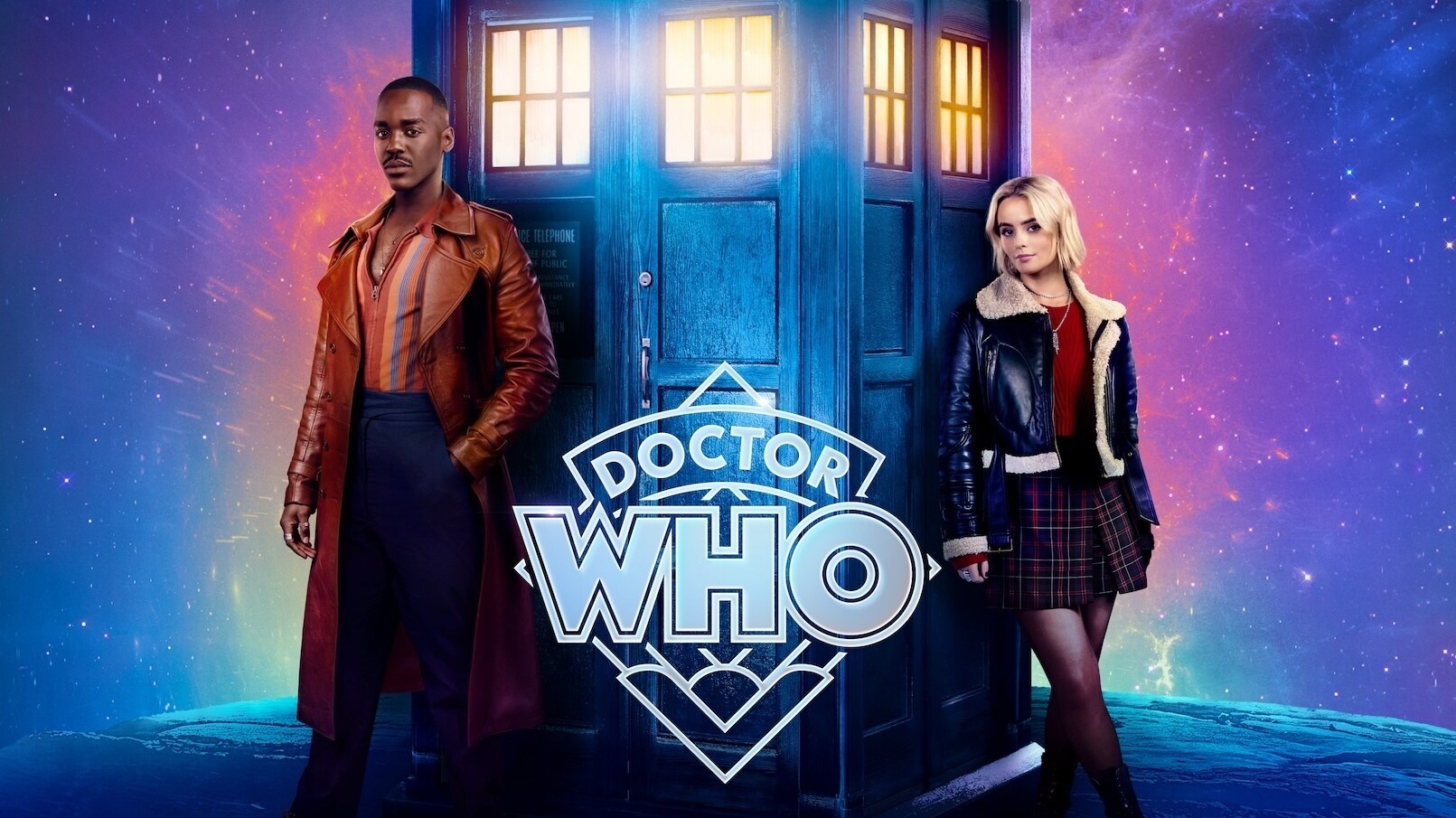
Watching: Doctor Who S1 (???)

2024, Disney

Season One. What? Not even 2005 Doctor Who has the conceit of rebranding itself as Season One. But Disney bought streaming rights for anything "new" and that has caused all sorts of weird fuckery. 

What 100.  A new Doctor, introduced to us in a weird, David Tenant guest-appearing, Xmas Special, and a brand new companion, Ruby Sunday (Millie Gibson, Coronation Street), an adopted orphan with a mysterious past linked directly to The Doctor (Ncuti Gatwa, Masters of the Air). This is a Doctor for our age: much more sexual, black (sad this is groundbreaking), extremely colourful, and oh so emotional. The anti-woke whingers will hate him, but fuck em. Russel T Davies returns to give us back the Willy Wonka, welcome to my factory, wonderment of companion-ing with The Doctor, but also with his requisite, dark, underlying story that ties directly to Ruby.

1 - Great. The dynamic between Ruby and The Doctor. Its a romp across space and time. But not without its dangers. She immediately falls for The Doctor, but not in a romantic way, just in a "we can be best buds forever" kind of way, which is how it should be. 

Also, when The Doctor is talking to the intergalactic bounty hunter Rogue (Jonathan Groff, Mindhunter), "Did you get your name from Dungeons & Dragons?!?!?"

Also, the requisite Davies standalone episode "73 Yards", wherein Ruby crosses over a fairy ring in Wales and ends up losing The Doctor, stalked by an old woman pointing at her, which derails her life almost entirely, and ends up saving the world from "the worst Prime Minister in History" (no not, Boris Johnson). She lives her entire life through to its end, only to return to Wales and cause a paradox so we can have our show. I am sure this will come back to bite her on the bum.

And a cute bum it... Shaddup you.

Also, Goblins on a flying boat and a song & dance number -- sadly, the only one for the season.

Ummm, I just noticed you are are not actually using Kent's format for this 100-1-1-1. So, I guess this is a Or Not scenario applied here as well?

1 - Good. The season long arc, which combines The Mystery Behind Ruby Sunday and a legacy Big Bad from Old Doctor Who -- Sutekh, the Egyptian God of the Dead. As is the tradition, it causes The End of the World, but only temporarily as a pissed off Doctor can undo just about anything. I am generally not jazzed for how Davies ends up his long running story arcs, as he is almost always anti-climactic, I did like the chicken & egg aspect of why Ruby was so important, so important that any time she came close to finding out who she actually was, it caused snow out of time to fall. And only because a Dumb Death God thought it was important. Turns out Ruby was just a normal girl with a normal mom, and a normal dad, who just happens to get mixed up with The Doctor, which makes her important from almost the first day of her life.

1 - Bad. Despite the fans lauding a drag queen playing Big Bad Maestro (Jinkx Monsoon), I just found the whole episode tiresome. Maestro is connected to the other (legacy) Big Bad from the Xmas Special, The ToyMaker (Neil Patrick Harris, Doogie Hauser MD), and both are supposed to be all powerful godlike beings with specific agendas. Sure sure, The Beatles show up. Sure sure, its all over the top melodrama -- classic Doctor Who. Yawn.

Also, its Ruby's only season. Booooooo.

Boooooo !!!

Sunday, February 18, 2024

3 Short Paragraphs (Or Not): The Beekeeper

2024, David Ayer (Suicide Squad) -- download 

The Bee Keeper and the Brick Layer walk into a bar....

This one, typical of the kind of movie I rush to download now, that That Guy of my youth would have sneered at. Despite my comments prior, I did not waste my youth only watching terrible movies. To have found the quality actioner among the dross was a challenge, endlessly reading reviews and the backs of VHS boxes. But as I got older, I tempered, reduced my desire to be challenged all the time. Sometimes, and more often than not now, I just want familiarity, a digestible plot, the same brain chemistry release I get when I play FPS video games. Oh, I want some semblance of capability, as if all I wanted was the concept, there are endless number of Z-grades on Amazon and Tubi. 

Yes, I know I have said that umpteen times but I still catch myself wondering why Toasty Now actually looks forward to movies that Toast Then (aka That Guy) would have sneered at.

David Ayer doesn't have a great track record in my world (actually no, scratch that dude. other than Suicide Squad, you rather like his work), but TBH I didn't even know he did the movie till I clicked Start. What I knew going in was that this was seminal Jason Statham, who is still in his prime Action Hero role for at least a decade, before he gets relegated to my other favourite (one of) genre of Aging Shooter. Here, he is a retired.... agent... of an organization called The Beekeepers, Ayer's version of Vaughn's "The Kingsmen", except there only seems to be one Beekeeper at any one time, a legendarily capable soldier for America, who stands aside from the politics and the laws to always set things right.

Statham is the same age as me, i.e. we are both turning 57 this year. On one hand, he is very very VERY much in better shape for a guy our age, than  I am. On the other hand, he or his purple suit, were very concerned about his "greying" as he has the most obviously dyed beard. People have asked me if I have ever thought about dying my facial hair as my head-hair is still mostly sans grey, but after seeing how blatant his was, and he doesn't even have any head-hair, I am secure being (more) salt & pepper.

Adam Clay (Statham, Parker) is quiet in his retirement as he... well, keeps bees. That is, until Evil Scammers scam the Old Lady (Phylicia Rashad, The Cosby Show) he rents bee space from, stealing from her not only her own money, but the money from the charity she runs. In response, he uses his old Bee Keeper contacts to blow the Evil Scammer callcentre up, which strangely enough, is not in a foreign country, but in midwest US of A, and looks like the set of a 90s hacker movie, replete with tacky clothing and annoying personalities, all the while spitting out an endless litany of bee knowledge. Meanwhile the Old Lady's daughter (Emmy Raver-Lampman, The Umbrella Academy), a member of law enforecement who happens to have been trying to take down these Evil Scammers, follows Clay from blowed-up-place to blowed-up-place. MEANWHILE, the Top Evil Scammer (Josh Hutcherson, The Hunger Games) happens to be a pampered rich boy who uses his pampered rich mom's contacts (Jeremy Irons, Dungeons & Dragons [not that one]) to find out who is blowing up his call centres, leading to a John Wick "oh" moment, when they discover Clay was a Bee Keeper.

For the most part, the movie is an unremarkable, familiar action movie, paced as well as expected, with a slight twist that is more of an eye roll. It introduces an an interesting John Wick-ian organization, but never really does anything with it. So.... pretty much as I expected / sought out?

Saturday, July 8, 2023

KWIF: Indiana Jones and the Dial of Destiny (+4)

KWIF is Kent's Week in Film, where each week (or so) I have a spotlight movie, of which I write a longer, thinkier piece about, and then whatever else I have watched that week I do a quick little summary of my thoughts.

This week:
Indiana Jones and the Dial of Destiny (2023, d. James Mangold - in theatre)
Asteroid City (2023, d. Wes Anderson - in theatre)
J.S.A.: Joint Security Area (2000, d. Park Chan-wook, tubi)
Sympathy for Mr. Vengeance (2002, d. Park Chan-wook, plex)

---

With the Mutt-tinted, jungle-vine-swinging, giant-fire-ant-crawling bar set pretty low, the latest Indiana Jones adventure delivered a far more engaging and entertaining movie than I thought possible with an octogenarian Harrison Ford. Although he does seem pretty creaky, the still dashing and far from frail-looking Ford seems to be delighted with some of his more recent co-stars, like the cast of Shrinking (most specifically young Lukita Maxwell) and definitely Phoebe Waller-Bridge. He seems to - like we all should - bask in the luminous presence of a fiery, energetic talent, absorbing their energy like rays of the sun (I haven't watched 1923, but I can only imagine he does the same with Helen Mirren).

Waller-Bridge here plays Indy's estranged goddaughter, Helena Shaw. As the film reminds us, Indy is terrible at family, and if you pay close attention to Raiders of the Lost Ark, he's kind of not a good guy, despite being the hero of the piece. Helena enters the picture as a seemingly chipper acolyte of the Indiana Jones brand, but very quickly proves that her allegiances are her own, as are her less-than altruistic intentions. She draws a mournful, self-loathing Indy out of his funk and back onto an adventure that he wouldn't otherwise survive if not for having good fortune, good friends, whip-smarts and a smart whip. 

Helena gets to be the action hero stand-in for moments where old-man Indy would otherwise seem far-fetched (and has to play the rescuer of her aged godfather on multiple occasions, not unlike Indy had to with a still robust Sean Connery back in The Last Crusade), but that does not deprived Ford of his own adventurous moments as well. Indy is definitely not "along for the ride", but the film, both in world and in a metatextual sense, is well aware Indy is not the man he used to be.


If that's a sticking point for the fans, I get it. It's painful to watch your heroes age and be sort of shadows of what they once were. One could look at Star Trek: Picard, or Rick Flair wrestling at 75, or Top Gun:Maverick (or, as a recent knock-off action figure called it, "Top Pilot Maverich"), these kind of sad attempts to recapture the boomer magic, or one's youth, or to validate ones worth as they see themselves replaced. I didn't feel that with Dial of Destiny. Mangold, with Logan, seems to understand the melancholy of aging, how to let it exist within a story without ignoring it when it nor overwhelming it. He seems to get how to present it as the flavour text of an action-adventure film. If you just don't want to see it, or dislike seeing it, that's understandable, but it is well done here.

The film opens with a cracking half hour, an end-of-war 1945 set piece that feels like prime Indiana Jones. It's a pretty satisfying short on its own. After the terrible, godawful, upsetting CGI face-swapping effects of The Flash, the deaging/deefakery of this film is pretty solid (seriously guys, we need to stop complaining about the quality of deepfaking in films, because it's just going to incentivize "them" to try and perfect it, and then we'll be in serious trouble when we can't actually tell). The alternative would be throwing Alden Ehrenreich in there (former Young Indy portrayer Sean Patrick Flannery is almost 60 now, and River Phoenix would've been 55). It's *barely* distracting, at least to me, your milage may vary.

With both Crystal Skull and Dial of Destiny I've heard heaps of complaints about going too far with the finale, as if aliens or time travel are any more fantastical or unbelievable than the wrath of god, hearts being pulled out of chests in ritualistic sacrifice, or meeting a centuries-old knight guarding they holy grail. What Dial of Destiny maybe doesn't get right is it spends too much time there, and the longer it spends the more problematic it becomes (especially from an archeological standpoint). It could have been more swift and clever but it ultimately didn't bother me in the viewing, nor in hindsight

Timing is a problem with much of the film, action sequences or set pieces do have a tendency to  overstay their welcome. There's a chase to kick off the second act that takes us through the streets of Tangier that seems to be exploring every street and alley the city has to offer. Earlier this year, Dungeons & Dragons put on a masterclass on setpiece economy, and a lot of films could stand to learn from it, this one included.

Like with the sequel trilogy of Star Wars, this film will please or displease depending on your ability to accept characters having moved past their heroic archetype mode into more complex people. If you love the Indy series from the 80's and always wished there were more adventures of the characters you love from the time when you first loved them, well, that's really not going to happen, at least not on film, and not with the performers who made the roles what they are. Is it better to let sleeping dogs lie than to watch your heroes become old and fragile, and possibly die on screen? Why are we okay with heroic sacrifice of the young in films, but seeing them age, and confront their flaws is a step too far? Does it ruin what came before to see where they wind up? Or does it just expose our own discomfort with acknowledging the years have crept up on us too? Should our escapist movies be total escapism, or can't something real, even meaningful, not slip through? 

This is a legitimately fine, enjoyable, often fun adventure movie, with sharp dialogue and John Williams giving one last horn-filled kick at the can (it's not his best or most memorable work, but it helps carry the through line of the series). Even better, it's a legitimately fine, enjoyable, often fun Indiana Jones movie that at least closes out the series with a truly beautiful moment that made me weepy.

Letting go of nostalgia, this is total middle of the road, but having seen Indy at its most offensive, middle of the road will certainly do.  I'd rank it 3rd in the series. Certainly not better that Raiders or Last Crusade, but Far less problematic than Temple of Doom, much less aggravating than Crystal Skull, and far less ridiculous than either (but with the right level of ridiculousness for an Indiana Jones movie).

The Flash Scale: better than The Flash

---

Asteroid City is the new Wes Anderson movie. If you like Wes Anderson movies, there's a pretty good chance you'll like this one as well. If you despise Wes Anderson movies, this won't change your mind.

Where often an Anderson movie can dazzle with ornate imagery, full of precision details that kind of boggle the mind, the nesting-doll structure of Asteroid City with it's mid-50's setting, is much more spare but exactly as precise. In the theatre setting that frames the film, the stage is evocatively decorated, rather than built up to the nines in usual Anderson fashion, all coded perfectly to pop in black and white. In the story-within-the-story of the town of Asteroid City, it's a very orange-saturated midwestern desert landscape with not a lot to see along the vista but a few clouds and mountains.  A (puppet? stop-motion? cgi?) road-runner darts across the screen from time to time, eliciting a "meep-meep" implying this exists within a surrealist Looney Tunes environment.

The massive cast of Anderson devotees and new conscripts descend upon the town where five brainiac children who have created wild inventions of science are being given an honour from science and/or military (there's a point to be made about how often advancements in science tend to be as a result of military backing) as well as gathering to witness a unique solar phenomenon.  When that solar phenomenon attracts a strange visitor, and word leaks through the military lockdown, pandemonium happens. But that's all the story within the story. The ur-story is about the writer of "Asteroid City", his casting process, fears and triumphs, which are displayed as a stage play that surrounds the making of "Asteroid City" as a stage production itself. This tier has Bryan Cranston in a Rod Serling-esque role standing outside of it all, narrating from a distance creating yet another level of separation from the telling.

The common thread between both the story and the story within the story is the connection between characters, how they interact and relate, which is all in that expected Anderson dead-pan snappy patter. The fact that both levels are still presented as fiction seems to allow Anderson to push this rapid-fire dialogue even further away from emotional performance.  What I noticed here, and can likely be applied to most, if not all Anderson films, is everyone is forthright and honest. There's little to no inference nor subtext to the dialogue. People speak their truth in an Anderson world, which I think is what makes it so disarmingly funny, but also what Anderson haters likely rebuke.  If one were to accuse Anderson of artificiality, it's not a false accusation, it's kind of the whole point. I have to wonder if Anderson is trying to understand human emotion, or if he understands it so intimately it allows him to explore it with such dispassionate interest.

I found Asteroid City an absolute delight, full of all the usual hallmarks, but also many, many surprises. I came out of it wondering what exactly Anderson was trying to say through the artifice and still have no idea. But I have no problem just enjoying what is presented at face value, and maybe, upon repeat viewings, it will unveil itself.

The Flash Scale: you better believe it's better than The Flash

---

Being a comic book nerd, I took notice of J.S.A many many years ago, because to me "J.S.A." means "Justice Society of America", the original superhero team from the golden age of comics. Here, "J.S.A." means "Joint Security Area" as in the bordering area between North and South Korea where each side have their own military police, but the location is administered by United Nations Command.  Not quite the same thing.

I don't think I ever knew, until quite recently, that J.S.A.: Joint Security Area was a Park Chan-wook film, nor did I have any concept of what the film was about. I knew it was a record-setting film from South Korea, but I gauged that film against the typical American blockbuster, which is my own dumb bias. The poster/DVD cover looked pretty drably like S.W.A.T. or some other cliched police action drama, so I never bothered to explore what the film was actually about.

Turns out its a fascinating dramatic tragedy about cross-zone agents from both sides who wind up becoming incredible friends, but can't ever seem to fully shake the conditioning that each of their respective governments have instilled in them about the "other side". Eventually they are discovered, and an incident erupts.  This brings in neutral forces from the U.N. to investigate the incident.  

The film opens with Lee Young-ae's Swiss-born, but of Korean descent, Major Sophie E. Jean as she starts her investigation, with persons of interest on both side of the border having delivered clearly fabricated, conflicting reports of the incident.  Sophie's investigation takes up the first act of the film, but is almost an extended red herring as to what the film is actually going to be.  Where we think it's to be some form of investigative procedural, the second act backtracks to the beginning and through the development of the friendships between the North and South Korean men, and then the third act is largely about the incident, and how the fallout impacts the men, as viewed through Sophie's eyes.

It's a surprisingly delicate story that ponders the complicated history between the Koreas, and really wants to assess how the two countries view each other. The point, I think, is to portray both sides as human, and not as something "other".  I don't know that the procedural element of it is fully necessary, and, aside from providing some key history about the post-war division tied to Sophie's origins, I don't think it contributed much.  But, overall, a captivating, enlightening, and heartbreaking film, though light on the visual flourishes that would become benchmarks of Park's directorial style.

The Flash Scale: better better than The Flash

---

Park had done two poorly-received films prior to J.S.A. which caused him to quit directing for a time (during which he returned to film criticism).  The success of J.S.A. really bolstered his confidence and boosted his career, and led him into the torturous revenge dramas that would come to be known as his "Vengeance Trilogy".

Old Boy is Park's most famous film (in North America, at least), the one that crossed over, and Lady Vengeance is seen as the, let's say... enjoyable one of the trilogy, but Sympathy for Mr. Vengeance really set the tone for what Park's career would become. It's clear from J.S.A. and Sympathy that Park is really fascinated by tragedy, and while J.S.A. takes it very, very seriously, Sympathy is a whole different beast altogether.

The "Mr. Vengeance" of the title isn't a single individual. The story of the film is a two sided coin, always connected but one side cannot see the other. The first side finds Ryu (Shin Ha-kyun), a deaf-mute factory worker laid off just as he's trying to save his ailing sister with a necessary kidney transplant. Ryu is not a match, and so he "trades" his liver for another, only to wake up post-surgery to find he's scammed. Ryu's anti-capitalist, revolutionary girlfriend, Yeong-mi (Sens8's Bae Doona) convinces him to kidnap his ex-boss's daughter, with the promise that they won't be evil kidnappers but to have the child love hanging out with them.  Without saying too much, things don't go well. 

The flipping point finds the boss, played by the impeccable Song Kang-ho (also from J.S.A. and Oscar-winner for Parasite) out on his own mission of vengeance against the Ryu and Yeong-mi, with its own disastrous consequences.

It's all just a pile-on of misfortune and misery, but it's (attempted at least) to be tempered with an exceptionally irreverent sense of humour throughout. This would be devastatingly funny if director Park weren't so good at elevating the tragedy out of the surreal. As is, it's too painful to laugh.  It's a visually stunning picture, with shot composition and colour sense that still seem utterly unique 20 years later.  Park is clearly criticizing the health care system in South Korea with this film, as well as satirizing its capitalistic nature. It's clear he's not a fan of either, but without more knowledge, I'm not well versed on the true impact of the critique, except to say that I felt it.

I didn't like watching this movie, I found it challenging to enjoy, but it's so purposeful and well crafted that  it's really, really hard to dislike, and impossible to dismiss.

The Flash Scale: can't really even be put in the same conversation as The Flash. It's like comparing apples to The Flash.


Thursday, May 4, 2023

3 Short Paragraphs (Or Not): Dungeons & Dragons: Honor Among Thieves

2023, John Francis Daly & Jonathan Goldstein - cinema

Yup, a movie in the cinema.

And then soon after, rewatch'd digitally.

Kent already wrote about the movie from the point of view of a non-D&Der enjoying it immensely. Sooo, I will write about from the POV of a Graybeard D&D Nerd. And I have the tattoo to illustrate the level.

I have been playing D&D since I got that boxed set in the late 70s. Well, I haven't been playing all the time since then, as its been quite some time since I have actively played, BUT it has always been on my mind, whether it be reading books, downloading source material (aaaarrh matey) or writing up stuff for the games we (Marmy, the Peanut Gallery, and me) never get around to playing.

I own all editions, have played all editions. I have shelves full of mouldering old books, and I like to get whichever Introductory Boxed Set that comes out for each new edition. I have bags and bags and bags of dice, including a pile in a requisite Crown Royal bag. I kind of low-key collect tshirts with polyhedral dice or dungeons on them. The underside (dark?) of that tattoo has d20.

Suffice to say, I am very fond of the entire idea of the game. If I am pulling away from nostalgic fondness in other forms of media, I will never give up my fondness for OSR (old school revolution) style D&D. But I have loved each new edition of the game, and even the spin-offs.

We are in a heyday for D&D, with celebrities playing, with podcasts and live-play YouTubes bringing attention like never before. Its back in the pop culture eye like never before, but without the stigma of the Satanic Panic of the 80s. And with Nerd Culture getting a mega boost from the MCU, that a movie was coming out was not surprising, but I am sure everyone, including me, assumed it would be another pile of drek, like the 2000 movie.

It was not. It was a really fun, well-written, well-paced adventure full of humour and heart, and so saturated with in-jokes, references and easter eggs, you could do a drinking game! And that's where I am going with it.

The movie is set in Faerun (the Forgotten Realms) and that becomes obvious after a few place names are tossed out. Our initial main characters are Edgin (Chris Pine, Star Trek) the Bard, and Holga (Michelle Rodriguez, Resident Evil) the Barbarian, and they begin regaling a character backstory to a parole board in a prison beyond The Spine of the World. Edgin had been a Harper, basically the Impossible Mission Force of the Sword Coast, and his major enemies were the Red Wizards of Thay. After a number of successful adventures against the Wizards, they retaliated by killing his wife. He shut down, left the Harpers, and became an adventurer & thief, working with a sorcerer named Simon (Justice Smith, Pokémon: Detective Pikachu), a Rogue named Forge (Hugh Grant, Notting Hill) and his Wizard companion Sofina (Daisy [bald] Head, Underworld: Blood Wars). On one fateful mission to secure a pile of treasure, and a Stone of Reawakening (I am guessing using the word Resurrection was too fraught with Christian turmoil), Edgin and Holga are caught, while the others escape. Sofina's to blame.

After telling the tale, Edgin and Holga escape by snagging a flight through a window on the back of one of the parole board, Jarnathan the Aarakocra (bird-man). They find their way to Neverwinter, where Forge has somehow made himself ruler, and has been raising Edgin's adolescent daughter. Alas, he's a Rogue so he cannot be trusted, and has turned Edgin's daughter against him, all the while not revealing to anyone that Sofina is actually a Red Wizard, and she has a Very Evil Plan. The Stone is still in Forge's armoury, which is protected by a sigil crafted by legendary wizard Mordenkainen (and I mean, legendary!! He's from the original AD&D from the 80s! Squeeee!). Sofina tries to have them killed, but they escape again.

They go find Simon, the less than stellar Sorcerer from a Wizard background (sorcerers are born with magic, while wizards learn magic), who appears to be wielding some sort of Spell Dispenser, that unfortunately is attuned to wild magic, i.e. he cannot always control what will happen. He knows of a helmet that could turn off the vault's magic, but not where it is.

Oh, I should mention, to learn about the vault, they recruit Doric, a Tiefling Druid who lives with the Emerald Enclave.  The Enclave's forest home is being cut/burned down by Forge's allies, so she is eager for retribution. Druids can shape change into animals, and she learns on the vault after becoming quite a few critters into get into the castle. Aaaand with the sigil in place, to get into the vault, they will need some magic to nullify it. 

Luckily, it was Holga's people who held the helm ! Too bad they lost it in a battle that pretty much wiped them out. This part of the story was fuzzy for me. Was it history? Did it happen a long time ago? Or was it more recent, and very personal to Holga? Either way, the only logical way to get some more details is to talk to someone who was at the battle, who knows where the helmet might be. But they are all dead. Nevermind, we got magic! This time in the form of a token that allows you to ask 5 questions of the dead. After some chuckle-out-loud screw ups, and lots and lots of wrong questions, they finally dig up the right body to find out... the helmet is gone.

NEXT ! They are led to Paladin Xenk (Regé-Jean Page, The Gray Man), who happens to be from Thay, and has his own vendetta against the Red Wizards, primarily for turning all of his people into undead. Also, him? Kind of? All we know is that as a kid, he fled the ritual but a tattoo still appeared on his forehead. Why? We don't know. He also says that took place a century ago, so he is reallllly old? Either way, he is the DMP, the "Dungeon Master's Player", i.e. a character possessed of lots of knowledge and TONS of ability, to the point of arrogant assurance. But he knows where the helmet is, and as long as they agree to distribute all treasure found to The People, he will help them find it.

Into the Underdark, which in The Game (when I was a kid, we referred to it as The Game), is massively underground, like miles, but for them, a quick jump down the right (wrong) hole -- the Orifice. Ick. Anywayz, caves and crawlies and and underground ruins of things dangling over lava pits on big BIG chains. And a very very VERY fat dragon. When I saw him in the trailer, I was like, "What kind of dragon is that? Oh probably something they just made up for the movie." But nope, its Themberchaud, the chubby dragon. Very chubby, as in giving chase looks like a penguin sliding across an iceberg. Snort. But he does help them take care of some undead Thayan assassins who show up at the behest of Sofina.

With the helmet found, Xenk is off to do non-funny, straight as a pin Paladin things and Simon has to figure out how to use the helmet. Alas... No matter, Edgin always has an alternate, or five, plan and they will use Simon's portal want to sneak their way into the vault, with the help of a painting of... snort... Volo. Volo is the travel writer of the Forgotten Realms, known for his line of books, "Volo's Guide to...." Alas... THAT plan doesn't go well, and Edgin, Holga and Simon end up in Forge's final plan --- an organized dungeon maze filled with adventurers and monsters, a sort of Monster Truck Rally for fantasy worlds, but with actual monsters, and no trucks. Buuuut, you see, he is just working for Sofina, and HER final plan is to use the same evil spell that turned Xenk's people into undead on the people of Neverwinter, and since everyone in town is watching the dungeon/maze games... But no matter, Edgin has a plan! He foils the attacks by the mimic (chest with teeth and tongue), displacer beast (panther with tentacles [proper tentacles, by definition] and an ability to show an illusion of itself) and The Gelatinous Cube (squeeeee!). They use the latter to escape into the bowels of the maze, and catch Forge in the act of stealing away with the city's treasure, while Sofina does her evil thing. They could escape with it themselves, but they return to fight the evil wizard and foil her spell before it can turn the city into undead. Well, most of the city. With a bit of subterfuge and a lot of thumping by Doric's owlbear form, they save the day! But not without losses.

In the most surprising turn, that is actually moving, and Marmy was right, Holga (Michelle Rodriguez) does actually die (we see her as the female form of Sean Bean) but Edgin sacrifices the resurrection stone for her. He had planned to use it bring back his wife, his daughter's mother, but realizes as they lost her when the girl was but a baby, in fact, Holga has been her mother all along, helping raise her along side Edgin. Wow. Moving scene. Sniff.

Rewards, adulation, Forge is caught and sent to the jail that started the movie!

OK, sorry for the long, drawling tale ("can I tell you about my character?") but I had to. And even so, I missed sooooo many references. So let's cover them!

Yes, the movie took place in and around Neverwinter which sort of disappointed me, as Waterdeep is just over there. Maybe the sequel? That the setting was something so familiar was just... fun.

Did you notice the baby rust monsters on the rafter, fighting over some scrap metal?

While I didn't get my beholder shot, I did get my gelatinous cube, though I don't think they would last that long inside one without at least a few HPs of damage.

Of course, the big easter egg for the maze battle was seeing the characters from the 80s D&D cartoon making their way through it. But they weren't kids for sure.

Pretty much all the spells cast, by both sides, were named ones. And the floor (stone to sand spell) upon which Edgin and Holga got snagged by Forge? Reference to the original 2000 movie. I believe I was the only one in the theatre who snorted at that.

The Tabaxi (cat people) in the town where they found Xenk the Paladin were cringe worthy looking, which is entirely appropriate considering the kind of players would want to play a Tabaxi. Yes, I am judging furries. The Dragonborn were only slightly better done, but at least they were there.

The Intellect Devourers were just too cute, "Who's a wittle monster, who wants to eat my brain!"

I absolutely loved that at least three scenes of exposition were done from taverns. And while I made a vocal note that Edgin didn't actually do much beyond bonking some people with his lute (he didn't even carry a weapon), he did actually play a couple of tunes, and they weren't half bad.

Did I miss any?

Monday, April 3, 2023

KWIF: Dungeons & Dragons: Honor Among Thieves (+3)

Kent's Week in Film is this: each week (or so) I have a spotlight movie which I write a longer thinkier piece about, and then whatever else I watched that week I do a quick little summary of my thoughts... just to speed things along. This entry covers the past two weeks, less my watching of the Scream series which will get its own entry.

This week:
Dungeons and Dragons: Honor Among Thieves - 2023, d. John Francis Daly & Jonathan Goldstein - In Theatre
Marcel, the Shell With Shoes On - 2022, d. Dean Fleischer - Crave
28 Weeks Later - 2008, d. Juan Carlos Fresnadillo- Disney+/Star
Dressed to Kill - 1980, d. Brian Di Palma - Criterion Channel

---


Of all the things I'm nerdy about, D&D is not one of them. I've RPGed a time or three, but I'm by no means invested in the property. Hell, fantasy, in general, is not a genre I particularly even like....something about magic having basically no rules and being able to do anything is ever a barrier. Here, Justice Smith's awkward and sometimes ineffectual mage, Simon, literally has a retort about the fact that there are rules and magic can't just do anything. I appreciated the sentiment, but magic kinda just does what ever it wants in this film, ultimately. Yet, the magic here, like in the game, is just one facet of the world. It's not all about magic. There be monsters, beasts, creatures, dragons, critters...different races and classes, all of which just coexist in this realm without excessive exposition (if any at all).

D&D:Honor Among Thieves starts by introducing us to a pair of partners in crime -- Chris Pine's bard, Edgin, and Michelle Rodriguez's latest badass character, the barbarian Holga -- on the date of their fantasy-realm-equivalent of a parole hearing. Edgin has the gift of gab, regaling the parole board with his backstory and how he and Holga came to be in their prison. Holga is far more stoic (having already proven herself an ace fighter) and chimes in bluntly when she needs to. This does follow, quite precisely, the show-don't-tell rule as it cuts back and forth between enactment and retelling in an amusing manner (almost too amusing, threatening to overpower even the mildest sense of drama, but the writer-directors know quite what they're doing). It's a deft move, repeated multiple times in the movie, characters breaking into story, cutting to the flashback, all evoking the effect of a player character providing other players around the table top background info on either the character or the campaign.

Edgin has a daughter, Kira (Chloe Coleman), to return to but she's ostensibly been raised and brainwashed by his ex-band-of-thieves-mate Forge, who has reached lofty status after helping send Edgin and Holga to prison. He's also collaborating with a red wizard, Sofina (Daisy Head with a bald head) the worst of the worst denizens of the land, and has the fugitives taken away. They escape, enlist the help of their mate Simon, and a tiefling (sp) Doric (Sophia Lillis) before formulating a plan to rob Forge and get Kira back.


It all leads to one adventurous sequence and/or fantastical sequence after the next which then leads them to a remarkably subdued but ridiculously entertaining paladin in the very charming and handsome form of Rege-Jean Page. If there was a doubt as to Page's on-screen charisma, consider it quashed. He literally steals the show for the second act (and he's a lawful good, not a thief!).

Every new adventure and every twist in the journey is a delight. I found myself enjoying the film increasingly more and more as it progressed, and where I may have questioned the tonal balance early on, it's just crackling with energy and parading forward to the end to the point that I could only enjoy the ride, no questions. By the time the credits rolled, I felt good...like...invigorated and satisfied. As much as I can enjoy a Marvel, leaving the viewer at the end with a tease for the future sometimes just leaves the viewer puzzled or tantilized in an unsatisfying way. Here, the film, the journey, the story is a complete one and it feels damn good to have that sense of completeness. Nothing is left dangling. In this age of franchises, to have a done-in-one massive picture is such a rarity (and for it to be so entertaining is a blessing).

I liked the cast, but I loved the characters. Each gets their shining moment and their own arc, and most are pretty satisfying. There's a seeming kismet to this assembly, everyone working so perfectly in their role. Lillis manages to be both slight and imposing, Pine is charismatic and self aware, while Rodriguez negotiates being the tough badass and having a deep sense of love for people that isn't buried and doesn't need to be drawn out, she wears both quite ably at the same time. Smith, as he did so adeptly in Sharper, manages to be appealingly vulnerable, and then grow into his strength in a captivating way. Grant, for his part, is just playing his Paddington 2 role again, just in a different setting, and hey, if it works, why not?

John Francis Daly, once the D&D nerd on Freaks and Geeks, has fulfilled his destiny in creating an unbelievably enjoyable motion picture out of a property where others have tried and failed so miserably. With long time collaborator Jonathan Goldstein, they've topped any of their prior directorial efforts (the strongest next contender being Game Night a distant second) and this screenplay rivals their Spider-Man: Homecoming (one of the MCU's best). Just...awesome. Love a geeks-make-good story.

If say another one of these does get greenlit, as much as I love this group of characters, I hope Daly and Goldstein create a whole new roster of players to send out on a new adventure.

---


I first heard about "Marcel, the shell with shoes on". When I started really getting to know Jenny Slate as a comedic performer (I recalled her from her short stint at SNL [where she said "Fuck" live on TV back when people still gave a shit if you said "fuck" live on TV], but she started to pop in her small roles on shows like Parks and Recreation, before really popping in Kroll Show and starring in the indie angel factory romcom Obvious Child). I looked into it briefly, but it didn't strike in any particular way. But it was a viral hit in the fledgling days of YouTube, and people really dug it.  Slate made only three videos, each under 4 minutes, with Dean Fleischer-Camp directing and animating, the last one appearing in 2014, but there was obviously enough cache behind the series to get both a kids book and a feature film made. 

The feature was critically praised but not a breakout success by any means. Having finally caught up with it, I can see why. It's a quiet, bizarre little movie about a little creature and the guy who films him. The people who own the home in which Marcel lives have split up and vacated the property, turning it into a short-term rental (AirBnB-style), and in the process of leaving accidentally took most of Marcel's family with them, save for his Nana (Isabella Rossellini). Dean (largely an off-screen/behind-the-camera/question-asking persona, having just gone through a break up himself), is renting the place and has discovered Marcel, and begins filming him and posting about him online, leading to a bit of a Marcel craze, that makes both Marcel and Dean quite uncomfortable.

If there's a journey, it's much more about Dean, primarily an off-screen persona, than Marcel. Marcel is an open book, talks about anything, where as Dean is closed off and wants the detachment of the lens to keep a barrier between him and the world. Marcel's sensibility is a trifecta of naivety, deep empathy, and zen-like acceptance for what is, and Marcel's point of view begins to affect Dean's world view but in really, really small ways. Nothing excessively large happens in this film. Marcel learns about the Internet and gets invited to be on 60 Minutes (the Shells' favourite show) and also takes a ride in Dean's car for a first trip into a much larger, mind-blowing world.  

It's a sweet, delicate film that feels like it could just fall over and shatter at any moment, but it's also so blazingly different from pretty much any other all-ages entertainment out there, that it's hard not to get charmed by its uniqueness, even if I'm still not stricken with it.

---


I'm not a zombie or horror guy, but I was a Danny Boyle for a long time so 28 Days Later was sort of a thing for me. It was an awakening of my mid-20s self to understanding that I could tolerate horror in a way I hadn't before.  I liked the film, a lot.  I saw 28 Weeks Later in the theatre, and found it to be more action-oriented, but also kind of nerdier in its examination of a kind of post-zombie contagion England. 

Where 28 Days Later started in media res, this one manages to both be a sequel and a new beginning, kickstarting a brand new wave of the pandemic, ultimately resulting in a fairly good follow-up. In a COVID-is-our-reality existence, but effectively demonstrates how a highly transmissible virus can spiral out of control, and even the most extreme efforts to contain it appear futile. It's fucking bleak.

The rage virus is still the most intense and scary of the "zombie" plagues, and I'm absolutely shocked that after, like, 10+ years of The Walking Dead, there still hasn't been another "28 X Later" sequel, or prequel.  You'd think Fox would just crank these things out. But no. There's still talk from Boyle and Alex Garland about making another one. They really should.

I'm not keen on the handheld style of filmmaking here from Fresnadillo, but it wares on me less the more the film goes on.  It's got a phenomenal ahead-of-its time cast with Imogen Poots, Rose Byrne, Jeremy Renner, Idris Elba, Harold Parrineau, and Robert Carlyle. It's just straight up solid.  I recall Renner really standing out when watching this in the theatre in 2008, like I remember distinctly thinking "should I know him?"  The Hurt Locker was only a year later and then he would be Hawkeye... coulda used him in the zombie apocalypse.... Oh wait, they did.

---


I probably shouldn't hold an 80's film up to modern standards of representation of mental health and gender identity, but it's hard not to. As it stands, Dressed to Kill could have been a lot worse, but it also doesn't escape Trans panic. The film's murderous character is never formally described as having a split personality, (which they clearly do), and the identities are then conflated with being transsexual rather than a mental health crisis, which sends a pretty awful message.

It was a recommendation from the Tarantin/Avery podcast "Video Archives", as part of their "American Giallo" profile. As a production, it's a gauzy yet stylish movie, that goes big and hard on the melodrama, sometimes to ludicrous excess, and manages more than a few effectively tense sequences. It does fit a giallo mold.

I'm not certain any of the performances in this film are particularly good...Angie Dickinson seems uncertain of her provocative, outwardly sexual role (looking far more fetching in that white dress than masturbating nude in the shower), while Nancy Allen never quite sells her toughness as the savvy sex worker. Michael Caine seems a little bored (sometimes works, sometimes doesn't), while Keith Gordon's gadget-wiz teen isn't really given time to develop a personality. Dennis Franz was born to play a douchebag cop, but it borders on parody here.

It all comes together to form a compellingly bizarre film that is at once in confident filmmaking hands, in a genre DiPalma seems really tapped into, but also working with subject matter(s) way out of their frame of reference.