Showing posts with label mockumentary. Show all posts

Thursday, July 4, 2019

10 for 10: these TV things, let them bleed

[10 for 10... that's 10 movies -- or TV shows -- which we give ourselves 10 minutes apiece to write about.  Part of our problem is we don't often have the spare hour or two to give to writing a big long review for every movie --or TV show-- we watch.  How about a 10-minute non-review full of half-remembered scattershot thoughts? Surely that's doable?   ]

In this edition:
What We Do In The Shadows Season1 - FX
Doom Patrol Season1 - Space/Crave
Krypton Season1 - Space/Crave
Fleabag Seasons1&2 - Amazon Prime
AP Bio Season2 - NBC
Westworld Season2 - HBO
Review Seasons1-3 - Crave
Letterkenny Season1 - Crave
Barry Seasons1&2 - HBO
3% Season1 - Netflix

...aaand  GO!

---

I love Flight of the Conchords, which led me to discover the film Eagle vs Shark which Jemaine Clement had done with Taika Waititi.  I wish I could say I fell in love with Waititi's absurd drollness immediately but it took a couple films to get me there.  The cinematic What We Do In The Shadows takes on a semi-improvised mockumentary format (in the Christopher Guest model) and is such a well crafted piece that should live in growing infamy as one of the funniest movies of the decade.  I worried that a TV translation of the movie would lessen it somehow.  Classic cinematic comedies grow in the zeitgeist over the years, as people start incorporating quotes from it into their regular lives.  With a TV show in the offering would it dilute the film's penetration into the zeitgeist as it divides people's attentions?  And could it even possibly live up to the film's brilliance, without seeming like a pale copy.

What little faith I had and what little I knew of the production.  Clement is credited as the show's creator, also he has written and directed some of the episodes as well as crafted an exceptional ensemble of writers.  He brought semi-legendary (and Kent household favourite) comedic performer Matt Berry into a cast of largely unknown talent, all who very quickly proved themselves exceptional in the first half hour of the show.  Waititi himself was not far away from the proceeding either.   It's a show that transposes the concept to Staten Island (Toronto posing as...) and finds many new angles to vampires in this setting.  There are genuine shocks, surprises, and big belly laughs in every episode.  It's very much the equal of its predecessor film, and rather than reinventing the world, it shares it nicely, sporting with one of the best ever cameo ensembles mid way through its run.

[12:27]

---

I honestly had low expectations for Doom Patrol.  I've been an longtime fan of the comics but it's taken many forms over the years, none of which I thought would be at all palatable to a mass audience, nor even adaptable into a live action format of any kind.  Plus, I had heard that Brendan Fraser and Matt Bomer (the show's biggest names, next to Timothy Dalton) would be voicing Robotman and Negative Man, but with other actors doing the physical performance.  I thought, well, talent like that only providing voice work, sounds kind of cheap.  Turns out I was wrong on all fronts, and I'm so pleased to be wrong.

Doom Patrol is one of my favourite shows of the year.  It dispenses with any pretense of superheroism, and instead focuses on the human element of its cast, a menagerie of science-freaks... a former race car driver with his brain in a robot, a woman with 64 split personalities (each with their own superpower), a woman who can shapeshift (but with great strain and, when relaxed or anxious turns into a blob), a man with a possibly alien spirit living within him, and the Chief, who tries to help them all mentally and physically...but is he as altruistic as he seems?

Time is strange in the show, and perhaps its only drawback...the characters seem to have lived long lives in isolation (Rita since the 50's, Larry since the 60's, Jane since the 70's, Cliff being a relative newcomer) but are only now dealing with aspects of themselves (Larry coming to terms with both his sexuality and negative spirit partnership, Rita letting go of her ego and pretense).  Even Chief has been around for over 100 years at this point.  The show barely touches on why time is so askew, as if these great spans of time are barely even that.

The show embraces the weirdness -- there's a vengeful mouse in one episode and a donkey who has an entire subdimension up its ass in another for example -- but the show always centers on the emotional drama of the characters (and likewise understands their absurd reality).  There's real heart to the show, and much of the charm is in the vast unexpectedness.  Fraser and Bomer also surprisingly appear a lot, actual starring roles, but in flashbacks for the characters.  Fraser most notably gives an award-worthy vocal performance as Cliff Steele... the intonations in his reactions are ceaselessly hilarious.  And the show looks great, very cinematic.  Visual effects may be a little cheaper than a big budget movie but for a small platform  like the DC Universe, the show has a very big feel.

[23:54]

---

Krypton was a hard pass for me when it first came out.  A show about Superman's grandfather on Krypton?  Yawn.  Who wants that?  Who is asking for it?  Nobody.  The show was in rumoured production for a while...for so long in fact I had thought it had fallen through altogether, but no, the SYFY channel in the states was committed and made the damn thing.  It looked ... not great from the commercials I had seen and I wanted nothing to do with it.

So what changed?  I dunno, perhaps it was the teasing for Season 2 which showed glimpses of Brainiac (who looked really comics-accurate for a change) and Doomsday and Lobo... plus I caught wind that Adam Strange was in this too, which piqued my curiosity.  So I gave the first episode a chance and it was... not that bad, actually.  The show's creators made a real effort to build a unique society in Kandor City on Krypton, highlighting the unfair class and hierarchical structures.  It seemed like there could be some actual meat on these bones, playing towards hard sci-fi rather than loose superheroism.

Alas, the show gets kind of lost in the loose superheroism, and forgets about the harder sci-fi elements.  The intriguing production values of the pilot start to look cheaper and cheaper the more the season runs on and sets are used and reused and budgets start to run out. Story wise, there's a lot of treading water happening, and a lot of melodrama that doesn't really go anywhere, and yet, there's enough momentum and more than a few surprises along the way [Zod] to make things interesting.  And yes, Brainiac, when he finally shows up, is pretty damn cool.  I'm not going to be right on top of Season 2 when it comes out, but I'll give it a watch eventually when time permits.

[31:44]

---

Phoebe Waller-Bridge is one of the fastest rising names in Hollywood.  I was completely unaware of her until about a year ago, when Killing Eve hit TV screens.  She was the show's creator and showrunner, but the only reason I even store the name in my brain was that she was also the voice of Lando's robot lover L337 in Solo: A Star Wars Story.  Her voice in Solo was so assured and hilarious, and somehow intimately familar without having ever heard it before.

With this newfound familiarity, I began hearing about how great her British TV programmes were, specifically Fleabag.  I had no idea what it was about, but the first ep lands us in Fleabag's lap (a lot of the characters go unnamed) as she navigates her family, her sexuality, and her lingering grief and depression some time after the accidental death of her best (and only?) friend.  It all sounds very dramatic and intense, but Fleabag's candidness, taking aside glances or breaking fourth wall mid scene addressing the camera, ingratiates you to this troubled character.

It's a character study definitely and she can make any situation uncomfortably funny (I don't know that it ever falls directly into cringe comedy, however, because those asides-at-camera deflate some of the cringe-y tension with Fleabag aware that her behavior was inappropriate, sometimes unconsciously, sometimes intentionally).   Season 1's 6 episodes are a funny, if challenging ride, but Season 2 is where the show explodes into brilliance.  Fleabag meets her match in a sexy Catholic priest played by Andrew Scott.  Their chemistry is incredible.  Plus her character is in a better space at the start of the season and much of the difficulties in the season start to be external to her (Olivia Coleman's beefed up role as her cheerily spiteful artist stepmother is a glorious thing to watch).  I cannot overstate how worth it it is to get through season one in order to have season 2.  It's up there with Leftovers season 3 as one of the great works of television.

[43:26]

---

RIP AP Bio.  Your life was cut short way too soon. This was a show that easily could be spun off into 17 different shows, each one following one of the characters within it.  It built such an amazing community in its 25-ish episodes, call it the Simpsons effect where you have a large roster of recurring background characters who occasionally seep into the foreground then recede into the back again. In this case it's a high school in Toledo, Ohio.

The first season found fallen Harvard philosophy prof Jack (Always Sunny In Philadelphia's Glenn Howerton) taking a denigrating job as a high school advanced placement biology teacher, living in his dead mother's house, and having zero interest in being that Welcome Back, Kotter guy.  He wasn't going to do anything that gave any impression he cared.  He wasn't going to dress in anything but sweats and t-shirts and baggy sweaters, he wasn't going to teach the damn class (keep quiet and you get an "A"), and he wasn't going to do anything but get the hell out of his current situation.  He was prickly and sarcastic and even a little bullying towards his students.  But Principal Durbin (Patton Oswalt) was so enamored to have a Harvard prof in his school, he let Jack get away with anything.

The show's tone shifted quickly in that first season, from focusing on Jack's caustic nature to how Jack's caustic nature just makes things worse for Jack.  He was its focal character, but we see him  through the eyes of everyone else, and everyone else sees him for who he is...and kind of accepts him. The class of students is a glorious ensemble of nerd types who very quickly start to defy the usual expectations of nerd types, and Season 2 gives way to even more of their lives and thoughts.

Jack meanwhile softens a tad in season 2, finding a relationship that gets him and sees through him, even though his get-the-hell-out-of-Toledo puts a barrier between them.  Paula Pell, as Durbin's office admin, is the shows secret weapon.  Her relentless positivity, even when she's hopping mad (literally in one occasion) highlights a comedic performer left in the shadows far too long.  She's brilliant.  The entire cast of this thing is top to bottom amazing and I want more and more time with them all.

[54:13]

---

I reviewed Westworld back on April 14, 2017.  So it's been over 2 years since I last watched the show.  I was worried launching into Season 2 how much I had forgotten that would be important to proceedings.  Turns out, most of it was recapped subtly in-show or it came back when necessary.

The first season was pretty damn tight with the culminating realization that there's two different timelines at play by the end, but season 2 again plays with timelines but with less fluidity.  A lot of it has to do with Bernard's memories fracturing and putting him in different timelines in his own head, but it makes for messy watching.  As well the show's direction seems to be exploring whether the artificial intelligence of Westworld is still life or if they are just unreal constructs with the facade of emotions and intelligence... programmed responses rather than learned behaviour, programmed memories and dreams, rather than a real subconsciousness.

It's that aspect I keyed into the most, as some characters felt like real, thinking people and others felt like automatons.  It was wholly intentional, as Dolores' actions turn her more and more into a monster, the more human she seems, same with some of the other characters who, despite their programming being changed find their way back to their natural state of mind.  The humans become increasingly callous, and Dolores, leading the revolt, responds in kind. The pile of dead bodies in this show (both hosts and humans) is astonishing, and likely record setting.  Like nudity in the first season, viewers become numb to death this season, and at a certain point death doesn't ever seem like something even possible anymore.

First half of the season struggles to find its feet again, a diversion into Shogunworld is visually fantastic and its parallels to Westworld are delightful, but it's almost unnecessary story-wise.  The latter half pulls itself back together and gains its directive thrust (an episode focusing on one of the native characters is a real high point for the series, a meditative, beautiful and painful hour of television).  Though not nearly as rewarding overall as season 1, it's still a pretty great watch.

[1:06:37]

----

For the past 10 years I've come to know Andy Daly as one of the best improv character performers in podcasting.  Daly knows how to inject a richness and depth to his characters that makes them feel like larger than life people rather than just a pliable joke.  There's an inner consistency he brings to them on shows like Comedy Bang Bang, Womp It Up, and his own Andy Daly Pilot Project that spotlight him as a premiere improv performer.

Review [with Forrest MacNeil] put Daly on camera as Forrest MacNeil, host of a program where he reviews any and all life experiences as submitted by viewers of the show.  It may seem like just simple basis for quasi-sketch comedy, but in the process of reviewing things like "Doing a William Tell" or "Being falsely accused" or "Eating 15 pancakes" we find a character study of Forrest MacNeil, a family man who is willing to sacrifice anything and everything for the integrity of his program.  It really kicks into high gear early in the first season when he has to review what it's like to get a divorce, and culminates at its peak when he's asked to review what it's like to kill a man.  The after affects of these scenarios linger as he does things like reviewing what it's like to join the mile high club, or get into a bare knuckle brawl, or start a cult.

Forrest is not insane per se, but his commitment to his reviewing integrity is certainly questionable.  The show has some moments that will surely send shivers up your spine while also making you laugh close to tears.  We learn through Review that Forrest, in trying to be a good reviewer, becomes a pretty terrible person despite his better nature.  Watching Daly do despicable things so reticently, so reluctantly (like blackmailing his girlfriend) is the performer's most shining moments.  And it end so aptly, on such a perfect note that really brings the shows philosophical implications into light.  A real wild ride of a series.

[1:18:57]

---

There was a low brow primalness to Trailer Park Boys that utterly repelled me from the show, but one that I respected for giving a Canadian property a rather massive hit outside its borders.  But celebrating trash culture in a scripted or improvised way made it like the Jersey Shore of comedy.  I was under the impression that Letterkenny would be more of this, more dumb humour for the dumb people to celebrate their dumb lives in dumb culture.

But very quickly in the Letterkenny pilot it becomes obvious that this isn't about dumbness as comedy, but an exploration of small town Ontario life, and that the hicks aren't necessarily dumb, but just kind of bored.  Created and starring Jared Keeso (originally started as a youtube series), the show highlight the small town animosity between the farming hick, the drug addled EDM skids kids, the hockey jocks, and the religious freaks.  It's a look at the young life in town, highschool through to early 20s, and it's mile-a-minute dialogue is so regionally colloquial and fast paced that it's really hard to keep up with.

Via the show Keeso has a lot to say about this small town life, both in celebration and in critiquing it.  His character, Wayne, is the toughest guy in town (an early episode declares he's retired from the fighting life, but upon learning about the other jerks claiming to be the toughest guy in town, he takes each of them on in surprisingly organized and civilized fashion) and perhaps the most sensible.  He suffers fools, because he has no other choice.  He's a farmer, living the life he wants to live, but seemingly only ever tolerating the world around him.

It's a hectic show that is looking-down-its-nose at lowbrow comedy while also kind of reveling in it.  It walks a tightrope in this regard and does it better than almost every other effort of this type.  It's also shot incredibly well, with a cinematic quality to its composition and editing.  I will slowly pick at it and see how it changes from season to season as it gets further away from its youtube roots.

[1:32:30]

---

Barry has been a bit of a media darling since its debut on HBO last year.  Bill Hader left SNL for other projects but his film work (outside of his great costarring role in Amy Schumer's Trainwreck) never really put him in the spotlight.  His series Documentary Now! with Fred Armisen on IFC is one of the greatest showcases of his character-creation talents but it's a show largely gone unrecognized by the media (as most IFC shows do).  But in Barry he gets his starring role as a discharged veteran with sever PTSD who works as a hitman and decides to try and quit the life when he joins an acting class in L.A.  It's a boffo premise that shouldn't really work, but does because of Hader's committed performance and Henry Winkler's egocentric drama teacher.

In a sense Barry is taking the piss out of the world of Hollywood wanna bes and the people who prey on them, and yet it also understands them very, very well.  It blends this examination of these delusional actor types (and their equally delusional mentors) with the various mafia figures Barry encounters, who have delusions of their own (only theirs often result in extreme violence).  The key player in this is Noho Hank, an absurdly wide-eyed, cheerful character for the mafia, but an utter joy every moment he is on screen.

The first season ends with the understanding that Barry, our protagonist, is outright a bad man.  He's a wolf hiding in sheep's clothing because he desperately wants to be a sheep, but his nature as a wolf is inescapable.  This is the thrust of season 2, finding Barry looking ever more sheepish, but those fangs come out far too often.  There are some solid twists this season, with a dynamite middle act in episode 5 where Barry decides not to do a hit his normal way and it leads into perhaps the wildest, most surreal action movie ever.  It's just a damn golden piece of television that justifies the show's existence from now to eternity.

As much as I love that episode and Noho Hank, I still have problems with Barry most of the time, primarily it's that Dexter effect where this bad man, trying to be a good man, has insinuated himself into regular people's lives.  Decent enough people who now actually care for him and he could wind up getting them killed, or worse, leaving them with the emotional scars when they discover they were friends or lovers with a monster.  I have a difficult time with stories like these.  I like Barry as a bad man trying to do good, but I don't like Barry as a bad man pretending he's a good man and willing to kill to maintain that illusion.

[1:46:04]

---

3% has been on Netflix for a few years now but it barely makes a dent in the discussion around what's worth watching.  I recall on seeing a few positive mentions of it on Facebook when it first started but next to nothing since.  Likely because of the lack of attention I never bothered to figure out what it was actually about.  I heard it was a bit dystopian and figured it was probably about class issues in a future world.

Which is what it is exactly about.

In the not too distant future Brazil, things have gotten really bad.  Society has effectively collapsed and it's a struggle to survive on its run-down streets. Everyone is given the promise that, at 20 years old, they can take "the process" and perhaps become one of the 3% to go to the island, a place of refined, luxurious existence, perfection, heaven.  The first season follows a subset of the hundreds of entrants as they take the latest round of the process.  The show gives us plenty of world building, insight into how these structures that govern the 3% work and what the trials are accomplishing.  Each episode focuses on a specific trial, as well as a specific character, providing flashbacks for that character.  It's the Lost model, and it's very effective here.

Also at play is the work of Ezequiel, the trial-runner, who is under audit from the ruling council, and has a secret life that threatens his prestigious role.  As well there's the threat of an underground resistance group who don't believe there should be an elite society, that its riches should be shared with everyone, that the trials are subjective and discriminatory and can take a deadly toll on the participants (sometimes physically, sometimes emotionally).

It's a show with limited budget and limited sets, but it doesn't need more than what it has, and it leans into the drama and intrigue it's set up.  It cares about its characters, and the more time you spend with them, coming to understand them, you learn that they're all desperate in their own way to achieve their goal, and that none of them are intending to be bad, but none are all that good either... except maybe Fernando, a character through which the show examines ableism like no other show or movie I've seen.

There are a few things that don't make sense, such as how the process cant discern if people have fake implants (when scarring is a telltale sign) or if they have smuggled implants on their body.

[1:58:22]
Ran a little long in each of these little reviews but that's because most of them venture on the smarter side of television and I enjoy exploring them.

Tuesday, July 25, 2017

20/20: #9 Tour De Pharmacy

[Like the "10 for 10" series but a little longer.  It's my endeavor to clean the backlog slate (with some things watched well over a year ago now) this month with 20 reviews written in 20 minutes (each) over 20 days.  Oops, I missed a day, so double dipping today.  This one in 20 minutes for sure]

2017, d. Jake Szymanski - HBO


I wrote last year about the HBO Sports talking heads mockumentary 7 Days In Hell , quite enjoying the short, under-an-hour production which lays the gags on as thick as the stack of celebrities appearing in it.  In fact, I've watched it at least three times since I first saw it, and likely will see it many more times in the future. Tour De Pharmacy is 7 Days In Hell's de facto sequel.  It's not really a direct sequel, but the next entry in what is hopefully an annual series at HBO for some time.

Once again starring Andy Samberg (co-created with writer Murray Miller) these two short films are almost exactly the same as the Lonely Island feature-length Popstar: Never Stop Stopping  which I literally just wrote about.  They're using the exact same formula for producing, for cutaway gags, the exact same structure of storytelling, both admiring and razzing their subject, and, yes, numerous celebrity appearances (both as themselves and in character, both self deprecating and celebrated).  I think Tour and 7 Days work better, if only because there's more characters in play, where the Lonely Island (Samberg, Jorma Taccone and Akiva Shaffer) were the primary leads of Popstar, what with it being their film and all. 

The sheer diversity of goofy characters is what really drives Tour De Pharmacy.  The film keys in on five cyclists in a spectacularly ridiculous (and fake, natch) Tour De France in 1984 where all banned substances were made legal.  The riders are played by Samberg, Orlando Bloom (with a marvelous French accent), Daveed Diggs, Freddie Highmore and, best of all, John Cena (put him on a racin g bike and that alone is comedy) in 1984, but a completely different set of actors in their 30-years-later talking heads appearance, which is best left as discovery, but all utterly amazing. 

A couple of stunt casts in Mike Tyson and Lance Armstrong, but at the same time they are used to tremendous effect.  Armstrong is lampooning himself here but it's still taking the piss out of him.  It while it may be distasteful that he gets to capitalize upon his own illicit deeds, but it's sometimes hard to argue with comedy.

I can't really say if Tour De Pharmacy is better than 7 Days In Hell.  The surprise of 7 Days, the trailblazing path it took, the formula it sets up, it kind of wins out for that..and yet, I think that Tour is even more clever, a bit more audacious, and even funnier.  What the hell, they're both winners.  They both are goofy as fuck, but tell really hilarious, engaging stories (much better ones than Popstar, I should say).  I'll be watching them both, probably back-to-back for some time to come.

20/20: #8 Popstar: Never Stop Stopping

[Like the "10 for 10" series but a little longer.  It's my endeavor to clean the backlog slate (with some things watched well over a year ago now) this month with 20 reviews written in 20 minutes (each) over 20 days.  Oops, I missed a day.  Damn, well obviously this isn't doing it's job very well.  I started the first few days getting out of bed at 7:30 and barfing one of these out.  Then it was 12:30, and then late in the afternoon, and then, not at all.  Now it's late and I'm trying to barf out a few before I fall asleep.  Habits, man, they're hard to start and hard to quit.]

2016, d. Jorma Taccone, Akiva Schaffer

Comedy is about the hardest thing to be successful with in film.  Senses of humour can be based on influences that are regional, national, continental, racial, generational, sexual, even denominational.  People's senses of humour can be based on their intelligence level, their EQ (aka "emotional intelligence"), their exposure to the greater world (pop culture or current affairs or politics).. our senses of humour can mature as we age or it can remain stunted.  One person's funny is not always going to be someone else's.  Making a comedy to appeal to all of these broad spectrums (and so many more left unmentioned) is an impossibility, and the more you try to broaden the appeal of your comedy the more you dilute the humour.

With stand-up, you're dealing with a specific point of view, and that perspective can be alien, alienating, or alluring (or varying mixes therein), but it's relatively pure, the product of one mind, honing and crafting a set over time, through repeated trial and error.  With movies, though, you have so many variables, starting with writing then casting and directing and finally editing (with a couple dozen other variables tossed in the mix).  So much can go wrong, and with filmmaking time is money.  It can take so much effort to make something spectacularly unfunny.

Then again, it can take so much effort to make something spectacularly unfunny to one person, but uproarious to someone else.  Context, as well, can matter.  One comedy film seen with a large audience in a theatre can be an amazing time, while that same comedy in a nearly empty theatre or alone at home or watching on the bus on a phone it could seem like a dire production.  Laughter is infectious.  It's why sitcoms still use laugh tracks, some even with studio audiences, to guide the viewer along --  home alone or a small family -- towards the laughs, even if it's not particularly funny, at least to give the impression of humour.

All that said, I don't understand how Popstar: Never Stop Stopping -- the first full movie from the "Lonely Island" trio of Andy Samberg, Jorma Taccone, and Akiva Schaffer -- cost $15 million to make but only grossed around $10 million at the box office.  The trio have had platinum-selling albums, Saturday Night Live "Digital Shorts" which received tens of millions of views on youtube, and Samberg has been all over the television spectrum, from the popular Brooklyn 99 to successful gigs hosting award shows and even producing short sports mocumentaries for HBO.  With all that at their backs, how did Popstar not at least make it's modest budget back?

Really, it's a bigger question than 20 minutes will allow ... time is already up, but I'ma keep going.  The answer is a lot of what I was speaking to above.  It's about the audience you're trying to get.  The title, Popstar: Never Stop Stopping is supposed to invoke the vapid documentaries of inexplicably popular musicians like Justin Beiber: Never Say Never, so on the one hand is it trying to attract the people who like those types of musicians, or are you trying to draw in those who don't?  Marketing for the film tried to have their cake and eat it too, when the film is more clearly on the side of making fun of these self-important, over-entitled trashbags.

Likewise, Popstar isn't a direct parody of any particular artist (and having not seen any of these kinds of documentaries, I can't really say if it invokes them) so there's not something tangible or instantly recognizable to grab onto as a lampoon or satire.  Unlike a Spinal Tap which has aged like a fine wine documenting the journey of a popular band having spectacular failures on tour and whose members are dim or eccentric, Popstar doesn't know what to make of its star - Conner 4 Real - and his catalog.  On the one hand they proclaim that his defunct white boy hip-hop crew, the Style Boyz, is beloved and legendary and dearly missed, but on the other hand the music we see doesn't quite bear that out.  We're supposed to believe that Conner's first solo effort was a global sensation, a smash hit that broke every conceivable record, but again, the music doesn't bear that out.  Then the film posits that his latest album is a travesty, a mindless hot garbage fire, but it honestly isn't that different than anything else we've heard from the previous album or from the Style Boyz.

The problem is the Lonely Island is famous for their music, which is always part genre satire (like "I'm on a Boat" or "Dick in a Box", but with a defiantly silly lyrical bent.  They tend to come together exquisitely well, with catchy hooks and often a big guest artist like Rhianna or Justin Timberlake or even Michael Bolton.  These music videos and sketches are their lifeblood and they couldn't get away from making good crappy songs or goofy good songs enough to service the needs of the film.  They were looking for another platinum record methinks.  Unfortunately, the songs on Popstar are some of the weakest they've written in that regard.  Oh, there's some real gems, but most of it feels a little like filler.  It's their version of "Weird" Al's UHF, not one of Al's strongest albums.  So the fact that the album which should have sold the film was one of their lesser efforts probably didn't do their box office any favors.

Putting the music aside, getting back to target audience.  The Lonely Island's target audience is used to consuming their stuff in bite-sized chunks, digitally, and largely for free.  Asking them to pay for it or go out of their way to get it, like in a movie theatre, was probably too much to ask.   They could have had better success producing a sketch comedy film (though, those types of film tend to flounder at the box office too) which would eventually be dissected across the internet but would have tremendous longevity.

All that said... and that's a lot said, in double the allotted time... I freaking loved the film.  It's a true-on mocumentary, following Conner as his latest album flounders, his celebrity starts to fade, and his ego takes a sever bruising.  It's such a perfunctory fall-from-grace plot, but the cast, which extends to Tim Meadows, Chris Redd, Sarah Silverman, and a veritable legion of celebrity cameos (I mean Seal gets mauled by wolves... I don't wish the man ill will, but that's just frickin funny, and even funnier in context).  I fully admit that it won't be to everyone's tastes, but if you generally find the SNL "Digital Shorts" funny, it's more of that, you know, largely silliness and absurdity, with some clever sight gags and sharply timed editing, as well as some savvy lampooning skills (like the "Equal Rights" song below).  Those songs that don't play so well as a soundtrack album actually start to pop (no pun intended) in context in the film, becoming more memorable, even entering my Spotify playlists.   It's not quite Spinal Tap but it just may have some legs.    I'm more than likely to give this another couple of viewings over the years.


Saturday, July 22, 2017

10 for 10: the "stuff I watched last year" Edition

[10 for 10... that's 10 movies which we give ourselves 10 minutes apiece to write about.  Part of our problem is we don't often have the spare hour or two to give to writing a big long review for every movie or TV show we watch.  How about a 10-minute non-review full of half-remembered scattershot thoughts? Surely that's doable?   ]

In this edition:
1. The Martian (TMN on demand) - 2015, d. Ridley Scott
2. Hunt for the Wilderpeople (in theatre) - 2016, d. Taika Waititi
3. Midnight Special (VOD) - 2016, d. Jeff Nichols
4. The Big Short (Netflix) - 2015, d. Adam McKay
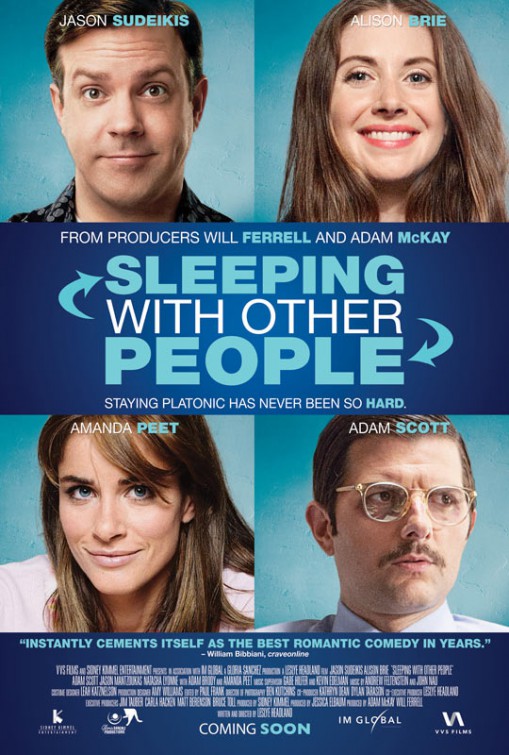
5. Sleeping With Other People (Netflix) - 2015, d. Leslye Headland
6. Admission (Shomi) - 2013, d . Paul Weitz
7. Elstree 1976 (Netflix) -2015, d. Jon Spira
8. Mascots (Netflix) - 2016, d, Christopher Guest
9. 10 Cloverfield Lane (Netflix) - 2016, d. Dan Trachtenburg
10. ARQ (Netflix) - 2016, d. Tony Elliott

aaaand...go

---


The Martian should have been something I saw in theatres, but it wasn't a big tentpole sci-fi, superhero or fantasy movie, and Ridley Scott isn't one of our "always see" directors.  Also, I've realized Matt Damon just isn't a draw for me.  I like him just fine, but he's never going to sell me on a movie on his own.  Sooo, it kind of languished, not for anything other than lack of time or access.  When we got the movie package last year for Game of Thrones, well, The Martian was there waiting.  And hey, it was good.  Entertaining, full of "Fuck Yeah, Science" moments (what was it?  "I'll science the shit out of this"? Eh, I don't recall).  It was a nice story of survival, but it was trying for a lighter, feel good tone, and a such there wasn't a terrible amount of drama.  I mean, we're not talking Castaway isolation (in terms of not having any other cast to cut away to), but for height of the stakes for ol' Matt Damon, there wasn't a lot of tension.  I think it may be a plausibility thing, the fact that we haven't actually landed anyone on Mars yet.  Sure, there's the potential, but we're just not at reality yet.  I liked it but it hasn't stuck with me.  And I couldn't help but think of this as related character to Matt Damon's role in Interstellar, and there's a lack of consistency between the two characters (both stranded on planets) that just bugged me.

(David has a great write-up from long ago...and also mentions the Interstellar thing)
[8:58]

---

The Hunt For The Wilderpeople  is now on Netflix, and it probably deserves a rewatch.  Any of Taika Waititi's directorial efforts do, in fact.  His first effort, Eagle vs Shark, was very much the Napoleon Dynamite of the New Zealand set, while the mocumentary What We Do In The Shadows has become an evergreen favourite because of its genre trappings.  Hunt For The Wilderpeople has a title that insinuates genre trappings, but is actually an exceptionally enjoyable, warm and funny (with a sombre undercurrent ) comedy about a young orphan boy, Ricky (Julian Dennison), in New Zealand who has behavioural problems, but is taken in by the sweetest, kindest-hearted woman anyway.  Her husband, a staunch, crotchety Hec (Sam Neill), doesn't really want much to do with the kid, and keeps to himself most of the time.  But the new surrogate mother figure suddenly passes away and Hec finds himself in a position he never wanted to be in, a mentor and father figure, and it a role he resoundingly rejects.  Faced with returning to state custody, realizing he's had his last chance at finding a home,  Ricky runs away.  Hec knows where he's going, and reluctantly sets out to bring him back.  In the trip on return, the two, as expected, bond, but in ways unexpected.  It's themes are well trod, but it's the way in which the story is told, Waititi's wry yet uproarious humour, and a very deliberate pacing and film style which make this one worth not just watching, but treasuring.  Waititi's next venture is Thor: Ragnarok for Marvel, which should be amazing.

[19:28]

---

I just wrote about Stranger Things, FINALLY,  and how spectacular it was, in large part due to its  1980's sensibilities.  Not just homage, or attempting retro trappings, but achieving a genuine sense of the era, a sense of belonging, of being of the '80's.  Jeff Nichols' Midnight Special strives for much of the same, and achieves to a certain extent.  There's the definite sensibilities of 80's genre dramas like John Carpenter's Starman or Spielberg's E.T., the type of movie that doesn't want to wow with special effects or any genre trappings, really, outside of one small conceit.  Here, it's a young boy who has a supernatural ability, an inner light that can manifest itself in both helpful and destructive ways.  The boy's father (Michael Shannon) has to extricate him from a cult-like religion and the pursuing governmental forces, both of whom have ill designs for the boy.  The chase is a fraught one, and seeing the lingering impact of the religious teachings on both the father and son is much of the meat of the story.  It's a sombre road movie, with Shannon's expert brooding carrying the bulk of the film on his shoulders.  I'm still not certain the retro 80's aesthetic (despite being modern day) helps the story much.  It's a pastiche for sure but using it would imply that it was more exciting or fun.  It has a pretty distinct ending, one which a viewer could go either way on (it could be too much, or make the viewer wish there were more of it).  It's a sad film, overall, but worth the journey.

(David watched it too and remembered far more details than I did)
[30:31]

---
I like the composition of the arrows but
there's just too much white space here.
I think the fact that the top and bottom
arrows are longer than the left and right
arrows is also part of the problem


The 2008/2009 housing crisis was a real shit show, and it had been brewing for years, due to a lack of regulatory oversight or industry foresight.  It was also the product of immense greed, the brainchild of the richest of assholes trying to get more money for the rest of the richest of assholes.  The fact of the matter is, the stock market is lost on the layperson for the most part, which allows the people that work in the industry, and the government agencies that oversee it, to do whatever the fuck they want to manipulate it to keep the money flowing in from ignorant investors and circulating among themselves.  The Big Short is a big-name cast movie (Christian Bale, Ryan Gosling, Steve Carrell, among many many others) that dives into what actually happened, and expresses it in a way that may still be a little too inside baseball for some, but with enough entertainment value that you'll get the gist if not the specifics.  Frequent Will Ferrell collaborator Adam McKay does an impressive job with this dense and dry topic, presenting it in such a way that you get angry but are still engaged with the story and the characters.  At the time, it was a fairly important movie, but important movies usually only get seen by people who already know the topic.  I don't think the Big Short reached enough of the laypeople audience to really measure an impact. People just knew they got screwed, and for a lot of them it was such a sore subject they just didn't want to know how.  They would rather be distracted.

[39:13]

---
Man, it is really hard to sell a comedy, even
a romcom with a poster.


The main flaw with Sleeping With Other People is the inference that ex-SNL star Jason Sudekis and then-Community/Mad Men star Alison Brie were the same age, the story involving the fact that they first hooked up in college.  There's a very noticeable 7-year-gap between the two of them.  Sudekis has looked to be pushing 40 for over a decade while Brie was playing a teenager when Community started.  Even with a real-world 7-year-gap, it's still hard to reconcile how they could have met in college.  The movie pays it no mind, and carries on, and delivers an enjoyable, yet unassuming, and ultimately unmemorable romantic comedy.  But I just couldn't get past it.

The comedy is light, though the cast is talented, including Amanda Peet, Adam Scott in full dickbag mode, Jason Mantzoukas playing against type as a nice guy best friend, sharing a delightful relationship with Andrea Savage.  It's a solid watch but no real standout comedy bits, and neither the characters nor plot will stick with you.

[47:14]

---
Like, I mean, really hard to sell comedy
with a poster.

Another romantic comedy, Admission, is equally as unmemorable.  Paul Rudd and Tina Fey are a great comedic pairing, both immensely likeable alone and together, but something about this film just doesn't click.  The conceit of the film is a light expose of the rather political and jaded admissions process for elite universities.  Not only do they rigorously screen their applicants but they also scout for applicants, looking for the best and brightest, which may seem noble, except when you understand that it's all done for the prestige, to maintain the reputation, to keep the elite status, all of which keeps alumni and donor money coming in, as well as allowing the school to charge more for tuition.  Fey plays the head of admissions at one such prestigious school, but when an applicant coming from a troubled alternative school run by Paul Rudd shakes up her worldview, (plus a romantic connection with Rudd) will her staunch adherence to customs and rules override her conscience as it always has.  You know it won't.  Rudd's far too charming, and his whip-smart kid who takes such a shining to Fey couldn't help but sway her.  It's a sweet film, and the usual charismatic schtick from Rudd goes a long, long way in watchability, but it's so by the number that it's almost painful.  You've seen this type of story a dozen times, if not dozens upon dozens of times.  Depending on your preference for romcom, it may be comfortably familiar, or it may be monotonous.  If you're not into romcom, take a hard pass, this isn't the place to start.

[57:01]

---

I probably shouldn't have even bothered watching Elstree 1976, a documentary featuring a few of the peripheral faces (or masked faces) from the original Star Wars series.  I'm not sure that the film does much in the way of enhancing the Star Wars experience, beyond going into the minutiae of how the film's success has affected a handful of the lesser-known performers.  The journey it takes is from the modest, British backgrounds of the actors, and onto the stage of Elstree studios.  Their seemingly well-honed stories at this point tell of their feelings about the film before they knew what it would become, which honestly could be just as much fabrication for "good" storytelling as actual recollection.  The Star Wars nerd in me was hoping for some unseen goodies, some trinkets of Star Wars that only the people on the inside would have had, some insight into things that could have been but weren't...but this isn't the doc for that.  It's not even really a "making of" which the title would almost imply, but rather the journey of the people involved.  There's a large portion of the film spent on fandom, how these performers capitalized upon it, and the politics of being a convention attraction.  It gets rather petty, and silly, and would make a pretty funny series, actually (note to self... how do I watch Con Man: The Series).  The people all seem nice, but this doc is inessential at best for all but the diest of die hard Star Wars nerds.

[1:07:38]

---

Speaking of conventions, Mascots takes us into a behind the scenes look at the people who participate in an international mascot competition.  [Okay, yeah, a competition is not a convention.  It was a shitty transition and I'm sorry.]  This mocumentary comes to us from Christopher Guest, because it obviously comes from Christopher Guest.  In fact it too obviously comes from Christopher Guest.  In fact it's almost a knock-off, for so middling are the results that there's not much about this film that doesn't immediately make the viewer wish they were watching Best in Show instead.  It's loosely the same story/plot, only with a somewhat different cast of absurd characters.  Really, had all of guests movies just been that same variation of formula, this would just be another in a tired line at this point, instead it's a disappointment that Guest would return to the same well.  What Best in Show had going for it was the plausibility.  There may be mascot competitions out there, but where best in show was sending up the people an personalities behind an analog Westminster Dog Show, a fairly well known event facilitated in Madison Square Garden in New York, Mascots isn't replicating anything familiar to the audience.  As such the competition that is being put on feels absurd and unbelievable.  Maybe I will see a mascot competition someday and marvel at how absurd and unbelievable it really is, and maybe I'll cut Mascots a little slack for it, but until then it just feels overboard, too broad.  It really wouldn't matter if the film were funny, and it is in fits and starts, but it just never clicks.  It feels rushed, the characters don't feel as fleshed out, and it's hard to care too much or invest in any particular person's chance at winning.  I would have preferred a mockumentary about furries to this, to be honest, but that seems to ribald for Guest these days.

[1:18:17]

---
erm, spoiler alert?

I have to wonder why the tenuous "Cloverfield" connection.  Overtly I realize that "Cloverfield" is now a brand for the studio, and one that's making them some nice coin, but in-world, in-story there is literally no crossover, so why?  I would actually like a for-real sequel to Cloverfield, one which does not use hand-held camcorders and so much nauseating shakey-cam to see the monsters mash NYC, but that's not this film.

No, 10 Cloverfield Lane is instead a smart, taut thriller that has you guessing through to the third act.  The fantastic Mary Elizabeth Winstead is Michelle, run off the road and awakens to some serious injuries inside a bunker.  Her captor is an equally fantastic John Goodman as Howard, who claims to have rescued her. Something bad has happened outside and they can.not.go.out.there. lest the bad things come find them. There's a third party in the bunker, the defiant Emmett (John Gallagher Jr.), who confirms Howard's story, to a point.  Howard is gracious to his "guests" so long as they obey the rules.  The bunker is homey with a 1970's vibe, and everyone gets along, until they don't.  Howard is explosive when he feels challenged, or violated, and Goodman as ever uses his stature and presence to scary effect.  Invariably all is not as it seems, or is it?  The question of Howard's honesty ebbs and flows, and even Emmett is a constant unknown.  Are they good men?  What's really going on?  Things erupt in the third act and where the film could have gotten really mean and not provided answers it instead opts for a big budget Twilight Zone-reveal that is equally out of place yet thrilling pay-off (but still no connection to Cloverfield).  This one's rock solid.

(Here's David's take)
[1:30:35]

---
He really doesn't wear the gas mask that much
in the film to frame the poster around it

I could have made 10 Cloverfield Lane #10, but I chose not to, just to drive some people mad.  If you're driven mad by the fact that 10 Cloverfield Lane is not #10 for no real reason, then mission accomplished.

Arq is a fine little time travel thriller, which has the feeling of a small-scale Edge of Tomorrow [aka Live.Die.Repeat] or an English Time Crimes, or a bigger budget, more mainstream Primer or a non romcom Groundhog's Day.  In other words, it's in good company, carving out its own place in the living-things-over-again market.  As with some of those other films there's no real scientific rationality to why someone is living their life over and over again, but the fun is not in the reality of the situation, but the rules that the plot establishes.  If there's an apparent defined set of rules to how the time reset works, then it's all good, the audience can invest.  I love these stories, as they explore one event from a whole bunch of alternate possibilities.  It's tremendous fun, but Arq actually builds a story, a purpose to it, and even, in the background, a whole other world (which we don't ever really see or interact with).  It's quite great though, real pulp sci-fi with a winning couple of leads in Rachel Taylor and Robbie Amell. It teases bigger things I certainly would like to see and know more about and explore, but it's plenty satisfying on its own.

(read David's take)
[1:42:06]

-FIN-

Monday, April 4, 2016

I Saw This!! - Here There Be Monsters

I Saw This (double exclamation point) is our all-too regular feature wherein Graig or David attempt to write about a bunch of movies they watched some time ago and meant to write about but just never got around to doing so.  These are some monster films Graig watched recently.

Monster Squad - 1987, Fred Dekker - Shomi
Monster House - 2006, Gil Kenan - Shomi
What We Do In The Shadows - 2015, Taika Waititi & Jemaine Clement - DVD

---

I don't know what was going on with my adolescence, but there was a whole lot of films in the 1980s that my peers consider seminal that I've never seen.  Well, perhaps Monster Squad isn't as classic as, say, Watership Down, but its still one of those pictures that should have fit in with the Gremlins, Goonies, Explorers, E.T. -type films about kids getting into trouble that I didn't wind up seeing.  I never saw any horror movies as a youth, so perhaps my parents thought a film called "Monster Squad" would be too scary or gory or something?

What makes Monster Squad worthwhile is twofold: firstly, it brings together all of the classic Universal horror monster icons (Frankenstein, the Mummy, Dracula, the Creature from the Black Lagoon, and Wolfman, though they were variations on the Universal versions since Universal didn't make the picture) and makes a fairly competent pre-teen friendly mystery/spookfest/adventure.  The second is the script co-written by Dekker and Shane Black.  Black, if you don't know, was the writer of Lethal Weapon (1 & 2), Iron Man 3 and Kiss Kiss, Bang Bang.  Following the release of the latter film, despite having over 20 years in the industry, he suddenly found himself a critical darling.  Thanks the internet.

Black is now well known for his dialogue, snappy banter and monologues alike.  He's got a penchant for clever action/violence and a keen wit.  He's like a straightforward Tarantino, with noir seeming to be his preferred genre.  He put that to good use within Dekker's script.  Where the film has aged somewhat in the visual effects and the general aesthetic, the script is still punchy, the kids all delivering these meaty lines like pros.

It's a genre of film that doesn't really exist today, the pre-teen horror/adventure film.  Back in the 1980's the perception was that adults wouldn't go see animated movies en masse, so they would make these high-adventure kids movies to capture the audience.  Goosebumps is the only one in recent memory and even that starred late-teens at best.  These were films where grade school kids were getting into all sorts of trouble.  These days, the CGI animation stuidos have that all-ages market on lock, and these kinds of films, where they're meant to appeal directly to the younger crowd but also be enjoyable for the parents (and Monster Squad still does both) don't get made anymore.


Monster House is one of those CGI films, but it's also an homage to those pre-teen horror/adventure films.  The story kicks off when the young protagonist, DJ, crosses the street to retrieve a basketball from the lawn of the the crotchety old man across the street.  The old man (perfectly voiced by Steve Buscemi) seemingly lies in wait to rush out and frighten anyone off his property but this time has a heart attack (though we don't find out he's still alive until late in the film, so it's a rather distressing opening moment) and keels over.  Without the old man's presence, DJ begins to notice strange things going on with the house.  It seems to be...alive.

Monster House was the lead of the second generation of CGI animated movies, where it delivered something unexpected and on par with Pixar, such that it didn't coddle its audience or play to the lowest common denominator.  It was notable as one of the first 3-D movies released in cinema, and even more notable since its script was co-written by Community and Rick and Morty creator Dan Harmon.

What's most interesting about Monster House is it's wholly not a comedy.  It's a horror movie for kids.  It's genuinely intense and frightening, but the severity of the threat is just at a much smaller scale.  That said, it was too much for my six-year-old, which, fair enough.


What is a comedy, full-on, while also being horror is the [expletive] delightful New Zealand film, What We Do In The Shadows.  I was on board with this film before it even started, being a huge fan of co-writer/co-director/co-star Jemaine Clement in Flight Of The Conchords (a musical comedy duo/HBO show) and also having enjoyed his past effort with co-writer/co-director Taika Waititi, Eagle vs Shark.

Where that latter film was a quiet outcast comedy, like a Napoleon Dynamite done New Zealand-style, this film is moves much faster as an ensemble mocumentary, a spiritual successor to Spinal Tap or the films of Christopher Guest, where the comedy is much more rampant, but it's equally charming with its distinctive Kiwi flavour.

The subject of the mocumentary is the hidden subcommunity of vampires in Wellington, in particular a small group of single men of different ages and backgrounds living together under one roof.  It examines how they live amongst the normals, and how they live with each other, their troubles with keeping a low profile while satisfying their urges, their "familiars", their friends, their gatherings, and their conflicts.  Early on it seems like the mocumentary angle might only support a short film, the introduction of a newly turned vampire to the group (and his still human best friend whom they all like more) adds a wildly entertaining narrative thrust as they adjust to his presence.

There are shockingly tense moments in this film as moments of comedy suddenly turn to the camera crew becoming genuinely frightened for their life.  It's part of its brilliance, it's ability to not abandon the genre its characters normally inhabit, while still making one of the funniest films of the decade.

What I enjoyed most was the level of detail provided to the back story of the characters.  All the aged photos and trinkets they've collected over their long lifespans (there's probably a nice art book ready to be made in there somewhere), as well as the way their personal style still reflects the era they were turned in.  They've not just thrown together a comedy but they've built characters and a cohesive reality for them to exist in, no matter how absurd it may seem at times.

Thursday, August 6, 2015

3 Short Paragraphs: Lake Mungo

2008, Joel Anderson -- download

This is a 'shocking reveal' kind of movie so I cannot talk about it without being spoilerish.

A mockumentary, billed as a ghost story, is how the marketing of Lake Mungo worked. But really, the movie is more about the onion skins of a family's life, as the death of a daughter from accidental drowning during a family vacation, reveals much more than they ever care to know. Its not just a simple ghost story, told through interviews and video camera footage. But it's also not a very scary one.

The slow reveal is decently done. We learn of the effect the daughter's death has on the family and their neighbourhood. The son acts out, making fake videos of his ghostly sister, because the mother feels there is a presence here. The dad distances himself. The mother cannot let go. Friends and neighbours mourn with them. After the ghost videos are proven to be fake, the family discovers something else in the footage leading to a horrible secret kept by the late daughter. And from there, we just keep on getting reveal after reveal, until we are back to... a haunting.

I don't watch a lot of documentaries, and the mockumentary style of this movie typified the ones I dislike. So much of it had me wondering, "what the fuck is wrong with this family?" The way they handle their daughter's death is so fraught with confusion and self-centeredness, I could not help feel it was a little too real for a ghost story. Or maybe it was just self indulgence on the film maker's part?  As for the scary, I benefited a bit from not knowing a thing about the movie, as Marmy discovered it via the collective opinion of the Internet. I had no clue where it was going to go. There were some possibilities of fear, but really only if you are one of those people who get a fright from the fake ghost hunting shows of cable channels past. I just found it long, and drawn out and ... boring.

Friday, May 11, 2012

3 Short Paragraphs: Chronicle

2012, Josh Trank -- download

Shaky cam movies lend themselves to my lesser attention span of late. In my transition from "see every movie in the cinemas" over the past 10 years to "rent many DVDs" to "download just about every movie I watch", I have noticed a lessening of the thorough immersion I once enjoyed.  Gone are the days where the lights were turned out, the phone was muted and we just ... watched.  Now, laptops are in laps, kittens are bounding and ... well, usually chores are being performed.  I rarely watch a movie completely through without a half dozen pauses.  That extracts me enough from the experience that these "reviews" can be sometimes difficult as I am not as invested.  It takes a lot for me to become so.  And then there are movies where it just doesn't matter. Shaky, faux documentary flicks, like Chronicle, have an element of mundanity attached to them, in order to impart a sense of "this is real cam work" normally by an amateur.  No editing, no cutting room floor.  So little things are left in that do not contribute so much to the world and the story, as much as they do add to the technique.  Thus, last night, pauses and kittens.

Chronicle is just that, a chronicle of a damaged kid's life through the eyes of a couple of different video cameras.  It's not "found footage" as there were a number of different cams used, including what could have only come from cell cams, dashboard cams and a few news choppers. And then there were a few scenes where he must of just said, fuck it, pretend there would be a camera there for whatever reason. But for the most part we get a story told via the floating eye of a digital camera.  P.S. This also lends itself to being pirated from the Interwebs, as you cannot really tell if you got a crappy copy or this was intended. The technique is effective as it leaves gaps where you would expect and provides a sense of reality in a story that is very superhero or anime in its plot.  Other than the magic cams, cameras where none would have been, I was OK with the indulgence.

The story is pretty much an origin story of kids getting super powers. No investigation of background, no research as to why it focuses entirely on how it affects the highschoolers.  And the newfound power doesn't really do right by them, which is not helped at all by the fact they are all dicks -- perhaps better to say they do not do right by it?  These kids are the epitome of today's internet generation, the self-absorbed arrogant commenters on YouTube, the kind that don't consider the consequences of their actions and, as previously mentioned, the kids just plain damaged by their lives. And as Spiderman says, "with great power comes great responsibility", responsibility they all toss to the wind, the wind rushing by their faces as they fly, fly like Superman.  But I would hazard that is the point that Landis (screenwriter/story) had -- not everyone given superpowers would go one way or the other, super hero or villain.  Most would just play with them irresponsibility.  And if one happened to be weaker than most, one might just go all Akira on the world.  Even the kid who begins to see where they are being led only has a tenuous connection to the responsibility, more interested in the image of being responsible, sort of like the whole Kony / Invisible Children thingy.

Tuesday, October 25, 2011

31 Days of Horror: Grave Encounters

2011, The Vicious Brothers -- download

I have said this many times (not here but in earshot of everybody I know) but I cannot stand these ghost hunting shows all over the reality TV stations. The idea that anything being produced, as reality, on TV is laughable to me. How the hell would someone produce a show that has a distinct chance of being completely boring? Thus I believe them to be nothing but fabricated and edited and produced within an inch of their existence.  Thusly, I have always had a fantasy of a movie where the ghost busters do one of these shows and actually encounter the violent, dangerous ghosts we see in all the movies.  And the ghosts kill them.  Yeah, not a nice fantasy.

Grave Encounters is that movie.  It's based on the found footage idea (Blair Witch Project, Troll Hunter) but does not state exactly where the footage was found. It's about a typical cast & crew of a ghost hunting show who are doing their 6th episode.  We are seeing all the footage that was taped, slightly edited for continuity and brevity.  The sources are the main camera man's work, a handy cam and a number of stationary cameras placed during the production.  Everything takes place in the typical abandoned closed-down asylum with the terrible reputation. Our crew is locked in over night to experience and record what haunts this place.

As expected things start out with a few jumps and scares and unexplained events. We see the combination of "to the audience" footage as well as the stuff that would normally be edited or cut, such as the reveal that their psychic is just an actor.  But as things escalated the movie took a fascinating turn -- the power of the asylum is not just with it's haunting but it's ability to change reality. No longer were they stuck inside this scary place till 6am rolled around; the group became trapped in an endless night where exit doors led to looped hallways, stairs ascended to concrete walls and basement tunnels went on for days. As things got less and less explainable and they began to encounter the more and more terrifying, I found myself wrapped up in their fear, as it was evident at all times. Even the lulls were full of that sick stomach feeling of not knowing what is next.  I cannot say I went as far as feeling scared myself but I definitely could feel the fear they were experiencing.

One by one the ghost hunters disappeared or were killed off by the entities and the asylum itself. When we finally end up with one remaining cast member, the host, with his dwindling battery life and all but gone food & water he is beyond fear having... cracked.  He is lost in the asylum's madness, which I guess that is what the asylum wanted all along. I was left wondering, what exactly did the caretaker find when he opened the doors that morning? And what did the producers think when they found literally days worth of footage to watch through.

Thursday, May 5, 2011

DOWNLOAD: Troll Hunter


Norway, 2010. Supposedly in US & Canada cinemas this summer.

In Dungeons & Dragons, the Troll has always been a skinny creature with green bumpy skin and a grassy knoll as a head – think the green hag Meg in Tom Cruise’s Legend. But in fairy tales they are normally large, lumbering creatures with big warty noses, baritone voices and a fondness for sitting under bridges eating billy goats or passersby who will not pay a toll. They have a strong allergy to sunlight. They are often inter-changeable with giants. They all emerge from Nordic and Scandinavian legends but have spread to most of Europe. In Norway the creatures have been cutified, essentially turned into cuddly little hairy creatures akin to garden gnomes. I won’t bring up the multi-colored troll doll of collecting infamy.

I prefer the large, lumpy sun-to-stone version of a troll. He’s scary, hates Christians and will probably eat you even if you pay the toll. And in the movie Troll Hunter, a Norwegian mockumentary out this year, they are even scarier. It’s your familiar found-footage film (wee alliteration!) about a documentary crew who uncover something they shouldn’t and we get to follow along to the inevitable outcome.

Our local university film crew wants to make a small controversial documentary on bear poaching in rural Norway. They have been told by a contact about a potential poacher and follow him, seeking a put-on-the-spot interview. He just tells them to go away. Of course, they follow him and end up meeting his real prey – the not so legendary trolls of Norway. It seems the government has an agency that keeps an eye on the various races of trolls, watching them for out of character behavior and even killing them if they become dangerous to the people of the countryside. Frustrated with some of the agency’s actions when dealing with some naughty monsters, the troll hunter invites the documentary crew along with him. And the footage they get !! But alas, for the footage to be found, things have to go wrong.

The plot is thin but the thing here is that we want to see great CGI trolls. And of course, a detail guy like me wants to hear the background behind the agencies and the particulars of the trolls. There are forest trolls and mountain trolls, some with multiple vestigial heads and some that live in caves. And then there are some that bring whole new meaning to the word giant.

What disappointed me was that the names given to the races of trolls were probably made up for the movie, as I can find no evidence of the names Raglefant, Tussealadd, Rimtusse or Dovregubben in any folk-lore sites. But it could just be the English translation.

The movie was satisfying enough to be enjoyable but like all mockumentaries it has its hands tied in the chosen format. There is limited characterization and one character has to be essentially invisible. The deus ex machine they use to fix the format, when things go terribly wrong for the crew, is laughable. In the end up I just wanted to see more Trolls on camera, to be given slow detailed plodding footage like you might get on animal planet. They didn’t need a subplot of a corrupt government agency & the disillusioned hunter but it was the vehicle to get the hunter and crew together. I would have been satisfied if the hunter dragged along the crew just because he wanted someone to see how good he was at what he did. And we could have wandered along with everyone to see how fascinating a 400’ monster can be.