Sunday, July 16, 2017

Twin Peaks: The Return (Season 3, the first half)

(2017, d. David Lynch)

We're in the "new Golden Age of Television", also known as "Peak TV", due to both the immense amount of programming being released each year across a great number of channels, as well as the unbelievably high quality of a great many of those programs. But "Peak TV" wouldn't feel so peak if we didn't get an 18-hour movie (broken out in 1 hour increments) from David Lynch.  I mean, if that never happened, I'm not sure that we'd actually have missed it, but now that it's happening, I can't see this new "Golden Age" existing without it.

Lynch is a force unto his own, an absolutely unique talent that attracts and repulses in equal measure.  His impulses are to stare into the darkness, to confront the grotesque, yet unlike a schlockmeister he does so not with reverence, but with curiosity.  Repulsed, but nonetheless, fascinated.  "Lynchian" is a term used by cinephiles to describe others movies, usually to represent a film that revels in inexplicable weirdness and absurdity.  This stems from as far back as his art-house debut, Eraserhead, which is in equal measure mesmerising and impenetrable and repulsive.  But to solely tie Lynch to his more outre efforts is to miss the storytelling deftness he is more than capable of, such as with The Elephant Man or The Straight Story.  He may prefer atypical storytelling structures, but he's not abject to telling a straightforward story.

Paired with Mark Frost, Lynch's sizeable fan base today is primarily a result of the 1991 phenomenon Twin Peaks.  "Who Killed Laura Palmer?" was a question people decidedly wanted an answer to, and they embraced the inexplicable weirdness of David Lynch amidst the nighttime soap operatic in order to get it.  By the time the mystery was resolved however, in the middle of the show's second season, Lynch had parted ways with the series, and the show floundered without his creative guidance, promptly being cancelled despite an absolutely arresting cliffhanger ending. The steadfast, unflappable, heroic Dale Cooper was possessed by the menacing dark force, Bob.

The show was given a follow up feature film, the relentlessly dark prequel Fire Walk With Me from Lynch, that shared very little of what fans liked about the show.  A story of youth spun out of control, telling the back story of Laura Palmer, as she became a slave to darker impulses that were both internal and external in nature.  There wasn't room for the whimsy or curious weirdness of the TV show, Fire Walk With Me  had its own purpose and story to tell.  We would never know how Coop would drive Bob free.

25 years later, we have an answer though.  Lynch and Frost back together, and Lynch at the helm for the entirety of the return, to learn that Coop has been trapped in the Black Lodge all this time, while his Bob-infested doppelganger has been spreading his evil across the States unchecked all this time.

The concept of an 18-hour movie is fully at play in the return.  While Lynch/Frost could have just focussed solely on Cooper's attempts to escape the Lodge, to fight his evil twin, to learn the secrets of the strangeness infecting this world, they don't, not in any simplistic straightforward fashion. Full of absurd asides, obfuscated conversations, telling looks with no outright meaning, painstakingly long takes of seemingly meaningless moment, this is at once Twin Peaks as we knew it, and yet nothing like it... simultaneously the most Lynchian of all Lynch productions and yet so often unlike anything he's done before.

It's easy to forget, among all the strangeness of Mulhollad Drive, The Lost Highway and Inland Empire, that Lynch has an immense fascination with television.  Mulholland Drive  started as a pilot for a TV show that was never produced.  Inland Empire is a surreal meditation on television's influence, and the Lynch/Frost duo went on to make the short-lived quasi-variety-show On The Air.  There is a peculiar fascination with the way television and TV storytelling works, in all its formats.  Twin Peaks:The Return is an 18-hour movie in a TV format, embracing aspects of both worlds like few others have (Louie CK's Louie is the closest example I can think of right now).

Within The Return you will find Lynch and Frost playing with everything from murder mystery, to slapstick situation comedy, to soap opera melodrama, to horror, to metaphysical discovery, to spoken word, to experimental art house, to silent film, to satire, to absurdity, to rock concert documentary and on and on.  Lynch is unchained, restricted probably only by budget (of which he's rarely needed a large one).  He weaves between genres and film styles with purpose, eliciting from his vast cast (attempting to rival the sprawling Game of Thrones in sheer volume of characters) some, at times, wonderful performances, and othertimes, most bizarre ones.  Some sequences play out like stilted public theatre, as if intentionally, while others are startlingly affecting, lingering in their power.  There's purpose to it.  Dodging between high quality and low quality acting, from tautly written scenes to meandering ones, disarms the viewer from having any expectations as to what's "normal" for this show.  Wavering quality means that the audience will come to forgive some janky special effects.  Even wild tonal shifts that lead from shocking horror to big laughs and back again mean that unintentional laughs at weird line readings or silly floating head images are just as earned as well-crafted comedy.

I can barely go into specifics about what's happening in this show, but needless to say Lynch seems to be having a blast.  He's throwing everything at the canvas, and nobody's telling him not to.  He doesn't care what sticks, because in his art the stuff that falls to the floor is just as important as what winds up in frame. Every episode, save for the first and eighth, ends with a live band a the Bang Bang Bar playing over the credits (the first has no band at all while the eighth episode has the Nine Inch Nails playing mid-episode) with no actual story purpose, just Lynch uncaged to do what he wishes.  What's most amazing about watching the first 9 episodes, in a concentrated sitting or two, is how carefully calculated the show actually is.  What seems absurd and random in one episode will reveal its meaning later on.  Even then you're never entitrely certain if you're getting the intended meaning or not.  Through his unusual storytelling style -- which will see threads drop for episodes at a time, only to crop up momentarily, then disappear again -- Lynch somehow manages to tell a cohesive, if overly complex tale, though still I'm unsure where it's heading and how all the threads will tie.

As much as The Return could have attempted to replicate past success, it's decidedly forging its own past.  Yet, Lynch and Frost haven't forgotten the past one iota.  Wherever possible they've found room for former cast, sometimes with pivotal roles, sometimes with slight asides.  Key players have yet to pop up, and some who wouldn't return are handled offscreen (Michael Ontkean's Sheriff Harry Truman is battling cancer offscreen, paying respect to the character and the wishes of a retired Ontkean, where Robert Forster as brother Sheriff Frank Truman talks to him on the phone without any cut-to scenes).  Even during filming or shortly thereafter, the show lost some cast, including Log Lady Catherine Coulson, Miguel Ferrer and Warren Frost.  David Bowie intended to return to reprise Agent Jeffries (from Fire Walk With Me) but passed before shooting began... his character is reverentially name checked.  The Return respects its past and reveres its mythology as much as the fans do.  There is indeed a nostalgia trip, not just for the old show its reviving, but for Lynch's relationships with actors.  He's brought in favourites from past works, like Laura Dern (in a key role) Harry Dean Stanton, and Balthazar Getty, while also heeding the call of fans across Hollywood to put them in the show. But more than anything Lynch serves his muse, Kyle MacLachlan, giving him at least four roles to play (so far), in Dale Cooper and his nefarious doppleganger, and the dual personas of Dougie Jones.  Escaping from the Black Lodge into Dougie leaves Cooper almost an invalid, unaware of pretty much anything, a childlike alien learning every aspect of humanity on the go, unaware of all the forces conspiring against him.

Not just reliving the past, it builds upon it to tell a new, unique story that feels both a natural extension and kind of its own thing.  It's not the most accessible show, but then it never was.  Lynch is rarely an accessible director, and yet here he's striving for intriguing amidst all his tone shifts and genre flourishes.  People will know pretty quickly whether they're in or out before the first episode finishes, but for those that are in, there is a plethora of reward... just try to pay attention.

Having caught up to the airing schedule in quick order, I would say that watching like a movie (binge-watching, in other words) is the way to go.  It allows you to pick up on the nuances and connective threads that you might miss over week long spans between episodes, and it balances the long methodical sequences that don't have an obvious point with more revealing moments.  Having reached the mid-way point in two days, I think I'm going to resist picking it up week to week and binge the back nine as another.  If I had to say though, I think episode 8 (which spends the bulk of its runtime in a mesmerizing silent art film exploring the anatomy of an atomic explosion resulting in the manifestation of the dark forces into "our" reality before giving way to  a Fritz Lang-style gothic-inspired silent film, ultimately lurching into a 1950's-era monster/invasion horror) is the natural stopping point, and a high point of the series.  It provides answers I honestly never thought we would get, and yet, doesn't truly explain very much, leaving the audience to interpret the imagery their own way.

The Return is truly unlike anything that's ever been on TV, but it embraces the format while pushing it to its very extreme. 

10 for 10: Kidstuffs, tufts for kids

10 for 10... that's 10 movies which we give ourselves 10 minutes apiece to write about.  Part of our problem is we don't often have the spare hour or two to give to writing a big long review for every movie or TV show we watch.  How about a 10-minute non-review full of scattershot thoughts? Surely that's doable? (Edit... maybe not so much, I started writing this at the end of March, got to A Series of Unfortunate Events and couldn't contain myself, and finished that extensive section in April.  I'm only now, in July, getting around to adding pictures and publishing),

This time, some programming and movies intended for younger audiences:
Big Hero 6 (blu-ray) 2014, d. Don Hall, Chris Williams
Zootopia (VOD) 2016, d. Byron Howard, Rich Moore
Babe (DVD) 1995, d. Chris Noonan
My Neighbor Totoro (Netflix) 1988, d. Hayao Miyazaki
Babe: Pig in the City (DVD) 1998, d. George Miller
JLA: Trapped In Time (Netflix) 2014, d. Giancarlo Volpe
Jumanji (TV) 1995, d. Joe Johnston
Jungle Book (Netflix) 2016, d. Jon Favreau
The Lego Batman Movie (in theatre) 2017, d. Chris McKay
A Series of Unfortunate Events (Netflix, 8 episodes) 2017, d. Barry Sonnenfeld, Mark Palansky and Bo Welch

aaand....go
---
In live action, Baymax in this poster would
be portrayed by Jack Black
Oh man, I don't remember much about Big Hero 6 at this point.  Mainly disappointment.  After missing it in the theatre and then waiting well over a year for the price to go down to buy it on disc (the price never did go down in stores, it was joining the Disney Movie Club that got it to me for free) once I finally got to see it, it didn't live up to expectations.  Not only that, my kid got kind of bored while watching it.

Science, yeah!  That's what I remember.  It's about science.  And of course, orphans.  Two genius-level boys, living with their aunt...or grandma... I don't recall.  And then to make their life so much worse, one of them dies.  The other finds a surrogate brother in Baymax, an inflatable helper medical droid, who he weaponizes because superheroes and stuff, and additional family in his brother's friends at science school. Based of a very unknown Marvel comic this movie has some inspired bits, particularly the San Frantokyo city and its mash-up of American and Japanese cultures.  But the dead brother thing weighs so heavy, it doesn't feel like much fun.

Honestly, I don't even really remember the full story to this.  I don't remember the bad guy.  That's not good.  It's not a tremendously memorable film, and after watching it I had little desire to revisit it any time soon.  Even now, with memory of it fading, I have little desire to refresh myself.

(8:22)

---

Like Big Hero 6, this is another not-Pixar but basically Pixar (now that John Lasseter runs everything Disney Animated) feature from Disney that, hey, just won an Oscar.  Hey, I actually saw an Oscar contender from last year.  Yay me.

There's a stand-out gag in Zootopia, one that took it from "enh, whatever" to "must see".  I don't remember which film it was I was going to see but prior to the film they played the entirety of Nick and Judy's visit to the DMV and their interactions with Flash, the sloth.  This is an instant classic comedy bit, one that will forever lift Zootopia up high in the ranks of incredible children's entertainment.  Even the Oscar couldn't really do that.

The movie has a moral, basically being don't let anyone tell you what you can or can't be in life. If your will is strong and your desire is there you can be anything you want.  It's an inspiring message, not wholly correct, but definitely inspiring.  Kids movies can be a bit simplified like that.

This movie has a mystery to it, as well as a conspiracy.  It's not quite as good as Rango (which was basically an animated version of Chinatown) was about treating the conspiracy with real weight and consequences for the people of Zootopia, but it's simplified version is also effective.

The best part of Zootopia is its introduction to the city itself.  The ride Judy takes into town that traverses it's unrivaled biodiversity is astounding.  I could get lost taking in those details.  Sadly the film doesn't explore the city's fantastical setting with any real awe or wonder.  It's just the environment the story is told in, which is kind of disappointing in an otherwise enjoyable film.

(20:01)

---

I've had zero desire to see Babe from day one.  From the first commercial I saw about the precious talking pig and the precocious farm animals he comes to live with and the singing mice, the whole cloying affair just screamed for me to stay away.

So why, over 20 years later, would I buy the damn movie?
Mad Max: Fury Road.  That's why.
Director George Miller's modern masterpiece (and potential dethroner of Die Hard as #1 action movie of all-time) made me curious about Miller's rather scant list of other directorial efforts.  Plus, someone once mentioned how Babe: Pig in the City was their favourite movie ever (I'm thinking it was Comedy Bang Bang's Scott Aukerman...sounds like something he'd say).

Upon watching it, it's still a pretty cloying movie, at times utterly precious, and yet, it's not unpalatable.  It's got its charm for sure.  It's certainly a much different piece of entertainment.  It's slow, and erratic.  It plays out in chapters that are largely compartmentalized and don't necessarily combine to form a whole, meaningful story.  And those singing mice are the friggin' Minions of their day.  Small doses, man, small doses.

It's a bit of a wonder on its own, though, wrangling all these animals into on screen performances with limited CGI technology at the time.  I'd be much more fascinated by a behind-the-scenes documentary than the film itself.  Plus, it's just now I realize that George Miller only directed the follow-up, and not this one.  Moops.

(29:57)

---

Totoro is one of those pop-culture figures I didn't understand because I had no frame of reference for.  A gigantic cat like thing from a Japanese cartoon?  I mean, I knew of Totoro as early as 20 or 25 years ago, and yet I never got around to seeing the film which launched him as an icon, the inspiration for a bazillion stuffed animals of all different sizes around the world.

My Neighbour Totoro is considered a classic, for good reason.  It's sweet, charming, and innocent.  It has a host of moments where it puts its young characters in harms' way, including a particularly harrowing moment where their father fears them missing.  It's dangers are kind of naive threats and existential fears rather than big scary villains.

There's gentle fantasy throughout, so gentle it's almost as if it doesn't exist at all.  One kind of wonders if they're the delusions of children or honest spiritual phenomena (at least in the context of the film).  It's a product of a different time of filmmaking so the pacing is quite deliberate, and curiously it underuses its titular character to a shocking degree.  Totoro is barely in the film at all.  But when he is there, he makes an impact.  It's like the xenomorph in Alien but in reverse.  He bring calm and peace instead of fear and anxiety.

(39:26)

Now this is what I was after.  Babe: Pig in the City, by George Miller, is an utterly insane movie.  Utterly insane.  I don't even know how to describe it beyond saying it's insane.  Because it is.  It's insane.

Miller constructed an crazily elaborate studio set for Babe and the other animals to inhabit as the titular city.  It's like Gotham from Tim Burton's Batman, but fully animal accessible.  The plot finds Babe and his owner's wife flying out to a Sheepdog competition in hopes of saving the farm from debt collectors.  Through curious circumstances they wind up missing their connecting flight and have to venture into the city to stay, where the farmer's wife has her luggage stolen.  A strange hotel for animals, nosy neighbours across the streed, a chimp mafioso, and god...so much more.

I mean what is this movie?  It's whimsical and dangerous, it's bizarre and amusing.  There are elaborate physics-defying physical gags that seem straight out of the 1930s but there aren't any straight up jokes.  This is meant to be a old timey comedy adventure, but with animals and puppets instead of the Little Tramp or Three Stooges or Laurel and Hardy.  It's whackadoo and kind of ingenious.  Definitely different and visionary, in its own weird way.  It's a sequel that's nothing like its predecessor, despite following the first film's formula.  It's the Fury Road of the Babe movies.

(49:59)
[-break-]

DC Comics and Warner Brothers have been producing direct-to-video animated movies for over a decade.  These efforts were fully independent of other animation ventures on Cartoon Network such as Justice League Unlimited, Teen Titans Go, and Young Justice, and usually they were adaptations of popular stories, such as Superman: Doomsday or Darwyn Cooke's 1950's inspired New Frontiers.  In recent years most of their efforts have been in supporting the New DC Universe after it was completely relaunched and rebooted in 2011 with most releases being adaptations or interpretations of Justice League or Batman stories.  These stories have a connective thread though, building a larger universe of animated features and have branched out to telling their own original stories in this world.  Alternatively there have been animated efforts to support the Batman Unlimited line of toys, which is a natural fit (even though both the animated series and toys are now kind of kaput).

JLA: Trapped In Time, however fit neither with the Batman Unlimited toys nor the New 52.  It's a curious project which starts with a "present day" action sequence in which Lex Luthor appears to die in the Arctic only to jump a thousand years into the future of the Legion of Super-Heroes where he's being kept in stasis. Dawnstar and Karate Kid roam a museum after being rejected by the Legion.  Karate Kid accidentally frees Luthor from his stasis and Luthor gains the power of the Time Trapper, and seeks to destroy the Justice League before they're even started, with the help of the Legion of Doom.

This is old school comic book superheroes, but with a modern eye towards multiculturalism and inclusiveness.  It's rather entertaining, surprisingly so...wish it were more than a one-shot.

(1:00:01)

---

Another reach-back into kids movies I never saw.  There's a new Jumanji sequel being filmed starring Dwayne Johnson, Jack Black, Kevin Hart and Karen Gillen, and I know I'm going to want to see that, so I figured I should start with the original.  Again, like most kids movies which popped up in the 90's I was kind of dismissive of it, mainly because I was a teenager and these things weren't meant to appeal to me and my sour teen attitude.

But Jumanji is actually quite fun and exciting children's entertainment.  A mystical board game that brings to life the dangers that should only be imaginary, in today's current board game resurgence, this is such a fun idea, well ahead of its time.  Unfortunately, though, if you don't finish the game bad things continue to occur.  That's what happened when young Alan got sucked into the game, and his friend, poor Judy ran and didn't complete her turn.  Alan disappeared and Judy went kind of mad.

Decades later a couple of kids (including Kirsten Dunst) discover the game and start playing themselves, freeing a now adult Alan who has to convince a troubled Judy of his return and of the need to finish the game they started.  The dangers exacerbate as they play and their town becomes more and more menaced by the creatures they unleash.

It's actually typical Joe Johnston fare...the man is tremendously consistent.  Jumanji fits quite adeptly between The Rocketeer, Jurassic Park III and Captain America The First Avenger in his storytelling repertoire.

[1:09:49]

---

I didn't think there was a need to see this Jon Favreau directed live-action adaptation of the Jungle Book, I wondered what it could possibly have to offer as an almost literal translation of the animated Jungle Book film (minus most of the musical numbers).  And yet, it was surprising in many different ways.

It's not a direct, shot-for-shot adaptation of the Disney cartoon, but it is more based of it than Rudyard Kipling's original story.  I think by doing all these live action adaptations of their adaptations of public domain stories Disney's hoping to supplant the original stories and make their interpretations of them the story of record.

Anyway, I had to appreciate the exquisite craft put into this movie.  The set design is immersive, you truly believe Mowgli lives in this jungle, and you believe his relationships with the various animals he meets.  The visual effects (another Oscar award winner this year, beating out Rogue One and Doctor Strange) are superb.  The voice cast, including Idris Elba, Bill Murray, Scarlett Johansson, Ben Kingsley and (best of all) Christopher Walken (as King Louie), are all superb, but young Neel Sethi holds the picture, a rare child acting talent that can feel at home in such a made up world (much kudos to Favreau's direction as well).  The King Louie sequence excited all my giant gorilla feels, better than the last King Kong movie (but maybe not the next one?).  After watching it I found myself wanting to watch it again.

[1:20:17]

---

Phil Lord and Chris Miller's Cloudy With a Chance of Meatballs is maybe my all-time favourite animated movie at this point.  It's a comedic masterpiece as well as an absurd one.  Their Lego Movie, by equal measure, is a stroke of genius, making something such as a movie about a non-descript toy product be about something so much more, while also being completely about the toy product.

Cloudy With a Chance of Meatballs had a sequel, not directed by Lord and Miller, which tried to replicate the success of the earlier, but failed pretty spectacularly.  Lord and Miller are so aware of convention and cliche that they can exploit, play with and play into them for comedic, dramatic and action purposes.  Few others are so capable of doing so (Dan Harmon of Community and Rick and Morty is another) without going full fledged into satire, lampoon or parody mode.

Similarly, this Lego Batman Movie feels like Cloudy With A Chance of Meatballs 2.  It's a sequel (indirectly, but still a sequel) to The Lego Movie but most of its predecessor's cleverness remains.  The Batman of The Lego Movie worked because he was delivered in such small doses.  That egotistical, metal screaming Dark Knight plays itself out pretty quickly in The Lego Batman Movie.  The forced concept of the loner most afraid of being alone so he stays alone could work, but it's hard to really feel for this character through the veneer of braying ass that he kind of is in the film.

The film also tries, with limited success, to touch upon The Lego Movie's fourth-wall busting aspect, but here it does so in the service of gags, while in the Miller-Lord production it was all in service of story.  Even breaking down the walls of different genres of Lego had logic in the first movie, while here it's just sort of accepted.

Okay, killing my 10-minutes-and-out policy with this one because I need to rant about how poorly executed this film was from a storytelling standpoint.  Part of the film's story thread is about how Joker and Batman need each other, they are compliments, they are their greatest enemies, and yet the callous Will Arnett Batman dismisses the Zack Galifianakis  Joker as meaningless to him.  The wounded Joker plans his revenge to destroy everything that Batman cares about (eg. Gotham City) by freeing all the villains of the Phantom Zone (set up by showing news footage of Superman placing General Zod into it).  Later Batman's tense relationship with the other superheroes is shown when he goes to the Fortress of Solitude to steal the Phantom Zone projector, only to find that the Justice League is having a party without him.

There's two things set up here: one, that Zod is in the Phantom Zone, and two, that Batman has a strained relationship with his teammates primarily because he's decided he's a loner.  In the film's climax Joker does manage to free all the villains, which inexplicably includes a host of bad guys from other Warner Brothers and Lego properties like Lord of the Rings, The Matrix, and Doctor Who.  It's cute to see all these things crop up on screen but there's no real rationale as to why they would be there or as to why Superman would have put them in the Phantom Zone.  Anyway, with all the villains that escape, who do we never see?
Zod.
And when Batman's at his most dire moment, when he's most in need of help, who shows up?
Not the Justice League.
This movie is confounding.

I didn't buy into it at all. This film does a complete disservice to Batman, Robin, Joker, their relationships... pretty much everything Batman is thrown under the bus for cheap gags and a cliche lesson for Batman to learn about trusting and loving others (including the Joker, in a way).  There are moments of inspiration in vehicle design and character use, and good moments that call back to the world the Lego Movie set up (Batman referencing that he is a master builder) but overall it's a film that gets lost in the shadow of its predecessor and a film that loses itself in its legacy.

[1:42:03]

---
(weeks later, breaking the formula...hard...) Number 10...here we go. 

I haven't read all of Lemony Snicket's A Series of Unfortunate Events, and what I have read was so long ago it's faded from memory (as most books do in my brain).  I did enjoy the previous Jim Carrey-starring adaptation but I could certainly acknowledge there was room for improvement.  The intent of that film was to run through the whole series of thirteen books in a trilogy of movies, but it didn't do well enough to carry on.

Thankfully Netflix saw the potential in the book series to be done right, with director Barry Sonnenfeld leading the charge and Lemony Snicket himself, Daniel Handler, handling the scripting chores for much of the adaptation.

The first season of A Series of Unfortunate Events plays out in four 2-part episodes, each covering one book.  Essentially each book gets its own movie-length story told in an episodic fashion.  It's a brilliant structure which makes consumption quite easy.

Sonnenfeld is known for his rather whimsical visual style which he's brought to television before with Pushing Daisies and the (first) live action adaptation of The Tick.  He typically likes bright colours with heavy contrast and those are definitely at play throughout the series, not just the four chapters he directed.  The show has a fastidiousness to it, a meticulous attention to detail that comes close to Wes Anderson in its anal retentiveness.  It's at its peak in the second story, The Reptile Room, but it's prevalent throughout.  The production quality of the show is enormously high, with sets, costuming, practical effects and CGI all creating a decidedly unique and charming world of bleakness.

As I talked about before with Riverdale and Emerald City, there seems to be a current of blackness invading programming based on materials for younger readers.  But there's a difference with A Series of Unfortunate Events, this a series designed from its inception to be very American-style tragedy, with a dust-bowl sensibility. But it's also a dark comedy, underlining the heightened surreality of the show with more extreme melodrama to the point of buffoonery. tapping into both melancholy and resilience in the face of adversity rare for kids literature and kids programming;  it's a place few shows, stories or networks are brave enough to go but A Series of Unfortunate Events just keeps going there again and again.  The despair one feels for the Beaudelaire children is palpable, but in a sick sense of schadenfreude (hinted at in the wonderful Stephin Merritt-inspired theme song in which Handler warns to "look away") is what makes the show so enjoyable.  Whenever validation, illumination or happiness is potentially in reach for the Beaudelaires, it's snatched away.  Patrick Warburton as Lemony Snicket, the narrator of the story, outright foretells the fate of the children in stages throughout the show, but in spite of his foreshadowing the show still provides glimmers of hope that he's wrong...but he never is.


While each book/movie/set of episodes is stand alone, there's a larger story of discovery as a mysterious secret society begins to unveil itself.  It's not simply the tale of nefarious Count Olaf scheming to steal the Beaudelaire children's inheritance, but what ties Olaf has to the Beaudelaires, how their unfortunate guardians tie in, and what Lemony Snicket's role in it all is.  It's an immersive through-line.

The show's regular cast is tremendous, with Neil Patrick Harris once again redefining his career as a genuinely evil villain who is equal parts ridiculous, stupid, and scary.  His schemes are sometimes violent, sometimes funny, and sometimes so outlandish even Olaf has a hard time fully committing to them. One of the great undercurrents of the show is that all adults in some form are really stupid.  They may be smart about certain topics, like lizards or the law, but they have irrational blinders to many stupid things.  The point being that adults are too quick to dismiss the concerns of children.  But the show is also tremendous at showing the children doing for themselves.  Violet is crafty, a tinkerer, maker of fantastic inventions.  Klaus is studious, a fast and avid reader absorbing knowledge like a sponge. Sunny is a baby with an incredibly strong jaw and tough front teeth who can chew through anything.

If there is a weak point, it's the uncanny valley that is Sunny.  As a baby performer, the show has little patience for trying to capture a scene with the wee performers playing her, and as such Sunny is almost entirely digitally inserted or altered.  Sunny is a true character, speaking baby gibberish, but subtitled to imply she's actually speaking intelligent thoughts that only Violet and Klaus can understand (my least favourite trope of the show, I would have preferred if she were like R2-D2 and only certain characters understand her, but we as the audience only somewhat get the gist of what she's saying) .  And yet, Sunny has her purpose in the show as much as Violet and Klaus do, some plot threads hinge around her, so it's not even like I wouldn't want her in the story, I just don't like the creepiness of the animation at times.

Second and third seasons, rounding out the baker's dozen of books, have been confirmed by Netflix, which is awesome.

Friday, July 14, 2017

Cleaning the Slate: TV (Hotel Beau Séjour)

Making a decision. As I watch too much TV, I have too much to comment on, some great, some good, and mostly only meh. As I always have a massive backlog of movies and TV, and even some video games, I am going to pare that down. Only four five remaindered TV shows will get posts, and after that, only things that leave a great impression will end up here. Well, maybe if I actually clean house on the Movies, I will do the occasional What I Am Watching post.

2017, Bert Van Dael, Sanne Nuyens, Eénf/Netflix -- Netflix

I have said it before, but as if I didn't have enough pending quality TV to watch (still haven't watched Mad Men, Orange is the New Black or True Detective) I regularly go seeking it from other countries. Its because I want something different and by different, I don't just mean genre, though that helps. I want exposure to a different perspective, a different take on a familiar topic, because no matter where you go, the concepts of TV seem to be similar, just more localized. Hotel Beau Séjour is a British-style murder mystery show, from Belgium, with a ghostly sub-plot.

Kato Hoeven awakens in a hotel room to find her own murdered body in the tub. Meanwhile she is dressed and has the head wound that killed her, sticky with blood. She doesn't remember why she is there, or who murdered her, but quickly finds out that few can see her -- she's dead after all. But she still has to eat, sleep and walk; and certain people can see & touch her.

The reasons how she is back (still here?) are completely overshadowed by finding out why she was killed, which becomes her obsession. Its a classic British-style murder mystery as Kato and the people who can interact with her look into her murder. British-style murder mysteries, exempting the procedural ones, do a wonderful job of focusing on how only a single murder can affect a small town, and the people in it. Of course, the quiet, small town lifestyles are always supplanted by the extremes at which even the most common people can go.

Kato, a tomboyish Rachael Leigh Cook Brain on Drugs moves between the people who can see her -- her drunken father, her half sister, an asshole cop, a damaged young man, her wallflower best friend -- and the others affected by her death -- her mother, the federal police investigating, her step father, the owner of the hotel where she was killed, etc. Every person has a small detail, a small connection to what is going, a part to play in the investigation. Kato herself is not as concerned about why & how she is back, as she is finding her killer and to fill in the gaps in her memory, on the day & night that ended in her death.

Typically, everything moves slowly, painfully sometimes, but with deliberation. Not everything needs to be revealed to stay compelling. The show is artful in its delivery of pain, the pain of loss, grief and tragedy. Even the people who can see her, interact with her, understand she is still lost to them. The balance with which the shows handles this, make this far more drama than genre but that little element of her return allows us to float like ghosts above the show, observing but not participating.

Saturday, July 8, 2017

Cleaning the Slate: TV (Legion)

Making a decision. As I watch too much TV, I have too much to comment on, some great, some good, and mostly only meh. As I always have a massive backlog of movies and TV, and even some video games, I am going to pare that down. Only four five remaindered TV shows will get posts, and after that, only things that leave a great impression will end up here. Well, maybe if I actually clean house on the Movies, I will do the occasional What I Am Watching post.

First up, Legion.

2017, Noah Hawley (Fargo), FX -- download

Wow, just wow. Very few shows leave me leaning forward on the sofa, eager to see what is coming next. Very few shows have me grinning ear to ear not just in the story being told, but in how they are telling the story. This one, a very Fuller-ish feeling story based loosely on X-Men character Legion (Professor X's nut job son) is not superhero at all, unless liberal use of powers is super; I don't think so. Instead, its a trippy, outrageous, comical and dramatic story in the lines of Lynch or aforesaid Bryan Fuller or maybe, at a stretch Lindelof, at his most Lost.

Dan Stevens (Matthew on Downton Abbey) plays David, a nice guy locked in an asylum. His best friend, confident and foil is Lenny (Aubrey Plaza). The new girl Syd is the centre of his affection. Turns out David is not insane at all, oh a little crazy, but not institutional. He just has psycho-kinetic powers and a ghostly spirit that's been haunting him most of his life, some extension of the power within him.

David discovers this when he broken out of the asylum, after a particularly explosive event centered around Syd. The people who break him out are freedom fighters working against a shadowy government agency that wants David's powers. Think of them as hippy Professor X.

That last statement says it all about the show, because this ain't your daddy's X-Men. It may be connected to that world, very tentatively, and the freedom fighters may be mutants, but this is not any comic book you've seen. Maybe if the 90s comic book era, when Vertigo from DC was king, ran Marvel then you could have found this as a trippy adaptation.

But migawds, is it good. Its weird, wild and totally non-mainstream. As Kent said, the music and set design say it all. Its chaotic and all over the place, both in style and tone (one episode being a straight up horror movie) but keeps its continuity all wrapped in a straight jacket. It needs to, as the plot could easily escape the confines of its characters.

And sometimes, it kind of does, as we escape into 60s surrealism pop film with Jemaine Clement as Oliver Bird, the husband of the leader of the cadre that rescued David. Oliver is a power psychic who escape the bad guys into his own mind, frozen (literally) in an ice cube of his own making. That single episode made me wonder if we are seeing the entire series through David's psychically damaged eyes.

Its a short season, only 8 episodes. But it introduces and reveals so so fucking much in those few episodes. You may look back on those words, and find I have not said much. That is true, I am trying desperately to put the mood and tone I felt into words. My mantle of mediocrity means I cannot wrangle those images, those emotions, into tangible paragraphs. I am David and he is David, and I could not help but feel namely kinship with him as we were both someone a little detached from reality. But I can continue to recommend.


Thursday, July 6, 2017

3 Short Paragraphs: Hell or High Water

2016, David MacKenzie (Asylum) -- download

Something about procrastination being a part of your soul, means "reviewing" (i still shudder when I accidentally call this reviewing) a movie ends up being just the lingering memories and emotions. In some ways this is what it should be. A movie post should not be a clinical reference to the plot and directorial details, but how you reacted. When your memory sucks, emotional reactions end up being all. If they are strong, even in a negative way, then that means the movie made an impression.

For the longest time, I thought this was a Coen Bros movie and was on my To Watch list. But other than the movie being about two brothers involved in crime, there is no relation to the Coens; none whatsoever, not even tone or intent. Instead this is a neo-noir cowboy crime movie about two Texan brothers who rob banks for a good & just reason. That sounds like it could be a Coen Bros movie, but nope, just a well told, well done crime story.

The bad brother was just released from prison and he is assisting the good brother to pay off the bank of their family land. You see, if they get the land back from the bank, they can in turn sell it to an oil company for boatloads of cash, and good brother will give the land to his ex-wife and kids, whom he has not been so good to. Chris Pine is the good brother, Ben Foster is the bad. Neither see this situation turning out in their favour, but have to see it through. On the other side of the fence is Jeff Bridges, the aging (he's been playing aging for a while, so this might be aged) Texas Ranger who should be retiring but decides to stop these two good ol boys. The tone is relentless and determined, with each side knowing they cannot stop. It draws you in, taking its time, but never leaves you bored; dialogue between the two pairs (brothers, texas rangers) is snappy, biting. The brown tones of dusty Texas, feel cowboy movie, but shift this in any direction, it could have been anywhere.

Note: There is a scene where the character launders the stolen money in a casino, in a very real manner, which I recognized. The Anti-Money Laundering course at that casino must not be very good.


Friday, June 30, 2017

3 Short Paragraphs: Moana

2016, Ron Clements & John Musker (Aladdin, Treasure Planet) -- download/Netflix

A co-worker has an animated GIF of Maui yelling "You're Welcome!", which he tosses at me every time I thank him for doing a good job. He knows it will spin off the song as an earworm in my head for the rest of the day. But thankgawds, something came along to replace "Let It Go" in the collective lexicon. Maui's song is bloody catchy, and I love the segment it is used in, as he dances around Moana explaining just how great he is, in a weird 3D animated on top of retro 2D animation backgrounds scene that harkens back to humans being green-screened onto animation. Brilliant.

P.S. The coworker regularly does good work.

I love this movie. It's not a Disney princess movie, and yet it is, despite Moana's protestations. She may be the chieftain's daughter but she ain't no princess. And she doesn't need any rescuing. Moana sees the plight of her people and heads into the open sea to seek the aid of demi-god Maui, to return the heart of Te Fiti, the island goddess from whom he stole. So, a guy was a jerk and its going to take a teenage girl to fix it. Good message.

But the message is not what makes this movie so charming. The two leads do. Auli'i Cravalho is incredible, her voice acting not only spot on, her little giggles and shocked sounds so genuine, but she lives the character. She is the character. Meanwhile Maui is a massive, super-deformed demi-god version of a person, bigger than life and played perfectly by The Rock.  Dwayne plays both cherubic and heroic perfectly. And doesn't sing half bad either. The movie is about how these two play off each other, how a teenage girl influences and eventually surpasses a hundreds of years old demi-god. That is what faeries tales should always be about.

Friday, June 23, 2017

3 Short Paragraphs: Hidden Figures

2016, Theodore Melfi (St. Vincent) -- download

The current state of race relations in the US is tragic. So many white Americans are so busy patting themselves on the back for being progressive, they are turning a blind eye to what is going on now, right now, right this minute. But that cannot discount that there was progress made in the past. The funny thing is though, that's not what the movie is about. Hidden Figures is not about some white men helping their downtrodden black coworkers succeed. Oh, that is in the movie, but its not the focus, its not the purpose of the movie. The purpose is to show that anyone could be the most impressive person you will ever know, even the friendly, affable housewife.

In case you don't know, the movie is about a small group of black American women who worked as computers for NASA. As in, they computed things. Before machines were embraced, they needed powerful minds to calculate intricate things such as fuel consumption and trajectories. Katherine Johnson, along with her two close friends,  Dorothy Vaughan and Mary Jackson not only succeed at their roles, but contribute greatly to the first major rocket flight in the US. The movie takes great liberty with history for the sake of palatable, Oscar worthy drama, but that doesn't degrade the impact.

The movie is cringe worthy -- that's pithy for it having many scenes that one should be cringing at, as it establishes the social injustices of the era. But even without the grand, sweeping changes we have experienced its not like we have complete progress. Women still make less and are looked down on, black people may be allowed to use any bathroom (doesn't just having to say that sound wrong?) but that doesn't stop them from being shot at traffic stops. But even putting these messages aside, the movie just has some great performances. I will never stop being a Taraji P. Henson fan, but Octavia Spenser won me over as her character learns FORTRAN, my first computer language. And Janelle Monáe, is stunningly beautiful, even beguiling as she takes on the role as the engineer. Its a Hollywood movie, glossy, pretty, skillfully toned to have exactly the right impact, but damn I liked it.

Wednesday, June 14, 2017

3 Short Paragraphs: The BlackCoat's Daughter

2015, Oz Perkins (I Am the Pretty Thing That Lives in the House ) -- download

We probably should have saved this for October; it was a worthy entry for the horror movie viewing season. This movie written & directed by Oz Perkins, yes the son of Anthony Perkins (Psycho) fits into that indie horror genre that has risen of late. And by 'of late', I mean ... the last decade? One thing I have noticed as I get older is that periods of time, which internally seem rather short, are much rather stretched out than I recall them being when I was in my 20s. That said, this style choose to reflect another age, not just the age the movie was set in, but directing & mood choices that were common in the era, the 70s this time.

The tone and temperament of The Blackcoat's Daughter is creepy tension. Two stories are playing out. One has Kat and Rose forced to stay at the isolated Catholic school over a winter holiday, the former because her parents never showed (why? what is the backstory there?) and the latter because she basically doesn't want them to come. Kat is a nervous, rather creepy wallflower; Rose is the vixen, who may be pregnant by her townie boyfriend. The other story has Joan (Emma Roberts) making her way back to an unknown location, looking like she just escaped a hospital. We know the stories are connected, but not how.

Its not about the plot that keeps our attention. Its the tension. From the expected fear filled, empty, dark halls of the school to Joan's evasive conversations with a nice, religious man who wants to just help her get... home (?), we feel on edge. Something is going to happen, something is going to be revealed. And when it is, we are not entirely surprised, but what a ride! The understated style that Perkins goes for, that genre element I mentioned earlier, works well here. And while not a movie for the jump-scare horror movie crowd, it left me satisfied, as it elicited an emotional reaction, which few do these days.

Sunday, June 4, 2017

John Wick: Chapter 2

2017, Chad Tahelski (John Wick) -- cinema

Chapter 2 picks up a few hours after the first one, as John tracks down his car, the one Iosef stole when he killed John Wick's puppy in the first movie. He ends up in front Peter Stormare, a face that I didn't realize was perfect for this franchise until I saw him in it, and then it made perfect sense. This gangster also understands the tale of Baba Yaga and does not argue when John comes to his desk. The funny thing is that John destroys his car while recovering it. That's just John. He drops the car with Aurelio and intends to return to his retirement, re-sealing the guns n gold in the basement, even refusing to do a job for the man who holds his marker, the man that helped him get out of the business. That's the mistake that makes a sequel.

This movie is less about John and more about the mythology of the world he lives in. This is truly a mythological world of high class assassins, who have such vast numbers that when John gets a bounty put on his head, almost an entire public park checks their phones. If there are so many assassins, who is left to kill but each other? What overall purpose do they serve besides the death of these ruling families, that are mentioned?

We are drawn to Italy to see this world in its full glory, as John is forced to do "one last job" getting the sense this is where this organization, this world, got its start. And what a world it is, from the unsurprising tailors of incredibly high quality (and beauty) tactical suits and sommeliers to provide your favourite weapon. The families who run everything, have rules to follow but are first to break said rules. The working men, the John Wicks, are the ones who take the fall.

It leads John to break Ian McShane's cardinal rule, no business on Continental grounds, and thus he gets a massive hit placed on his head. We saw the consequences of such an act in the first, but this is Baba Yaga. All others are his lesser, including the wonderfully sexy androgynous (and deaf) Ares (what a NAME!)  played by Ruby Rose. The action is again a beautiful ballet of ultra violence. From the sideways way John holds his gun as he confirms head shots, to the choreographed combats in stunning locations, the movie does not shirk on style. If anything, this one goes higher, more over the top as the underground of NYC is replaced by the decorated ruins and streets of Italy, and then back again to NY. Man, this movie looks beautiful.

And they don't get the chance to kill  his dog this time.

Friday, June 2, 2017

3+1 Short Paragraphs: The Great Wall

2016, Yimou Zhang (Hero) -- download

AV Club said, "is a stupidly awesome eyeful." The Telegraph said, "One thing The Great Wall gets absolutely right is the walliness, because watching it feels like repeatedly banging your head against one. The LA Times said, " 'The Great Wall' is poised to take a great fall, creating the kind of mess not seen since Humpty Dumpty sat on a similar structure." There were a lot more fun bad reviews in the first week, but those are now buried under the weight of the Top Critics of the Internet.

The Great Wall is a silly movie with a silly premise, more made for D&D playing adolescents than anyone. Long ago, a meteor crashed into a mountain and the Great Wall was built to protect Song Dynasty China from the monsters that emerged from the crater. So, 5500 miles to keep out a valley full of creatures that are pretty much the beasts from After Earth or Outlander. But it's not just the wall, but the trained units of soldiers, all with their own specialties (and colours!!), that help protect the land beyond. Two Europeans, William (Matt Damon) and Tovar (Pedro Pascal) come blundering along, while on the hunt for fabled black powder. They are caught, but after some rescue antics, where they prove their mettle, they are allowed to go. But William has grown a conscience and wants to help protect China. Tovar wants to steal the black powder and run. And then everyone notices that the monsters have a bad reaction to William's magnetic lodestone; and no, that's not a euphemism.

So, washing aside (*ahem*) the critics of this movie, William is a rather amusing character. Starting off as a dirty European with a hint of some accent (Irish? Welsh? Proto-American?) he does so fancy bow & arrow tricks to bring him up in the eyes of the Chinese soldiers. Once washed, the new general (a woman!) actually likes him. But Damon plays him as a straight up cardboard hero, lots of wry comments, heroic looks and a grim look constantly on his face. This was more cosplay than character.

Zhang's previous movies have been such bombastic, well crafted pieces of Chinese cinema. It's a shame that this one is just a low rent Lord of the Rings mixed with classic wuxia and (?!?) The Power Rangers. Little of the movie makes sense. Things are done just because they look cool, plot happens to encourage action, characters never say much of import. But really, do most big budget American action movies ever reach further? I liked this movie, not loved, but I will not be amazed if the Blu-ray joins The Shelf.

Wednesday, May 24, 2017

Rewatch: Jurassic Parks

I don't have any particular fondness for this franchise, but I did enjoy the first one immensely, and the others decreasingly as time went by. I only watched because I needed something to watch on Netflix that I could watch in chunks, turning on and off again, while staring at my phone or doing work.

Jurassic Park, 1993, Steven Spielburg (The BFG) -- Netflix

That seminal scene, the ripple vibrations in the glass of water, as the T-Rex walks forward. I always loved it, as it came with such a sense of impending doom. But it doesn't make any sense. Is the T-Rex making every third step a heavier one? Is he pausing between each step? Walking very very slowly? Unless someone can toss me some science where soil vibration gathers, the further away it is, I am just going with For Dramatic Effect.

After all these years, over 20 to be precise, the first reveal of those dinosaurs is still awe inspiring. After over 20 years, the reference of, "This is a Unix system. I know this..." still really bugs me. What bugs me even more is that, it's a genuine representation. The system she is on is an SGI (early high end unix systems often used for TV graphics; Marmy used one) workstation and they had an experimental 3D file manager called 'fsn'. Yup that's it. It's real.

Back then, Sam Neill's point of view felt very plausible but these days, he feels a little anti-science. Sure, they are doing something very very dangerous and for entirely corporate reasons. But they did successfully achieve something astounding! They just needed more oversight and less cost saving measures. I am sure with today's venture capitalism, InGen would have done some incredible things. But I do agree, maybe a theme park shouldn't have been the first implementation of the technology.

The Lost World: Jurassic Park, 1997, Steven Spielburg (War of the Worlds) -- Netflix

This one's basic plot always escapes me. I know they are going to the sister island of the one from the first, but why is never in my memory. Essentially Hammond now knows better and wants unfettered propagation of dinosaurs on that other island, without human intervention. His company InGen wants to absorb some losses by monetizing it. And this time leather jacketed Jeff Goldblum gets to be the main character. And he has a kid.

So, after the young tough guy (Vince Vaughn) screws up and helps a baby T-Rex, only to lead to the destruction of their Damnation Alley style accordion bus, and the death of a selfless, helpful character, I always thought the army of hunters was arriving to rescue them. But no, InGen sells knowledge and access to Big Game Hunters, one of whom I am sure is a dentist. This gives us a larger body of mooks to die at the hands of the raptors and T-Rex's. One poignant bit I never caught before was Pete Postlethwaite's hunter catching onto the folly of challenging these beasts, after his best friend and partner is killed. Then again, he has accomplished his goal and has captured a T-Rex, of which is being transported back to the mainland in a King Kong style disaster.

That end scene, with the T-Rex rampaging amusingly, but not amusingly (eating motorists), around LA always annoyed the fuck out of me. And it did again. Again, mass casualty for the purpose of chuckles. And considering they were trying to keep all this under wraps, the cat would be out of the bag for the rest of the movies, no? Apparently not...

Jurassic Park III, 2001, Joe Johnston (Jumanji) -- Netflix


III is three slashes; get it?  Groan.

This movie takes place in the post-dinosaur world. The events of the second movie could not have been covered up (despite what the X-Files tells you) and now the world is aware of recreated biologica dinosaurs. I wished there had been more discussion, more debate, more background of what this new world was like, but no, this is a  quick toss back into the action as a kid and his step father disappear on Isla Sorna after some ill fated and foolish para-sailing.

This is also the 'bring back the old guy' movie! While Goldblum was celebrated as the lead for the last movie, I like the idea of bringing back non-action, non-smarmy Alan Grant, the palentologist who just wants his bone digging work to be funded, while everyone wants to talk to him about him nearly being eaten by real dinosaurs. As he and his team lament; who wants to fund bone digging when there are now living, breathing ones.

Dr Grant is conned back to the island by the father of said para-sailing kid, who pretends to be a foolishly wealthy man seeking an aerial tour. Along with the man come some short lived mercenaries, and his stereotype complaining, foolish wife. Please stop screaming, please stop running off into the forest where all the dinosaurs want to eat you! The movie runs back to the formula of just finding a way off the island, this time running from something that eats T-Rexes, but is not very memorable but for some cliff escapades.  Still, they get the tension right which is the only point.


Monday, May 8, 2017

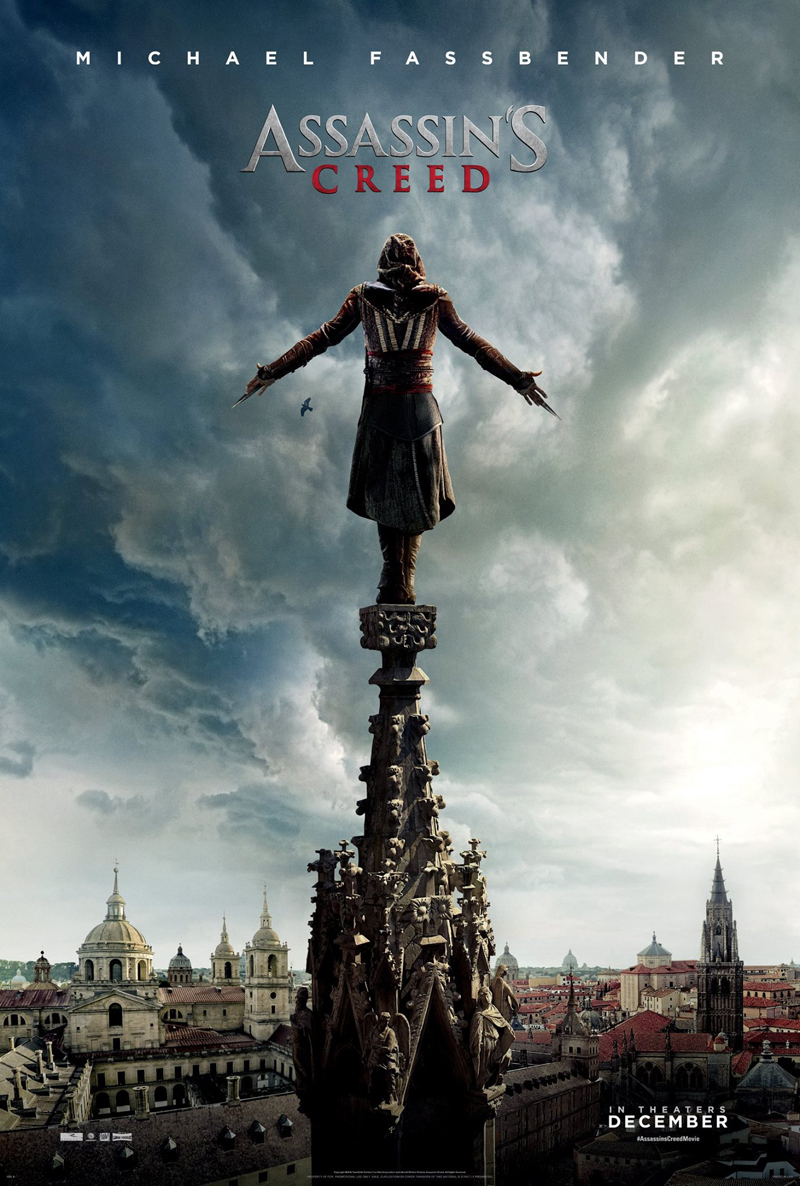
3 Short Paragraphs: Assassin's Creed

2016, Justin Kurzel (Macbeth) -- download

Yes, that Macbeth with Fassbender. This time, Kurzel comes along with a video game adaptation of a popular franchise, well at least the first game, the intro game, that most people would tell you has pretty much been glossed over since the first game. In other words, not even the big fans of the game enjoy the origins of their popular franchise. So, part of me think this is another Assigned Director Syndrome situation, where a bunch of producers have the idea that this game would make a great movie, so they dig up the latest hot new director and pitch it to him. And they are kinda right; this premise is really neat even if I didn't enjoy the game. But... you know how well video game movies do.

In Assassin's Creed, Fassbender is the descendant of a great family name in a long line of legendary assassins. Fassbender's family got out of the killing business just before they were all killed themselves. An organization, a Templar organization, takes the broken man that Fassbender grew into, from his very last hours, from the moments where he is executed for capital crimes. So, he is technically a dead man, a man they can do with whatever they want. They use him in an experiment, where they draw upon the trace memories in his DNA, so he can jump into a memory based virtual reality of the distant past, and help them recover something, a lovely red herring called The Apple.  Yes, this is the Apple, the one that Eve plucked, and it contains the genetic code for free will. The Templars want to eliminate it from mankind, to return us to a state of compliant and peaceful bliss. The assassins were against that.

This is a lovely lovely movie. It just looks so damn good! And Fassbender buys into the story so very completely, but even that cannot save it. The story, like the game, involves jumping from the VR / Time Travel sequences in the past to the current era's super science experiments. There was a reason the game abandoned it; people wanted one or the other, not both. And the past won. The current wins in the movie and it devolves very quickly into a low rent Dan Brown religious conspiracy flick complete with final chase before the Templars do something nefarious with The Apple. Maybe the sequel will just forget the first movie existed and embrace the jumping and stabbing?

Sunday, May 7, 2017

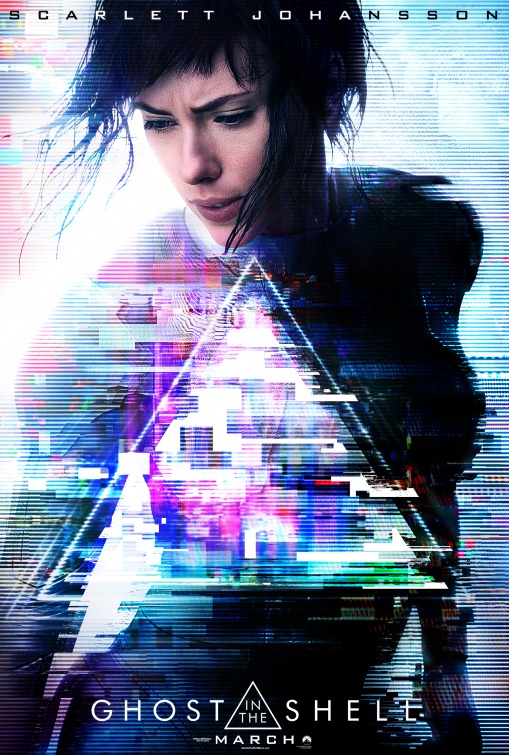
Ghost in the Shell

2017, Rupert Sanders (Snow White and the Huntsman) -- cinema

Yes, I went to see it. By myself, at 10:30am on a Saturday morning. Of course, I wasn't seeing it in the first few weeks, nor in 3D, but not long after it had been bombed down into only a few theatres. And the only one accessible to me was downtown, with showings while I was at work. So, this weekend, I made the effort, got up for the only Saturday showing and sat as the Only Other Person In the Theatre to see it.

And I enjoyed it.

But let me get this out; I am a rather big fan of the franchise. I saw the original anime movie ages ago, Ottawa ages ago, cinematically and adored it. English printed Manga was not big back then so, other than a few American comics out since, it was all I knew of it. And not until here in Toronto, many years later, the two TV series came out, Stand Alone Complex and  SAC 2nd Gig, and I bought them faithfully as soon as the DVDs hit the shelves. Eventually I did read the Manga, but to be honest, Motoko's even more overt sexualization turned me off, and of course, the books are incredibly dense reading -- there are almost more addendum and footnotes than there are main story. But still a fan. Action figures everywhere, and a little plastic tachikoma travels with me from desk to desk wherever I work.

So, when a movie was coming out, live action starring Scarlet Johansson, I was simultaneously excited and bothered. The early visuals seemed to capture a lot of the intent which made the original movie so popular. But why white wash her? Theoretically I know why, as its obvious for there to be American appeal, an American actress has to play her. Or so the industry keeps on  telling us. But no, they didn't really have to cast her that way. Anywayz, I moved on, cuz to be honest, I like ScarJo --- remember, I am the one who really enjoyed Lucy.

But the lingering bit that really bugged me was the idea that her name was now Major. Not Major Motoko Kusanagi, and not even as a rank. But her first name seemed to be Major. "This is Major, " the character says while standing on a rooftop, in the trailer. And as more data came out, her name had been further revealed to be Major Mira Killian. But still, not always used as rank, but as name. And then Marmy played me a bit where Sanders mispronounces a supporting character's name. Bleah. Losing further hope.

But still, I knew I would see it, and pretty much expected to like it. And I was right, but... there were as many raising of expectations as there were minor disappointments.

Let's get the spoiler stuff out of the way!

The whole white washing turns out to be a misfired intentional plot and marketing campaign element. Her character is actually white washed in the movie itself. If you don't know already, the idea is that Major (or Mira) is a full body mod, the "first of her kind". They have taken the brain from a dying girl and transplanted it inside an incredibly advanced robot body. The process wipes her memories. But in fact, they actually kidnapped a girl, the young Moto Kusanagi (Japanese refugee) and stole her life from her. The Evil Corporation actually does white wash the person into the cold, white, beauty that is ScarJo. So, not exactly the best way to handle the situation, but at least it is clumsily handled.

Also, despite the Director, everyone else knows how to pronounced Batou, which rhymes with gateau. And his character is rather well portrayed, right down to his dog. The actor gets his character

But how is the movie?

Meh.

Again, it looks good. But Rupert seems intent on recreating some of the most memorable scenes in the anime (like the hand to hand fight in the inches deep water) but only tenuously connecting the scenes together into a viable story. Gone was the density of plot from the anime, replaced by a simple, accessible story of it being bad to kidnap people and force them to become your new ultra-cyborg military source. Like I said in my post about Passengers, there could have been more dialogue about the ramifications and the questionable terms about how much can be replaced, and leave you still "human" but those are reduced to a handful of snippets of conversation and mournful looks from ScarJo. In the end, the whole story is rather pedestrian.

As a nod out the door, I am known to blame the producers for reducing movies to lower than their original intent. While much of the blame lies heavily in Sanders hands, I think I am noticing a new trend -- Chinese producers. This movie is another in the growing line of Hollywood movies funded by Chinese production companies. This time, inserting Asian actors was not the requirement, but the evening out of dialogue sure was. There are many scenes that reminded me of the dramatic structure of a Hong Kong action flick, with characters speaking in short sentences, strong enunciated, interspersed by dramatic pauses. Places that could have had dense dialogue were reduced to one liners and stares. Cultural transpositioning? Perhaps. Or just bad direction.

Friday, May 5, 2017

I Saw This!! What I Watched (Time Travel After Time Travel) Pt. v

I Saw This (double exclamation point) is our feature wherein Graig or David attempt to write about a bunch of stuff they watched some time ago and meant to write about but just never got around to doing so. But we can't not write cuz that would be bad, very bad.  Miss a Next Big Thing bad.

Part i, ii, iii, and iv are here.

Timeless, 2016, NBC -- live/download

Meanwhile, the latest show from Eric Kripke (Supernatural) was one that took me time to see, forgive the pun. Seriously, I don't know why as a time travel series show-run by him should have been in my wheelhouse. But the commercials and the familiar time travel chase plot didn't do much for me.

On that, why does the show seem so familiar? I swear I saw this show before, right down to the statement from the lone black time traveller stating that few American historical periods would be safe for him. Some day it will come to me.

[Edit: Thankyou Netflix! Obviously, someone in their employ saw the same connection and added Rewind to their roster. That was a 2013 SyFy pilot that never got picked up, based on that old show The Time Tunnel. But it also has a trio of a man, a woman and a black man doing pretty much the same as this show.]

So, chase through time. Two time machines, the new clean one stolen by a terrorist who wants to alter time. The old, broken down one containing a soldier, a scientist (the black guy, Malcolm Barrett, Lem from Better Off Ted) and a historian. The former messes with time, the latter do their best to contain his damage and not doing any more. Butterfly effect and all that.

I rather liked the show.

It had charm, it had wit, it had a manageable conspiracy and its time period jumps were fun. They even did a Hidden Figures episode, where I am pretty sure they recreated the whole "walking on a black woman fiddling with the IBM computer" scene, but this time she's Lem's hero. The whole time changing plot is rather convoluted, and a lot of things have been changed/damaged but part of me thinks that in the end, they are going to swing around and end up with our world, i.e. the one they started with was rather unlike our own.

As far as I know, the show was probably cancelled. Maybe not. [edit: cancelled may 10, 2017, but back on again on May 14]

Travelers, 2016, Showcase/Netflix -- download


This show, with its classic Vancouver look & feel and done by Brad Wright (Stargate: Everything) was right down my alley. Of course, time travel, but this time in a rather disturbing version. From a distant future, where things are not so good but at least technologically advanced, key agents are sent back into the bodies of those seconds away from historically recorded death. The details on life and death of the host body may be fuzzy, but the "travelers" show up and assume the identity and life of the host. Their agenda is to contribute to a great conspiracy to end the future they came from. Groups of travelers work together while avoiding making any other major changes to the timeline, other than the one that might help them in the future. And they cannot reveal themselves, for the future can still punish them.

Eric McCormack (Will & Grace) is one such traveler, in the body of an FBI agent, and the leader of a new, small group. His "fix" has something to do with diverting an asteroid that severely changes climate and lifestyle in his time. With him are a high school jock, a heroin addict, a developmentally challenged young lady (miraculously cured, from the eyes of her social worker) and an abused single mom.


The whole show plays out rather enigmatically, with the above fix not being revealed until much into the season, but not really contributing much with said reveal. But we do wonder whether they are being played by evil future overlords or if they know truly why they are doing things. I am yet to download the last few episodes of the season, but it was stylishly done, more dramatic than action oriented and asked some new, nagging questions about their particular method of time travel. How much responsibility to they have to the life they are now in? If they have a record of people who have died, why not save some people? What changes can they make that won't have big future effects? And if they do succeed in wiping out their dark future, does that mean they never went back in time in the first place? That is the bit that is fun, as they sort of ... wait for it to happen at any moment. They will know they succeeded at a task, by not having to worry about the ramifications of said completion. That doesn't work out so well.


If you enjoyed Stargate: Universe, which was the most Brad Wright show of his myriad Stargate contributions, you will enjoy this show.

Thursday, May 4, 2017

I Saw This!! What I Watched (What Got Cancelled) Pt. iv

I Saw This (double exclamation point) is our feature wherein Graig or David attempt to write about a bunch of stuff they watched some time ago and meant to write about but just never got around to doing so. But we can't not write cuz that would be bad, very bad.  Miss a Next Big Thing bad.

Part i, ii and iii are here.

Conviction, 2016, ABC -- download

OK, let's get this out. Fuck TV.  Fuck you. You cancel Agent Carter, not only a great vehicle for Hayley Atwell but a great turn of quality for Marvel TV -- I like S.H.I.E.L.D. but it isn't top notch; Agent Carter was. And then TV follows it up with Conviction, a show that is supposed to be based on Chelsea Clinton's life, and that would just be a reason not to watch the show. It is a sub-standard procedural in the CSI, Criminal Minds construct mixed with a bit of court room drama.

Hayley Atwell's charisma almost pulls it off, almost. She is a spoiled daughter of an ex-POTUS who is brilliant but non-committal and a disaster to her family's reputation. She gets bribed into running a Conviction Integrity Unit, which review old cases to see whether the conviction should stand. Of course, every case they review is a Great Injustice That Needs to be Righted.  Toss in a bit of high falootin' sex-scapades, ala The Good Wife and you have a mixed up formula doomed to fail.

And it did.  Cancelled after completing its first season. But still, fuck TV for saddling Hayley with this. She deserves something cable channel brilliant. Or I should say, cable TV deserves to have her in something.

Incorporated, 2016, SyFy -- download

This show, which I rather looked forward, ends up looking like a mix between the Brazilian show  3% and the old Ethan Hawke movie, Gattaca. We have a dystopian near future American after global economic failure and the onset of massive climate change damage. America is broken into have's and have-not's. Ben has infiltrated the have's while looking for his childhood love, under the auspices of working for a revolutionary group. Like all dystopian futures, it's beautiful, luxurious and rife with paranoia and unwarranted persecution.

As much of the show as I got around to watching was quite good looking, with above grade production values from SyFy and a solid cast. But I guess my initial thoughts of the show just going with a  familiar and unimpressive plot held true. The audiences must have felt the same, as it got sucked under pretty quickly. One season on SyFy is a damning death knell.

Time After Time, 2017, ABC -- download

This remake of the 70s movie with Malcolm McDowell as HG Wells showing off his new time machine to his dinner guests, one of whom happens to be Jack the Ripper, was a sure-win from my point of view.  Part time travel, part Bad Guy Chase, part romance, it had all the parts for a winning series. The original movie was charming and one of my favourites in my memories, i.e. I haven't seen it in over 20 years. Unfortunately, ABC made a terrible terrible show.

This show wanted to be a CW show with sardonic wit and beautiful people. It came with no recognizable cast, a lead male who you wanted to pat on the head and a lead female who never convincingly left behind her Dumb Bimbo roles, even though I am pretty sure she never played one. Oh, and it had to have a patent conspiracy which it fumbled from the get-go.

But let's harp on one thing. Genesis Rodriguez played Jane Walker, a museum curator who is there when HG Wells climbs out of his time machine. So, she is a curator, something that requires education and intelligence. But everything about the way her character is played, and I want to blame direction, as Dumb Supporting Female. Not only that, but they have to mash in the romantic connections from almost moment one. This is I Just Met You But I Love You in the extreme, and really has no supporting reasons, but for the fact that Wells has the look of a beaten puppy all the time.

I stopped watching after two episodes, and ABC dumped it after five.

Monday, May 1, 2017

3 Short Paragraphs: Keanu

2016, Peter Atencio (Key & Peele) -- download

Keanu Reeves is the nicest celebrity in Hollywood. What? You didn't know that? Of course you knew that, so why wouldn't a pair of nice suburban guys name their kitten after Keanu? Keegan-Michael Key (no, not Keenan Ivory Wayans) and Jordan Peele are a comedy duo Key & Peele, and again, no not Keenan & Peele. This is not the post where I will muse on the state of Black in North America, but suffice it to say a lot of their comedy seems to be about making Black Comedy accessible to middle of the road white people. Or at the very least, diverging from most white people think Black Comedy should be. They also did a hilarious D&D sketch.

The movie continues that, as the two suburban cousins get mixed up in what is typical (???) urban culture, i.e. drugs and gangsta antics. Keanu, the kitten of a fallen drug lord, finds his way into the hands of an emotionally broken Rell, the classic pop culture nerd - they bond. His cousin Wallace, a straight laced danger-free repressive ends up joining Rell on his hunt for his kitten, when Keanu is stolen by drug dealers who raid Rell's apartment, instead of the pot dealers next door. Hilarity ensues.

The movie is rather hit and miss, joke wise, but these guys pull off the fish out of water quite masterfully. Oh, it's easy to toss two white suburban kids into a strip bar full of gangsters, and expect hyuck-hyucks, but despite what the parents in my own white suburb thought, not every black kid would feel at ease there. Alas, they have a kitten to save! And the whole scene with an unhinged Anna Faris as herself is worth the price of the download.