Showing posts with label moral dillema. Show all posts

Tuesday, February 13, 2024

3 Short Paragraphs (Or Not): Paradise

2023, Boris Kunz (Drei Stunden) -- Netflix

Youth is wasted on the young. In my personal experience, as in me, that is entirely true. I wasted my youth in vast swathes. TBH I still am wasting my life. And I am past the point of return value. But whatever. But what if you could regain that youth? As in physically be younger, but with all the wisdom (???) of your current age. Like all good scifi cautionary tales, this youth only comes at the cost... of another's youth. Tit for tat. You get younger, they get older.

The world of Paradise is of the twenty minutes into the future ilk, where the rich are richer and reap all the benefits. There are unexplained massive refugee camps everywhere all over Europe, much of eastern Europe left the union and lives in squalor. But for a small exchange, like 10, 20... 40 years of your life, a company called AEON will give you a life (what's remaining of it) of leisure and wealth. And your years are given to someone who can afford it. Oh they say it is meant to benefit the scientists and artists and the people who are making the world better, but we all know better. 

Max (Kostja Ullman, The Reckoning) is Top Seller at AEON, a man who coerces teenage refugees out of decades, a man about to be rewarded, able to upgrade his apartment, start a family. But then their apartment burns down, and he finds out his young wife Elena (Marlene Tanczik, Never Look Away) has used her years as collateral. Debt enforcement is immediate -- 40 years. Max is desperate to get his wife's, their, life back, even if she doesn't want it. And when he finds out the founder of AEON was directly involved in his apartment fire and his wife's debt, he has to ask himself who is worth more.

The movie could have continued to explore the moral complications, but instead it decided to devolve into an actioner, putting Max and Elena between the forces of AEON and Adam, the terrorist group that wants to end this technology forever and kills anyone who benefits from it. Oh, it tries to weave in some difficult choices but those get lost in the gunfire. In the end, nobody wins but AEON the corporation, which is a lazy way to end most dystopian fiction, assuming Nothing Ever Changes and nobody wins. Except the rich.

Tuesday, October 9, 2018

31 Days of Halloween 2018: Jug Face

2013, Chad Crawford Kinkle (pretty much just this) -- download

OK, WTF. A movie starts out with a hillbilly brother fucking his sister, the main character, and we are supposed to find these characters sympathetic? Yeah, whatever out of the ordinary vibe (hillbilly occult) they were going for was lost on me almost immediately.

The movie begins with an opening segment, cryptic drawings of a child depicting a backwoods family who sacrifice the local preacher to a pit full of blood. There are hints at demons or spirits implying some sort of pact. We then fall into the story, a potter possessed by something, probably The Pit, making these disturbing moonshine jugs with people's faces. Ada (above sister) finds the newly made jug with her face on it, and hides it. What does that bode? Nuttin' good.

This family / these families have lived in these woods forever -- dirty, poverty stricken and adhering to strange rituals. Ada is to be "joined" with the neighbour's ugly son but only if she is "pure", i.e. virginal. We know she isn't as was just fucking her brother, and she has to hide it or her dad will whup her. And then she finds out she is pregnant.

So, to hide her incestual promiscuity and pregnancy, she begins a conspiracy involving the potter -- a half-baked young man who obviously dotes on her, and her dottering grandfather. Oh, and the rather lucid, talkative spirit who follows her grampa around. But The Pit won't have any of that and eats one of her neighbours. Her Pa knows that this shouldn't happen and that they have upset The Pit -- so a sacrifice has to happen. The jug face was supposed to depict who would need to be sacrificed, and since the potter Dawai doesn't remember who he fired, he makes another one and just blames it on Ada's beau to be. The Pit gets its sacrifice.

It doesn't work.

Again, we are supposed to sympathize with Ada? Not only is she fucking her brother but she just got the neighbour kid killed AND Dawai the potter is being blamed. And since she pissed off The Pit, she also got her neighbour killed. And it just continues !! More blame, more death and more hungry Pit until finally the truth comes out. But w.... t.... f..... no climax, no resolution, just an ending to this current drama and the movie.

You see, you can do a peek into a seedy and despicable slice of life. But either they have to be particularly shocking or spectacularly well depicted. This was neither. Its a not a badly done movie, as the acting is decent, but nothing compelling or interesting happens in the least. And yes, I just couldn't get past the main character fucking her brother !!

Sunday, May 7, 2017

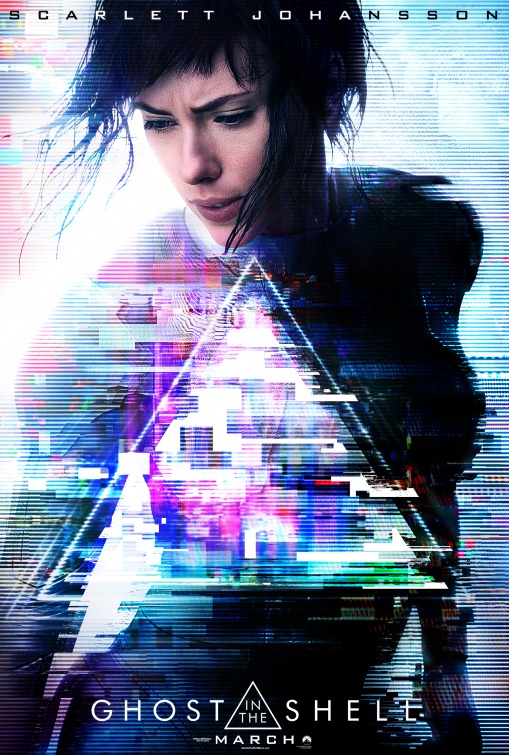
Ghost in the Shell

2017, Rupert Sanders (Snow White and the Huntsman) -- cinema

Yes, I went to see it. By myself, at 10:30am on a Saturday morning. Of course, I wasn't seeing it in the first few weeks, nor in 3D, but not long after it had been bombed down into only a few theatres. And the only one accessible to me was downtown, with showings while I was at work. So, this weekend, I made the effort, got up for the only Saturday showing and sat as the Only Other Person In the Theatre to see it.

And I enjoyed it.

But let me get this out; I am a rather big fan of the franchise. I saw the original anime movie ages ago, Ottawa ages ago, cinematically and adored it. English printed Manga was not big back then so, other than a few American comics out since, it was all I knew of it. And not until here in Toronto, many years later, the two TV series came out, Stand Alone Complex and  SAC 2nd Gig, and I bought them faithfully as soon as the DVDs hit the shelves. Eventually I did read the Manga, but to be honest, Motoko's even more overt sexualization turned me off, and of course, the books are incredibly dense reading -- there are almost more addendum and footnotes than there are main story. But still a fan. Action figures everywhere, and a little plastic tachikoma travels with me from desk to desk wherever I work.

So, when a movie was coming out, live action starring Scarlet Johansson, I was simultaneously excited and bothered. The early visuals seemed to capture a lot of the intent which made the original movie so popular. But why white wash her? Theoretically I know why, as its obvious for there to be American appeal, an American actress has to play her. Or so the industry keeps on  telling us. But no, they didn't really have to cast her that way. Anywayz, I moved on, cuz to be honest, I like ScarJo --- remember, I am the one who really enjoyed Lucy.

But the lingering bit that really bugged me was the idea that her name was now Major. Not Major Motoko Kusanagi, and not even as a rank. But her first name seemed to be Major. "This is Major, " the character says while standing on a rooftop, in the trailer. And as more data came out, her name had been further revealed to be Major Mira Killian. But still, not always used as rank, but as name. And then Marmy played me a bit where Sanders mispronounces a supporting character's name. Bleah. Losing further hope.

But still, I knew I would see it, and pretty much expected to like it. And I was right, but... there were as many raising of expectations as there were minor disappointments.

Let's get the spoiler stuff out of the way!

The whole white washing turns out to be a misfired intentional plot and marketing campaign element. Her character is actually white washed in the movie itself. If you don't know already, the idea is that Major (or Mira) is a full body mod, the "first of her kind". They have taken the brain from a dying girl and transplanted it inside an incredibly advanced robot body. The process wipes her memories. But in fact, they actually kidnapped a girl, the young Moto Kusanagi (Japanese refugee) and stole her life from her. The Evil Corporation actually does white wash the person into the cold, white, beauty that is ScarJo. So, not exactly the best way to handle the situation, but at least it is clumsily handled.

Also, despite the Director, everyone else knows how to pronounced Batou, which rhymes with gateau. And his character is rather well portrayed, right down to his dog. The actor gets his character

But how is the movie?

Meh.

Again, it looks good. But Rupert seems intent on recreating some of the most memorable scenes in the anime (like the hand to hand fight in the inches deep water) but only tenuously connecting the scenes together into a viable story. Gone was the density of plot from the anime, replaced by a simple, accessible story of it being bad to kidnap people and force them to become your new ultra-cyborg military source. Like I said in my post about Passengers, there could have been more dialogue about the ramifications and the questionable terms about how much can be replaced, and leave you still "human" but those are reduced to a handful of snippets of conversation and mournful looks from ScarJo. In the end, the whole story is rather pedestrian.

As a nod out the door, I am known to blame the producers for reducing movies to lower than their original intent. While much of the blame lies heavily in Sanders hands, I think I am noticing a new trend -- Chinese producers. This movie is another in the growing line of Hollywood movies funded by Chinese production companies. This time, inserting Asian actors was not the requirement, but the evening out of dialogue sure was. There are many scenes that reminded me of the dramatic structure of a Hong Kong action flick, with characters speaking in short sentences, strong enunciated, interspersed by dramatic pauses. Places that could have had dense dialogue were reduced to one liners and stares. Cultural transpositioning? Perhaps. Or just bad direction.

Friday, May 5, 2017

I Saw This!! What I Watched (Time Travel After Time Travel) Pt. v

I Saw This (double exclamation point) is our feature wherein Graig or David attempt to write about a bunch of stuff they watched some time ago and meant to write about but just never got around to doing so. But we can't not write cuz that would be bad, very bad.  Miss a Next Big Thing bad.

Part i, ii, iii, and iv are here.

Timeless, 2016, NBC -- live/download

Meanwhile, the latest show from Eric Kripke (Supernatural) was one that took me time to see, forgive the pun. Seriously, I don't know why as a time travel series show-run by him should have been in my wheelhouse. But the commercials and the familiar time travel chase plot didn't do much for me.

On that, why does the show seem so familiar? I swear I saw this show before, right down to the statement from the lone black time traveller stating that few American historical periods would be safe for him. Some day it will come to me.

[Edit: Thankyou Netflix! Obviously, someone in their employ saw the same connection and added Rewind to their roster. That was a 2013 SyFy pilot that never got picked up, based on that old show The Time Tunnel. But it also has a trio of a man, a woman and a black man doing pretty much the same as this show.]

So, chase through time. Two time machines, the new clean one stolen by a terrorist who wants to alter time. The old, broken down one containing a soldier, a scientist (the black guy, Malcolm Barrett, Lem from Better Off Ted) and a historian. The former messes with time, the latter do their best to contain his damage and not doing any more. Butterfly effect and all that.

I rather liked the show.

It had charm, it had wit, it had a manageable conspiracy and its time period jumps were fun. They even did a Hidden Figures episode, where I am pretty sure they recreated the whole "walking on a black woman fiddling with the IBM computer" scene, but this time she's Lem's hero. The whole time changing plot is rather convoluted, and a lot of things have been changed/damaged but part of me thinks that in the end, they are going to swing around and end up with our world, i.e. the one they started with was rather unlike our own.

As far as I know, the show was probably cancelled. Maybe not. [edit: cancelled may 10, 2017, but back on again on May 14]

Travelers, 2016, Showcase/Netflix -- download


This show, with its classic Vancouver look & feel and done by Brad Wright (Stargate: Everything) was right down my alley. Of course, time travel, but this time in a rather disturbing version. From a distant future, where things are not so good but at least technologically advanced, key agents are sent back into the bodies of those seconds away from historically recorded death. The details on life and death of the host body may be fuzzy, but the "travelers" show up and assume the identity and life of the host. Their agenda is to contribute to a great conspiracy to end the future they came from. Groups of travelers work together while avoiding making any other major changes to the timeline, other than the one that might help them in the future. And they cannot reveal themselves, for the future can still punish them.

Eric McCormack (Will & Grace) is one such traveler, in the body of an FBI agent, and the leader of a new, small group. His "fix" has something to do with diverting an asteroid that severely changes climate and lifestyle in his time. With him are a high school jock, a heroin addict, a developmentally challenged young lady (miraculously cured, from the eyes of her social worker) and an abused single mom.


The whole show plays out rather enigmatically, with the above fix not being revealed until much into the season, but not really contributing much with said reveal. But we do wonder whether they are being played by evil future overlords or if they know truly why they are doing things. I am yet to download the last few episodes of the season, but it was stylishly done, more dramatic than action oriented and asked some new, nagging questions about their particular method of time travel. How much responsibility to they have to the life they are now in? If they have a record of people who have died, why not save some people? What changes can they make that won't have big future effects? And if they do succeed in wiping out their dark future, does that mean they never went back in time in the first place? That is the bit that is fun, as they sort of ... wait for it to happen at any moment. They will know they succeeded at a task, by not having to worry about the ramifications of said completion. That doesn't work out so well.


If you enjoyed Stargate: Universe, which was the most Brad Wright show of his myriad Stargate contributions, you will enjoy this show.

Saturday, January 21, 2017

Passengers

2016, Morten Tyldum (The Imitation Game) - cinema

**SPOILERS**

From the get go, you could tell the producers took a miss-turn revealing the core premise of this scifi drama and turned the wheel towards a more manageable romantic thriller. Do you remember the early trailers, where they reveal that Chris Pratt's Jim Preston wakes up Jennifer Lawrence's Aurora Lane because he is lonely? Once the Internet Outrage Machine took hold of that, it had to be hidden. And all subsequent trailers went the way of two people up against great odds while alone on a spaceship, a hundred years from its destination.

So, that. In a distant future, faster than light travel is still not possible. The big starship Avalon on its way to Homestead II, and will take about 120 years. The passengers sleep while the robots and massive computer keep everything clean and working. But the ship suffers a bumpy ride, malfunctions and wakes up Jim. Only Jim.

Jim is an economy class passenger. Breakfast is cereal, lunch & dinner are Mexican and AYCE sushi. His berth is tiny. But all it takes is a crowbar to find a bigger bed.  Those first few months on the ship are like the first few episodes of The Last Man on Earth minus the Margarita Pool. Jim does as he pleases, eventually succumbing to the no-shave, no-cleaning despondent lifestyle. Eventually Jim gets lonely and then fixates on Aurora, a writer from NYC, who is a first class passenger. After some months of painful deliberation, he wakes her up.

And there is the rub of it. In a more thoughtful movie, he might wake up a handful of people which would generate all the different opinions for and against what Jim has done. While the movie doesn't entirely shirk away from the moral implications of what he has done, but it doesn't fully embrace them either. This is a December-January release movie, which means it has to be accessible and likeable. So, we get enough to know Jim feels bad about what he has done, but not bad enough to not have done it.

And the movie is a romance. No, really. And it does a good job of realizing it, of allowing it to happen slowly, probably another year? They are alone, they entertain each other, the entertain together, they get drunk together (Michael Sheehan plays the programmatically affable robot bartender) and eventually they fall in love. C'mon, its a buffed up Chris Pratt and a gorgeous white blonde Jennifer Lawrence. Who wouldn't want them to get together.

And of course she finds out. And of course she freaks out.

Again, a better movie would have focused on the ramifications, both of what he had done, and the nature of what comes next. There is one scene where he wakes to find her on top of him, pounding away with fists. He lets it happen. Amusingly enough, I think Jennifer got an actual punch in there, as earlier in the movie, they do a bad job of hiding a black eye on Pratt.  But once the movie does a requisite amount of hatred and tears, it shifts the goal to saving the ship. As a Hollywood blockbuster, it does a good job of giving them a reason to be together, even after everything they go through, after everything he has done, and how she has reacted. But a better movie would have focused more on the, "This is our life now, so now what...."

Saturday, January 7, 2017

Arrival

2016, Denis Villeneuve (Sicario) -- cinema

My unwritten novel starts with cello music the same way this movie does, beautiful haunting and appropriate to the lonely locale. In a way, the music set the tone for the movie much more than any visual did. This looks like a Villeneuve movie, from his architecture shots to his not entirely sharp way of building wide shots. Sharp, as in exquisite camera shots. When someone like Michael Bay shoots a movie, most on the screen is CGI that comes out incredibly focused, so everything around it has to be shot as such. For Villeneuve, it's more about the story, so the mood has to be set. I am more appreciative of this camera work these days, as I find it very hard to view a very sharply shot movie, because.... well, focus, both visually and emotionally. Villeneuve made it so very easy for me to do both. He helped me hunch in my seat, ignore the people checking their phones and just be absorbed.

Aliens have arrived in big disks, like they always do. And like they always do, these disks float over our cities, but sometimes just over big empty fields in Montana. Unlike other alien movies, this is not just happening in the US, and there is not just a team of smart people in the US. There are smart teams everywhere and for them all to be smarter, they work together. Like many alien visits, the heptapods leave heavy lifting of First Contact to us. Amy Adams and Jeremy Renner are tasked with trying to understand & communicate with the Montana disk. Amy is language, Renner is physics. Forest Whitaker is the army colonel in charge of all this, because we know the military will always be in charge of it.

Everyone highlights how this is a smart science fiction movie, about smart people doing smart things. True, not denying it, but it's not what the movie is about.  In The Martian, much of what the movie was about was showing the smart science. The linguistic science of Arrival is presented only briefly under the microscope, and then becomes the backdrop to what our main character is experiencing. This movie is not about one person being the only useful one in the room, though it definitely starts that way, but about choosing the right path (in this case, science & understanding) vs the wrong path (fear and mistrust).

Arrival is a very beautiful movie, at its heart.

Amy Adams plays a character that just wants to connect with these visitors and she cannot conceive they are here to do harm, because if they wished to, they would have already. But the beauty doesn't really come from her drive, not entirely.

**SPOILER**

The core beauty of this movie comes with the reveal of exactly how different the aliens are from us. As Adams' character explores the language structure of these creatures, she begins to experience things, dreams and memories that seem, at first, like they are influencing her to remember and feel things she is repressing, memories of a daughter lost to cancer, on an uncaring husband who is not there. These memories distract her, overwhelm her, but don't deter her. The more she works the more the experiences these jarring happenings. Until a final confrontation with the alien she calls Costello (as in, Abbot and...) explains to her that the aliens feel time as a whole, not as a past, present and future but always as a whole now.

For them, a life is made up entirely of all of its parts. In much the way we faintly recall our past, they must faintly recall their future. So, the message to humans is for them to live life fully, to see all of it as beautiful, to accept the good and the bad as part of the joy of living.

OK, the aliens don't explain that, they are not platitude serving gurus leaving us with text over scenes of sunsets to post of Facebook, they just offer us what is theirs to offer. But the core (for me) is that, if you knew you would see hints of your consequences, that you could be tortured by your choices yet to be made, in much the way many of us are tormented by our past, wouldn't you start making better choices? You would see life as a whole, as  a long but finite period of time that is better filled with good memories (even those yet to happen) than painful ones.

Think of it this way. You are re-reading a book you really really enjoyed. It was filled with great parts, both painful and joyful. You cherish every bit of the book. And, as you re-read, you know what is going to happen but it doesn't diminish the act of re-reading, not experiencing the sad parts you know are going to happen, not experiencing the joyful parts.

Now, add in the mind bending time travel aspect that you can subtly influence what will happen by knowing what has happened, you can understand how this knowing this understanding of a new way of thinking is the true gift from the alien visitors. And this, this is what was so beautiful to me, that we can still offer a hopeful vision of a First Contact. We need a lot of hope right now.

Sunday, December 25, 2016

I Saw This!! What I Have Been Watching (PT D.3)

Pt. A, B, C, D.1, D.2 can be found there.

I Saw This (double exclamation point) is our feature wherein Graig or David attempt to write about a bunch of stuff they watched some time ago and meant to write about but just never got around to doing so. But we can't not write cuz that would be bad, very bad.  Y'know, red horny demon possession, bad.

Just to round out the pile, I am going to shoe horn in a show I am currently watching. So, this edition, we get a completed season (and series), a dropped show (but likely to be binge watched) and a nearly done season.

Meh; four (series) seasons completed.

Westworld, 2016, HBO -- download

Speaking of technology rampant, the best thing on TV this year was Westworld, a remake of the 70s movie. If Person of Interest can question how can an autonomous AI come about, and how we should react to it, then this show can question whether it really matters or not. Westworld does its best, at its core, to question whether we can really even ask the question without questioning our own existence. What is intelligence? What is sentience? What is free will? Heavy stuff.

So, the brief is a theme park has been designed, in what must be a distant future, and set in America's Old West. It is populated by autonomous AI robots, so incredibly smart that we cannot differentiate the people (guests) from the robots (hosts). That is the point of the park; you just never know. OK, not really, the point is that we can so easily fool ourselves, we will get lost in the fantasy. In today's era of Japanese Otaku wanting to marry imaginary characters (or their pillows), it's not a thin stretch to believes people would become throughly immersed in this park's residents.

Gah, you cannot start talking about this show without skipping past the plot(s) and right into the meat of the matter. This is because the characters and plots are really just a vehicle for the questions and vague attempts at answers. Anthony Hopkins is the park's aging designer, one obsessed with keeping his toy to himself as well as pushing the boundaries of the narrative. Ed Harris is The Man in Black, a guest of the park who is always playing The Bad Guy. You know, Black Hats vs White Hats? Evan Rachel Wood is Dolores, a host who is often the subject of his Bad Guy routine. Jeffrey Right is Bernard, a tech who is constantly noticing that the hosts are thinking a bit more than they are designed to. Jimmi Simpson is Billy, an investor on his first trip to the park, a man who questions the moral implications of people letting themselves go entirely when they come to the park. Thandie Newton, easily the most compelling character in the whole season, is Maeve a host who has nightmares she is not supposed to be programmed to have. And the cast goes on, from hosts to staff to guests.

It's no surprise this show is all about questions -- it's Jonathan Nolan again, who was behind Person of Interest. I guess he has a theme he wants to explore and doesn't let a series ending interrupt that. Maybe he should have been given the reigns of Ghost in the Shell.

There is a mystery built into the show, a series of events and questions around those events, that are almost built to tease the Internet based viewer. Discussion, speculation, theory and predictions became the reaction to each and every episode. Some were telegraphed, some were tenuous and some were incredibly way out there. Boy, could you easily get wrapped up in that, but the show was smart enough to not capitalize on it, like The Walking Dead has -- there was no after-show, there was no discussion round table. Any such would have led to answering too many questions, which should be left up to the viewer just like the greatest moral questions of the show were.

Go see it.


Sunday, July 3, 2016

3 short paragraphs: Nightcrawler


2014, d. Dan Gilroy -- Netflix


 It's been quite some time since I watched this film, so the finer details are pretty fuzzy.  But...but...it is a powerful film.  It's the proverbial trainwreck, difficult to watch and just as hard to turn away.  Jake Gyllenhaal is Lewis Bloom, a smart man with poor social skills.  The first question is whether he falls on the spectrum somewhere, but it turns out he's just a sociopath... dangerous things to get confused to be sure.  Lewis looks for work and hustles when work doesn't come through, petty criminal acts like lifting scrap metal from a construction site and selling it.  When he witnesses a car crash, it doesn't prompt Lewis into action in any way to assist, his only reaction is to watch.  He watches the scene unfold, including Bill Paxton's camera crew who arrive before police and paramedics to capture the scene with a self-certified impunity.  Lewis sees not only is there money to be made, but a job he seems adequately equipped for...no he doesn't have the camera, or the police scanner, or any video skills, but he has the temperament, the tenacity, and the ruthlessness to be successful.

Lewis Bloom is an awful, awful person, but not unwatchable (like his videos, he's too fascinating not to pay attention to).  He gets on the scene and in personal spaces far beyond the comforts of most, doing whatever it takes to get the goods.  If it bleeds, it leads.  Renee Russo is a nightly news manager of a program on decline.  She enables Lewis' actions because it's good for her.  Lewis winds up blackmailing her into both a business and sexual partnership, one that benefits them both but puts one in control of the other in unsettling ways.  Russo's given the role of both a desireable woman and a character her own age, uncommon for Hollywood films, not that we're rooting for her and Lewis as a couple.  If anything it's cringe inducing his manipulation of her.

He takes on an apprentice whom he can barely contemplate paying, and expects complimentary ruthlesness, which obviously cannot be met.  This is a film in which the stakes escalate, dramatically so, some by Lewis' own design.  If there is no news worth selling, he's going to manufacture it, at whatever cost.  Gyllenhaal creates an unemotional figure in Lewis (not emotionless, but he just doesn't really react strongly unless it benefits him to do so).  He's not still or robotic, but he's dead behind the eyes...there's a soullessness that Gyllenhaal disturbingly and effectively conveys.  He doesn't allow anything but ambition to drive him.  It's finely crafted film that is both distressingly enjoyable and disturbing.  If it speaks to anything it's that humanity's peculiar desire for Schadenfreude is perhaps better left underserved.

(we agree - David's take here)

Wednesday, June 22, 2016

We Agree-ish: Captain America: Civil War

2016, Russo Brothers (Community) -- cinema

I finally got to sorting through the boxes of comics I had pulled out of the closet, a year ago, with intention of dividing them into Keep and Go. Wow, I didn't know I bought so many Civil War issues, especially since it crossed over almost every Marvel title. And no, I didn't even have an inkling to start re-reading them, for I remember distinctly not enjoying them at all. But comic collecting always had a momentum to it, whether you were getting a good read or not. But, finally I stopped (probably no money) and before they did the whole Skrull reveal thing.

That knowledge of the comic story led me to wonder whether they would weave two key elements into the movie -- the aforementioned Skrull part, and the death of Captain America. I was OK with the lack of the former (Skrull analog was already used for the first Avengers movie), but I was sorely disappointed they didn't go with the latter. It would have been a great ending for the current age of Marvel movies. But, yes, I realize they have a vision (no, not him) for the coming movies and that does not fit into it. Alas, it would have been a great controversy. Better than Hydra Cap.

In case you don't know, the civil war is between half the Avengers and the other half of the Avengers. One half, led by a still traumatized Tony Stark supports oversight of all enhanced beings. The other side, led by the ever optimistic Captain America believes the Avengers will only be able to do what they do without any sort of control; self-oversight is how he sees it. But the world keeps on seeing them mixed up in very bad things.

This is the classic Doctor Who dillema -- are the bad things happening because the heroes are around (quoting Vision, "Our Very Strength Incites Challenge. Challenge Incites Conflict. And Conflict Breeds Catastrophe.") or would things be much much worse if the heroes were not. As has been the theme of a season of Agents of S.H.I.E.L.D., the world is afraid of all the emerging powers. And the world has to blame someone. Add new laws into this mix, and suddenly Tony has to arrest Cap.

The thing is, I kind of agree with Tony. In fact, it goes to show a lot of thought in the writing that we are torn between believing in either of the two. Super powered vigilantes or the only people with the power to protect us? I want to side wholeheartedly with Captain America but the problem is that not everyone has such a well stamped moral code like he does. The problem with the other side, and we see it escalate very quickly, is that people with less than stellar moral agendas will enforce that oversight. It's a lose lose situation.

I found myself deeply entrenched in this moral debate, the first third of the movie, but once the overly cartoony super heroics started onscreen, I fell out of it. The battle in Nigeria is incredibly vibrant full of the expected crunches enhanced strength allows. There was a bit wriggly, too-fast scene editing but you could feel the weight of the fight. Then that car chase scene. There is nothing I hate more than a running scene where the body is moving quicker than the movement of the feet. It looks like they are hanging from wires and being swooped along.  And those few scenes when a completely rubbery Black Panther jumps onto the screen. It is supposed to depict how lithe he is, but ends up feeling like a scene from Toy Story. They are supposed to be living action figures, but not literal ones. Still, once the battle at the airport happened, I forgave the FX crew.

In the end we have another decent spy story mixed in with a ensemble super hero action movie. So many characters, but one focused plot. The only real side plots are Tony setting up Spider-Man as his ace in the hole, and the entry of Wakanda and Black Panther into the Marvel cinematic universe.  The civil war may fade out by the end of the movie, but the Sokovia Accords are still in place, which should have interesting play out in which ever movie comes next, not including anything Thor/offworld based. If anything disappointed me, it was the whole Zemo reveal which was very anti-climactic considering how much effect it will have on the world.

Graig's take....

Wednesday, April 27, 2016

3 (and a bit) Short Paragraphs: The Monuments Men

2014, George Clooney (Leatherheads) -- Netflix

A dilemma of being the guy who downloads movies (i.e. pirate) is that movies of mixed language are difficult to properly watch. Most movies with subtitles come all or nothing. Sure, there are fansubs, sites that build their own subtitles, but I have always found that connecting the right subtitle file with right copy of the movie to be arduous. They almost always have the timing off by a bit, if you even get one that is translated well. So, I wanted to properly rent this movie to see subtitles for only the non-English bits. Try and I might to rent the movie from one of the sources I have at my disposal, Sony and Microsoft, I could not. I could buy the file or the disk, but not rent the digital video. It's a shame when you want to consume something in a legal format, but they put walls up. I miss video stores.

And then it came to Netflix and I was left confused.

This is a WW2 movie, about a collection of old and 4F men with the sole purpose of identifying and saving priceless pieces of art and locations of great historical/architectural importance. As the war was winding down, the Germans were pulling back and taking with them as much of value as they could, often destroying it if they couldn't properly store it. Big pieces and architecture were blown up. Clooney gets the go ahead to build the taskforce, but support is at the minimum -- nobody really wants to help these guys save old paintings. But they persevere and succeed, all the way to Germany.

Confused? Well, of course English, German and French are spoken in the movie. But very little was subtitled in the movie. I have never understood the concept of only sub-titling key scenes. I get keeping the mystery to a plot, but if the language can be understood by someone isn't that already defeating the point of not subtitling it? Either way, I am not sure whether Netflix did a bad job of  subtitling or just followed Hollywood's only-key-scenes idea. So I could have probably lived with the subtitle files I thought were badly done.

That said, I like Clooney movies and I love the premise of the movie, but she fell kind of flat. You have an ensemble cast broken up and sent to key areas in Europe to accomplish key goals. But the tenuous threads connecting these characters is strained to a great degree turning the movie into a bunch of barely connected vignettes. And because of the need to give each of the recognizable faces (Clooney, Matt Damon, John Goodman, Bill Murray, etc.) enough screen time, they seemed to invent reasons for the characters to contribute. Again, strained. But I loved the performances and I like Clooney's likeable way of directing a movie. This one just needed some more polish.

Sunday, April 10, 2016

PC: Fallout 4, Pt. 3

part 2 can be found here, ages ago just before my card went AWOL.


So, the card was fixed, the computer was cleaned up and a new SSD put into it. And it was a month later. I felt out of touch with my white haired supermodel and his dashing good looks. I was still tired of being the General of the Minutemen, doing one more job for a needy Preston Garvey. I had paused my playing after liberating about a dozen settlements and was spending more and more time stocking them up on armor and weapons than I was on finding my son. So, start a new character. Start a new focus.

Hieronymous was going to follow through the story but not join The Minutemen. There are four factions to choose allegiances with. The Brotherhood of Steel are the militaristic assholes all about technology and a for-your-own-good sense of violent superiority. The Institute is an underground bunker of descendants of old world scientists, who make robots with laser guns and have a creepy agenda involving replicants & replacing people. The Railroad is directly against The Institute acting as liberator of the intelligent synthetic humans, identifying them as sentient and smuggling them out into The Commonwealth. They're a bit fanatic but have their hearts in the right place. The Commonwealth doesn't care much for them And I already mentioned The Minutemen, who really only exist to populate and protect The Commonwealth. They're the Good Guys if a bit short sighted.

This time I chose the story of The Railroad. The Institute is a focus of the story, the obvious bad guys, responsible for the kidnapping of your son and are the big boogeyman of the game. So, working with the liberating force who is against them felt right.

The only way for the Railroad to accomplish their goals is for the Institute to fall. And they know I am motivated to get into the hidden base, so they help me. They gain my loyalty through a number of liberation and combat missions, basically working me into being one of their "heavies" -- well armed and armoured soldiers taking out their enemies and protecting their liberated synths.

Meanwhile I am doing my best to NOT get caught up in the support of the settlers and their little towns, but once I liberate one, I feel a bit protective of it. No, I am not back in the Minutemen, but these are my people and keeping them flush in armour and weapons is not a bad thing. Oh the time you can waste just upgrading weapons and armour. Take every last thing off a fallen enemy, quick travel back to the town that is in need, cover everybody in Combat Armor and automatic lasers and head out again. Again with the false sense of accomplishment and benevolence.

It doesn't take long for me to figure my way into the Institute via their super duper teleportation ability. And wow.  The Institute is everything a hidden underground superscience base should be. Its clean, its well stocked and all the humans are over achieving megalomaniacs who see the surface as paranoid hicks. They are not wrong, but wow, the sense of superiority. And there is that thing about them sending their robots to murder people and take important pieces of technology AND people.

And your son is there. But he's 65 and he's running the place. You see, back when that mercenary killed your wife and took your baby son, he was already working for the Institute and their previous leader. They needed clean DNA for their experiments and a cryo'd baby was perfect. You and your wife were collateral damage. When you come across the same mercenary, after you get out, it's a smoke & mirrors game. His life has been extended and your son was raised in the Institute the entire time. In fact, your son Shaun is the one who allowed you to be released all these years later, as he needs a trustworthy contact on the surface now that the mercenary who killed his mother had become unreliable. Your son's a bit of a dick. And you gather this very quickly, but since you are now working for the Railroad, you pretend to go along with Shaun's agenda to find out what their end goal is AND help out the Railroad.

This is where the story becomes a bit muddled. You know you are being manipulated on both sides. You know Shaun has a creepy agenda and you begin to suspect he knows you are playing both sides. But that's fine, he's OK with that. As long as you accomplish his murdery goals, killing non-Railroad bad guys for him and gathering up stuff he needs, it's fine. You are his gun and you cannot help but defer a bit to your own, albeit aged, son. And he is directing you towards becoming the new leader of the Institute so maybe you can mould their agenda to your own, a less homicidally superior one.

Its very weird. Heroism is being left to the wayside as you become a pawn in two major powers' games. The Railroad is looking less and less benevolent and more just about kicking the ass of the other power they don't like. The Institute could complete their goals without murdering The Commonwealth but they don't want to. Meanwhile I made friends with the Brotherhood, but didn't follow their missions for long as I was lead to a big climactic battle at a small settlement called Bunker Hill. All three factions take on each other there, and the average Commonwealth people are all collateral damage. Seriously, even the Railroad shoots anyone who doesn't stand with them. But I am playing the long game now, still doing what I can to play both sides until I determine who the real bad guy is. Or I am just forced to take a side because I have to be committed to something.

And that is where the game leads you. You know the Institute are going to be about more than protecting their own goals. You know the Railroad has a major chip on its shoulder and wants all their nemesis dead, despite the innocents involved. It leads you to an end goal, a Nuclear Option to end the Institute once and for all. Boom, you blow it all to hell. You murder everyone. You choose a side. You are... a terrorist.

The game ends (???) with a new radioactive hole in Boston. The Institute is dead, but many escaped. The Railroad released hundreds of synths before they blew up the place but the Commonwealth still doesn't trust synths. There will always be a Railroad leading them to safety and protecting them. And the Brotherhood? Well, you had to murder them all so they wouldn't get in your way. I was killing people my character had made friends with, had drinks with, patched up my armor with. As a player, I was feeling pretty low by the end of the game.

At the end of the game, you are nobody's hero. You are the MurderHobo, the guy who had no home but wandered everywhere killing anyone who got in his way, friends or foes. You took their stuff, you garnered experience points from them and you bank your gold (bottle caps). Its not as fun as the D&D players made it out to be. You told yourself you were there to be the hero, that each death was for a cause, a just cause. But in the end you only did what you were best at -- kill.

Thursday, March 31, 2016

I Saw This!! Two Pair, Two Pair

I Saw This (double exclamation point) is our all-too regular feature wherein Graig or David attempt to write about a bunch of movies they watched some time ago and meant to write about but just never got around to doing so. Downloads come, downloads go. They slip in and fade out. How about a pair of "kids movies" and a pair of movies in bunkers?

Inside Out, 2015, Pete Docter, Ronnie Del Carmen (Monsters, Inc.) -- download
Goosebumps, 2015, Rob Letterman (Monsters vs Aliens) -- download
Air, 2015, Christian Cantamessa (writer of video game Red Dead Redemption) -- download
400 Days, Matt Osterman -- download

There used to be a world where we knew anything from Pixar would be great, at least in comparison to anything from Dreamworks Animation, which might be OK. As of late, I have been finding Dreamworks as often a notch above Pixar, almost a tag team event. How to Train Your Dragon and Megamind were incredible for the former, but does anyone even remember Home came out? Up and Brave seem forever ago and the rest, by the latter, were sequels. I hoped that Inside Out would be the return of Pixar, but in all honesty, found it very meh. Charming but meh.

The elevator pitch is great. You have four people inside your head, at a control room console, representing your primary emotional states: anger, sadness, fear and joy. Oh, and disgust. Is disgust even an emotional state? And no, Eddie Murphy is not one of the characters inside Riley's head.

Riley is the adolescent main (human) character who is uprooted from her mid-western home to San Francisco; Dad's new job. Puberty is coming and the emotions are having a tough time coping. There's been upgrades to the equipment and Joy does not have as much control as she once did. Then Joy screws something up and has to go on a quest to save Riley's delicate psyche.

Is this movie a metaphor for a terrible mental health care establishment?

Kent loved this movie but I never connected. For one, I couldn't sidestep my annoyance with there only being five emotions representing everything for everyone. I was hoping they might show some people who have five different primary emotions, or at least a couple of competing ones. The world building, inside her head, is quite good but since I had not connected to the main story, I wasn't as awed as I should have been.

Again, a great elevator pitch: Goosebumps is a movie about the writer of the famous children's horror book series. Yes, a movie about the writer but the twist is that he wrote the books to contain the horrors within. Annoying teen boy comes along, releases said horrors and hijinx abound.

Jack Black plays the author RL Stine, who is hiding in plain sight in Delaware. Nobody really knows what he looks like so he gets away with being weird and cranky. Until horny teenage boy Zach meets his housebound daughter and becomes enamoured. Zach thinks dad is not just weird but abusive and breaks into the house to release Hannah, but instead releases a yeti from a book. The ink is magic and contains the monsters that RL Stine wrote into existence. Then another monsters is released, and then.... them all.

It could have been a great movie if it either contained itself to a few monsters being released or had really accepted that ALL of them had been released. We only ever get to see a few, even though a horde of varied monsters is literally rampaging all over town. For some reason, there are very few casualties. I know I know, kids movie.

The movie is very forgettable, almost to the point that I have no idea how the re-contain the monsters went about. It wants to be the Gremlins of our age but really just feels like an overblown Scooby Doo episode. The best bit of the entire movie is music teacher Jack, played by the real RL Stine, walking by in the background.

Speaking of forgettable, I am the audience for those genre blog posts that promote the new Straight To movies and want their audience to be as excited as they are, but really are probably just paid-for promotional posts. Sometimes, and just sometimes, a really good underground indie genre movie only ever finds its way out via the Straight To market. But most often, it's just a very meh movie. Air and and  400 Days are two such very meh examples. Yes, word of the month. Been a long but not very committed winter.

Air is a bunker movie staring Norman Reedus, still looking and acting exactly like Daryl minus the biker vest and crossbow, and Djimon Hounsou. Holy shit, I spelled his name correctly without seeing it spelled out 5 minutes before. They are two guys doing the maintenance run in a longrun cryo bunker. Something happened to the world and everyone important is underground in cryo stasis. Every 6 months the maintenance guys wake up, check in with everyone else (via 1980s bad terminal computers), make sure everything is working as it should be and then go back to sleep themselves.  When the air up top finally cleans up, they will wake up the sleepers and repopulate the planet.

This time they fuck up. One of their own sleep tanks is burned in an accidental fire. This is the climax of some paranoid tension between the two guys and leads them to violent odds against each other. As a bunker movie, the key stress should be about what it is like up above. But this movie wants it to be between them.

A well done movie with a great script would have us on edge, dialling into the frustration and impotence these two men feel. Conversations would be tense, tight and have us choosing one side or the other. An average movie has us disliking both of them and not really care what is going on. Hounsou shows some potential but Reedus has slipped into the type casting of his most famous character, which leads me to believe he knows this, and will be be meeting Lucille very soon. If you don't watch The Walking Dead, you won't know what that means.

400 Days is just another wonky bunker movie that is weird for weird's sake. Seriously, the premise is pretty decent, as a crew is locked up under the idea of testing long term isolation for a future spaceflight by some Space X style venture. Brandon Routh, Caty Lotz, Ben Feldman and Dane Cook are the crew.  What? Dane Cook? Yes, a serious tense movie starring Dane Cook. They should have stuck to casting people from Arrow and The Flash.

Initially its all well setup, well played out. The bunker doesn't look much like a spaceship but they play it out like they are in one. They are supposed to ignore all outside interaction, but for delayed communications, as if they were really on a 400 day deep space journey. There is the usual tension, sexual and otherwise, as there is only one woman. Testosterone, loneliness and duty to the mission are the key elements of tension. Expected. Well done.

And the someone bangs on the hatch.  And then they have to go outside. That is when it just goes wackadoodle, which would have been fine if they had hinted at some sort of explanation to the strange situation into which the crew is thrust. Present ideas, ask questions, formulate conclusions. But nope, just more wackadoodle on top of more oddness with no explanation or resolution. Its like they just gave up on the story and went with weirdness. Totally pissed me off as it contributed nothing. Still makes me grumpy.


Friday, February 26, 2016

3 Short Paragraphs: Absolutely Anything

2015, Terry Jones (Erik the Viking) -- download

I love Simon Pegg, I love Terry Jones and I love godcomplex movies. Bruce Almighty did it before, Click has done it (and had Kate Beckinsale to boot) -- a movie where someone is given godlike powers and things go hilariously wrong. Things do go wrong in the movie, but hilarity is hard to find.

I watched this movie in two sittings, as is my wont these days. Life always interrupts. Attentions wane. The first sitting had me watching in detail the humorous antics between Pegg's schoolteacher Neil, with his crush on the gorgeous neighbour (Beckinsale)  and his alien-given magic hand. Said aliens are a council of Monty Python actors testing to see if humans are worthy of obliteration or continued existence. He does fun things, silly things and selfish things only to be done in each time by a childish version of the genie's lamp wish -- liberal interpretation. Then it hits that key point, that happened just as I was moving onto sitting two.

The number one antic for socially awkward lonely men to do, once they get powers, is make the the girl of their dreams love them. Or just have sex with them. And you get the latter is rape, right? If she has no choice because you control All, then you are basically forcing her. Icky. The movie tries to get around the uncomfortable bit by having him lose his powers for a brief period (unbeknownst to him) and Kate getting drunk & horny. They have sex. He thinks he made her do it and feels terrible. It was a cute way of sidestepping the issue, but it really didn't. He could have said no, because she was drunk. Suddenly, after that deed, the movie falls apart as if it lost its direction. Things just got sillier without any introspection and couldn't be dragged up by Robin Williams as a dog. But at least Pegg made some money so he can get to making the next Star Wars & Star Trek movies.

Thursday, December 10, 2015

Nightcrawler

2014, Dan Gilroy (writer Real Steel, Freejack) -- Netflix

I was so used to babbling on as I did with the horror movie posts, I just skipped right past the '3 short paragraphs'.

I just finished a rewatch of The Day After Tomorrow; from my collection, but no, not garnering a ReWatch post -- not yet. The movie is dated, and not just because of the use of really old cell phone technology, but because of a baby faced Jake Gyllenhaal. That was 11 years ago, when he could still play a high school kid. In Nightcrawler he still has a sense of youth about him,  but there is no fresh faced kid in this; this kid grew up into quite the creepy character.

Louis Bloom is another example in a recent string of characters barely surviving in society, definitely awkward but more sinister than Sheldon Cooper endearing. The movie begins with him stealing from a construction site, only to pummel the guard who catches him -- he likes his watch. With metal in hand, he sells it to a scrap yard and has the gall to ask the owner for a job. He doesn't understand why he wouldn't hire a thief. On his return home, he happens across a crash and is exposed to the stringer cameramen, who wander the nights of LA, capturing & selling bloody footage for the TV news. Bloom is inspired.

The key point of his introduction is to make us aware that Bloom is intelligent, very very eager and lacking a certain ... something. Emotional quotient perhaps? That he is in his thirties and not as accomplished as his research leads him to believe he should be says that he stumbles over every interaction, that his belief in how to do something outweighs the social cues he should pay attention to. Until now. This time he discovers an affinity for horrific news footage and makes the right (struggling) connection at the right (struggling) station.

And yeah, he's a blooming sociopath who has found his calling.

Gyllenhaal really sells it as Bloom. Skinnied down, but without the "did he lose weight?" that I ask of almost every Hollywood actor these days, in these days of never-too-skinny. Bloom would be rakishly thin, never eating well, not really knowing he has to, as he moves from one obsession to another. High IQ and low EQ has him gaining knowledge quickly, applying simple social interactions from theory but not getting any real connection with anyone. He really is scary.

Of course, as we know news is cut throat, we know things have to escalate -- one more body, one more death, one more gorey shot. Bloom succeeds wildly, making money and a reputation but has to escalate to maintain it. The consequences are unsettling.

Renee Russo is the news producer desperate to make ratings and accepts Bloom's amateurish but shocking vid. She becomes his conspirator in ever escalating shots, as he wants respect & money and she just needs the ratings to keep her job. She is the aging producer, and I was glad Gilroy had her play to her age, lines and all. In the right lighting and makeup, everyone seems ageless and defiant Nina the producer appeared weighed down by it all.

This is not a movie with a definite ending nor climax, just an escalation to a resolution. We can be shocked at how things sum up or we can look to the coverage of the latest shootings and not be surprised at all.

Every sociopath has his place I guess.


Monday, October 5, 2015

31 Days of Halloween 2015: Fear the Walking Dead

2015, AMC -- download

The premise of Fear the Walking Dead is a great one -- if the main series started weeks after the outbreak, how did it come about?  OK, not exactly how it came to happen, but more, what was it like in those early hours, days and weeks? What was the fall like? What was it like when nobody believed it was happening? Origin story its not, but introduction it is.

The fucking problem is that they spun the drama in the same exact way as they narrowed the plot on The Walking Dead. Again, we have to deal with fearing the humans more than we have in fearing the dead. Yes, I get it, that is the successful formula that draws in the viewers, but this is a new show, couldn't we have had at least one decent person? And I mean a decent person who isn't proven to be a liability?

I fear the world we are living in where we accept doing whatever it takes, no matter the cost. And our pop culture reflects us, so...

The show starts with introducing us to two connected families. Travis is dating Madison but was married to Liza. There are teens in each family, including Maddie's heroin addict son Nick, the first to experience the walking dead, as his (dead) junkie (ex?)girlfriend eats the rest of the junkies in their shooting gallery. The slow burn of the first episode shows strong bonds between them all, albeit strained ones. The hints of what is to come are there, with fewer and fewer students showing up at the school where Maddie and Travis work, weird stories in the news, and the basement dwelling internet kid spouting enigmatic "it's happening!" rants.

There were a lot of complaints about the first episode, in that it was too slow and didn't have enough zombies in it. Oh shut up; how can you do a proper intro story if you don't take your time and establish the characters and the environment they are living in? How can you see how quickly civilization falls if you don't actually see the calm but nervous exterior of it? If I had any problem is that they didn't establish it enough. Where was the flu that was killing people? Oh there were minor mentions of it keeping students at home, but nobody actually is sick in the entire episode. Well, nobody that isn't already bitten. The virus killed people as a flu to begin with, before people got back up and bit other people, then continuing the infection. The primary element of the first series is not that the main characters are survivors but also immune and/or carriers of the virus. If they got sick, they beat it, if they ever got sick to begin with. And where was the social media? Sure, the internet kid knew things few others did but if this was happening nation wide, it would have been all over Facebook and Twitter. But no, they made vague comments about the Internet being down and moved on. They do understand that is why and how the Internet was made, right? It doesn't go down because some cities go black. It finds the route around. Oh well, this is Your Parent's internet -- not understood.

The fall happens by episode three, leading all the characters back together behind quickly built fences and chain link gates. The Army is here to protect them, but no not really, because this is a WD show, and thus the army is as much or more an enemy than their dead neighbours. Abuse, corruption and an agenda that expands far beyond protecting civilians is at play. But why? Why the fuck would the American government sink resources and men into temporarily protecting people if their final agenda was not to actually do so? It was a means to a conflict for the show, which didn't ring so true.

Amongst our main survivors, Travis stands as the naive one, where I just wanted him to be the moral one. They keep on proving him wrong and he keeps on being a decent, stand up guy. Its like the show thinks helpful, nice people are morons and the only ones who should survive are evil people. They even present the capable survivor as a man who once "disappeared" people in El Salvador, a torturer and evil regime man who fled the country when his power base was taken down. He is presented as the hero who figures things out. Again and again, Travis is proven an idiot, until finally, he himself is given so much evidence of the necessary evils in man, that he believes it himself.

Talk about bleak.

In the last few scenes of the last episode, the junkie character Nick is relaxed and even toned, even though he hasn't had his fix in ages. No longer jonesing, no longer detoxing, he seems somewhat... happy. When asked, he claims that all his life he has been trapped in this nightmare, and finally, it seems like the rest of the world is catching up. While part of me cringes at that, I actually see that. As one of those guys who always felt at odds with the world, never fitting in, never part of the wife, family, house, job world (but not really having any viable alternatives) I get what he is saying. He now no longer has to worry about being the standup guy, like his mother's BF, he can just be a survivor like everyone else. And if there is anything a junkie is good at, its surviving when all is at its worse.

Again, weeeee bleak.

Wednesday, August 12, 2015

A Pair of Yawns


Speaking of yawns (yay, a new label) I wasn't even going to put up posts about these movies, as I was wandering out of the viewing room as much as I was watching. They just did not keep my attention at all. But since they both had pretty much the same effect, and since I am having "fun" with StoVonD movies, why not roll them into one post?

Possession (2008, Joel Bergvall, Simon Sandquist, Netflix) is a remake of a South Korean film, and it really shows. So, no its not The Possession, which we (we? since when did I start talking about myself in the third person?) already reviewed. Its not the 1981 weird Sam Neill one and no, its not the sexy Gwyneth Paltrow one from 2002. This one has Sarah Michelle Gellar, because she has unfortunately been classified by the B-horror watchers as a good choice for Asian remakes, and a really really out of place Lee Pace.

When I said, "it shows", I was speaking to the aspect of Korean cinema that is so heavily focused on the melodrama around family tragedies. The horror of many South Korean (horror) films (I cannot speak for North, but I would love a chance to, should anyone know any sources) is often embedded with familial situations. When the ties that bind, are strained or broken, with some supernatural twists, more emotional weight is supposed to be carried. That is not absent in our own western horror, but it so much more defined here.

Gellar loses her husband (Michael Landes) in a head on collision with his own brother, played by Pace. There was already tension between the three, as Pace is the recent ex-con and has always been a creep to Gellar. That was the part I couldn't buy -- Pace just doesn't play the marble mouthed bad boy very well; he's just a bit too elegant sounding & pretty to pull it off. Anywayz, both are in comas, but Pace awakens with the memories and mannerisms of his brother. Cue spooky music; he's possessed !

But the brother isn't dead. He's still in a coma. And even with that argument against possession intact, Gellar still ends up fully accepting Pace as her new (but criminal hot bod) bed partner and they resurrect the relationship that was previously falling apart.

Walk out of the room a few times and you lose the thread, only to return to have Gellar discovering some elements that makes her doubt her previous "my husband's soul is in his brother's body" convictions -- like the love letters that say word for word, what Pace was saying in his brother's "memories".  Oh no, I slept with my icky brother in law !! From there it just falls apart but continues with some hints there is still some possessed type connection between the two. It was almost like the director(s)  had spent so much time developing spooky they have a connection elements that they didn't want to give them up, even after it was proven to all be the long con.

Bleah.

Meanwhile, we have Honeymoon (2014, Leigh Janiak, Netflix) a creepy movie about another type of possession set in the scary environs of rural Ontario.  Rose Leslie (Ygritte from Game of Thrones) and Harry Treadaway (Dr Frankenstein in Penny Dreadful) are a newly married couple driving from Brooklyn to her family's getaway place in Canada. You have to assume its Ontario, and we also assumed she must be Canadian to have a summer place on a lake, in Ontario.

So, first --- that elephant. I get that Dominic West and Ruth Wilson are both Brits playing Americans in The Affair, but both of them are already known for acting with gravitas, and not in their own accents. But Leslie and Treadaway are relatively unknown, so why not just cast some Americans or Canadians? Either way, they did a decent North American accent. What I didn't buy was that they were in love.

You know those scenes, in other movies,  where couple pretend to be married and act all over the top, lovey dovey buts it's obvious they are faking?  That is what all their interactions felt like in this movie. No. Chemistry. I thought the secret that made this a horror movie was that she was actually a person/monster/thing that lured people to the lovely lakeside cottage to eat them; that the marriage was a sham.

But that never is explained or played out. The "loving" couple start having immediate issues, when he notices her acting weird. Oh wait, that was only after he found her naked in the woods in the middle of the night covered in mucus. Nothing weird there; take some Tylenol and go back to bed. From acting weird to acting not quite his wife, he starts to question their marriage.

In the end (oh puh-leese, you are worried about spoilers?) she is a kind of monster but we never know if she had been all along (Gir's voice) or it happened after the naked mucus incident. I think she had the worm gestating in her all the time, but that is still just icky. Icky worm... inside her. With claws.  Eww. But maybe I missed something wandering out of the room.

In the end end, I still never bought that Treadaway loved her. He goes from lovey dovey to suspicion to downright stick-his-hands-rudely-there in less than two days. Just a wee bit mad, he goes. And yet, sobres up only after he yanks the clawed worm thing out of her there. THAT is the point I would have been running off into the night screaming like a loon (and he knows what they sound like, because it's a Canadian lakeside cottage) but no, he wants to know more. What happened to his wife? Where is she? Monologue to him please.

Aliens, possession, probing, metamorphosis, death etc.

Yawn.

Friday, July 17, 2015

It Follows

2014, David Robert Mitchell -- download

The innovative horror movie. What does it take to be innovative? A unique plot? A twist that turns the genre or sub-genre on its head? An unfamiliar stylistic approach? These questions are being asked a lot in the indie horror circuit, and some just answer it --- by being really really good. No, seriously, being innovative in horror can be as simple as trying to be a good movie, instead of following the standard playbook and pandering to the familiar tropes.

It Follows presents a familiar premise of a monster haunting an individual, relentless and unstoppable, until eventually leading to their death. But is unlike anything you have seen before, a mix of supernatural creature, Japanese curse and campfire tale. The monster, when you first "catch" it, begins to appear to you -- as your mother, a dead relative, or even a complete stranger. Nobody else sees the monster. And it begins walking towards you. It will be disturbing, either horrific or uncomfortable. Who wants to see their mother naked. If it reaches you, and is able to touch you, then you are dead. You can run away, or even drive away, but it will always eventually catch up. How do you survive? Well, pass it on. Like the evil consequence of promiscuity, you pass it on by having sex with another person. And you have to pass on the story, for if this unwitting sex mate dies, the monster comes back to you. So, the idea is to just have it being passed on and on and on.

This premise is wrapped in an odd little movie set in the modern day ruins that are the Detroit suburbs. The suburbs, as well as the movie, are trapped in the 70s, in track suits and spandex shorts, in backyard above-ground pools and kids playing cards. Our characters are high schoolers, or just post high schoolers, idle and bored. They spend most of their days talking about nothing, rarely really even looking at each other, until the monster comes into play. And then there is incentive, loyalty and inventiveness.

And then there is that one girl with the clamshell shaped tablet, the alterna-geek reading poetry and philosophy, a little bit of the future dropped into their retro trap. She is not a key plot twist, more a small jarring twist to keep us from falling into the ennui these kids exhibit. The movie is also almost entirely adult-less, a bizarre Charlie Brown world where the presented adults don't contribute anything of value. There is a monster stalking these kids, and the parents seem oblivious to the terrors, the disappearances and the deaths.

As a horror movie, many will be disappointed for the lack of continuous death and a defined resolution, at least until a sequel presents itself. But this movie is more about the fear these kids experience, an allegory for the looming future with just a bit of a hammer to the head about promiscuity and the way unexpected pregnancy can force adulthood on you. As a creation, the movie is wonderful, unexpected and artful. I rather liked it.

But I cannot help but think back to a few other examples of genre breaking horror movies, such as The House of the Devil or The Innkeepers. There seems to be stylistic choice of being just a little retro, as if people my age have to tap into the VCR and late night movie airings. We associate some aspects of the 70s with horror, and by adding in those stylistic choices, we set our brain back a bit.

Sunday, March 15, 2015

xBox One: Far Cry 4

This falls under the "...and other stuff" category that sub-titles this blog.

Just around the Canadian Black Friday of last year, I acquired an xBox One after noticing I had a bit of excess in my bank account. That doesn't often happen and I haven't treated myself to anything for a couple of years, so I took the opportunity. Who am I to deny myself the never ending cycle of living paycheck to paycheck? Now, I was a bit frugal as I made use of a great sale they were promoting, and after a bit of back-and-forthing with Microsoft Store managers, I got the version of the console I wanted -- the Sunset Overdrive Edition, white with the include game of its namesake. Combine that with a $100 trade-in of my dust gathering xBox 360, and a free copy of Far Cry 4, and I was a happy gamer.

In case you are one of those few readers who are in the other camp, wondering, "Why not a PS4 ?" One simple answer. No media centre. My PS3 is my media centre, even more so since I cut the cable years ago. We pump all media through it -- music, TV and movies. From the legal uses of Netflix and disk media, to the *cough* less  than legal download TV and movies. I want my consoles to be more than just games and the while media capabilities of the xBox One may be curtailed by me not having digital TV, at least its possible. I am not having a PS3 sitting next to a PS4.

Far Cry 4 is the latest in the series which, so far, have been entirely unrelated to each other. In fact, the only real thing that has connected the games, other than FPS genre, has been a revolutionary use of foliage. The engine behind these games is impressive, even looking back at the first 11 years ago, I remember marvelling as my crouched character moved through the tropical undergrowth, fern fronds moving separately and hiding me, as I snuck up on bad guys. Far Cry 2 abandoned the story of genetic monsters and tropical island bad guys for the African savanna. But it introduced an open world style that set the tone for the rest. Far Cry 3 expanded upon the game play style but was back on an island -- no genetically enhanced super soldiers though, just red bandannaed bad guys who oppressed the countryside. But still, throughout them all, I was marvelling as I crept through the underbrush.

The new game looks remarkably like the previous one. It runs on the "if it ain't broke..." mantra. The game play and look & feel are very familiar, but we toss Ajay Ghale into a remote mountain Tibet analog called Kyrat. Ajay is returning home to deliver his mother's ashes when he gets mixed up in the civil war between Kyrat's usurper, Pagan Min and the rebel Golden Path. We are exposed to Min's leadership in the opening sequence when he stabs someone to death with a gold pen. And then we are rescued by the rebels, and asked to become one of them. Ajay's father was a founding member of the Golden Path and they expect his son to take the mantle.

Like the previous game, this one wants us to take on the role of a protagonist not familiar with warfare and its moral dilemmas. Like with most FPS games, you start off rather weak and progress into a killing machine. This is entwined into the story that you are to be the rebirth of a mystical figure from Kyrat's past.

The game loves its moral gray zones. The rebels are led by two people, each with their own idealistic views and immense failings. You are expected to choose sides. Meanwhile Pagan Min, ever cheerful and maniacal, continues overtures to you while seeking to eradicate the rebels. But he is very honest that things are not quite what they seem. As the story progresses, you trust your allies less and less and you might just be charmed by Min's antics.

But its a game. You are molded into a ruthless killer. And like all  these games, you slaughter hundreds if not thousands of enemy soldiers. And animals. And the occasional peasant. You move from hesitant American uncomfortable with the guns in his hands, to an expert with heavy weapons and the skinning of countless rare animals. Even so, I never felt comfortable shooting rhinos, even after they constantly tossed me into the air in a fit of rage -- rhinos were easily enraged. But not honey badgers; no remorse there, the goddamn motherfucking honey badgers can all die. Yes, the game was liberally sprinkled with meme references.

The play does become a bit repetitive as you get deeper in, being that it has tons of side quests and collectibles. That is sort of intentional, not only for a full game feel but also to impress upon you what you are becoming -- a bored killer of men and beasts.

In the end, you are left with the decision of which side to take. Do you kill Pagan Min or do you accept the truth in what he is saying, that you were just a pawn in many people's hands. There are no good choices here -- Pagan as the psychopathic usurper? One Golden Path leader who wants to become a drug lord? Or the other, who believes in the old Kyrat, but that also means oppressing women and slaying anyone who disagrees with him. But I committed to my perceived path and slew Min. I doubt I left my father's country in good hands.

I really enjoyed this game, as much as the previous. I would have preferred a bit more radio content (as you drive around, you listen to a loon of a radio DJ) as that became 4th wall breaking repetitive. There was almost too much to do, and after I finished the main story, I realized I had some lingering questions with the side stories. But by then, I was over it. I will have to return and find out what the mask wearing killer was up to, and see the rest of the mystical otherworldly stories. And I was disappointed with Pagan's lieutenants, as their interaction was very minimal until you hit the cut scenes. Still, a solid game that looked great on the "next gen" hardware.