Showing posts with label parental issues. Show all posts

Wednesday, October 4, 2023

31 Days of Halloween: Blood

2022, Brad Anderson (Session 9) -- Netflix

Meh.

A mother will do anything for their child. Except, apparently, do what's best. Jess (Michelle Monaghan, Source Code) is a mom barely holding onto the full custody of her children after the breakup of her marriage due to Jess's addiction and anger issues. She is desperate to prove to them, to the court and to herself that she can take care of the kids. But she's not doing so well, as she has to move them out to "the country", to what must be her grandparents' house.  

Then the family dog goes missing. Then the dog returns all blood covered and glowing eyed. He bites Owen (Finlay Wojtak-Hissong, Dreamkatcher), on the neck, before Jess can kill the dog with a heavy water bowl. Owen recovers but is caught slurping from his plasma bag. Soon after Jess realizes the boy needs blood to survive and, as a nurse, makes some ... challenging choices, first collecting blood from the hospital lockers, then herself, and then... well, you know how these movies go.

There could have been something here, but the movie spent pretty much all of its two hours focused on just-OK mom making terrible-mom choices. It introduced, and even highlighted in the trailers, a creepy AF tree, in a dried up lake, surrounded by dead things, and even makes a feeble attempt to tie the vampirism to the tree, but... does nothing with it. Even the vampire nature is distilled down to just a blood addiction, which if not carrying with it some actual scary monster vibes, could have been investigated, even by just mom, as a contagion or virus or ... something. Instead, she just keeps on finding other ways to get blood for the vacant eyed little fucker until it becomes impossible to continue, and then... makes the worst choice. Even as a terrible metaphor for terrible parenting, I just didn't care. I also didn't care that the movie thought it would get a sequel implied by a "oooo something is still out there" post-credits coda.

Monday, January 2, 2023

Guillermo Del Toro's Pinocchio

2022, d. Guillermo Del Toro, Mark Gustafson - Netflix

I've never been too interested in the story of Pinocchio, but it's very clear that many a filmmaker (most of generations before me) are particularly compelled by it.  The cautionary tale of a naive, lying, troublesome boy, full of self-indulgence and oblivious to the consequences of his actions always just grated on me (I was a good boy), and the Disney animated interpretation always seemed heavy-handed in its intentions of getting obedient, well-behaved children

Guillermo Del Toro's new, gorgeous, stop-motion interpretation leans quite specifically into Del Toro's interests in the darker aspects of fantasy, and moreso the darker aspects of life. The film opens with a  father and son, the bond they have, the love they share, as Gepetto educates his boy Carlo on the world as he knows it, but the spectre of World War I, though nearing its end, looms ominously as planes fly overhead, wowing the young boy.  Carlo is killed in an accidental bombing, and Gepetto is absolutely destroyed. Years pass, and Gepetto is a bitter drunk, and in a fit of drunken sorrow, he chops down the tree Carlos planted and hastily fashions a new puppet who is enchanted while he is passed out.

What comes to life is a nightmare of pine and nails, and his initial reveal is presented in the language of horror cinema, but it quickly steps out of it into an entirely different horror, a naive innocent who is curious about everything but is too much of a hurricane to actually learn anything.  He stumbles into town, wandering into church where the religous think him a demon, but the local arm of facist rule is particularly intrigued.  Pinocchio is rejected by his papa, a burden, and as such he flees into the world and has to learn on his own, without parental guidance.

The backdrop of fascism of Musillini's Italy, becomes foreground and the threat of conscripting Pinocchio into a youth regimen is eventually fulfilled a fate he doesn't really understand the implications of. 

Amidst the ample fancifulness, such as Pinocchio's various trips to the afterlife and a particularly gnarly re-envisioning of the whale, there's a heaviness and severity to Del Toro's Pinocchio, full of abusive adult figures, a brutal regime, and war.  The biggest message of the film is not Pinocchio's usual "fall in line, obey your parents" but rather "know when it's right to break the rules" for children, and for adults "accept your children for who they are". It also posits that abusive parents love their children deep down, but doubles down on it being a parents actions, demonstrations of love, that matter most.

The stop-motion animation is outstanding, beautifully and richly detailed, but animated so finely (as Del Toro says, "if you animate the ordinary, you will achieve something extraordinary") with innovative puppets that it truly looks like nothing else. We're pretty steeped in miniatures in our household and to contemplate the vast amount of minis required to create such a natural world is mind boggling (as much as I liked the movie, the 35-minute making-of featurette was even more fascinating to me).

The cast is pretty solid, but very anglicized (but all writing is in Italian, and the towns and landscapes are steeped in the aesthetics of Italy), when I wonder if a more Italian-oriented voice cast would have met the visual authenticity more appropriately.  That said, I loved Christoph Waltz, Tilda Swinton and Cate Blanchett (doing primarily monkey sounds).  There are songs in the film from Alexander Desplat which don't strive for "musical!" feel, but something much more organic to the production bleeding out of, then back into the score.  They're not bangers, but they feel integral.

It's still Pinocchio, but it's not the same old Pinocchio.  I like it more than any other interpretation of Pinocchio before it, by far.  It's perhaps the last Pinocchio we need, and probably the best.  It's also one of Del Toro's finest productions.

Monday, June 20, 2022

Harry Potter and the Cursed Child

 2022, d.  - theatrical performance (June 19, Ed Mirvish Theatre, Toronto)


Let's just get this out of the way off the top...I like Harry Potter ok. I'm not the hugest of fans, but I do generally like the film series and think they were quite an achievement.  I found the books started feeling unnecessarily bloated around the fourth and gave up on reading them.  I vehemently detest J.K. Rowling's outspoken anti-trans stance, and find that for someone who talks a lot in her stories about acceptance, that she seems painfully unaware of how close-minded and proactively hurtful she has become.  I wish to, as much as possible, distance my assessment of the Harry Potter and the Cursed Child from the ugliness of its creator, separate the art from the artist, as a lot of other artists had a hand in this production than just Rowling (is it fair to wish that the property were owned by some faceless corporation, like how Disney has control of Star Wars now?)

I was lucky enough to have a friend who is working on the show and graced me with tickets to the opening day performance, lucky in the sense that tickets are hard to get generally, and that I didn't have to pay for them.  

I'm not a regular theatre goer, but I've seen a number of different productions in Toronto (and even a couple on Broadway).  This was, far and away, the biggest, most elaborate, most technically complex production I've seen.  The theme of the show, through and through, is magic, and it's everywhere within the production.  It's not just the pyrotechnics emanating from the wands, or the clever trap door-aided physical transformation scenes, or the slight of hand tricks where one part of the set becomes a complete other set without you noticing the act of transformation.  It's everywhere.  I remember a performance of Les Miserables with a transforming set, but that's just it's transition from one act's backdrop to another.  This show's sets seem so simplistic and yet they are constantly move right before your eyes without calling attention to themselves.  Sometimes it's just a trick of the lighting, sometimes it's the ancillary players using the props as one thing, but them becoming another thing as the scene goes on (suitcases play multiple parts throughout the performance).  

While there are no songs -- it's not a musical -- there are dance numbers, and the dances are quite incredible.  They use props, wardrobes, and the various tricks of the sets and stage to create a dazzling display that serves the dual purpose both of visually arresting choreography but also in obfuscating the set transitions.  You only kind of notice the end result when they exit the stage, to see that it's been completely redressed during their dance.  The dancing is very contemporary, but also so specific to its dual purpose.  It's "in world" in terms of the people and their movements and the accessories being used, and, except maybe the first time, it never feels shoehorned in... there's an organicness to it.  Other scenes change as a result of passing time (an anti-montage if you will) which involves the cast on stage moving slowly and jerkily to not-quite-strobe lighting cues that make it seem like time is acting erratically.  Part of the plot also involves time travel, and they've devised an exceptionally clever lighting effect to show when a journey has completed, on top of the clock motifs embedded into the set that are equally highlighted by different lighting.

The stage features rotating pieces, trap doors, treadmills, all which are used in both obvious and obtuse ways.  Characters will walk decently paced while basically existing in same spot, while the curving part of the stage provides movement to pieces around them that give the illusion that the performer is moving closer or further away.  It's so well done, and so subtle, that unless you start to look for it you don't even see it.

Wire work also has a heavy role to play in this, and there are performers being swung around the stage, and in one instance over the audience (still not sure if it was a performer, an animatronic, or just a trick of light and wind), but it's again, always disguised how the performer, previously untetherd, suddenly is up in the air (or whether it's the performer or something else, swapped out through a trap door).

I was just in awe of this production purely on a technical level.  It's dazzling, and certainly exceptionally well thought through.  No movement is wasted, and every piece of the set seems to have been optimized for maximum functionality.  And it all looks magnificent.

Now it's all in service of the story, an original creation from Rowling, with playwright Jack Thorne and director John Tiffany also getting story credit.   It's steeped in the lore of the previous Harry Potter septology, but basically fits as a legasequel, in which the primary characters are children of the lead characters of the previous series, but the parents also play a part.  As well, in legasequel style, the kids are dealing with ripples that remain from the previous endeavour. 

In this case our leads are Albus Potter and Scorpius Malfoy, the former the younger child of Harry and Ginny, the latter the son of Harry's childhood rival, Draco.  Albus is awkward and anxious, he feels the weight of his father's legacy on him in a way his brother, James, somehow ignored.  He's unsure how to live up to the expectations he thinks are upon him, and it builds up anger and resentment towards his father within him.  Scorpius, meanwhile, is a nervous twitch of a boy who is super smart but also super awkward.  The horrible, unfounded rumour is that his parents used a Time Turner to go back in time and that he's the offspring of his mother and Voldemort.  In an absolutely clever and well done on-stage montage, we traverse two years of the boys' lives at Hogwarts (and inbetween) in less than 10 mintues of stage time which serves both to solidify their connection to each other, as well as the awkwardness between Albus and Harry.

The crux of the story is a bit of a shoehorn, as a wedged-in scene finds Cedric Diggory's father (the boy played by Robert Pattinson in The Goblet of Fire) implores Harry to use a Time Turner to go back in time and save his boy.  Harry, now Mister of Defense or somesuch, denies the existence of any Time Turners and refuses the old man's pleas.  However, a skulking Albus is aware that Harry recently discovered a Time Turner in a raid.  Albus and Scorpius, escaping their train to year 3 at Hogwarts, set out to steal the Time Turner and set right what Harry could, or would not.  Of course, these two awkward boys and their Time Travel shenanigans make a real mess of things and things get real bad.  

The plot weaves in and out of events of The Goblet of Fire, but uses its story to be one about fathers.  Harry feels like a failure as a father to Albus, a boy he doesn't try to understand, but then admits that without having a father himself, he doesn't have anyone to measure himself against.  Scorpius, having recently lost his mother to disease, senses distance between his father and himself, distance which Draco admits to not wanting but not understanding how to correct.  Harry's father figure, Dumbledor, makes appearances as a moving speaking portait (an excellent effect of lighting) and calls the old man out for his coldness.  James Potter, the father Harry never knew, is a bit of a shadow, until he is not.  And there's even another father who plays a role in the proceedings, but that's a spoiler.  And of course, there's Cedric Diggory's grieving father, who has seemingly withered away in his despair over the years.

Being that this production's opening day was on Father's Day, it was a rather fitting day to catch it, and the impact seemed even greater as a result.  I think it's the strength of the story.  The stupid boys doing stupid time travel things without thinking through the consequences seemed an exercise to get some fan favourite characters into the proceedings as well as drag the story through a number of familiar cues.  There are some surprises, but it all felt a little fan-servicey and it gets a bit Back to the Future Part 2 at times.

The all-Canadian(?) cast were all quite good, with only Scorpius performer Thomas Mitchell Barnet and Katie Ryerson's Moaning Myrtle really standing out for giving bigger, broader performances.  Everyone else was giving apt energy.  I think Draco Malfoy performer Brad Hodder did a good job, but it's more the character than the performer that gets the best speeches in the production, in part because of considering who the words are coming from. The accents are all "stage British", and sound as such, fading in and out a bit throughout.  It's all fine to my Canadian ears.  Actual Brits may feel differently.

The heavy insinuation by the end is that Albus and Scorpius are in love with each other, but the story never goes beyond inference.  It seems to be explicitly written in a way to allow for plausible deniability that they're just bestest friends ever and that the "love" they speak of for each other is just that.  It's Rowling's late-stage, out-of-story admission that Dumbledor was gay all over again, just cowardly. The boys share a hug or two but there's no kiss, which seems regressive.  I'm sure the production doesn't want the interruption of hate-filled homophobes standing up and disrupting the whole play but they easily could have devised it so that the show ends with their kiss which then goes to curtains and fanfare reception, drowning out the haters.  Fuck the haters.

Which brings us back to where we started. Rowling. A hater. Its obvious that this is a successful production but I have to say in the back of my brain I couldn't shut off the notion that there would be some form of anti-trans subliminal messaging somewhere in all this.  There isn't, and I admit it is paranoid thinking that there would be.  I'm sure it's something neither Thorne nor Tiffany would allow, but how does one condemn the artist and still condone their art.  If you support the art, you're therefore supporting the artist, are you not?  I can't in conscience tell people to pay to go see this production, but I can't really say it's not something worth seeing either.   The story, the name of Harry Potter is the draw, but the real art of it all come from set designer Christine Jones, costume designer Katrina Lindsay, movement director Steven Hoggett, composer and arranger Imogen Heap (it's a great score), lighting designer Neil Austin, sound designer Gareth Fry, illusions and magic from Jamie Harrison and all the other great artists involved.  Everyone else polished it up and brought it to life, all Rowling did was build the world and the characters and story (I know, it is a mighty achievement and I'm really falsely underplaying it... I just wish she weren't such a TERF).


Tuesday, May 10, 2022

Doctor Strange in the Multiverse of Madness

 2022, d. Sam Raimi - in theatre


My daughter pointed out that this movie, which debuted this past weekend - Mother's Day weekend - can effectively be called Doctor Strange: MOM.  And being a mother, though you might not expect it, is a large part of this movie. Of course, I heard it as "Dr. Strangemom" which I then subtitled "or How I Learned to Stop Worrying and Love the Multiverse".  I mean, it's probably coincidence. Marvel always likes to release a film on the first weekend of May, coinciding with Free Comic Book Day, just so happens Mother's day (the second Sunday of May) falls a little earlier than usual.

Dr. Strangemom is not a great character story, but it's kind of an impressively epic superhero spectacle.  It just won't make much sense unless you're somewhat invested in MCU lore (or at least an old school comic book fan), in which case... this is freaking amazing!  But even then it's "freaking amazing" with an asterisk.  It's just so chock full of fun nuggets and big BIG crazy visuals that it's hard not to be continually impressed and entertained, even if you're not fully connected emotionally with, really any of the characters or their journeys.  

I've been going through Sam Raimi's filmography over the past two months (alongside the Blank Check podcast), and finding his work frequently ambitious but often hindered either by his sensibilities (he likes slapstick and melodrama almost to a fault) or by budget, or studio constraints.  We've seen very little from Raimi in this almost decade since his flawed venture into Oz the Great and Powerful but Dr. Strangemom seems like he's been given carte blanche to make a big, zippy, gross superhero action adventure movie that allows him to employ all his bag of tricks, the only caveat is it has to weave all around the MCU.  A lot of critics have been dismissing that this is somehow a big put-upon thing, that the demands of the MCU does Raimi a disservice, when it seems to me he kind of really enjoyed playing with these toys and having the budget to let his imagination run wild.  


With each scene change, I was more and more engrossed in the movie... the story, yeah, fine, but moreso how crazily ramped-up Raimi made things.  By the third act, Dr. Strangemom basically becomes an MCU-ified continuation of Army of Darkness.  Even if you're not familiar with Raimi's "Deadite" series, you're still going to notice that this Marvel ain't like other Marvels.  It's not even like any of the Tobey Maguire Spider-Man movies, it's far more ambitious.  The kind of pulpy, gross out gags in this are utterly delightful, and seriously gross (but they happen to non-humans so it's okay).  I "ooooh"ed so many times.  Raimi's sense of the macabre is always one that has tongue planted firmly in cheek... if there was a cheek remaining.  I'm giving all the credit to Raimi, but Loki and Rick and Morty writer Michael Waldron should be credited with creating a script that played to Raimi's strengths and ...yeah, there's a real Rick and Morty vibe to all this lunacy.

I had a damn good time.  This is probably the second closest a superhero movie has gotten to feeling like a lived-in comic book universe (next to Avengers: Infinity War).  It just assumes you get it.  It doesn't cede much time (for better or worse) to setting up any of its characters, and the various surprise character appearances, well, it just assumes you've been paying attention to all the other Marvel stuff.  This movie does nothing that fans of comics haven't seen for decades now, but it does it with a massive big screen budget and it actually succeeds at replicating the delightful feel of a shared universe story.  


I'm not a Doctor Strange fan.  I've read scant few comics featuring the character, and he's low down on the list of MCU characters I get excited about.  I like Cumberbatch. I think he's great in the role. For me, as a non-fan, the character is served best in guest starring roles like Thor: Ragnarok, Infinity War and No Way Home where he's kind of a douchey third wheel.  This, his second feature, still puts him as part of an ensemble, and a story where he's the central figure, but he's definitely not in control.  It works for the character because there's ample opportunity to cut away from him and spend time with someone else throughout.

I get that not everyone is as invested in comic books or comic book movies as I am.  I just finished listening to a podcast about a Kevin Costner baseball movie and I vehemently don't give a shit about either of those things, but there are people that passionately do, so I understand how annoying it can be for non-fans to see this nerd shit taking up so much of the cultural real estate.  But nerd shit has been my life for decades, and this, well, it makes me happy, because it's some real nerd shit.  It's not going to last forever.  Eventually there will be a revolt and nerd shit will be pushed to the background...or the industry will collapse due to unsustainable practices and there won't bee 200 million or even 100 million dollar spectacles anymore, so I'm going to enjoy this ride for as long as it lasts.  

 I'm going into spoiler territory now...

ME
|
|
|
V
----SPOILER TERRITORY----


This isn't a perfect film, and I'm not above critiquing it.  As I said, the characterization in this film is thin.  There's a running thread of Stephen Strange thinking about whether he's happy or not, but it's only a running thread in that it's brought up, briefly, four times throughout the film, stopping it dead in its tracks for maybe sixty seconds before the next crazy thing takes place.  By the end, I think we're supposed to feel that, perhaps, Stephen has found happiness by letting go of his fixations and his ego, but it's a bit of a stretch.

Strange is paired up in this film with a young dimension-hopping woman, America Chavez, whom I love from the Young Avengers comics.  The appropriate word to describe comics' America is brassy.   She's not at all brassy here.  Here's she's pretty much the maguffin, the thing everyone's chasing after that Strange needs to protect.  A lot of this comes down to whether Stephen can be trusted to protect her, or if he's that guy who will destroy something so no one can have it.   America, for her part, gets one, maybe two moments of character revelation otherwise she's just a walking talking plot device.  Cool powers though.


If you were thinking "but hey, isn't this a Doctor Strange and Scarlet Witch" team-up movie... oof, yeah, some bad news for you there, bub.  The antagonist of the film is, surprisingly, the Scarlet Witch.  Coming out of Wandavision she has been dabbling in dark magics, desperately trying to find her mystically conjured children from the TV series, and needing America's powers to travel dimensions to get them.  But she's corrupted, and the film had me hanging on a wire wondering how she was going to redeem herself, because almost from the get go she goes pretty dark, pretty deeply.  Wanda's story has been a tragedy at every turn, from Age of Ultron onwards, and and Elizabeth Olson's been quite exceptional at balancing the emotional toll all of that has had on her.  But here, the scales have tipped and it'd be very heart wrenching if Strange and Wanda had any real emotional history at all.  As it is, the film relies upon us having the deep affection for Wanda, which perhaps we all don't, especially if you've not seen Wandavision.

Wong gets a beefed up role, appropriately, as he is now the Sorcerer Supreme.  It's unfortunate though, that the two Benedicts are separated as they have had really fun chemistry (and are apparently good friends off screen).  Rachael McAdams is also back as Strange's former love Christine Palmer, here getting married and moving on, triggering Stephen's regret and remorse (and if you've seen the Disney+ What If? series you know that Strange kind of has a bit of an unhealthy obsession about Christine, and the journey here is him coming to terms with that and moving on.  McAdams gets to play a more proactive alternate universe version of the character, and there's a couple great moments that justify her presence.

Chiwetel Ejiofor is back as Karl Mordo, who we last saw being set up as the next big bad for Doctor Strange, and effectively carrying out an anti-magic crusade.  This film brushes past that set-up and maybe even implies that it was resolved off-screen.  Instead we meet a Mordo from an alternate universe who, you know, still kinda hates Stephen.

I could fan gush about the Illuminati, teased ever so slightly in the trailers and deconstructed by a 1000 youtubers to the point of basically getting the roster completely accurate.  Even with that level of scrutiny, the quick reveal of each member just bristles with potential and excitement.  Just like Marvel managed to reclaim Andrew Garfield's Spider-Man in No Way Home, they do the same with another MCU figure or two here and it's delightful.

A final note, the film uses the term "Incursions" to describe when two multiversal worlds collide.  There was a huge, epic Avengers story where, effectively, the multiverse was collapsing upon itself and worlds would collide unless one was destroyed.  Like prior uses of big Marvel events (Age of Ultron, Civil War, Infinity War), it's unlikely that Secret Wars will happen the same way as in the comics, but it seems like seeds are gently being planted.

----LEAVING SPOILER TERRITORY---


Ranking the MCU:
(including D+)

    the top tier - my favourites, all just good stuff

  1. Avengers: Infinity War
  2. Captain America: Civil War
  3. Guardians of the Galaxy
  4. Thor: Ragnarok
  5. Spider-Man: Homecoming
  6. Captain America: First Avenger
  7. Hawkeye
  8. Captain America: Winter Soldier
  9. Avengers: Endgame
  10. Black Panther
  11. Spider-Man: No Way Home
  12. Loki
  13. Doctor Strange in the Multiverse of Madness
  14. Ant-Man
  15. Avengers
  16. Wandavision

        the second line - stories I like but perhaps don't fully resonate
  17. Iron Man 3
  18. Guardians of the Galaxy Vol. 2
  19. Black Widow
  20. Doctor Strange
  21. Shang-Chi and the Legend of the Ten Rings
  22. Ant-Man and the Wasp
  23. Captain Marvel

         third wave -- flawed but still fun, stuff I'll still go back to
  24. What If...?
  25. Spider-Man: Far From Home
  26. Eternals
  27. Falcon and the Winter Soldier
  28. Moon Knight
  29. Avengers: Age of Ultron
  30. Iron Man 2

        the bottom - the ones I don't know that I even want to watch again
  31. Thor: The Dark World
  32. Iron Man
  33. Thor
  34. The Incredible Hulk

Thursday, February 3, 2022

Woebots: Mother/Android & Zone 414

Mother/Android, 2021, Mattson Tomlin (Solomon Grundy) -- Netflix
Zone 414, 2021, Andrew Baird (Rebirth) -- Netflix

Without deep diving, I will just say I am fond of the android trope in scifi. But something about the concept has always bothered me. Why android, as in "why limit an artificial intelligence to a humanoid body?" Sure, from a tale telling concept, the Biblical comparisons to creating life in one's own image is obvious, but it seems inherent in the separate but connected trope that AI creation involves creating a walking, talking robot with two arms, two legs, and a face. Even from a non-AI robotics theme, limiting one's designs to humanoid shaped themes seems impractical. At least IRL, we see that the Boston Dynamics dog is proving itself well.

Both of these movies dive shallowly into this likely more fiction than reality desire to make humanoid robots as human as possible. Of course, they both come as cautionary tales.

Zone 414 is more neo-noir crime investigation than anything, which because of Bladerunner is now ingrained in the trope. David (Guy Pearce, The Rover), the grizzled private detective with a tragic past, is hired by Marlon Veidt (a mysteriously unrecognizable Travis Fimmel, Vikings), the creator of the world's best androids, to find his daughter. Despite having created almost human, independent androids which could have a myriad of uses in society, this world has decided they will serve one purpose only -- sex toys. Thus, all use of androids is relegated to a single walled city called Zone 414. Veidt's daughter has disappeared into the zone.

David is provided with one clue -- connect with Veidt's other "daughter", his best designed android Jane (Matilda Anna Ingrid Lutz, Revenge). Well, at least they didn't call her Eve. Jane is considered unique among androids because the feelings she portrays are real feelings, and let's just say that being used as a sex slave is not doing her emotional state well. Meanwhile, she is also being stalked by someone who is killing other androids. Considering they are not people, no one cares if someone pays to stalk and kill an android, as it may just be their kink. But David agrees to find her stalker in return for assistance in finding Veidt's daughter, as the two were friends.

As a noir thriller, the movie is serviceable; Pearce is always up for being gritty, grumpy and tortured. But as an exploration of created life becoming real life it is weak. Really, the movie was more about the kink and shame, but didn't really take one side or the other, despite realizing Jane's Pinocchio goal of becoming a real girl and leaving the zone. Perhaps it was Baird's Irish background, but the shame with which the androids were used seemed entirely out of place in today's world, let alone in a future where near-indistinguishable-from-humans robots could exist. And of course, there was that establishment of ... fear.

That fear is at the terminators-are-coming-to-get-you core of Mother/Android.

In this world, the strongly-in-the-uncanny-valley humanoid androids have an almost mundane place in everyone's lives. Even the most middle classed folks have a butler or maid bot that takes care of the household chores. There is no exploration of the why's or how's, just "here is the world we are about to end" in a brief setup that is more about the mother side of the story, as Georgia (Chloë Grace Moretz, Shadow in the Cloud) finds out she is pregnant, just as she is about to breakup with her boyfriend Sam (Algee Smith, The Hate U Give), which is further interrupted by the robot apocalypse. Nine months later, they are still alive and still on the run.

I saw what they were trying to do with this movie. Instead of being purely redundant robot on human hunting and killing action, they put the relationship of the emerging family at the core. A young woman who wasn't sure about motherhood nor her partner is now tasked with protecting what she has left. A young man who was about to be cut loose feels he has to prove to the woman he loves that he will stick around, that he will protect them. Georgia and Sam are trying to reach Boston, a last human hold out on the East Coast where they can have the baby, and possibly catch a ship to North Korea, where the android apocalypse never happened. But there are miles and miles of wilderness and killer androids in between.

But, I didn't really buy in. It was just too sub-par on all fronts to enthrall; neither the android backstory, which is barely hinted at, leaving them a mysterious foe with no motivation beyond Kill All Humans, nor on the relationship between the two expectant parents. Sure, the acting was decent enough, but I wanted to see more desperation, frustration, utter panic from them considering what they were going up against. I was left feeling flat.

And speaking of Boston Robotics and their dog robots, I would have liked to have seen more non-humanoid killer robots in this movie, as I imagine the industry would have expanded far beyond personal home care.

For example...

Interestingly enough, both of these directors came from the "new faces" camp, but not really, as both have been producing content or working in the industry for quite some time. But directorial, most previous content was shorts or music videos or deep indie features. Here's hoping that the Netflix/Amazon/Hulu/AppleTV/HBO Max/etc. streaming mega-industry becomes the new place to allow new talent to emerge and learn, and isn't just using these projects to fill in the inevitable gap left by a couple of years of pandemic shrinkage which was already following on the coattails of a flagging theatre release world.

Tuesday, April 21, 2020

Jay and Silent Bob Reboot

2019, d. Kevin Smith - AmazonPrime


I was a massive Kevin Smith fan back in the 90's; wildly entertained by his salty dialogue, his geeky undercurrents heretofore unseen in the mainstream, and he had the first real sense of universe-building and shared continuity long before the MCU found success with it. But as I grew up as a movie viewer I found Smith didn't grow much as a filmmaker with me.

Stylistically, he's self-admittedly never been able to dazzle with the camera's lens. The deeper one goes into his repertoire, the more one wishes he still was beholden to the limitations he had with Clerks.

The man is a talker, as witnessed by his numerous speaking tours and his multitude of podcasts. Like many a geek, he likes to talk, opine, geek out and rant... the key distinguisher from, say, myself, is he actually takes the initiative to create as well, and had the gall to be a moderate success along the way. So his films reflect his verbosity, with the dialogue having always been the key draw.

But the juvenile sensibility to his dialogue -- extensive cursing, sexual innuendo, and pseudo-boundary pushing -- wore thin by the time of Jay and Silent Bob Strike Back.  Even more egregiously, like latter-day Simpsons, that film spent way too much time passing off self-reference as comedy.

Smith's career has been a see-saw since then. Red State showed improvement as a storyteller and a willingness to move beyond his standard tropes, while Clerks II (and even the maligned Jersey Girl) showed he had more on his mind as a writer. But then the atrocity of Cop Out and wildly unnecessary goof-em-up films like The Walrus and Yoga-Hosers seemed to undermine any sense of real auteurship, any sense of a place where he's not only comfortable operating in, but competent too.

These days he seems most at home in his podcast network, whil doing side jobs on the CW superhero shows like Flash and Supergirl put him in a machine that's too big for him to fail. So coming back to Jay and Silent Bob, particularly after the ugliness of the last movie they featured in, was not necessarily the most welcome news from Smith, and the parade of guest stars and names reprising past "View Askewniverse" characters announced made it sound like another tired retread of past glories.

The opening of Jay and Silent Bob Reboot is a painful exercise in production company title card creep, followed by an opening sequence that screamed at me to immediately turn off the film and do something better with my time. Out front of the old Quick Stop location (an artificial but accurate recreation) it's immediately reliving old jokes, delivering a crudely juvenile "Cock Smoker" joke name for a chicken sandwich place (a brief moment later it revisits this joke and smugly takes time to have Craig Robinson and Joe Manganiello laugh at it), and Jay do his "Buffalo Bill" impression when he mistakes the police order to "put the plants down" to "put the pants down". This would have been pretty funny in Smith's second or third feature in the mid-90's but we're over a dozen features in and this is about as sophisticated that Smith's comedy seems to get.

The film spends the next 20 minutes revisiting old jokes, making painfully unfunny new jokes (puns and weed jokes mostly), and managed a parade of guest stars including Molly Shannon, Fred Armisen, Kate Micucci and Justin Long before it gets to the crux of what it wants to deal with: Jay learning he's the father of an 18 year old girl, and then coming to terms with it via a road trip that conveniently intersects with the otherwise rehashed plot of Jay and Silent Bob going to Hollywood to stop a reboot of Bluntman and Chronic.

The father-daughter road trip is full of inane turns (so much pot talk and guest appearances, and a couple go-nowhere complications like a menace-free encounter with the Klan) but it still has a tremendous amount of heart as Jay's paternal instincts, self-doubt and nervousness ground the film with some sense of reality and meaning.

The third act is a messy mixed-bag of this earnest - and welcome - sentimentality and a level of self-reference/fourth wall breaking that actually fatigued my eye-rolling muscles.

"Chronic-con", a Jay and Silent Bob/Bluntman and Chronic-themed convention, is where, in-movie, director Kevin Smith is filming the final scene of his Bluntman and Chronic reboot. Anything having to do with this film or its director is the most tiresome winky comedy (often directly into camera), and he just keeps going back to it.

Conversely though, the cameos and trips down memory lane make much more sense at a convention, with Jay and SB running past the cast of Clerks (in black and white, a good gag but held on too long) or encountering Ben Affleck's Holden and Joey Lauren Adams' Alyssa from Chasing Amy to see where they are today and make some genuinely welcome (and meaningful) contributions to the plot while also serving as both a necessary critique of the film and a coda to it.

The big climax (snoogans) of the film is wacky surrealism, which the film otherwise does a decent job at staving off for most of its run (though it finds its way through here or there like creeping bellflower), but the sweet heart at the core of it makes it more palatable than it otherwise should be.
This is not a great film, but you can see the gestation in Smith's friendship with Jason Mewes, and Mewes newfound parentage providing inspiration for he script (his actual daughter appears in a prominent scene). It's somewhat familiar ground from Jersey Girl but its a logical happy place for Smith to operate in and show some maturity.

Harley Quinn Smith, as Jay's daughter, Millennium Falcon, Treshelle Edmond and AP Bio's Aparna Brielle provide some distinctly feminine energy and youthful vigor to an otherwise (acknowledged) dated pairing. Of the guest spots aplenty, Chris Hemsworth comes out on top ("It's Hems-worth it"), with Method Man, Redman, Affleck, Adams and Rosario Dawson following close behind.

Not the exact waste of time I was expecting. Strangely, as a lapsed Kevin Smith fan, it felt like closure I didn't know I needed.

Tuesday, July 16, 2019

Double Dose: b-word graduation comedies

Booksmart - 2019, d. Olivia Wilde - in theatre
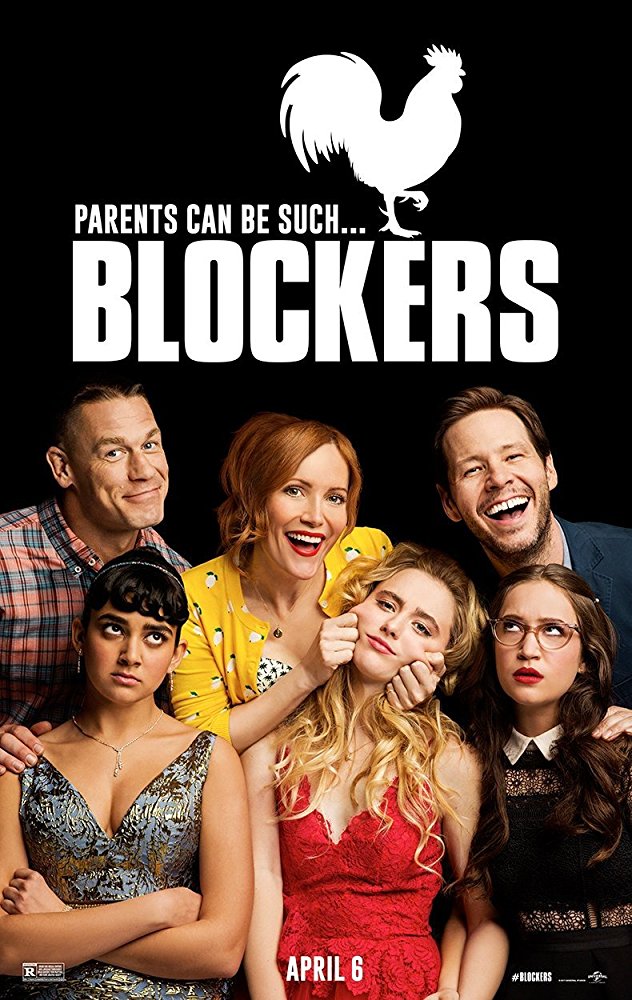
Blockers - 2018, d. Kay Cannon - Crave


Since their inception - in a way spinning out of Peter Bogdanovich's 1971 classic(?) The Last Picture Show - the raucous teen comedy have largely been told from a male point of view.  Even those stories starring female leads can often be pretty male-gazey.  Sure there are plenty of great teen, female-led high school comedies - Easy A, Mean Girls, 10 Things I Hate About You - and more recently a lot of great light dramas - Eighth Grade, Lady Bird - but they're hardly what I would call raucous.  That type of female-led high school comedy has been pretty elusive up to now, but within the span of a year we have two comedies with a very similar set-up that finally give us the teen girl equivalent of Superbad or American Pie.

Both Booksmart and Blockers take place in the final days of these young women's grade 12 semester, leading up to Prom night.  In Booksmart, Molly (Beanie Feldstein) and Amy (Kaitlyn Dever) play best friends who have foregone any socialization and partying to focus almost exclusively on academic endeavors and getting into the best colleges.  When they find out that all the popular, partying kids have also been accepted into the best colleges they find themselves in a mad scramble to make big swing memories in their final days as high schoolers.  Blockers meanwhile finds a trio of besties (oof, don't feel good about using that word) who enter into a sex pact, a promise to all lose their virginity on Prom night. When their parents catch wind of the pact, they take extreme measures to try to stop it.  Despite this premise, the film gives the teens and their parents equal time and attention.

While Blockers is definitely more sex-focused than Booksmart, both films wade in playing with, warping, or defying the conventions of the high school comedy.  With Booksmart this entails dispensing with the mean girl collective and avoiding bullying behaviour.  At this point at this upscale Californian high school everyone is tolerant of each other, and, in fact Molly and Amy are only outcasts because of their snobbish attitude towards partying.  Once they decide to let loose, they're very much welcomed in as part of the crowd, unexpected highlights of the evening even.  Meanwhile, Blockers is about defying the stigma of female sexuality, that it's something to be protected and preserved, which is the opposite of male sexuality which should be frivolous and conquering.  Where American Pie and its raunchy predecessors were about the desperate gambits of teen males seeking their first sexual encounter, Blockers dispenses with the desperation.  Julie (Kathryn Newton) is in a longtime relationship already and makes the decision to go all the way.  Sporty, confident Kayla (Geraldine Viswanathan) is ready to jump in the mix and seemingly picks out a suitor at random in the lunchroom.  Sam (Gideon Adlon) meanwhile reluctantly agrees to the pact, less because she's unsure of having sex, and more because she's still in the closet.


I had expected the adult leads of Blockers - Leslie Mann playing Julie's mom, John Cena playing Kayla's dad, and Ike Barinholtz playing Sam's dad - to be very single minded and collectively unified in their venture to interrupt their kid's prom night, but Mann's Lisa has very personal reasons for her actions, while Barinholtz's Hunter more just wants to stop his daughter from having sex with a boy, keenly aware of his daughter's homosexuality.  Cena's Mitchell is the knee-jerk reactionary father, his big muscles and sports metaphors are quick shorthand to acknowledging the character's discomfort with his daughter's femininity and sexuality.  Throughout, Blockers constantly reminds you how wrong-headed the adults of the film  are in thought and behaviour, despite their seeming best intentions.  Hunter, despite being the wild card of the group, is the voice of reason for them, but his backstory leads to frequent dismissal.

Amy in Booksmart is also a lesbian, but she has been out for some time, but due to her anti-partying stance she hasn't even ventured to look for a girlfriend or deign for a first kiss.  With their newly liberated partying selves, Amy decides to (awkwardly) chase her long-time crush.  Amy's parents (played by Will Forte and Lisa Kudrow) are religious and have a hard time with her being a lesbian, but love her dearly and make pained efforts towards reluctant acceptance.  I like both films approaches to this, showing different stages of both acceptance of self and familial acceptance of one's sexual identity.

As comedies, both are quite funny.  Blockers feels more Hollywood, where the situations the characters get into and their responses to them are often larger than life, while Booksmart's humour is more grounded in the characters and the gifted comedic delivery of Feldstein and Dever.  Both have a "one wild and crazy night" setup but Booksmart has a razor sharp focus on two of its players (with an incredibly well-established microcosm of characters to surround them) where Blockers has to split its attention six ways (and yet does so remarkably well). 

Both films derive unique and distinct identities for all of their teen players.  There's no hive mind here, and, especially in the case of Booksmart there's a real tendency to lean away from the superficial.  Even some of the way aside characters seem to have a rich inner life we don't get to explore.

Teen comedies like this can age poorly and rapidly so.  In the moment Booksmart is a "must see", an incredibly confident and impressive directorial debut from Wilde.  Blockers is more of a "worth seeing", a movie that can't decide whether it's playing to an adult or teen audience but impressively works for both.

Tuesday, October 6, 2015

3 Short Paragraphs: No Reservations

2007, Scott Hicks (Snow Falling on Cedars ) -- Netflix

Even though most of my energy will be to the horror movie I just watched, I have to clear these out before they get relegated to the I Saw tag.  Seems rude for some of them; for others, like this one, not so much. Normally food movies are always a good pick for a day when nothing else on the My List hits, and one that is a remake of a popular European movie usually makes for a win. All of the great food movies are remakes of others (slap me on that one; the originals are great to begin with) and there are only a few that originated over here. I refuse to link to any listicals as they all seem to want to include Charlie & the Chocolate Factory. A pile of giant candy does not a food movie make.

This is a remake of  the German movie Mostly Martha, and not a dramatization of the Anthony Bourdain book. The latter would have been better. Kate is the chef at a popular resto in Manhattan. She dedicates her entire life to the place, focusing on food all day and often all night and even waking up on her days off to visit the early markets. The movie wants us to believe it is to her detriment, but really, the people in the kitchen like her and its only her inability to deal with asshole customers that sends her to a shrink. The sudden death of her sister plops a niece in her lap and the single woman has to learn about life work balance.

This is a good plot. She accepts her new role as adoptive mom and attempts to insert the new relationship into the existing working one. Things don't work out and her work begins to suffer, which then inserts Aaron Eckert into the resto. More conflict. All good for drama. But the movie presents everything in a quick cut, snap snap snap snap snap snap, style that never allows anything to be absorbed. I just never felt a story was being told, which would have been forgivable if I was looking forward to the next food scene, but those were sorely lacking, making me doubt it was even a proper food movie.

Plus, I never trust a movie with only one known poster.

Monday, May 20, 2013

3 Short Paragraphs: The Place Beyond the Pines

2012, Derek Cianfrance (Blue Valentine) -- cinema

Graig is right. Ryan Gosling has already created a violent indie micro-genre for himself in only a few films, one of them being Drive by Nicolas Winding Refn, and even weirdly enough, the upcoming Only God Forgives. I think it more says what stands out for us with Gosling, than any real attempt at choosing a character typecast.  There may even have been violent characters in his more Hollywoodish earlier films, but it is not this image that seems to be emerging.  For sure, the prevalent images for the marketing of The Place Beyond the Pines were the violent, thuggish character Gosling plays, with his tattoos and bad-ass motorcycle.  Interestingly enough, he is only one facet of the movie.

This is a movie with three definitive acts.  I never truly thought of movies in acts, at least consciously, until Graig and I started talking movies.  Like with board games, he sees structure where I only see play.  He inherently sees a movie broken into three narrative pieces while I generally see only a story. But this movie is so much about its three view points, three jarring narrative shifts. We have Gosling, in the late 80s-early 90s (more likely a town in the mid-90s but stuck in the 80s) riding bikes and robbing banks.  We have Bradley Cooper, made a hero-cop by a shooting but challenged by the heroism of his act, and by corruption in his force.  And finally we have the children of the two men, fifteen years later, each dealing with their dads' legacies and failing in their own ways.

I so much wanted to enjoy this movie, but something nagged me about it as i watched it. Beautiful cinematography, wonderful acting and compelling characters. But it all felt so unfortunate that I didn't want to be watching. It does say something for a movie, that it can show tragic happenstance, and make me not want to watch it -- me, the guy who joyfully watches countless numbers die in disaster movies or emotionlessly watches mooks fall in action movies. I guess, I was pulled in enough that I just didn't want to see what I was seeing.  I have to admit that some parts did drag a bit but it was more the moroseness I felt, that dominated my dislike.  I think I will enjoy it more in a re-watch for the sake of an academic viewing.