Showing posts with label Marvel. Show all posts

Sunday, August 2, 2026

KWIF: Spider-Man: Brand New Day (+2)

KWIF=Kent's Week in Film. Back at it in cinemas, doing the after-work movie thing. The goal is to have an average once a week in theatres for the year (so 52), and currently I'm behind pace (27 screenings, 2 rewatches, 1 rep screening over 30 weeks). I'm going to have to push myself out of my comfort zone, like I did this week, and just try something out, rather than going by critical response or leaning into genre films, or basing desire on trailers I might have seen. It's nice to have a project I guess.

This week:
Spider-Man: Brand New Day (2026, d. Destin Daniel Cretton - in theatre)
Rose of Nevada (2025, d. Mark Jenkin - in theatre)
The Dink (2026, d. Josh Greenbaum - AppleTV)

---

At the end of No Way Home - the previous entry in the Tom Holland era of Spider-Man movies - in order to repair a rip in space-time he had caused, Peter Parker (Holland, The Odyssey) had Dr. Strange erase everyone's memory of Peter Parker, including his girlfriend M.J. (Zendaya, The Odyssey) and his best friend Ned (Jacob Batalon, Tarot). 

Brand New Day starts with an montage of what Spider-Man and Peter have been up to across a four year span, which is basically fighting super-villains (we see quick glimpses of a half dozen or so of Spider-Man's plentiful rogues gallery here) and following Ned and M.J. on social media, but keeping his distance.  They were all supposed to attend M.I.T. and dorm together, and Peter has missed all that. The death of his Aunt May in the prior film has him thinking that, if he's going to do the superhero thing then he needs to do it alone, or else the people he cares for might get hurt. His only meaningful connection is with a detective Jean DeWolff (Liza Colón-Zayas, The Bear), whose innate compassion and empathy find her unwittingly playing as an Aunt May substitute for Peter.

The plot of Brand New Day, kicks off with a runaway tank heading for the headquarters of Damage Control, the governmental organization responsible for cleaning up after superhero battles and alien incursions. Spider-Man stops the tank only to find inside not a hardened criminal or military wing-nut, but a janitor who suddenly doesn't know where they are nor how they got there. Spidey tracks that someone is hopping bodies, and is after something within Damage Control. Spidey manages a meeting with Bill Metzger, head of Damage Control (Tramell Tillman, Severance) who, somehow, Peter doesn't clock is maybe doing more nefarious things beyond his department's mandate.

Peter's attempts to track down whomever this new supervillain is (with a bit of assistance from New Avengers Yelena Belova (an always welcome Florence Pugh, Thunderbolts)) prove difficult, in part because he's distracted by the fact that his body is mutating, deeply affecting his emotions. (He consults Bruce Banner (Mark Ruffalo) for help on how to control his mutation). His fight with this new, unseen villain escalates, and they discover his secret identity and also his affection for M.J. and Ned. Threats on their life put them right back into the mess he was trying to avoid, but, he also finds the connections in his life that he's been so desperately missing.

The promise of the end of No Way Home was street-level Spider-Man, a guy with no connections to Tony Stark and all his resources, a guy with nothing but a spandex suit and web shooters doing his best to help out his city. Sony had been handed the perfect opportunity to detach itself from the flagging MCU, to have Spider-Man stand on his own, the golden goose of Marvel's pantheon. What's utterly clear with this film is that the Peter, M.J. and Ned dynamic is its emotional core and its greatest strength. If you just have those three in a Spider-Man film, it's going to work.

But instead producer Amy Pascal chose to continue the partnership with Marvel producer Kevin Feige and so Brand New Day not only keeps Spider-Man firmly tied to the great Marvel world, and also is used as a strategic launch point for yet another wing of the MCU (one which Sony has zero stake in). Here we get, as mentioned, appearances from Hulk and Black Widow as well as, surprisingly, teaming Spider-Man up with Frank Castle, the Punisher (Jon Berenthal, The Bear), which winds up turning into a sort of buddy cop-style dynamic of bickering and opposing world views, but also respect and fraternity. Plus, Peter still has a high(er) tech computer set-up with an AI (voiced by Naomi Watts) and a head's up display in his mask helping him out.

There's a totally spoilery element I can't talk about without spoilering, but its revelation (which will only be a surprise to anyone who doesn't watch or read about MCU speculation) threatens to derail the entire picture into some half-baked backdoor launch for more Marvel stuff. The character who winds up being Peter's adversary here is not much, if at all, a part of the Spider-Man real of Marvel comics, and soon could very cynically denounce the character's involvement in this film. But, credit to writers Chris McKenna and Eric Sommers whose script manages to thematically pull together this character's emotional arc with Peter's, and to use that character to accelerate Peter's naval gazing into action.

Would Brand New Day have been a better film had it found a way to tell the same story without the trappings of involving so much Marvel world building (which are just as often distracting as they are exciting)? Absolutely. But at the same time every incursion here of the MCU into Spider-Man's friendly neighbourhood has purpose. There's set-up and payoff to all of it. Plus, I'm still a comics nerd, and this connect universe shit I eat up with a spoon.

Destin Daniel Cretton (Shang-Chi) takes over the Spider-Man franchise from Jon Watts and...wow. It's not that Watts did a bad job at all. Far from it. Each of Watts' entries were supremely enjoyable, but Cretton uses his extensive budget to really, really push the visuals storytelling of how Spider-Man engages with the world. The web-slinging scenes add geometry to the equation which really give you the sense of Spidey's reaction time. We feel how fast the world moves by, the velocity of the swing and the spring of Spidey's webs. It builds upon what Mark Webb was attempting with POV webslinging in the Andrew Garfield Amazing Spider-Man and goes much much further. And with Spidey's wall-crawling ability it's like Cretton watched the Spider-Verse movies and questioned why that kind of camera work couldn't be done in live action. 

It's visually an exceptionally playful movie, and its stars are all very game. Holland seems even more invested in the franchise now that Watts has moved on. He seems like he's very much committed to taking the lead here. No doubt he was the champion of the four-year time jump, as Holland, while still very youthful, does now look like a man. Zendaya is one of those performers for whom everything seems effortless. She can convey so much with so little and while much of M.J.'s character here rests on what came before, Zendaya gives everything you need to know where this character is (and more) without really any verbal confirmation. The Punisher here is toned down to PG-13 levels, so his severity from the Netflix/Disney+ runs is tamped down quite a bit, but this gives Berenthal a chance to be playful in the role in a way not afforded to him otherwise, and he's a damn delight. I've never enjoyed Frank Castle even half as much as I do here. Besides a few other MCU mainstays, the rest of the main cast is filled out with amazing performers from hit streaming series, and they all deliver.

The sum is a very entertaining, surprisingly emotionally grounded movie that fits with what came before but also pushes forward.

---

I ran into a friend at the theatre coming out of a late-afternoon screening of Rose of Nevada. He had only a vague awareness of the title, and was very interested in me sharing my thoughts and opinions of the film. Unfortunately, I really didn't have the time yet to process what I had seen. Not that it was anything scandalous or salacious, but Rose of Nevada is such a ... unique(?)... peculiar(?)... distinctive(?) film that I really wasn't sure how to receive it and equally unsure of my own reaction to it.

The opening minutes of Mark Jenkin's latest film are a montage of static images of the remote Cornish fishing village, its derelict docks, and run-down vibes. We see extremely brief glances at some of the characters in our films, and nobody looks happy.  The first half of the first act is somewhat perplexing, as we're slowly let in on the connective threads of the images we've seen, but even then, there's a real lack of exposition. Wherever in Cornwall this is, the people don't talk much. 

The score, intense with it's low registers tones, implies that there's something...haunted about this place, and there's just a whiff that something ever so slightly sinister is afoot. The images don't corroborate the tone, but the intention is there. It's like those youtube videos where someone recuts a trailer to a comedy or drama with new music to make it a horror film. This is low-key British drama that carries something else with it.

Jenkins films in a grainy 4:3 aspect ratio, so the movie looks like 1970's era British television, and it has to be intentional. Jenkin leans into the aesthetic with framing and lighting that seems like it would be at home on Coronation Street. And yet, it's not at all a made for TV production and very much feels like a film that yearns for some nostalgic trappings of times past.  There's an etherial quality to the camera choice, the editing, and the shot composition. Maybe it's recency bias, but I couldn't stop comparing it to Peter Weir's Picnic at Hanging Rock, which would make for, tonally, an apt double feature.

The problem with even providing a loose plot of the film, it doesn't convey the equally fascinating and perplexing way in which the story is assembled and told. What I write herein is pretty straghtforward, but most of what's even laid out here is doled out in nuggets in the film's telling. 

The gist of the story is that this small town survived almost entirely on the service of a small fishing trawler named Rose of Nevada. It went missing about 30 years ago, its two crewmen lost at sea. The ship, however, has returned. The very same ship, barely the worse for wear. Mike (Edward Rowe) has been the longstanding money man and organizer for the town, is stunned by its arrival, and does everything to disguise the fact that it's the Rose. The only person who's in on it is Tina (Rosalind Eleazar, Slow Horses) whose husband was one of the lost crew.

Mike wastes no time setting up a crew to send the ship back out and get to work, and this includes handsome vagrant Liam (Callum Turner) and struggling father Nick (George MacKay), as well as a mysterious old salty dog named Murgey (Francis McGee) who takes on captaining the boat and teaching the boys the trade.  

Their three days at sea go fairly smoothly (though there's continued intensity in the soundtrack as well as the editing and penchant for cut ins that make you think anything can go wrong any second). The ship arrives to shore to find a party of people waiting, ready to get to work off-loading the haul and processing it.  But, Nick realizes, he's not home. He's 30 years in the past. His neighbours, whom in the future were still grieving the loss of their son, in 1993 think him to be their son returned from his fishing sojourn. He panics about being apart from his wife and child.  Liam, meanwhile, is believed to be Tina's estranged husband, and given his vagrant and solitary life from before, he's ready to settle into.

But the sea beckons, and the town can only survive if the fish come in. Everyone has a role to play, and so Nick and Liam are back out to sea for days on end. Each time, Nick hopes to return home, only to find himself in the past...where he has a role to play in the survival of this town if he can accept it.

It's a time travel story unlike any other I've seen, the fantasy aspect serving only as a mechanism to highlight how entire cultures have dwindled in the past 30 years. Here, the profession was what the community gravitated around, but it hasn't been like that since the disappearance of the Rose, and the community has suffered for it.

It's a methodically paced film, uninterested in the hows or whys, but instead focused on what it means not just for a character or two, but for the community and maybe society in macro. I still can't tell you if I truly liked it, but at least I'm certain I didn't not like it. I was captivated and intrigued constantly, unsure of whether Jenkin would drop the other shoe or not, or escalate the scale of the story at all. 

It's definitely different, and just as different doesn't have to mean bad, it also doesn't have to be good. But I'm pretty sure, at the very least, Rose of Nevada is good. I'll have to tell my friend.

---

I was writing last week about the sad state of comedies in North American cinema, and then, as if to accentuate the point, AppleTV released The Dink on their streaming service to minimal promotion and very little fanfare.  AppleTV doesn't release most of their features in theatres, at least not widely. They might get limited showings for meeting awards requirements but outside of F1, Argylle, Fly Me To The Moon, and Killers of the Flower Moon, I don't recall any others getting wide release.

The Dink has no aspirations of being awards bait, so it wasn't going to get one of Apple's token limited releases, but I would still be curious if a small-but-enjoyable little comedy like this could have gotten any traction in cinemas.  

The set-up is fairly standard sports-comedy fare: Dustin "The Hammer" Boyd (Jake Johnson, Let's Be Cops) was once a promising junior tennis champ who lost it all when, in his first big pro tournament, supposedly, Andy Roddick (also in his first big pro tournament) sabotaged the match, causing The Hammer a wrist injury costing him his career. Now he's a tennis pro at the racquet club his father runs. The club is getting hit with demand to increase their pickleball presence, to cede more courts to the low-impact racquet sport.

Most sports comedies, though, tend to be about that one final shot at glory, about the protagonist getting another shot at the fame that they lost. Here though, Dustin's just reaching for his father's acceptance. Chuck Boyd (an overqualified Ed Harris) has barely any affection for his son. He's mostly embarrassed by him, sees him as a failure, and doesn't trust him. Dustin always wants to prove himself, but he's never given the opportunity.  But Chuck, in trying to ward off the pickleball plague has found a by-law in the club's charter that allows decisions to be decided by a duel on the courts. Dustin, desperately, wants to be the guy in that duel, only to be ruled out after he injures himself trying to show off jumping over the net.  

Dustin's doctor (Ben Stiller) prescribes him pickleball as a low-impact rehab treatment, and also some dating service called Sticky Honey that he seems pretty intent on. Hiding his shame, Dustin joins some septuagenarians on the pickleball court and makes fast friends with Candace (Mary Steenburgen). 

Their unlikely friendship is the core of the film, less so tennis or pickleball. It's a sweet and funny quasi-May-December that, for all the sillier bits, remains pretty emotionally grounded.  This isn't a Will Ferrell or Ben Stiller sports comedy like out of the 2000s, it's not going to extremes or pushing the plausibility of what can happen to absurd levels.  Its characters don't lack self awareness, and their actions don't contradict their emotional intelligence. I hesitate to call it a smart comedy, but it's certainly not dumb.

The surprise here is that this is a film at all, that AppleTV didn't ask to have this rather tightly constructed 90-minute script turned into a 8-or-10 episode TV series. The tide winds are changing. Maybe there's hope for more comedy movies, and more comedies in theatres coming.


Thursday, November 6, 2025

3 Short Paragraphs (Or Not): The Fantastic 4: First Steps

2025, Matt Shakman (It's Always Sunny in Philadelphia) -- download

OK, to be perfectly honest, I am kind of angry with this movie for being so ... boring? And also reminiscent of an already twice portrayed plot line? I wanted to like this movie more, and even worse, I assumed I would absolutely love it. I thought it would be fun, over the top referential material set in a cartoony The Incredibles meets The Jetsons type world that would set the tone for the climax of whatever-fucking-Marvel-Phase-we-are-in. Instead, I felt like we got retread plot lines, barely likeable characters and, and yes I am surprised I am saying this considering what's on the screen, far too little world building.

Part of me/him wonders whether the writer/director were taking this piss, in how the plot is presented, at superhero movies and Marvel movies in particular.

For the pedantic Marvel fans, the first scene identifies this as Earth 828, vs the prime MCU which is Earth 616, which in turn lifts its designation from the comics. So, no John Krasinski here. The movie kicks off with flashbacks to the origin story, of four friends & family who get zapped by cosmic radiation while on a space mission. The movie has Reed refer to the crew as "the most brilliant scientific minds on the planet" but that has got to be sarcasm, right? Other than Johnny "working the problem" in trying to figure out what the transmissions from space are, we never see any of the others, other than Reed that is, do anything remotely scientific. I almost felt as if Reed was truly saying, "Other people would take trained astronauts and scientists, but I am more than enough brilliance for them all, so I will take my family, whom I trust implicitly." Yeah, it doesn't work out for him, and its the focus of the rest of the movie, as grumpy, depressed Reed Richards constantly berates himself for not being smart enough.

But no matter, after they came back from space kind of weird, they became the planet's superheroes and we get a newsreel style recap of their best adventures including kaiju and The Mole Man, ala Jack Kirby styles. This also affords us a look at the Silver Age styling to the world, which looks like a mish mash of 40s, 60s and far future. Other than Reed's smarts, there is no commentary on why things are so futuristic, but it seems normal life. And this should be wonderful, but its... all empty backdrops? Like glitzy painted sets, this really neat bit of world building should have been entrancing but its barely window dressing. I was more enthralled by the similarly retro-future look to the Loki show than I was this.

Other than the newsreels we don't really get to see them being super-heroic before flaming rocks fall from the sky and a silver lady on a surfboard with a brushed back coif shows up heralding doom & gloom, i.e. Galactus. Not sure how I feel about Jennifer Garner being the Herald of Galactus, but she is the current It-Girl of the moment so not surprised she got the role. And let me be clear, no issue with her per se or the gender bent choice for the character, but I am not sure she got to bring anything to the role. With today's technology, you could literally have no-one play the role and its CGI status would have worked just as well. Anywayz, time for Reed to work this next problem -- who is this Galactus guy and why does he want to destroy the planet. And that leads to space travel.

Space travel does not go well. They FTL to a place where Galactus eats a planet, get grabbed by him, recreate the Superman scene with the weird glowy river, piss him off and barely escape. Oh, and Sue has her baby, in space, a baby that Galactus senses could quell his hunger. He offers to exchange Earth for the baby and, of course, everyone yells, "NO FUCKING WAY DUDE !"

My pith masks my mirroring of what Kent said ("I really wanted to luxuriate in the aesthetic of the film, but it so quickly becomes background") in that these space scenes could have been so (cough) fantastic ! I think of Guardians of the Galaxy Vol. 3 and its very basic but enthralling visuals of space travel -- everything just has a cool factor, while the depiction of scifi space here strikes me more as a YouTube scifi mood board collage. I just wanted more "oooo" and "ahhhhh" but all I got was, "yawn, OK go on." As for the team, the encounter makes only nodding referential use of the character power set.

Back on Earth for act three brings Reed again getting all mopey as he devises a plan to Save Earth without giving up his baby. And guess what, taking a flagrantly annoying note from Spider-Man: No Way Home the entire planet turns on them because they won't exchange one life (baby life) for that of the planet. I mean, I get it, they are afraid, but how quickly they turn on the supposed saviours of the planet... Of course, Reed's first solution, after he has reminded the entire planet of how his family has always saved them, fails completely, but not due to him but due to failure of other humans, i.e. Dr. Doom. Its a cute nod. In the end, they do save Earth but via an unexpected turn of events, a more hands-on approach actually making use of their power set, and a hail mary. 

But again, it didn't do anything for me. It was "basic MCU film making". It was just OK. It was "punch in the algorithm" scenery generation. It could have been so much more, and it wasn't and that is pretty much my statement for much of MCU in the ... last few phases? Again, I stopped paying attention to the phase concept after they got derailed and mashed together and abandoned and retooled and and and... Hopefully the coming Beyonder pulls a comic trick and REBOOTS THE ENTIRE MARVEL PARADIGM.

For the sake of completion, the characters are as follows. Reed Richards is played by Pedro Pascal (Wonder Woman 1984), Sue Richards nee Storm by Vanessa Kirby (The Frankenstein Chronicles), Ben Grimm (aka The Thing) by Ebon Moss-Bachrach (The Punisher), and Johnny Storm by Joseph Quinn (Stranger Things). The Silver Surfer, or Shalla-Bal, is played by Jennifer Garner (Weapons) and Galactus himself by Ralph Ineson (Ludwig). And because I love to point out Dr. Sharon from Ted Lasso, Sarah Niles (Heads of State) is the Fantastic Four's attache.

Oh, we agree.

Sunday, July 27, 2025

KWIF: The Fantastic Four: First Steps (+1)

KWIF=Kent's Week in Film.

This Week:
The Fantastic Four: First Steps (2025, d. Matt Shankman - in theatre)
Miller's Crossing (1990, d. Joel Coen - dvd)

---

There was a lot of promises around the latest big screen interpretation of The Fantastic Four: that it would be a return to form for the Marvel Cinematic Universe; that it would stand on its own two feet, no homework required; that it would be super-retro and fun, fun, fun; that it would be a fresh start for Marvel's "phase six"... among other promises either made or inferred.

The film measures up to a few of these promises and struggles to do so with others, which is not to say it's a bad film, but it isn't quite the experience it needed to be and there's one reason, and one reason only for it: Superman.

I hate to review one movie by comparing it to another (lies, I actually love doing that) but I noted at the end of my Superman review that it felt very experimental, that it was pushing the form of superhero movies forward. The Fantastic Four: First Steps, for all its trying to do different, still feels like same old, same old in comparison to the James Gunn film that came two weeks before. My feelings about Superman were positive, but hesitant in coming out of that film, but my esteem for the film has grown and grown in the two weeks since. I find myself thinking about it, and all it does so very, very well, and I have had an ever-present urge to go back and relive it again. There hasn't been an inkling of that with The Fantastic Four. Where I'm holding onto the memories of scenes and characters in Superman tightly, I'm letting memories of The Fantastic Four slip away without a fuss, and after watching First Steps my affection for Superman has only gotten bigger. Unfortunately this movie's biggest mistake was coming out after Superman, and not realizing that the rules of the game have officially changed.

(I'm struggling with whether to lean into the Superman comparisons, or attempt to approach TFF:FS on its own merit, and I'm going to try for the latter but the former is potentially going to sneak in. Let's get back to those promises.)

When we think about the MCU in its prime, it was all about growth. Every film was a gateway to the possibility of other films. It was what made it so fresh and exciting. At times it was like it was a riddle to solve, and so many of us would look at the clues and try to tease out what was to come. Part of the game was the MCU's penchant for defying expectations. But we had a decade of that which culminated in Avengers:Endgame, a literal endgame for everything it started with Iron Man. So trying to replicate that in the 5 years since has been a wildly mixed bag. During peak MCU, countless other studios tried to replicate Marvel's successes and failed, and then Marvel phase 4 (and more specifically phase 5) started to feel like just another imitator. The Marvel machine couldn't get away from being a machine, they had set up their formula and didn't really want to tinker with it because it had been so successful. First Steps carries with it the promise of tinkering, and while the formula may have changed somewhat, the base of it is still too recognizable as the formula, and that's a problem.

The first act of The Fantastic Four introduces us to this superhero family, to Reed Richards (Pedro Pascal), his wife Sue Storm (Vanessa Kirby), her brother Johnny (Joseph Quinn) and Reed's best friend Ben Grimm (Ebon Moss-Bachrach) who have already become champions of this parallel Earth that seems to have never escaped the aesthetic of the 1960s. A "helpful" newsreel breezes through four years of the Fantastic Four's history, from origin to how their presence has reshaped the world for the better and garnered them the adoration of practically everyone. It's an intense infodump that unfortunately is what passes for world building here. It does carry with it that naivete of America that shattered after Kennedy's assassination, where idols were heroes and vice-versa. The early tone that there's been this half-century age of innocence is inferred but not really reinforced. The arrival of Shalla-Bal, the Silver Surfer (Julia Garner), herald of Galactus, should be the inflection point of the age of innocence, as she tells of the world's impending end. The world looks to the Fantastic Four for a solution to their doom.

In between the newsreel and the Silver Surfer's arrival, we gets some moments that sort of establish character and dynamics. It gives us Reed's logical and pragmatic mind, not entirely devoid of emotion, but emotion is hard for him to render. Sue is the diplomatic one, the peacekeeper, and discovers she is pregnant, although apparently it was supposed to be an impossibility. Ben, transformed into a man of rocks, is making the best out of living a life as a man of rocks... and you'd almost think he liked it if he didn't feel so isolated inside his rock body. And Johnny is...energetic, I guess. The film does a really good job of establishing their family dynamic, how they each engage with one another, but it succeeds less in defining them each as individuals within that dynamic. 

The second act finds the team racing off into space to confront Galactus, and besides the unnecessarily laborious takeoff sequence, the space venture and meeting Galactus sequence is the film's most stimulating (if only the trailers and the merchandise and promotional materials didn't spoil the visual for Galactus already). The encounter with Galactus goes poorly, and the realization is that this is perhaps the worst adversary to debut the team against as he's impervious to fire, the rock-man's punching would have no effect, Reed's super smarts can't really match that of a celestial (and his stretchy powers are of little use), and Sue doesn't quite know how to use her powers maliciously (like putting a bubble in Galactus' head and expanding it...even if that wouldn't work on a celestial, worth trying maybe?).

That opening newsreel tells us who these characters are and sort of breezes past their abilities, but the film really needed an opening sequence that showed us their abilities both in full action and being effective. Otherwise Reed stretches to grab things, Johnny flies around, Ben lifts a car to impress children and Sue turns invisible to avoid an awkward political encounter. Not really scintillating stuff.

I really wanted to luxuriate in the aesthetic of the film, but it so quickly becomes background, and the filter put over the film kind of muddies it all. I think it's trying to be gauzy but instead comes across more like AI slop. Superman proved you could have a vibrant, comic-booky world, and The Fantastic Four somehow, despite having the Mole Man and Galactus, still seems to fear bright colours and embracing the spirit of 60's comic books. It's a film that really wants you to feel the weight of the world ending and understand how the burden of solving this problem sits on the shoulders of these characters so heavily. It loses what sense of fun it had in the process. It feels like the Marvel machine in action. It feels like a film-by-committee with no personal flair or flavour. You can sense the producers in the background putting such pressure on "getting the Fantastic Four right" that they don't let the filmmakers play at all. This feels like work for them, if not necessarily homework for us.

But at the same time, the third act couldn't help but constantly trigger me into thinking about the rest of the MCU from which I this is supposed to be divested from. Reed's various solutions to the Galactus problem all feel like triggering points for the Fantastic Four's entry in the MCU proper, and I found that distracting. Again, part of the Marvel machine has taught us to exprect teases of "what comes next" and I think if we were having more fun we wouldn't be so distracted by it. I mean, we get a scene of a Kaiju-sized Galactus tromping through New York City...why are we not having fun with this?

Much of the film's plot centers around Sue's pregnancy and the fate of baby Franklin Richards. My wife wisely pointed out that Franklin becoming such a focal point pulls focus away from everyone else to their detriment. Perhaps it's because some of us comic nerds know what Franklin is, a living deus ex machina machine that unmake and remake reality, and rather than Franklin being the next step in this family, he feels like both a maguffin and a plot device seeded for the future.

The casting is really good, and it's a very small, contained cast. Beyond the main four, the Silver Surfer and Galactus (Ralph Ineson), there's FF's press agent Lynn Nichols (Sarah Niles), a talk show host (Mark Gatiss), a potential love interest for Ben (Natasha Lyonne) and the Mole Man Harvey Elder (Paul Walker Houser absolutely destroying his one big scene... this film should have opened with the classic first issue battle between the subterrans and the FF just so we could get more of Houser). That's pretty much it, besides Herbie, perhaps the best bleep-bloopy robot in cinema outside of Star Wars?

Michael Giacchino's score is brilliant, sweeping and bombastic, with it's main theme heightened by choral chanting that is both epic and kind of cheesy in a fittingly 60's vibe way. In a film where you have a near-comics-accurate Galactus, it's effusive praise to say it's the best part of the film. 

If this review sounds pretty negative, it's primarily because I'm slightly disappointed by the film. I wanted this Fantastic Four to be a blast, a rollicking good comic-booky time (like Superman was) and instead I got a good-not-great coldly impersonal Marvel movie that, while full of spectacle and the best representation of Marvel's first family so far, didn't deliver on what I felt it promised.

---

My viewing of the films of the Coen Brothers continues with the Coen's first venture into period filmmaking, taking us back to prohibition era America (city unnamed). Of course Miller's Crossing is a film about crime, but where the Coens usual strength is in small-scale crime with perpetrators who rapidly get in over their head and frantically try to dig their way out, here they put their spin on organized crime.  

The usual sense of organized crime in cinema is grandiosity, making it feels epic in scale, and important. The Coens, though, make it small in focus, as we follow Tom (Gabriel Bryne), the right-hand to an Irish gangster, as he tries to avert a mob war, and then survive it when it starts. While a mob war may sound like an epic backdrop, the Coens mostly only show it from Tom's perspective, and he's manipulating the fringes, both trying stay out of it while being the eye of the storm.

Tom is, in true Coens fashion, a flawed protagonist. He seems to have a moral compass (for a gangster) and a fierce sense of loyalty to Leo (Albert Finney), and his advice always seems to be in Leo's best interest. But he's also a gambling addict, dedicated to paying off his own debts, but incapable of constantly incurring more. He's also sleeping with Verna (Marcia Gay Harden), and probably loves her, even though she's dating Leo and he knows she's bad news.

The Italian mobster Johnny Caspar (the incredible Joe Polito) asks Leo to whack Bernie Bernbaum (John Turturro) a problematic actor in his fight fixing scheme, but Leo refuses primarily because he's Verna's brother. Tom tries to convince Leo that Bernie is bad news and Verna's only keeping time with him to keep Bernie safe, but it falls on deaf ears. As tensions escalate between the Italians and the Irish, Tom does the only thing he can do to try and get Leo to listen, which is be 100% honest with him. It winds up backfiring and Tom is excommunicated. 

More than anything Tom seems to want to avert war on the city's streets, so he starts working for Johnny Caspar, which doesn't sit well with Johnny's right hand, and soon honest and loyal Tom starts spinning a web of lies that even he might get trapped in. It's a Coen Brothers specialty, making a mess and swirling it around and around watching the fragments scatter and collide. If it seems like Tom has a plan, it's a highly improvisational one.

I can't think of a move Miller's Crossing makes that is a wrong one. It's simultaneously tense but breezy, moving along fluidly without any stray motions. Byrne, Finney, Turturro, Harden, Polito and J.E. Freeman are all in top form in these fully realized characters, each seems to have their own inner monologue driving them that is telegraphed so readily in their performance without needing to externalize it. There's a lot of the comedic Coen Brothers touches to them which only serves to ground them as human rather than archetypes.

Barry Sonnenfeld as D.P. makes this film look phenomenal, and the whole picture is about having room to breathe, about space. So many sequences highlight the space between people or the distance one has to cross to bridge the gap. Sonnenfeld uses a lot of wide shots, and he holds the frame rather than cutting between the wide and the action shot. Miller's Crossing is patient in that regard, it's not quick to move, it lets the moments sit and play out. This is Sonnenfeld's last film with the Coens before he starts his own directorial career, but he, along with master composer Carter Burwell, are key components to the Coens early success. (Next up is Barton Fink with Roger Deakins providing cinematography, so there's going to be no degredation in the visual department, that's for sure, and Burwell's with the Coens for the long haul).

Sunday, July 6, 2025

3 Short Paragraphs (Probably Not): Thunderbolts*

2025, Jake Schreier (Beef) -- download

Definitely not.

Stubbing (more like preambling) this before I forget it, because if the few readers out there have happened to notice, I have been slowing down of late. This is not my 3265th Hiatus just a very real state of change going on in my life, some very real person shit that, despite my usual habit of blathering on about all my personal baggage, I will not be getting into here. Kent knows. That will suffice. But it has impacted how I write, impacted how I think, impacted how I watch; the latter primarily in that I have a new Life Schedule right now, and that doesn't often include sitting by myself watching movies. Oh, a lot of TV is being watched, but, y'know, despite that brief experiment, still not interested in writing about TV.

OK, that's out of the way.

I did not, in fact, get out to see this in the cinema, as I hoped to. I did not, in fact, outrageously enjoy this, as I expected to do. It had not been hope; I had been convinced this movie would be right down my alley, and yet... it was just OK. 

In some ways, it is fair to call this movie, "Marvel's Suicide Squad." It is a movie about the MCU anti-heroes, at best, or villains, to a degree. It is a movie about the Bad Guys being re-tooled into being the heroes and, spoiling something that attempted to stay hidden for quite some time, into being The New Avengers. Except, almost the entirety of that revelation is buried behind a "14 months later" coda. But yeah, for the first time, DC flipped the table on Marvel and still retains the better of the two executions of an idea.

I will let Kent "we disagree" on that note, cuz he probably knows the real comic book Thunderbolts and can explain in educated details how I am wrong. But he probably won't; he's far too gracious with my foot-in-mouth syndrome.

Luckily, this movie starred my favourite character and portrayal of a character in MCU-dom -- Yelena Belova (Florence Pugh, Oppenheimer), of Black Widow and Hawkeye fame. Like her sister Natasha Romanov, or Black Widow, she was raised in the Red Room, a secretive Russian agency that trained assassins from childhood. Unlike her sister, she hadn't escaped of her own volition, and not until the circumstances of said movie. And even after she has escaped, and the Red Room has fallen (quite literally), she remains what she was ... a quippy, snarky, violent killer. And that leads her right into the hands of CIA director  Valentina Allegra de Fontaine (Julie Louis-Dreyfus, Enough Said), who kind of presents as the less than savoury Nick Fury, as de Fontaine continues to use Yelena for her wetwork skills. And that work eats away an Yelena's soul.

When the movie begins, Yelena professes a desire to leave de Fontaine's employ and is sent to a top secret mountain base to kill someone who wants to steal from de Fontaine. Note to bunker builders, if you want to make a top secret base with an even more secret room "a mile below the bunker", don't start on top of a mountain. It just seems... flagrant. Anywayz, Yelena is attacked before she can stop said thief and ... well, we catch on pretty quick. A was sent to kill B, B was sent to kill C, C was sent to kill... well, you get the idea. The alphabet squad includes: John Walker (Wyatt Russell, Overlord), the Asshole Captain America, Ava Starr (Hannah John-Kamen, Killjoys) or Ghost, the villain from the Ant-Man movie, and Antonia Dreykov (Olga Kurylenko, Quantum of Solace), or Taskmaster from the Black Widow movie, another pawn of the Red Room. They all punch, shoot and stab the other, all playing "I am not here for you, just them" game, with Yelena catching on almost as quick as we, the viewer, does. But before she can halt everyone, Ghost shoots Taskmaster in the head.

Wait, what? Yes, like the opening sequence of Gunn's The Suicide Squad, we start by killing off one of who we assume is the main characters. Its a shock, and frankly, I didn't like it. It was there for only shock value, but also to drive home that all these characters are amoral, cuz nobody mourns her, even when they realize her death, and the possibility of them all dying, was de Fontaine's plan all along -- insert evil cackle.

De Fontaine. She's been a villain-in-waiting for a few movies and TV shows. Unlike Thanos, they have been spreading her thin on the toast for some time now. But Marvel had a lot of loafs of villain in the oven over the past 10+ years, many of which just fell flat. If anything, that is more adherent to the comics where there are tons of villains and supervillains and inbetweeners. Not sure I believe it works in Cinematic Universe-dom. I don't like her as a character (you are not supposed to), and I don't like her as a plot device. To be honest, I kept on expecting her to become a Hydra-lite villain as the character always struck me as a riff on "GI Joe" character, Baroness. But I am not a big Joe fan, so I will once again let Kent talk that one through. At least here, in this movie, other people have noticed her being nefarious and have her up for impeachment, in front of a Senate Hearing. I just wish Real Life hadn't shown us how weak-kneed those hearings are, but still, the whole movie hinges on her scrambling to eliminate any evidence the Senators can use against her.

In much the way the original Avengers movie was supposed to established the assembling of the team because of a specific event, this movie uses the emergence of The Void (Lewis Pullman, Salem's Lot) in NYC as an opportunity for de Fontaine's original plan to actually be given light, despite her mishandling of it. She has literally caused the event that allowed her to use The New Avengers to stop. If she had perhaps intended on that happening, I would have enjoyed her character more, but no, its unintended consequences, leaving her more as comic-relief than supervillain.

If anything saved the movie for me, let me return to my opening comments on Yelena Belova. As Kent says, this movie is her movie. She's the only one playing a real character, and everyone else (maybe Bob to a lesser degree) is there to be either support, or comic relief, to her part in the story. She's deep in the shade of gray of moral behaviour, but unlike others, she knows she's there and... well, regrets it. But she also knows nothing else. She cannot pretend, like her "father" (David Harbour, Hellboy) does, and see herself as ever having been a hero, or becoming one. But she has her sister as a template, a statement of potentiality. Her heroic acts throughout the movie are not the "stop the rock from crushing the little girl" style, but more the being able to step out of her own way and attempt to help Bob. She sees a mirror in him being manipulated by an agency who doesn't care who they hurt in order to accomplish their goals. So, when everyone else wants to shoot or smash their way into stopping The Void, she sees, again, her sister as the template and tries sacrifice. Its not the most mentally healthy of choices, but its... something in the right direction.

Exceeept, de Fontaine is able to step in and pull her "this was my plan all along" out of her ass, and everyone, Yelena included, tags along. They become The New Avengers, for better or for worse. The coda introduces them "14 months later" dealing with the emergence of Sam's own version of The Avengers, which I hope they handle well, but I don't have much actual faith they will. Considering how Ironheart ended, RiRi is more likely to join de Fontaine's team than go anywhere actually heroic.

So, again, it was alright. I enjoyed myself, I like the quipping and the action was well done. But I wasn't all-in, I wasn't satisfied. Is it me? Will I enjoy more in re-watches? Probably, to both.

Kent's post from 10,000 years ago. I agree with everything he said, but he liked it way more than I did.

Friday, June 27, 2025

KsMIRT: well...maybe I do

 KsMIRT=Kent's Month in Reviewing Television in which Kent (that'sa me) reviews the television series he watched in the past month (*cough* April *cough*) in the patented 1-1-1 format. I have been writing these things rather expediently at the beginning of each month and yet, for some reason, sitting on them for weeks (and weeks), and posting them at the end of that month, so they're, like, a month behind (*cough* now, like, three *cough*). Whatevs. Let's do this:

This Month:
The Residence (8/8 episodes, Netflix)
Mythic Quest Season 4 (9/10 episodes, AppleTV+)
Yellowjackets Season 3 (7/10 episodes, Crave)
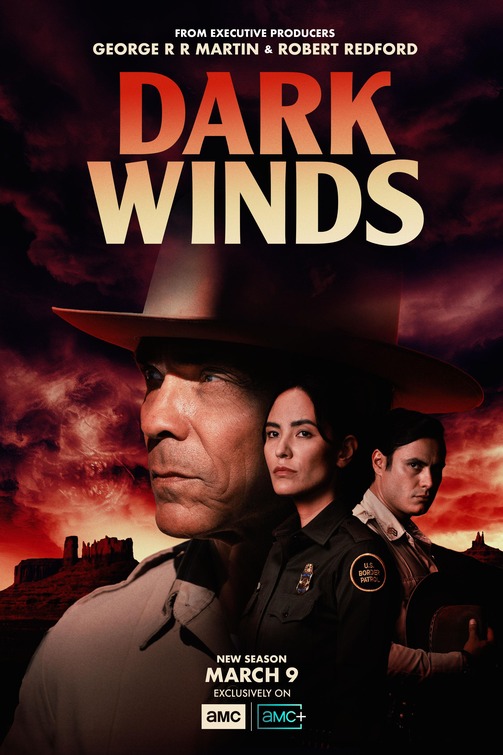
Dark Winds Season 1 (6/6 episodes, Crave)
Daredevil: Born Again Season ? (9/9 episodes)

---
created by Paul William Davies

The What 100: There's been a murder in the White House (not the president this time) during a state dinner with the Australian Prime Minister. The victim is the Chief Usher of the White House (Giancarlo Esposito) and the suspects are plentiful with, like, 60 staff members and residents plus nearly 200 guests. Given the sensitivity of the issue the chief of the Metro PD calls in a favour and brings world renowned detective Cordelia Cupp (Uzo Aduba) on the scene where she takes control locking the premises down for as long as she can against mounting opposition and unrest.

(1 Great) I haven't ever really considered myself a big fan of murder mysteries, but the recent spate of eccentric detective mysteries like the Poirot films, Knives Out mysteries and, especially, Poker Face have certainly brought me closer to fandom. Uzo Aduba makes for a wonderfully eccentric detective, as Cordelia Cupp obsesses as much about her birding as she does the case, and often applies her vast knowledge of the birds of the world to the case at hand.  She is exceptionally observant, patient, and never gets ahead of what she knows (she never identifies a suspect, more just persons of interest). She's certainly not a people person, but at the same time, Aduba manages Cordelias frankness as something more charmingly humorous than rude or abrasive. She puts some very powerful people in their place.  8 episodes is a long time to maintain a murder mystery like this given that most of these kinds of stories are done in a 2 hour movie or 1 hour TV show format, but the show makes it less a whodunnit and more about Cordelia's process.  She's an exceptional detective and she knows it, and has a little bit of an ego about it, but it's also clear she enjoys the challenge the work brings.  I also appreciated that amidst it all she remembers that there's an actual person who lost their life in all this. It's a pretty breezy watch.

(1 Good): I do find myself enjoying these big ensemble murder mysteries, and here we have a sizeable cast of recognizable faces. They're not all big, big stars, but if you've watched any TV/streaming in the past decade (or even just the 80's) you're bound to recognize at least a half dozen faces, if not more. You've got Jane Curtin (3rd Rock From the Sun), Jason Lee (My Name is Earl), Bronson Pinchot (Beverly Hills Cop), Isiah Whitlock Jr. (The Wire), Randall Park (Aquaman), Ken Marino (Party Down), Taran Killam (Saturday Night Live), Al Franken (Saturday Night Live), Eliza Coupe (Happy Endings), Mel Rodriguez (Last Man on Earth), Mary Wiseman (Star Trek: Discovery), and even Kylie Minogue as herself, among so many others. It's a sprawling cast that makes you point and say "heeyyyy!" over and over again throughout the first episode or two, and nobody is so obviously outsized compared to the rest to be the immediate obvious choice for who did it.

(1 Bad): I really did enjoy the show, quite a bit, and found it really, really easy to digest. Buuut... it was too long, and there were obvious points in the show that felt like padding. There were at least three lengthy cold opens that take place outside the central mystery, starting with the opening of episode 4 which finds Cordelia on Hawaii teaching her nephew birding. It's a nice mini-story in itself, but it really hastens the narrative thrust of the central mystery.  Likewise, the framing device of a Congressional hearing about White House security turns the whole story into a retelling, and, again, it was unnecessary. It is where we get former actual senator Al Franken and Eliza Coupe sparring with each other, but I don't think any aspect of this framing device was really servicing the story. This could have been 6, or even 5 episodes easy. 

META: The final episode is almost 90 minutes, so, movie length. The majority of this episode is Cordelia assembling her shortlist of persons of interest (not suspects) and then walking them painstakingly through the events of Chief Usher A.B. Wynter's death. It really is a tremendously convoluted mystery and there's no way the casual observer could figure it all out given the clues presented, because there's still clues revealing themselves in this final episode that tie it all together. It mostly works, but if there are more Cordelia Cupp adventures, it can't be a repeatable formula.  I would hope a future series might be movie length individual adventure (Columbo/Sherlock-style) or a series of shorter, tighter mysteries.

---

season 1 | season 2 | season 3


The What 100: Ian and Poppy have returned to Mythic Quest but are the runners-up to their former protege Dana who has a massive hit on her hands with Playspace -- a game development tool and user-developed-game sharing hub -- and developed a massive ego along with it...but is seeing none of the monetary rewards. Jo and Brad have gone all-in on backing Dana, but find even their considerable abilities to manipulate David has its limits. David and Rachel are called before Congress regarding an inquiry on whether Playspace is actually child labor. It goes poorly. Oh and Poppy has a boyfriend...and then gets pregnant, and Ian just can't handle it.

(1 Great): This season of Mythic Quest has been, generally, quite fine, and consistently so. It's settled into its character types and their dynamics pretty well and knows how to get the mileage out of them for a lot of chuckels, chortles and laughs. The season's best episode, though, is "The Fish and the Whale", episode six, which finds Brad attending a poker night at David's house thinking he can completely shark David, and win Dana a release from her contract. David's space, vintage 70's decor through-and-through is perfection, and the local first responders that he's assembled as his poker crew, who genuinely admire him no less, baffle and dismay Brad to no end. Danny Pudi's narration certainly recalls the classic "My Dinner With Abed" episode of Community, mainly in how it stands out from the normal structure of the show. Pudi usually only gets the spotlight once a season, but he always makes it count, and David Hornsby is really the show's secret weapon. He's the Charlie Brown of the series, so it's always tremendous when he actually gets to kick that football.

(1 Good): The second best of the season is "Villain's Feast" where the gang are summoned to a murder mystery party by a mysterious benefactor, and sussing out the benefactor becomes more of the objective than the murder mystery. Everyone's dressed up and the manor that the episode is shot in is perfection. It's a real work-outing detour of an episode which allows all the main cast to interact with each other and to really hit those dynamics hard. As noted above with The Residence, I'm liking a good murder mystery and this one is so silly and fun.

(1 Bad): It's not a bad season, but the past three seasons of Mythic Quest have all had a definite highlight in their stand-alone episodes which usually travel back in time and explore characters and subject matter almost tangentially related to the show. Lady Kent and I were really anticipating such an episode this year, and it kept us waiting later in the season than ever, episode 8, "Rebrand"...and it wasn't really worth the wait. It's not a bad episode but it's also decidedly not as good or emotionally impactful as any of the three prior standalone episodes. This one focuses on a now late-teens Pooty, Ian's estranged son and massive YouTube celeb. He's a kid who has everything he could want but realizing that money doesn't buy happiness or a genuine connection with his father.  I dunno, I just don't really care about the struggles of a YouTuber, and even though it finds an emotional core, it still doesn't resonate very strongly. 

META: David might be the glue of Mythic Quest, but the dynamic between Ian and Poppy is what the show has grown to revolve around. It's the heart and the muscle of the show. This season does a really solid job of showing Poppy wrestling with life decisions (ugh, the dreaded pregnancy), and then showing how Ian is wrestling with those same decisions that are Poppy's to make, and thinking he has a say in any of it.  The end of episode seven land like a meteorite, just threatening to crater the show, and I was really curious as to what that would look like, but after stepping back for the Pooty episode, we return to ...not really face the fallout, and to just get back to Mythic Quest's usual chaotic "who's in charge" nature. It's all quite fine, but not the strongest of the show's run.

After writing (and sitting on) this "review" it was announced that Mythic Quest had been cancelled by Apple, but they were giving the show a chance to re-edit the season finale to provide different closure. [edit: the change, it turns out, was the tweaking of the last scene. In the original "airing", Ian and Poppy share a kiss to which they immediately a confusedly recoil from, while in the edit they simply get back to work. I did not like that first ending and was glad for the re-edit]. After writing this I had been thinking how Mythic Quest was a rare show in this streaming age that was surviving beyond the two or three season run, only for it to then be cut down. I will miss it.

---

season 1 | season 2 

created by Ashley Lyle and Bart Nickerson

The What 100: In fallout of Nat's death last season, Misty looks to solidify her friendships with Van, Tai and Shauna, but to no avail. Lottie burdens herself on Shauna, only to turn up murdered? The 'jackets investigate. Shauna is harassed by an unseen person, but blames Misty. Back in the 90's in the woods of Ontario, the 'jackets have forged a new life and society  in the wake of the cabin fire that left them unhoused. But finding coach Ben once again starts creating schisms in the group as they put him on trial. And the woods present new surprises.

(1 Great): I can't talk about the surprises that the woods present at the end of episode 8, but it's a fantastic reveal, which leads into episode 6 which may be my favourite episode of the show since season one. I just didn't see it coming, and it's the shake-up the show needed. I had started to tire of the woodland rites and rituals of the now savage 'jackets, but Coach's trial was certainly unexpected and the fallout from that trial (which carried on longer than I thought but mercifully not as long as it could have) is pretty wild and surprising. 

(1 Good): I'm sorry but Shauna and Tai, in the present day, are outright villainous, and Misty, the diagnosed psychopath, is somehow now the most sympathetic character of the modern day crew (you would think that would be Van, given the cancer and, well, being saddled with Tai...but she's kind of riddled with inaction). I've grown up watching Christina Ricci grow up and I've basically had a little crush on her the whole time, and it persists. With Misty she threads a fine line between too much and wounded bird, with woman-of-action wedged right in the middle and she's a delight to watch no matter what's going on. 

(1 Bad): Shauna seems to be getting pushed further and further into being the most awful character on the show in both time periods after, seemingly, being ostensibly our protagonist in the first and second season. I'm feeling a bit jerked around by it all and she's becoming an increasingly frustrating character to watch in both time periods...whether that's self-destruction, the show setting up specific stakes for later payoff, or just the complications of the trauma she's experience, it's all very, very hard to look at her the same way we once did.That her daughter Callie calls this out directly shows an awareness that the show

META:  The weirdest part of the show this season is Lottie's sudden murder. It seemed so out of the blue and not anticipated. It all happened off camera in episode 4 after Lottie being rather present for the first three episodes. It was just weird. Dark Taissa makes another return and she's an unsettling figure...but I find regular Tai to be even more disturbing, just a purely unhinged woman.  These 'jackets survivors are severely fucked up.  I feel like after a very rocky start the first half of the season, the second half really rebounded, capturing some of the wild, go-anywhere sensibility of the first season.

[Edit: In the spirit of honesty, I had written the above write-up thinking I had just finished episode 9 with only one episode to go, when I had in fact just finished episode six. The radical turn of events that happen in episodes 7 through 10 rather reinvigorated my interest in the show. The writing team upended the status quo twice in those four episodes and, yeah, they quite clearly are painting Shauna as the wickedest of the bunch. That twist at the end of episode 6 perked me up on the show when I was feeling pretty down, and then a special guest star shows up for two episodes that rocks the status quo even further.  The creative team also introduce a new "facing who you were" motif that bridges the character's pasts and presents in an uncertain metaspace that, once again, toys with the metaphysical in a way that is so typically non-committal of the show, but seems presented with real intentionality as to where it's all leading.  For the first time since the earliest of episodes of season 1, it feels like creative is in control and know where it's all going.]

---


created by Graham Roland

The What 100: It's the early-mid 1970's and a bold armored car heist in Gallup, New Mexico has drawn the feds to the nearby Navajo reservation.  Lieutenant Joe Leaphorn of the Navajo Tribal Police is trying his best to investigate a murder where the only witness is a blind woman, but he doesn't have the resources. Enter the FBI, who give him a "you scratch my back..." offer if he will investigate the heist. The Feds plant a new deputy in the form of Jim Chee, who seems uncomfortable being out of the white man's world, but slowly finds connection he didn't know he was missing.  

(1 Great): Ever since season 2 of FX's Fargo, Zahn McClarnan has been an actor I'm always on the look out for, and just adore watching him perform. There are some actors who elevate any material they touch, some actors who don't know how to fail in a role. That's definitely McClarnan, and here as Joe Leaphorn, the center of the show, the question is how did it take so long for him to lead a series? (Answer: systemic racism, of course.)  He is the center of gravity upon which this show spins, and he's never seemed more comfortable, like he's been ready to be up front and in charge this whole time. We've seen him play dangerous, we've seen him play goofy, we've seen him play paternal, and here he's playing stoic, intelligent, observational, but with, so clearly, a deep wound inside him that he's pushing through every day. The scenes he has with Deanna Allison who plays Ellen Leaphorn, his wife, are a new take on the strained relationship of a cop and his domestic partner, one that has its own history and strains, but there's still a connective bond that refuses to separate them.

(1 Good): The tone of Dark Winds is integral to what makes it so special. It's a show that is proactively putting Native American culture and heritage as well as trials and tribulations specific to its community front and center. It's containing most of its show within the confines of the Navajo reservation, but the ugly influence of the white man's world - capitalistic greed, systemic oppression - it all is weight in the subtext, as the characters and community can sense it. But it's not a show that buries itself in weight,it's not a message show outright. It's still a detective procedural in its own way. In the sun-drenched New Mexican desert lands - often shot beautifully, and just as often shot with intensity - the subtext is just the sweat running down one's back.  

(1 Bad): This is really nitpicky. Some of the sequences feel under-baked, lacking vision, and so the edits or the framing might feel cheap or out of place in what seems to otherwise be a prestige drama. I'm curious to see if those awkward moments show up in the second or third seasons, or if it was just a matter of the crew learning as they go.

META: My expectations for Dark Winds were set, oddly enough, by an episode of Netflix's Unsolved Mysteries.  Season 3 featured an episode that put the spotlight on the rangers of the Navajo Nation, and the rangers who investigate paranormal activities reported by residents across the grand span of the land. If ever there were a new take on the X-Files that needed to be a series, this was definitely it. I thought Dark Winds would be, if not outright be a paranormal-only show, at least have a foot in the paranormal door, kind of like True Detective.  The interesting thing (and not actually disappointing) about the show is that it's never overt about anything metaphysical, but it's there, they acknowledge that there are aspects to life and culture that have unexplained origins, even if, at least in this season, there's nothing paranormal at all about the events. It's a very human drama.

---

created by Dario Scardapane, Matt Corman, Chris Ord

The What 100: Wilson Fisk is elected Mayor of New York City, because, hot take, all elected officials are criminals. He's instilled a ban on costumed vigilantes and assigned a task force of the NYPD's most unhinged and morally bankrupt officers to take down anyone who would dare do some masked crimefighting. Thankfully for Matt Murdock, he's already hung up his horns after the death of Foggy Nelson pushed him to the brink, and Karen Page left, unable to stand by and watch him self-destruct (again). But a series of event in Matt's professional lawyering life force him into doing more on the streets of Hell's Kitchen again, including taking on a mass murderer and paying Frank Castle a visit. Matt also dates a psychiatrist who also happens to be Fisk's marriage counsellor.

(1 Great): It is remarkable how much goodwill there is out there for Charlie Cox's Matt Murdock/Daredevil. He was in three wildly uneven seasons and one definitively not-great crossover series on Netflix in the mid 2010s, but nobody ever questioned how good Cox was in the role. And when Cox turned up in Spider-Man: No Way Home for a brief cameo, people lost their shit, and many cite his appearance in She-Hulk as the series highlight. So it really is just great to have Cox in the role back on the screen any time he wants to play it. It's a pretty comfortable glove for him and he wears it very, very well.

(1 Good): Born Again is not "Season 4" of the Netflix series, nor is it a reboot. It is a hybrid sequel that takes what it can of the past while seeding its characters and setting much more firmly into the MCU, and you know what? I liked it a lot. Fisk making a comment about Spider-Man, Matt getting invited over to Kamala Khan's house for dinner, callbacks to characters from Hawkeye... yes to all. Shared universes still make me giddy (maybe less so than they used to, but I can't help it).

(1 Bad): While I generally enjoyed Daredevil: Born Again it definitely does not hang together as a whole. It fails to find a thematic through-line to build its season around, even though it has so many options. Talking about corruption at the highest levels of government and the people who support them and how just punching and kicking will not take it down would be one theme it could explore. Another would be talking about police brutality and the injustice that takes place when the men in blue use their influence to protect even the worst of their kind. Another could have been just exploring trauma, both Fisk's post-near-death experience and Matt's grief over Foggy (and his fear of his own rage in response)... dating a psychiatrist should have yielded so much more. It winds up taking these elements and more and tossing them into a pot of soup such that no individual piece has its own flavour anymore.  The story arcs are ill-defined, which, in a way, gives it a very 1980's comic book feel, back when serialization was still kind of experimental, but it was somewhat unsatisfying as a week-to-week experience overall.

META: Born Again began life as a much longer project, it was intended to be Disney+ and Marvel's longest single-season series (it was to clock in at 18 episodes) and be more forthright a continuation/season 4 of the Netflix series, last seen in 2018. But around half-way through production, Marvel execs could see that either what they had wasn't working, or what they had wasn't working for the new direction they wanted to pivot to. And so the head writers/showrunners were let go, a new team brought on, new scenes and episodes filmed, and never is that patchwork more noticeable than in the first episode.  But it continues to be felt throughout the entire series where the total whiplash can really wreck your brain.

There's definitely more Daredevil to come, I just hope there's a better plan (and more actual Daredevil in costume) next time around. And I want to see Matt at the Khan's for dinner.

---


Tuesday, May 6, 2025

KWIF: Thunderbolts* (+1)

 KWIF=Kent's Week in Film. Some weeks are more fruitful than others. Some weeks are just a full kick in the fruits.

This Week:
Thunderbolts* (2025, d. Jake Schrier - in theatre)
Superman: The Movie (1978, d. Richard Donner - DVD)

---

We're all aware (every single last damn one of us) that the Marvel Studios' output post Avengers:Endgame has not felt nearly as exciting as the 10 years that led into it. It was a pretty monumental achievement up to that point, building up a shared universe and a roster of beloved characters leading into an epic two-part event that gave a pretty satisfying sense of closure to the whole thing, even as it teased that it would be carrying on.  In their hubris, the studio thought they could just do it all again, build up a new roster of favourite heroes and build towards something epic once again. But they weren't banking on a few things... the pandemic, the streaming wars, and superhero fatigue (as well as a certain someone being arrested for assaulting his girlfriend) all collided, contributing to softened (or obliterated ) box office attendance.

"Phase 4" of Marvel was overconfident in its plans and the audience's appetite for them. Seven films, eight Disney+ series, and two specials felt like a bombardment even to the avid fan, and to some, it seemed too much like homework, despite maintaining a generally high-level of quality. "Phase 5" has been Marvel's wobbliest because of late stage course corrections and casting shake-ups, but also because it's stories been so utterly reliant on what has come before.

Quantumania required you to have watched prior Ant-Man movies as well as Loki season one. Guardians of the Galaxy vol. 3 was the third in a trilogy but also needed you to recall the events of Infinity War. The Marvels had the Captain Marvel movie as well as the Ms. Marvel, and Wandavision streaming series all as pre-requisites. Deadpool and Wolverine  assumed you were familiar with the majority of the Marvel output from Fox. The latest Captain America sequel asked its audience to recollect the events of the much ignored 2008 Incredible Hulk film as well as the Disney+ Falcon and the Winter Soldier show. Marvel effectively leaned in to whisper in its audience ear and dare them to keep up, not realizing that they seemed to be turning people off as much as they were turning them on.


Thunderbolts*
is not immune. It stars characters previously introduced in Black Widow, Falcon and the Winter Soldier, and 2018's Ant-Man and the Wasp, but the difference is it doesn't fully rely upon you having seen those pictures to understand the characters... well, most of them.  

At the center of the picture is Black Widow Yelena Belova (Florence Pugh). What you need to know about her is her sister died, and she's been depressed. She feels aimless and disengaged from the world, and is looking for meaning and connection. She reaches out to her estranged father Alexei Shostakov "The Red Guardian" (David Harbour), whose pep talks leave something to be desired. She's working black ops cleanup for a horrible woman,  Valentina Allegra de Fontaine (Julia Louis-Dreyfus), the CIA Director who facing a senate impeachment trial (revolving around the illegal activities she has Yelena cleaning up). Yelena wants a change.

On her next assignment, Yelena is sent to take out a rogue operative, "The Ghost" Ava Starr (Hannah John Kamen), only to face off against one-time Captain America John Walker (Wyatt Russell) who is there to kill her, and then the Taskmaster shows up to kill John while The Ghost is there to eliminate Taskmaster. As they melee they begin to realize they've been played and find themselves in Valentina's deathtrap, and must rely upon each other to escape...along with test subject Bob (Lewis Pullman) who is awakened from his containment chamber.

Rescued from their predicament by Sergei and Senator Bucky Barnes (Sebastian Stan) they form an unlikely alliance to take down Valentina, only to find out that the experiment done on Bob has turned him into an unbeatable "super-man", who Valentina wants to use as the ultimate weapon for ultimate control, only Bob has a darker side that comes out and it could threaten everything.

Yelena's not the only one unsatisfied with her life. The film nimbly uses Bob's psychic abilities and his darker half to provide insight into some of the other characters' dark states.  Bob's history as well is one of trauma, substance abuse and bipolar disorder. 

I was not expecting a Marvel film to center so specifically around depression like the Thunderbolts* does, addressing it from the first impactful moment. It's a story about a group of people looking for a way out of the darkness and looking for purpose and finding at least something to grab onto, which is, in part, each other.

This is Yelena's movie.  Even though it is a ensemble picture, Florence Pugh is clearly the star. Marvel chose wisely in putting her front-and-center. Pugh is one of the best actors under 30 working today. She is one of the most emotive people on screen, her expressive face can convey joy, pathos, fear, whatever better than almost any other performer. She's an absolute powerhouse in a tiny body.  I believe a Marvel movie has only ever once brought me to tears (Peter's dusting in Infinity War) but I teared up three times in Thunderbolts*, all of them triggered by Pugh's performance.

Harbour is big and brash and loud comic relief as the over-eager, self-aggrandizing Red Guardian, which can be a lot but thankfully is in mostly the right dosage in this ensemble. Louis-Dreyfus delivers both a funny and boo-hiss worthy performance, while Stan provides the stabilizing backing board to the whole piece, making it feel very integrated with the MCU just from his presence. Russell's John Walker was a pretty difficult pill to swallow in Falcon and the Winter Soldier, but here navigates between light and dark much more nimbly, and showing real big screen presence without stepping outside of the character.  Hannah John Kamen's Ghost is perhaps the most underserved character in the film (next to Olga Kurylenko's Taskmaster) but her presence in the ensemble is welcome.  Louis Pullman's Bob has probably the most difficult job, being the only first appearance character of the bunch, and he navigate Bob's multiple personality disorder tremendously well...from his nearly hapless civilian to the above-it-all Sentry to the scary-as-hell Void.  Seriously, the Void is probably the scariest villain Marvel has introduced yet.

There is a climactic sequence in the third act in which Yelena, Bob and the team have to confront a manifestation of trauma, and if the film let me down at all it was in not exploring the traumas of every Thunderbolt in the film... I don't think it would have eaten up much time but it certainly would have provided more insight into the secondary and tertiary characters.

Thunderbolts* has been well received because it's a Marvel movie that puts its characters at the centre and lets the situation build around them, rather than building a team only to have them stop a tangential enemy. It's confidently scripted to be self-contained and not aggressively easter-egging the audience or distracting them with set up that's going to pay off in some other film some other time.  Yes, there is a post-credits sequence teasing something more, but it does so in a way that deftly extends the film at hand and doesn't feel like a random aside. 

---

Richard Donner's 1978 production of Superman is a minor miracle in its own right. So many things could have gone wrong (and many things did go wrong) but a lot of things went very very right, starting with the casting of Christopher Reeve as Clark Kent/Superman. Reeve's very gifted physical performance distinguishing Clark from Superman is the best special effects in a film full of them. Reeve gives Clark a clumsiness that just borders on slapstick without teetering over into it. His tall, broad-shouldered, beefed-up frame, in Clark's drab suit, oversized glasses and greasy combover turn a beautiful specimen of a man into a slouching, slumping, oafish character that not only do you not want to make eye contact with, but you wish to actively forget about him.

Thus stems the conflict of Clark's love triangle with Lois and his superheroic alter-ego... he's too good at making himself invisible, whereas Superman's putting it all out there and Lois is completely ready and willing to take it all in. Superman's penthouse apartment rendezvous with Lois, leading to a heavily flirtatious interview, is the best scene in this movie, and it establishes a real connection between the two characters. Unfortunately the film does not pay off this connection, and actively separates the two characters for most of the third act.  It should also be noted that the two only meet in the second act of the film, as the first act is split in two parts, one on Krypton and one in Smallville, both dealing more with Kal-El/Clark/Superman's parents than with the character himself.

The first 40 minutes of this quite bloated movie is spent on establishing Superman's backstory, his lore, and it's all quite decently told (I like the Krypton piece quite a bit, Marlon Brando's Jor-El is a commanding screen presence, even if the actor was kind of checked out and reading his lines off screen). The second act establishing Metropolis, the Daily Planet, Superman's supporting characters and his nemesis Lex Luthor (Gene Hackman) is the meat of the movie.


It all slumps pretty direly in the third act as it sets off on the journey of enacting Luthor's land-grab plot, which involves a complex scheme to trigger the collapse of the San Andreas Fault. Surely in hatching his scheme a do-gooder such as Superman would get in the way, so Lex figures out how to stop him and hatches another elaborate scheme to eliminate his problem, with Kryptonite.

The third act is all shenanigans, as Luthor executes his schemes, and the result is Clark disappears, Lois is off on her own, and everything is set outside of Metropolis. It culminates in Superman saving the day, of course, but Lois is killed in the process...so Superman flies as fast as he can reversing the rotation of the Earth which turns back time so he can save Lois. No, I'm not sure how it works either.

Despite being a Superman fan as long as I can remember, I've not only never loved this movie but I've never even really liked it. The opening segments on Krypton and in Smallville could be truncated or even eliminated altogether. The film only really feels like it starts when Clark enters the Daily Planet building, and then screeches pretty much to a dead halt once it tries to establish a plot.  

I hate the spoken word poem Lois recites when she is flying with Superman, I don't much like Luthor's bumbling henchman Otis (Ned Beatty) and the logic of this film's turning back time has always drove me crazy.

There are parts of Superman: The Movie I like, but generally I find it pretty tedious and it's never been what I've been looking for in a Superman movie. I've yet to get a Superman movie that delivers what I want out of a Superman movie, which is for it to feel like a good story from the comics. It seems like directors and the studio are always too afraid to do that.