Showing posts with label high school. Show all posts

Wednesday, October 7, 2026

31 Days of Halloween: Carrie

2026 - Amazon

How do I write about TV again?

Every year, at least one TV show appears near-to or during the season. This year, we get at least three, which are automatically on the slate: Yaga which starts at the end of the month, the Newfoundland shot and based monster-in-the-water series Below that starts tomorrow on Netflix, and this one, the latest from favourite Mike Flanagan.

Insert Fanfare Emoji

There have been a lot of Carrie adaptations, the debut novel from Stephen King, going all the way back to the 1976 De Palma / Sissy Spacek movie. Then there is its "sequel", the terrible The Rage: Carrie 2 in the 90s, and the 2013 version with ChloĆ« Grace Moretz, and there was also a 2002 made-for-TV movie written by Bryan Fuller; it was meant to be a backdoor pilot, but that never happened. I will also mention there were two stage productions, but I refuse to even dig into them.

This is Flanagan, whom we love love love, but I have to admit... I had no great anticipation for this one. I might have to admit no great fondness for the King story, despite it being his first. It was likely my fifth or six of his books. I might have soured on it due my own high school drama; nothing involving buckets of pig blood, but I do not look fondly back on those years. But I will watch it, and I will enjoy it despite getting in my own way.

It begins with the death of Carrie's father (Tahmoh Penikett, Dollhouse), a construction worker, but more importantly, a prep'er and anti-government whacko who kept to himself. Nobody at work knew him at all. It continues with the authorities finding Carrie(ta) and her mother (Samantha Sloyan, Midnight Mass) in the closet. Nobody knew they existed. But, I should say it begins with the simul-cast preamble, interviews with people regarding the incident that started in the high school gymnasium during prom, and ended with the entire school burned down, and most of the town. The same interviews explain that, pending funds being setup for the now widow and her daughter, Carrie (Summer H Howell, Night of the Reaper) has to go to school and mom has to work.

Smart move from Flanagan, as most people watching already know the story behind Carrie in that a young girl with powers gets a bucket of pigs blood poured over her and she ... explodes, taking everyone with her. Not literally, but powerful telepathic response. So, we know the ending, but do we know the story.

The setup is familiar enough. Carrie is new to this world, pretty much all of it. She's weird but resilient, open to every new experience. High school girls are demons, cliques within cliques. New people are fodder, new & weird even more juicy. Her first few days of homemade clothing, sexual awakening, popularity machinations and her first school shooting drill do not go well. We also see that there is an emerging conflict between Carrie and her mother, as Carrie begins to understand how much she has been kept from.

The episode ends as the torture begins. Carrie gets her first period, something her mother neglected to prepare her for ("my daughter is a child...") and the other gym class girls go wild on her, throwing feminine protection at her, while filming her confusion and panic. The episode truly ends with the introduction of something new, an Xavier style school of other girls with psychic powers, one who is sensitive to Carrie's awakenings.

Like all Flanagan, we begin with characters, good and bad, slow burning our way into a story. He's brought only a few of the usual suspects along so far, but I suspect more will come along.  Its a sold opener.

Friday, July 3, 2026

T&K Go Loopty Loo: Before I Fall

 2017, d.  Ry Russo Young - amazonprime

Preamble
[Toasty] Yes, intentionally, I am editing Kent's existing post, to add in some typical rambling on my part. This Loopty Loo project started out as something we were hunting down, but as all of our "Projects" do, it ambled off into... squirrel !! But I have to say, I actually like being surprised by one popping up on the radar.

"You realize the reader did not see the draft of this, the moment in time when there wasn't a Preamble?"

And yes, I finally got around to seeing this Teen Drama rendition of a Loopty Loo, as Kent put in the stub many weeks ago.

Its a decent example of the trope while actually striving to be slightly different from the norm.

How did the Loop Begin?

[Kent] Sam (Zoey Deutch, The Threesome) wakes up to music playing on her phone at 6:52 AM. Apparently she's been sleeping in? (Why do American kids go to school so early?!?). Her adorable little sister is bouncing on her bed. Sam is annoyed. She gets ready for the day, skips breakfast, gets further frustrated at her little sister, then hops in her friend Lindsay's SUV (Halston Sage, The Orville) and they pick up their other friends Ally (Cynthy Wu, For All Mankind) and Elody (Medalion Rahimi, NCIS: Los Angeles). Today is apparently "Cupid's day" at school, when people (mainly guys) buy roses to signify their affection for someone. (This isn't the first time I've seen this tradition on screen, but is it a real thing? Never at my school).

[Toasty] Geez, these people have money. Usually, in these Pacific North West set movies, when we get "small Vancouver suburbia" setting we see those lovely Queen Anne's and other vintage houses, but this entire neighbourhood seems West Coast Modern all piled on immaculate terraces.

Tangent Note: For about 10 minutes, I thought Cynthy Wu was the actress who played Knives Chau, and then suddenly realized I was a decade off timeline. Also, "Cynthy" ???

[Kent] Today is also the day Sam has decided she's going to go all the way with her boyfriend, the hottest guy in school. He sends her a rose, but she also receives a decidedly different rose from Kent (no, not me; Logan Miller, Escape Room), a boy she's was friends with when they were kids, but hasn't really paid any attention to him in years. (Kent basically looks like Jeff Daniels in Dumb and Dumber and doesn't give off good vibes, but he's, apparently. the true love interest of this teen fable...ick). At lunch, Lindsay leads the girls in a rousing spate of taunting unkempt Juliet (Elena Kampouris, Jupiter's Legacy) who, clearly, is not having a good time in high school. (I mean, I didn't have a good feeling about these girls from the car ride into school, but now I really, really despise them. They're Mean Girls.)

[Toasty] Yes, this is most definitely the clique of Popular Girls, with Sam filling the role of Most Likeable. But like all cliques, even if she has reservations about their behaviour, she piles on anyway. I imagine the setup of them as characters, as I don't watch many of this demographic of film, is that they are simultaneously the "I hate them" and the "I wanna be them" girls?

[Kent] Kent's having a party (still not me), so that's where everyone will be. The girls get dressed up and Sam's nervous about her first time with the hottest guy in school. When they arrive at (not me) Kent's, THGIS is drunk off his ass already and Sam is turned right off. Then Juliet turns up and Lindsay goes full on demon on her. They get into a pushing match before everyone starts ganging up on Juliet and tossing their drinks on her. The night is heated, and, frustrated, the girls leave, only to get into an accident at 12:39 AM. 

[Toasty] THGIS... ?? ohhhhh.... yeah. Juliet and Lindsay have some history; she seems to instantly know Lindsay's trigger points. But WHY did she even show up to the party?

[Kent] I had assumed at first that maybe Juliet was Kent's sister and lived there? But then that was quickly disproven. Given what we know about what Juliet is bound to do, she was going there to provoke the mean girls.

[Toasty] Did you hear the "bump" just before they crashed? I wondered if this was going to be a "I Know What You Did Last Summer" vibe, but the Peanut Gallery said a tired popped. Did angry Juliet sabotage their vehicle? 

[Kent] I did, and given how the second time loop winds up, I was wondering if, somehow, the loops all kinda looped back on each other, and the "bump" in the first instance was connected to the same "bump" in the second last instance.

[Toasty] I am assuming they all died.

[Kent] Let's hope!  Sam wakes up in bed, and today is yesterday again. What'd I miss?

[Toasty] OK, classic setup. Introduce the mains, add in a "pining for love" Nice Guy, and even have a few core "repeatable events": the origami bird on the bed, the bouncing sister, a pile of books fall from the locker, etc. I also love that it begins with an alarm going off and all new Loopty-Loo's will involve the time displayed on someone's phone (as opposed to a red digital clock on the night stand); at least until we get past that paradigm.

What was the main character's first reaction to the Loop?

[Kent] There's a voiceover at the start of the film and sometimes at the start of each loop. Here Sam opines that she's maybe dead already. She's not sure what's going on. The familiarity of the day as is, just waking up to the same song, the same texts, the same little sister jumping on her bed. She's moving slower. Lindsay doesn't meet her in the driveway, she comes to her room.  It's the same but it's not. Deja-fucking-vu much? But this time, seeing everything again, she's not participating, she's almost an outside observer, and as sort of freaked out by the same-sameness of it all, she's also kind of in disbelief. She wonders if she just dreamed the prior day, and all the similarities are just...eerie coincidences. But standing as an outside observer to one's own life, they perhaps see things one might not see when they are actively participating.

[Toasty] Was she hung over? She got mid-level drunk the night before. Is this one of the loops where they retain the physical effects of the previous loop? Even if not, she is emotionally spent over that whole party thing, Demon Lindsay, drunk-as-fuck THGIS, etc.

[Kent] Oooh, I like that reasoning. Either one of them, heehee.

WHY did the main character get put into the Loop? Can someone else be brought into the Loop?

[Kent] It's pretty evident that, from the onset, Sam is being a total b-hole and not a good person, but that she has the capacity for change. It's clear THGIS is a terrible boyfriend, and that this Kent kid (still not me, and not even jealous), I guess, is the guy she should be with (I guess?) as well as trying to figure out the Juliet situation. Of course in loop #3, Sam and friends avoid the party, they stay up past the time of the car crash the past two nights, and Sam relaxes. "I did everything right" she says. But the girls are all woken up by text bings at, like, 3am saying Juliet committed suicide. Everyone's upset, and Lindsay is putting up a wall, sloughing off any blame. She's kinda the worst. When Sam wakes up the next morning, back in the loop, we all know it's something to do with Juliet, but it takes Sam a few more tries to figure that out.

[Toasty] Isn't it fascinating that we grew up with Nice Guy fiction, in that we were supposed to identify with the awkward, nice kid who was "supposed to get" the female protagonist BUT that code has been flipped on its head so much so that we cannot HELP but expect him to turn out to be some sort of incel fuckhead? I mean, we weren't ALL incel fuckheads, were we? Not All Nice Guys?

[Kent] There's been some interesting reassessments of Xander from Buffy in this regard (especially as Joss' avatar in the show)...but I/we digress....

[Toasty] Of note, all  those wee hours of the morning bings. HOW did all these high school kids learn of Juliet's death so quickly, and if they were all partying, how did one get out to the highway to witness it? Talk about Doom Scrolling...

[Kent] The highway seemed to be an access point to Kent's house, so someone must have driven by and saw what's up....

[Toasty] And, assuming Juliet went to the party to confront her tormentors, primarily Lindsay, and they weren't at the party, what triggered Juliet this time?

[Kent] I really think she was already long triggered, and that going to the party was maybe the last gasp at trying to find some reason no to, to find someone or something to convince her not to (and even then, as we see, someone does try and she's still already got her mind made up).

[Toasty] But, to address the question. Was it as simple as the car crash and her subsequent death led the loop to begin? The usual "Groundhog Day" educational punishment but an unseen and unknown force? Or, was she dead. She died in the crash, and this is her Purgatory. Sam has to stay there, living that same fateful night over and over until.... she learns something? And this being her purgatory, nobody else can become involved. Buuut for the briefest of moments, I thought Juliet might actually be in her own loop, explaining the craziness. And the only way to get out of the loop was to pass it on.

[Kent] Ugh. Why this time loop actually happens... what forces are at play? Deus Ex Machina, plain and simple. It happens because it has to happen otherwise there's no story. There's no logical in-world explanation. Points for trying to concoct something tho *wink*

How long is this time Loop? What resets it? Can you force the reset?

[Kent] The loop starts at 6:52 am, and ends...whenever Sam dies or falls asleep...except that, breaking with the convention of the time loop genre, she does fall asleep about 1am and then is woken up a few hours later with the news of Juliet's death, and then falls asleep again waking up back in the loop. I don't know how that works! Sam never does try to force a reset though.

[Toasty] I liked to think the loop was exactly 24 hrs long. If she's dead, she doesn't experience the remaining hours. If she sleeps, she would sleep through to the next loop-back. If she stayed awake, she would just find herself in bed, in the blink of an eye.

[Kent] I like it. Change approved!

How long does the main character stay in the Loop? Does it have any affect on them, their personality, their outlook?

[Kent] I think I counted about 9 loops in total. There's the first loop which is most the same as the day before, the second loop where they avoid the "big thing" then a montage of loops where Sam just can't cope with being in a time loop,  and completely disconnects from everyone and everything, of which I count 3 unique loops intoned there. There's the loop where, per convention, Sam goes full "scorched earth" and dresses in her baddest bad-girl outfit, burns her friendships to the ground and has awful rage sex with THGIS and winds up having a nice(/creepy?) heart to heart with her old friend Kent (still not me) before falling asleep in his bed. The seventh loop she bunks off school for the day and spends the day with her little sister, and then has a dinner out with her family, reconnecting with them. The eight loop she starts to see that changes need to be made, that Juliet is in crisis and nobody else is noticing, but it doesn't end well. It's the ninth loop where she knows exactly what she needs to do, and how to make the perfect day.

There is a conversation Sam has with her mom, asking her mom if she think's Sam's a good person. Anyone who asks that usually wants to do good but are aware that they've been caught in a loop of selfishness but maybe don't know how to get out of it. They might be capable of being a good person, but they're not currently a good person. The time loop, yes, it changes her personality, and she becomes a "good person" (I guess, she still seems kind of selfish in this final loop, frankly, especially that mindfuck she pulls on Kent).

[Toasty] Based on all her voice overs, I liked to think there were countless (COUNTLESS !!) other loops we didn't get to experience, thus her commentary on thousands of hours. She talks about doing good for the sake of doing good, of doing it for others because that is what matters. This movie definitely did not want to nerd out over Time Loops, so it did not have her perfecting the loop -- no wiping up of the nail polish, no finding the exact amount of time to squeeze in a BDay dinner with her parents, no perfect amount of sister bonding... in fact, it kind of abandons all of that in the final loop. She just ... focuses on Juliet.

[Kent] I didn't catch that VO line of dialogue, but there is nothing in what happens in the subsequent loops that even remotely indicates that she's been through dozens or hundreds of loops. I only trust what I see with this one. Even the montage seems concretely like three distinct loops, as opposed to so many Loopty Loos which have montages that convey the fact that someone is stuck in their loop a very long time.

What about the other people in the Loop? Are they aware? Can they become aware?  Does anything happen if they become aware?

[Kent] Nobody ever learns that Sam is in a time loop, she never shares it with anyone. We also never really learn what causes the time loop. Kent makes a crack about some experiment gone wrong when he's late to class the first day, but it's not highlighted and there's no way a high school kid is doing that level of experiments to fracture space-time.

[Toasty] I guess it would have just been too cliche to have her share it with Kent and the nerding-out elements of other loopties are an aspect I don't think the demographic for this movie would appreciate. It would have been nice if she had confided with Anna (the "bull dyke"; Liv Hewson, "Dramaworld") about something more than boots. 

[Kent] Oh yeah, the Shannon Purser  Liv Hewson cameo. I thought it was a good moment in the film, actually, but also felt like a nothingburger in the grander scheme?

What does the main character think about the other people in the Loop? Are they real? Do they matter?

[Kent] It's a rollercoaster of a ride for Sam. She has one day where basically everyone can fuck right off but after that she realizes that she needs to connect with the people she loves more, rather than push them away. So inevitably they matter more, not less as the loop crescendos.

[Toasty] As there is no real "deep thought" about being caught in a time loop, there is no metaphysical thoughts in Sam's head about what is real and who is not real. This is all real to her, everyone is real, even when she is being a bitch to them. The "lashing out" loop was out of character for her.

Most memorable event in a Loop? Most surprising event during a Loop?

[Kent] This is a YA novel adaptation and, as such, its so utterly bogged down in heightened teen emotions, and everything largely revolves around these big feelings that, by the story's own admission, are just a blip and won't mean much to these people a year or two down the road.  High school is a Petri dish of hormones and selfishness, it's a wonder any of us survive it. The best parts of the loop are Sam connecting with her kid sister. Just a genuine, meaning, lasting sweetness.

The most surprising was the fact that Sam fell asleep and then was woken up by texts hours later and the loop hadn't reset yet.  Mindblowing deviation from convention. Were you as surprised by this as I was, Toasty?

[Toasty] I was surprised. But not overly so; it just had to reset my idea that the loop might have been contained to Juliet's final day in a more tangible way... i.e. it resets on her death. This showed otherwise. I guess the biggest surprise was that Sam sought out a way to end the loop by "saving someone else's life" so very early in the series. Of course, being a selfish teen, she didn't realize that the catalyst at the party was not the only reason Juliet would seek to take her own life. Can you have Main Character Syndrome even if you are the Main Character?

For me, the loop that stood out was when she told Kent she loved him. Yes, I realize this was the source material's attempt to show that after a long long long series of loops where she reconnects with Kent and begins to care for him, but for me, it still felt out of the blue. I get the "I just [re]met you but I love you" aspect of teenagers, but that confession seems... odd.

How does this stack up in the subgenre?

[Kent] One of my least favourites, because it's basically not interested in the time loop at all. Sam has zero curiosity about it, why it may be happening, what it means, what could have caused it. She inherently knows that there's a code to crack, a right answer to get out of this escape room, and it seems from the voiceover she provides that she knows it's only ever going to end one way.  And that ending is the biggest fart of the movie. Just that sort of a stinky poo-poo "ain't I so clever and important and meaningful" kind of finale that writers write because they think so highly of themselves and think their story that's nominally about teen suicide is going to matter.

The movie is a decent production, generally, but clearly meant for teenage girls, not 50-year-old men. A central message of learning kindness and empathy and connection is not a bad one. What'd you think Toasty?

[Toast] Yup. Wrong demographic fer shure. I liked and didn't like the ending. In my mind of "this being purgatory" it was fine and dandy -- after figgering things out, she gets to Move On. But in the loopty convention of "learn a bunch of stuff, live life as a better person" it diminishes everything done. This is only about Sam, not about the other people. Sam gets her reward, and sure Juliet lives, but no one else really is bettered for what Sam learned. Part of me likens this to the mind of a vacuous teenage girl, in that she doesn't have any inherent curiosity into her situation. She is only "oh woe is me, how do I get out of this?" which is not absent from "Groundhog Day" either -- only after the convention of loopties established itself, did people start wondering why. We never do understand why Phil is there, nor what or who created it. Maybe its time we (re)watched and wrote that one up, so we can explore how it, the originator, stacks up against its progeny.

And yes, its a very pretty movie with very pretty people, likening to "Twilight" but with time loop tropes instead of vampire tropes.

Friday, June 21, 2024

3 Short Paragraphs (Or Not): Lisa Frankenstein

2024, Zelda Williams (Kappa Kappa Die) -- download

For much of this movie, I was thinking, often out loud to the screen (yes, I am that old now), "Is this movie really this bad?!?!" There are just so many moments where I wanted to cringe for the actors eliciting their lines, and the director for choosing to depict that on screen, and for Diablo Cody actually writing that in the script. And yet, we persevered and came out the other side, and a part of my lizard brain cannot help but keep thinking about the movie. Which is something.

Lisa Swallows (an unfortunate name for a high school kid; Kathryn Newton, The Map of Tiny Perfect Things) mom was killed by an axe murderer. That has very little to do with the movie. Two years later her dad is married to a Karen named Janet (Carla Gugino, San Andreas) and Lisa has a popular cheerleader step-sister named Taffy (Liza Soberano, Bagani). Except Taffy is not an evil step-sister, and you keep on waiting for the veil to lift, but it never does. It is the best part about the movie, in that her vacuous but sweet & truly caring nature is genuine. Lisa is the weird step sister, picked on at school, dorky in nature, hanging out in the graveyard (of bachelors; yes the graveyard only has men who died wife-less) and pining for the lit club president. She also proclaims undying love to a gravestone. And then on a fateful night, for no reason at all, there is green lightning and it raises one of the dead bachelors. He shambles off to find Lisa, who professed love to him. Afterall, he died a bachelor. 

Lisa hides him in her closet, all rotting corpse-fied, sprouting bugs and worms. He dotes on her, in his own rotting, mute (no tongue), smelly way and even gives her some fashion tips. Thus Lisa starts becoming a confident, one might say asshole, goth. Lisa's (truly) evil step-mother is saying truly evil things to Lisa and corpse-bachelor (Cole Sprouse, Riverdale) has had enough -- he clonks Janet on the head. Dead Janet. Lisa is not all that bothered by it, and since Janet is dead, she can give up a hand. Thus Lisa discovers that if she attaches a fresh limb to corpse-bachelor (no, he never gets a name ala "Frankenstein") and zaps him in her sister's defective tanning bed, the limb becomes useful. One new, well manicured hand. 

Now, Janet was going to a convention, so nobody immediately misses her, but eventually they realize she is truly missing. Taffy is heart broken -- its her mom after all. Lisa's dad focuses on supporting his daughters. Lisa is becoming more and more amoral about the whole thing. And thaaaat is how the movie goes. Kill a groping, rumour spreading classmate, get an ear. Find out Taffy is sleeping with the lit club president, who Lisa never actually pursued, get a ... cough ... dick. It is that final act that reveals Lisa has lost it. The police are on her trail, Taffy and Dad (Joe Chrest, Stranger Things) know she is a murderer with a weird corpse-fied boyfriend. So, Lisa takes the last recourse --- dies in the defective tanning bed.

Epilogue. Lisa is now a walking corpse and the two undead can walk off into the sunset together. How romantic.

It was a weird, weird movie. Its not the first time Diablo Cody has written us into rooting for the murderous high school girl. But Zelda's desire to be "the next Tim Burton" (I doubt that was actually her intent, but you can see it there, in droves, even if it was only Purple Suit meddling) washes the movie with bright colours, weird characters and melodramatic flairs aplenty. I wavered constantly between this being intent (Kent's comment about intent of creators constantly haunts me) or just clumsy delivery. Despite my initial cringing, I actually found myself enjoying (that may be too strong a word) or at least intrigued enough to see it through.

You watch a lot of toss-away movies. For example, this one from the archives, "The Brass Teapot". Maybe MOST movies are toss away movies? But what about these inbetweeners, not good or memorable enough to end up on a streaming service backlog, but also not terrible enough to end up sold for pennies to Tubi.

Sunday, December 10, 2023

T&K's XMas (2023) Advent Calendar: Day 10 - The Holdovers (1-1-1)

 2023, d. Alexander Payne - in theatre

The What 100:
Paul is a history teacher at Barton, a prestigious private boys' school he once also attended. He's erudite with a superiority complex, and is generally disliked by staff and students alike. Mary doesn't seem to mind him though. She's the kitchen manager, and recently lost her son -- a former Barton student -- in Vietnam. At Christmas break, Paul is forced to watch "the holdovers" - kids with no place to go - and Mary volunteers to stay on. Ultimately, the only holdover is Angus, a smart but troubled kid who is generally disliked by staff and students alike. This is how they got on.

1 Great:
Da'Vine Joy Randolph.
Randolph as Mary is outstanding in the role, and the role was an absolute surprise. The film doesn't introduce her with the sense of importance she has to the story, and it's a role that could have been much more cliched or just tokenism in a lesser movie. But Mary is a full character, yes a grieving mother, but that's not what defines her. She carries herself with confidence and grace, commands a level of respect even if its not shown to her, and she doesn't suffer fools, which seems to be why she gets along with Paul Hunham.  Randolph carries Mary's grief in every scene, but shows who Mary is by how it affects her from moment to moment, how it doesn't preclude her from her duty or her anger or her faith or her survival. 
She is a Black woman in a very white institution and very aware of it, the film is too, and while it's never the issue front and center, it's definitely a facet of her daily life that she's long ago figured out how to cope with.  She had hoped her working at the school, thus permitting her son's attendance at the school, would give him the same advantages of the rich, entitled white kids, but the stark truth of systemic racism showed that the education is not the great parallel, money is.  Randolph shows anger, regret, helplessness, and resignation at the injustice of it all in her beautifully subtle performance.  

1 Good:
Defied expectations.

I saw the trailer for The Holdovers a few months back, which really leaned into the 1970s of it all (the trailer was cut like a 70's film promo as well) and it seemed like a cliche-laden movie that could go horrendously wrong in many different ways. It seemed like a trite comedy where the lonely sarcastic teacher and the lonely sarcastic kid find their common ground and become less lonely, less sarcastic people due to spending time with mirror versions of themselves, all while a perfunctory Black woman tells them what's what over and over.

It isn't that movie, even though that is kind of what happens. Director Payne and writer David Hemingson set up the situation where Angus is going to "come out of his shell" thanks to being around an older version of himself, while Mr. Hunham is going to soften from being around a younger version of himself. But quickly into the film, the idea of Paul Hunham being just a curmudgeonly asshole is kind of thrown aside as we see him engage with both the school's politics-playing dean, where Paul's true character (which is partly aspiring to uphold the tenets of the school's founder whom he greatly respected, and also partly resentment of the freeloading children with their golden tickets in life). He does want to be a good teacher, he does want to inspire, but he certainly seems to have lost a sense of flexibility in his approach.  The same with Angus who isn't so much an unlikable kid as someone who, like both Mary and Paul, doesn't suffer fools lightly (but also like Paul has a misguided sense of who the fools are). We are shown early that Angus isn't an asshole full stop, and is capable of being compassionate and congenial.  

We're shown that we're not just supposed to like these two characters because of their sharp wit and humourous abrasiveness, but that they are innately decent people who have, for reasons that get explored, distanced themselves from connecting with others.  

It's a film that could have been both outrageous in its comedy and manipulative emotionally and it veers away from those wild tonal swings. It stays in a light-drama realm that allows for humour and heart, but settles into a consistent tone that's less about provoking a reaction out of the audience than it is about understanding the characters in play.


1 Bad:
I had recently seen about 4 minutes of Paul Giamatti in a TV series called 30 Coins. It was a completely out-of-context viewing, and Giamatti was overacting and being slimy and the camerawork was tight on his face and the lighting was blowing him out and maybe he was made up to look particularly disgusting but it was a thoroughly unappealing 4 minutes and I wondered if Giamatti was a good actor anymore.

Turns out yes. He is really, really good in The Holdovers, but is his character here too much? He's given a lazy eye (which I believe was a contact lens), he's described as malodorous, he drinks too much, he's prone to quoting things in latin, being caustically witty, and Giamatti provides the character a very distinctive, pantomime walk. Is it too much? 

I have to say, it's not "bad", but I couldn't reconcile while watching the film, nor after, whether it was too much.

Also, in keeping with the advent calendar theme...it's not really *that* Christmassy.

META:
I hadn't heard about the grooming allegations made against Alexander Payne (which he denied publicly) until I started doing a bit of reading while doing this write up. And beyond those allegations there are some unsettling details about his behaviour on an early film shoot of his.
I enjoyed the film without knowing these things. Do I enjoy the film less as a result of knowing this about its director's past? 
It's possible had I known these things I wouldn't have wanted to even see the film, and not because I outright believe in "cancelling" someone, but because I maybe just don't want to engage with ... all of that.
It's that same old question of can or should you separate the art from the artist. I know I have great difficulty doing so. 
There are bad people who continually do bad things, and then there are people who have done bad things in their past, and maybe have or maybe have not atoned for them. Which is Alexander Payne? 
Beyond allegations from over 20 years ago, and his behaviour on the set of his initial feature, his nose seems fairly clean, but another question that has no definitive answer is should we still support the works of men who managed to advance their careers despite toxic behaviour towards women, even if the toxicity hasn't persisted?  Again, public atonement would go a long way into easing some of my discomfort.
Ugh. This is never a topic I relish exploring.
Merry Christmas.

Sunday, October 29, 2023

KWIF: Haunter (+2)

KWIF is Kent's Week in Film where each week (umm...) I have a spotlight movie (or two) which I write a longer, thinkier piece (or two) about, and then whatever else I watched that week (or three weeks ago) I do a quick little summary of my thoughts.

This Week:
Haunter (2013, d. Vincenzo Natali - Netflix)
Bottoms (2023, d. Emma Seligman - In Theatre)
Warlock (1989, d. Steve Miner - tubi)

---

Toast and Kent love themselves a time loop, we do, to the point that we started a little series for us to explicitly comment on the time loop explosion in pop culture circa 2020 (a fad which has mercifully receded rather than burn itself out). 

When we were constructing our list of time loop movies and programs, there were more than a few surprises, things we'd never heard of...surprisingly. Like Haunter, a film by Canadian horror mainstay Vincenzo Natali (Cube, In The Tall Grass, Hannibal, Guillermo Del Toro's Cabinet of Curiosities). The surprise was, really, how had Toasty not covered this on one of his annual 31 Days of Hallowe'en fests?

Haunter was definitely the "take note" film in the Loopty Loo list for me, largely because it was Natali. I'm not about to say that Natali is one of those directors worth doggedly following, because his repertoire is shaky, but he has a particular visual acuity that does make his work stand out. Even on his work for hire TV work, like Westworld or Locke & Key, he employs shadows and light in a different way that stands out just enough to differentiate himself.

Finally arriving on a streaming service after years of keeping an eye out (I've only recently discovered video rental stores still exist in Toronto), I prioritized watching Haunter the day after it arrived on Netflix. 

If I was disappointed it's only because I was expecting a time loop movie first, horror movie second, and the time loop is a nominal part of the film. It's actually a red herring.

The film begins in the 1980s with angsty teen Lisa (Abigail Breslin) waking up and already experiencing the day over again. There's a crippling fog keeping everyone indoors. Dad's working on the car, mom's fixing meals, brother's playing video games, and Lisa has chores to do. It's a pretty boring day for a time loop. But little flashes invade Lisa's mind's eye. Sounds emanate. Shadows move. Things are the same, day-to-day, but different. Dad has a smoke. Mom's reading a book instead of watching Murder She Wrote. Lisa's bedroom door creaks open at 1am.  The loop only really plays out about three times, enough to get the gist of what's the same so that the aberrations are tangible.

Then, Lisa realizes that she and her family are dead, and that the aberrations are maybe ghosts from the past...or possibly the future. 

It's a pretty abrupt realization, and there's no real sense of how Lisa came to this awareness.  There are a few points in this film where characters suddenly know things or know how to do things without really explaining how they came to know it. It doesn't cripple the film, but it does feel like scenes are missing that would fill in those blanks.

Ultimately Lisa finds herself in the center of a time-spanning murder mystery that only her particularly unique situation affords enough insight into solving it.  I imagine Last Night in Soho is an improved-upon version of this conceit (though I still need to watch it).  

My nerd senses tingled with this film, as it introduces a lot of fun concepts, such as summoning ghosts through totems, moving between worlds, and possessing other bodies, but the concepts remain conceptual, and never satisfactorily explored. This isn't some sort of hero origin story, it's just a ghost story.

I enjoyed the film to a point. It didn't deliver what I wanted, and while I was intrigued throughout, I don't think I was ever satisfied with how it pulled its story together. Often the film would pivot in a in a surprising way, but less of a "Ooh!" surprise and more of an "oh, that's what you're doing?" surprise. It's like the more alluring aspects of the premise were always just out of reach.

But is it horror? Yeah, it is. It's total ghost story horror.

---


Bottoms
 is a comedy I watched in theatres. That's not something that's said much anymore. 

I've been resisting the critical commentary on the current state of cinema for a while, but the statement that studios don't really invest in comedies anymore is quite true. I think more than any genre, comedy in film has suffered because of the explosion of streaming and other media. There's so many more avenues to find one's chuckles, from improv podcasts to youtube sketch comedy to cat videos on instagram, not to mention the multitude of top notch comedy TV programming. Why would a studio gamble on theatrical anymore?  Comedies are no longer tentpole films, especially now that studios don't really promote movie stars but rather I.P., so the draw becomes less and less if you can't sell the comedy.  (The biggest comedy of the year [and maybe ever?]  is also a massive pink I.P.).  TV shows can at least build an audience over time. Films these days get about one week to make an impression or be lost to time.

The only way to break out is by breaking the mold, and/or building a brand. Bottoms does both, multiple times over. 

In breaking the mold, Bottoms reinterprets the tried-and-true "gotta get laid" high school sex romp for a modern era, by establishing two queer female lead characters who are outcasts not because they're gay, but because they're gay and untalented. Sticking to formulae, PJ (Rachel Sennott) and Josie (Ayo Edibiri) each pine for the hottest cheerleaders in school, but the formulae falls completely to the wayside as they start a fight club for girls to get their attention.  Bottoms constantly flirts with filmmaking, storytelling, and genre tropes, and continually steps aside, refusing to play into them, occasionally sweeping the leg and dropping the tropes flat on their ass. It's constantly surprising, often charming, but also chaotic and a little difficult to fully embrace (at least on first viewing).  These types of high school comedies always have "the lesson" and it's almost like Bottoms refuses to adhere to that.  When you think it's about female empowerment, they punch it in the face. When you think it's about solidarity, it gets kicked in the crotch. When you think it's about any sort of message, you're tapped on the shoulder and it runs the other way.  It wants you to think that you're going to think, then it tells you to fuck off for thinking it would even dare try.

In building a brand, this is the second film from director Emma Seligman partnering with Sennott as co-writer and star.  The first was Shiva Baby, which was a real buzz film during the pandemic amidst the cinephiliae, and I flirted with watching a couple times but never fully pulled the trigger. I'm definitely going back to it though. This pairing of Seligman and Sennott is certainly building a brand after two critically successful outings. Sennott on her own is building a very specific niche of the likeably unlikeable comedic persona that recalls early Bill Murray.  

And then there Ayo Edibiri, who is just coming out on top in 2023.  Edibiri had put in time on stage and as a TV writer (Dickinson, What We Do In The Shadows) before getting her first high-profile break taking over, and emboldening, the role of Missy on Big Mouth a few seasons back. Shortly thereafter she exploded as Sydney on The Bear, and quickly proved herself a formidable co-lead.  This year, along with the impeccable season two of The Bear, and season seven of Big Mouth, she's just kind of popping up everywhere on TV from Clone High's revival to Black Mirror to Abbott Elementary, and in moviesas the voice of April O'Neal in the latest edition of the Teenage Mutant Ninja Turtles, plus Theatre Camp and Bottoms. She is a literal force.  In bottoms, where it seems like Sennott is the lead and Edibiri is the sidekick, by the third act of the film, the roles seem decidedly reversed. It's no surprise then that Edibiri and Sennott also have a history of working together and their comedic chemistry is palpable on screen.

Bottoms plays fast and loose with reality. The teens (played by 20-somethings) of this film live in a world without any consequences except social ones. I don't know if the point is to say that, when you're a teenager, the only thing you care about is status and how people perceive you, but if I've learned anything it's to assume everything is intentional, especially when the filmmakers are so in control of their narrative. So, violence, arson, all of it is tolerated. Quite literally the only thing that matters in this weird town of Bottoms is some years-in-the-making homecoming football game against their bitter rivals, and the most grievous offence that can be committed is to in any way harm or foul star quarterback, human golden lab, Jeff. 

Sometimes it takes me writing about a film before I can truly admire it. With Bottoms, I enjoyed myself but I wasn't entirely certain about the story as a whole. But as I'm parsing through what's there, it's absurd internal logic and its defiance of any real sort of messaging, I really can't wait to watch it again. It's a comedy that's working on its own terms and not waiting for you to catch up. Its these kinds of comedies that last and grow over time, ones that do something so unique it's maybe even a little off-putting at first, but the more you invest the more it reveals its unique self. Breaking molds and building brands.

---

I wrote in the last KWIF about David Twohy, who is a not-so-guilty pleasure of mine. I really dig the guy's work. Immediately after writing that last KWIF, I went on the hunt in my streaming subscriptions for another Twohy joint and landed on Warlock. 

Warlock, for people my age, was one of those infamous films that met in the middle of the venn diagram of interests shared by horror loving bangers and the comic book nerds.  Young high school kids would talk about specific scenes in Warlock like the time when the sorcerer gouges the guys' eyes out and uses them as a compass. It set up the film as this totally edgy, dark and upsetting work that all the cool kids must see.

I was a complete wuss going into my teen years, and avoided seeing anything gross, so that description of the eyeballs would have been a real no-go for me.  Yet, I'm certain I've seen Warlock before, but watching it recently, it felt both familiar and foreign. I know Warlock had sequels, so perhaps it was one of them that I had watched.

Warlock is a blast. It's the exact kind of classic 80's genre adventure I love, bad guy vs. good guy with love interest in tow, with some form of maguffin that requires going from one location to the next, encountering a few different eclectic people along the way.

In this case, it's the 1600s Massachusetts and the Warlock (Julian Sands) is being tried for his crimes, but a portal opens up providing his escape. Witch hunter Giles Redferne (Richard E. Grant) dives in after him. The Warlock crashes into the rented L.A. house of Kassandra (Lori Singer), an uneducated but savvy, no-nonsense waitress. The Warlock murders her roommate and curses her with rapid aging. She's given hope for salvation from a premature death by Redferne who enlists her help in tracking the Warlock. Along the way they learn he is reassembling a lost tome that contains God's real name, which, when uttered, can undo creation. So the stakes are pretty high.

It's adventurous, comedic, and only the slightest bit horrific. It's really a fun, pulpy romp that plays like Highlander but without all the self-seriousness and brooding. Singer is a unique lead, in that she's not really asked to play the romantic leading lady, and she wavers between selfish and selfless with conviction. Grant plays the conservative moralistic very well, and through both scripting and performance Redferne avoids so many fish-out-of-water tropes. 

The titular character is the Warlock, but it's Singer and Grant who are decidedly the film's leads. If anything Sands doesn't get enough horrific things to do, or enough scenery chewing. He's clearly a menace but the threat isn't as high as it should be.  Much of Sands' scenes involve special effects or practical gags, all of varying quality. The Warlock levels up and starts flying, but it never really looks great. Budget limitations do creep through. 

Given where it ends, I'm not sure the necessity of the sequels, and my interest in them is surprisingly naught. This one, though, might have to hit the shelf with physical media.

But is it horror? No. There's an eye gouged out in Marvel's The Avengers. Just 'cause there's eyes gouged out doesn't a horror make. This is also fun-time comic-booky stuff.

---


Tuesday, February 28, 2023

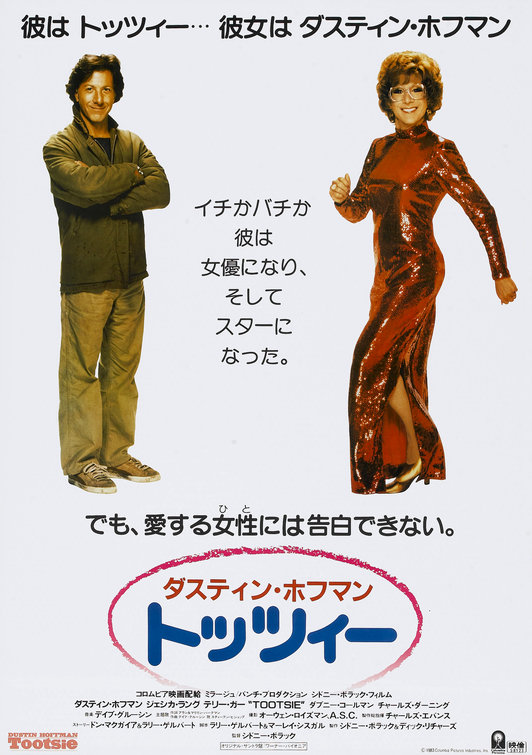
KWIF: Tootsie, plus Do Revenge (+3)

 Kent's week (or two) in film #5:
Tootsie - 1982, d. Sydney Pollack - Criterion Channel
Do Revenge - 2022, d. Jennifer Kaytin Robinson - Netflix
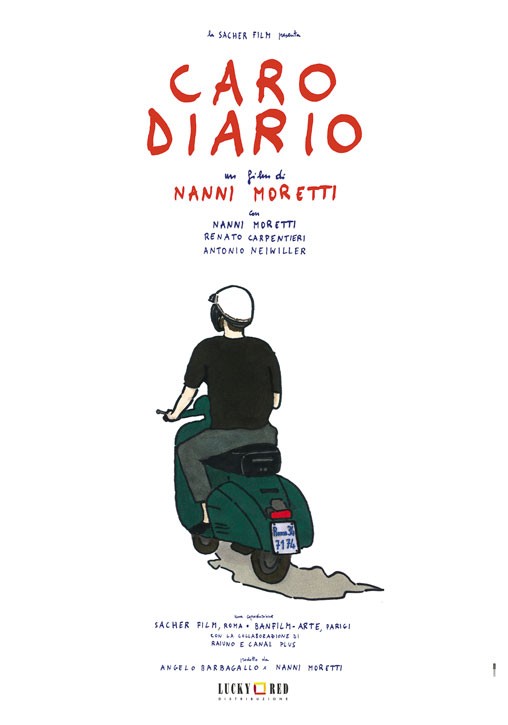
Caro Diario - 1993, d. Nanni Moretti - Tubi
Tampopo - 1985, d. Juzo Itami - Criterion Channel
Sharper - 2023, d. Benjamin Caron - AppleTV+

---


From moment one, something didn't sit right with me about Tootsie. I mean, it's Dustin Hoffman, an actor I've never particularly cared for, playing a character that is recognizably Dustin Hoffman the actor, ergo a very difficult person nobody wants to work with (I'd forgotten about the multiple accusations of sexual predation which makes the irony of the film's intent even more distasteful). That unease I started into the film with never left me throughout the viewing.

It's the early 80's, and there's still a battle of the sexes going on, and Sydney Pollack wants to tackle it head-on by putting a womanizing, arrogant, self-involved actor in the shoes of a woman, in order for him to play a female character role on a soap opera, because the actor thinks he can do it better than any woman could. Throughout the film, Hoffman's character uses his disguise as armour while he performs his perception of a tough (but not in a manly way), independent (but not in a manly way), no-nonsense (but not in a manly way) woman. In the most unbelievable reach of the film, Pollack asks us to buy into Hoffman going off-script on a soap opera on.the.regular. They wouldn't have lasted a day in reality. One warning at best before they were turfed.

In its day I'm sure its very binary perception of gender roles and gender politics seemed progressive, but at the same time we had "nerds" who were "revenging" on the cool kids by having non-consentual sex with women for comedy. This is an equally unamusing and toxic film. 

The binary perception of gender roles here cannot sustain with a modern lens, and I cannot turn off my modern lens in watching it. There are trans, drag and other queer lenses this film is unintentionally filtering through, and since I don't think for a moment Pollack had them in mind, he's not addressing these demographics in any satisfactory way. Nor is he even having the characters reasonably question their own roles and identities, at least not beyond a knee-jerk-reactionary homophobic/transphobic-for-comedy way. It's ugly. But also, it's the 80's, so ugly is expected. So of course we wind up with a story about a cisgender, heterosexual white male who lies and uses pretty much everyone around him and succeeds as a result. It's probably the most truthful thing about the film.

Taken even at just a base, binary comedy with a love story sub-plot, it fails. I don't want Jessica Lange to be with him. I want her to despise him and let him know that he abused her trust, her dad's trust and the trust of everyone they work with for his own selfish gain, and that his love means nothing to her. There's nothing he can do to repair that trust except to respect her wishes and leave her alone. But who am I, a cis-het white man to tell another cis-het white man what the woman he's writing should or shouldn't do with her love life.

Really, kinda fuck this film, y'know. The soundtrack and score are godawful, it's not funny, it's certainly not romantic, and I just don't buy into it. But also fuck this film mostly because it's pretty insidiously watchable despite everything I said...but maybe I kept watching just hoping for a comeuppance that never really happens because 1980s.

---


With Do Revenge, I found myself with mixed feelings watching upper-crust high schoolers "do revenge" on one another, in what could be an expanding whirlwind of destroying people's possible futures and trajectories in life. It can happen so simply. But at the same time these are the asshole kids of rich asshole parents (parents we never meet or see) who generally cannot see past their own wants, amusements and ambitions. They are, as reiterated numerous times, sociopaths, and it's hard to feel sorry for them for having to experience any sort of complications in life.

So the film relies upon us seeing these charismatic leads (twenty-something-year-old stars from Riverdale and Stranger Things) as complex people, not just snobs or psychos (though they are respectively each that), despite their Strangers on a Train-like bargain.

Camila Mendes' Drea, despite being the "poor kid" at school, has entrenched herself as a queen bee academically and socially, but her boyfriend Max (Dash and Lily's Austin Abrams)-- the most elite of the elite offsprings attending the school-- coaxes her into sending him a cam vid which he then shares with everyone. But, being the elite of the elite, he successfully spins himself as victim leaving Drea an outcast. During summer tennis camp she meets Eleanor (Maya Hawke), an outcast lesbian who will be transferring to Drea's school in the fall which means she will encounter the girl who maliciously branded her a sexual predator a few years earlier. The plan is to do revenge on each other's offenders.

Though we recognize Drea's elitist, selfish tendencies, we see what she has done to survive, thrive and elevate herself above her contemporaries, with none of the resources they have. She's an inspiring figure, though one clearly having lost perspective and empathy as a result of their status, but earning our support as victim of what is an actual crime. Yet her casual ability to just destroy mean girl Sophie Turner at tennis camp is a really frightening side to her personality. Eleanor has developed anxiety and keeps herself at a distance from most people so it seems like a real coup for her to befriend Drea, but the unease sets in when she becomes too comfortable blending in with Drea's old crowd. Are they a bad influence on her? Is Drea? 

The film doesn't sit with these questions for too long as it has a few tricks up its sleeve, as the revenge they do don't go so according to plan, and they have unintended consequences... but not enough for my liking. This film is entertainment, not a morality play, but I wish there was more fallout to the events at hand. Even nth degree shitheel Max, upon receiving his comeuppance, will probably just wind up backpacking around Europe with his camera (likely coaxing many European women into nude photography that he'll share without their permission) and dad's money and (unfortunately) be just fine.

Both Drea and Eleanor provide voiceover during the film, but its used inconsistently and not always effectively, and I wonder, if I actually paid attention on a rewatch, if these POV shifts would actually break the film.

Do Revenge is fun, surprising and quite engrossing, but I question if it is smartly using its elite-class setting or if it just thinks it is.

---


I thought for the longest time that Caro Diario was a film I first watched on the Canadian cable channel "Showcase" back in the late-90's.  It's a small Italian film with no real narrative, just kind of a travelogue/slice of life, and I really connected with it back then.  Rewatching it on Tubi (of all places), I had a potent sense memory of sitting in the theatre watching certain scenes and realized that Caro Diario was one of the movies I watched at Thunder Bay's first film festival held by the North of Superior Film Association (which I'm happy to see is still a thing) back in 1994.

'94 was a big year for me in film. It's when both Clerks and Pulp Fiction hit and my brain exploded, realizing there was more to movies than I ever thought or new, and the NOSFA film festival was another big part of that awakening. Caro Diario holds a special place in my heart and brain as a result.  

It's a sweet, often funny picture that finds director/writer Nanni Moretti playing a version of himself as he, through narration of his diary entries, first, rides his Vespa around Rome, contemplating architecture, dance and cinema, and having a chance run-in with Jennifer Beals.  His second diary entry finds him trying to find escape to focus on work, jumping from one island to another, never to find peace (but with comedic results).  The third entry is more serious and personal as he finds himself sleepless and itchy only for it to take a year of medical examinations before a cancer diagnoses is given. This isn't documentary, it's not a drama or comedy, but somewhere in the center of the venn diagram of these.

It's not the monumental, life changing picture I remember it being, but I'm not in that same place or time I once was. It's a charming, often amusing, and serene picture that doesn't ask much of the audience except to try and enjoy the world as Moretti sees it.

--- 


Directors du jour The Daniels (Kwan and Scheinert of Everything Everywhere All At Once) have cited Tampopo as having a direct influence on their filmmaking style, which I guess we could call an "anything goes" style.  But "anything goes" undersells the craft of actually selling the "anything goes" style, of telling a story where "anything goes" but within the frame or context of the story so that it all hangs together.

Tampopo is, as far as I know, the sole entrant in the subgenre of "ramen western", and I think that label does the absolute best job, simply so, of describing what this movie is. It's set in an unnamed city in Japan in its current-day 80's, following a truck driver who inadvertently becomes "sensei" to a ramen shop widow who wants to figure out what she's doing wrong and become the best ramen shop she can.

This is a food porn movie before food porn was a subgenre, but it maybe invented it? There are interstitial scenes, disconnected from the main plot, that feature bizarre eroticism involving food (among other, non-erotic adventures in enjoying one's meal), including one particular moment where an egg yolk is sensuously(?) passed from mouth to mouth between two lovers until the female climaxes from the sensation, breaking the yolk's membrane and dripping yellow goo everywhere.  But it's mostly about finding the ramen recipe, the Japanese noodle soup I can not partake in due to onion and wheat sensitivites (one makes me barf, the other I break out in hives). In total, it's about the pleasures of food, but with a spaghetti western pastiche. (Disclaimer, there are scenes of a turtle and prawn being killed on screen but for the purpose of food preparation...still, rough stuff).

---

If the opening sequence, "Tom", were a stand alone short film starring Justice Smith and Briana Middleton, it would be a pretty compelling piece. The attractive leads have great chemistry but also there's a sense of "why are we watching this" that just underlines the whole thing. Knowing the basic plot of the film from trailers, it unfortunately cuts this seemingly stand-alone bit right off at the knees. And there's a reveal, a reveal you know is coming from almost moment one as this type of film has you questioning everything you're seeing all the time. 

Sharper stars Smith, Middleton, Julianne Moore, Sebastian Stan and John Lithgow, which is a curiously intriguing cast. If you know nothing about the film and have not seen a trailer, and this cast does curiously intrigue you, maybe stop reading, and go watch it.. as I think it might play fairly well if one watches with no prior knowledge.

Buuuut...[now spoilers] even then, once you catch onto what the film is, which is a movie about grifters who are just scamming, scamming, scamming one another, it becomes somewhat obvious to see where it's going. It's the inevitable flaw in a film about grifters, it becomes a very binary picture where you either trust everything you see on the screen or you trust nothing. After its first three acts (of five), the film has taught you not to trust anything about it and so whenever it tries to surprise you, you're never surprised because you're already anticipating it.

It's a really good, often great looking film (director Caron, comes into his feature debut after working on expensive and ambitious TV projects like Sherlock, The Crown, and Andor), often cloaked in hard black shadows contrasting against the fairly spare and flat aesthetic of the nouveau riche.  The contrast between Tom's cozy bookstore and his father's sprawling, contemporary, sterile apartment are so telling of the differences between the characters. It's got an interesting structure, but the nature of the story makes it hard to invest in almost any of the characters (save Tom who disappears for a long stretch), and thus makes it difficult to really enjoy the film.  Caron surely will have much better features in the future.

Monday, June 20, 2022

Harry Potter and the Cursed Child

 2022, d.  - theatrical performance (June 19, Ed Mirvish Theatre, Toronto)


Let's just get this out of the way off the top...I like Harry Potter ok. I'm not the hugest of fans, but I do generally like the film series and think they were quite an achievement.  I found the books started feeling unnecessarily bloated around the fourth and gave up on reading them.  I vehemently detest J.K. Rowling's outspoken anti-trans stance, and find that for someone who talks a lot in her stories about acceptance, that she seems painfully unaware of how close-minded and proactively hurtful she has become.  I wish to, as much as possible, distance my assessment of the Harry Potter and the Cursed Child from the ugliness of its creator, separate the art from the artist, as a lot of other artists had a hand in this production than just Rowling (is it fair to wish that the property were owned by some faceless corporation, like how Disney has control of Star Wars now?)

I was lucky enough to have a friend who is working on the show and graced me with tickets to the opening day performance, lucky in the sense that tickets are hard to get generally, and that I didn't have to pay for them.  

I'm not a regular theatre goer, but I've seen a number of different productions in Toronto (and even a couple on Broadway).  This was, far and away, the biggest, most elaborate, most technically complex production I've seen.  The theme of the show, through and through, is magic, and it's everywhere within the production.  It's not just the pyrotechnics emanating from the wands, or the clever trap door-aided physical transformation scenes, or the slight of hand tricks where one part of the set becomes a complete other set without you noticing the act of transformation.  It's everywhere.  I remember a performance of Les Miserables with a transforming set, but that's just it's transition from one act's backdrop to another.  This show's sets seem so simplistic and yet they are constantly move right before your eyes without calling attention to themselves.  Sometimes it's just a trick of the lighting, sometimes it's the ancillary players using the props as one thing, but them becoming another thing as the scene goes on (suitcases play multiple parts throughout the performance).  

While there are no songs -- it's not a musical -- there are dance numbers, and the dances are quite incredible.  They use props, wardrobes, and the various tricks of the sets and stage to create a dazzling display that serves the dual purpose both of visually arresting choreography but also in obfuscating the set transitions.  You only kind of notice the end result when they exit the stage, to see that it's been completely redressed during their dance.  The dancing is very contemporary, but also so specific to its dual purpose.  It's "in world" in terms of the people and their movements and the accessories being used, and, except maybe the first time, it never feels shoehorned in... there's an organicness to it.  Other scenes change as a result of passing time (an anti-montage if you will) which involves the cast on stage moving slowly and jerkily to not-quite-strobe lighting cues that make it seem like time is acting erratically.  Part of the plot also involves time travel, and they've devised an exceptionally clever lighting effect to show when a journey has completed, on top of the clock motifs embedded into the set that are equally highlighted by different lighting.

The stage features rotating pieces, trap doors, treadmills, all which are used in both obvious and obtuse ways.  Characters will walk decently paced while basically existing in same spot, while the curving part of the stage provides movement to pieces around them that give the illusion that the performer is moving closer or further away.  It's so well done, and so subtle, that unless you start to look for it you don't even see it.

Wire work also has a heavy role to play in this, and there are performers being swung around the stage, and in one instance over the audience (still not sure if it was a performer, an animatronic, or just a trick of light and wind), but it's again, always disguised how the performer, previously untetherd, suddenly is up in the air (or whether it's the performer or something else, swapped out through a trap door).

I was just in awe of this production purely on a technical level.  It's dazzling, and certainly exceptionally well thought through.  No movement is wasted, and every piece of the set seems to have been optimized for maximum functionality.  And it all looks magnificent.

Now it's all in service of the story, an original creation from Rowling, with playwright Jack Thorne and director John Tiffany also getting story credit.   It's steeped in the lore of the previous Harry Potter septology, but basically fits as a legasequel, in which the primary characters are children of the lead characters of the previous series, but the parents also play a part.  As well, in legasequel style, the kids are dealing with ripples that remain from the previous endeavour. 

In this case our leads are Albus Potter and Scorpius Malfoy, the former the younger child of Harry and Ginny, the latter the son of Harry's childhood rival, Draco.  Albus is awkward and anxious, he feels the weight of his father's legacy on him in a way his brother, James, somehow ignored.  He's unsure how to live up to the expectations he thinks are upon him, and it builds up anger and resentment towards his father within him.  Scorpius, meanwhile, is a nervous twitch of a boy who is super smart but also super awkward.  The horrible, unfounded rumour is that his parents used a Time Turner to go back in time and that he's the offspring of his mother and Voldemort.  In an absolutely clever and well done on-stage montage, we traverse two years of the boys' lives at Hogwarts (and inbetween) in less than 10 mintues of stage time which serves both to solidify their connection to each other, as well as the awkwardness between Albus and Harry.

The crux of the story is a bit of a shoehorn, as a wedged-in scene finds Cedric Diggory's father (the boy played by Robert Pattinson in The Goblet of Fire) implores Harry to use a Time Turner to go back in time and save his boy.  Harry, now Mister of Defense or somesuch, denies the existence of any Time Turners and refuses the old man's pleas.  However, a skulking Albus is aware that Harry recently discovered a Time Turner in a raid.  Albus and Scorpius, escaping their train to year 3 at Hogwarts, set out to steal the Time Turner and set right what Harry could, or would not.  Of course, these two awkward boys and their Time Travel shenanigans make a real mess of things and things get real bad.  

The plot weaves in and out of events of The Goblet of Fire, but uses its story to be one about fathers.  Harry feels like a failure as a father to Albus, a boy he doesn't try to understand, but then admits that without having a father himself, he doesn't have anyone to measure himself against.  Scorpius, having recently lost his mother to disease, senses distance between his father and himself, distance which Draco admits to not wanting but not understanding how to correct.  Harry's father figure, Dumbledor, makes appearances as a moving speaking portait (an excellent effect of lighting) and calls the old man out for his coldness.  James Potter, the father Harry never knew, is a bit of a shadow, until he is not.  And there's even another father who plays a role in the proceedings, but that's a spoiler.  And of course, there's Cedric Diggory's grieving father, who has seemingly withered away in his despair over the years.

Being that this production's opening day was on Father's Day, it was a rather fitting day to catch it, and the impact seemed even greater as a result.  I think it's the strength of the story.  The stupid boys doing stupid time travel things without thinking through the consequences seemed an exercise to get some fan favourite characters into the proceedings as well as drag the story through a number of familiar cues.  There are some surprises, but it all felt a little fan-servicey and it gets a bit Back to the Future Part 2 at times.

The all-Canadian(?) cast were all quite good, with only Scorpius performer Thomas Mitchell Barnet and Katie Ryerson's Moaning Myrtle really standing out for giving bigger, broader performances.  Everyone else was giving apt energy.  I think Draco Malfoy performer Brad Hodder did a good job, but it's more the character than the performer that gets the best speeches in the production, in part because of considering who the words are coming from. The accents are all "stage British", and sound as such, fading in and out a bit throughout.  It's all fine to my Canadian ears.  Actual Brits may feel differently.

The heavy insinuation by the end is that Albus and Scorpius are in love with each other, but the story never goes beyond inference.  It seems to be explicitly written in a way to allow for plausible deniability that they're just bestest friends ever and that the "love" they speak of for each other is just that.  It's Rowling's late-stage, out-of-story admission that Dumbledor was gay all over again, just cowardly. The boys share a hug or two but there's no kiss, which seems regressive.  I'm sure the production doesn't want the interruption of hate-filled homophobes standing up and disrupting the whole play but they easily could have devised it so that the show ends with their kiss which then goes to curtains and fanfare reception, drowning out the haters.  Fuck the haters.

Which brings us back to where we started. Rowling. A hater. Its obvious that this is a successful production but I have to say in the back of my brain I couldn't shut off the notion that there would be some form of anti-trans subliminal messaging somewhere in all this.  There isn't, and I admit it is paranoid thinking that there would be.  I'm sure it's something neither Thorne nor Tiffany would allow, but how does one condemn the artist and still condone their art.  If you support the art, you're therefore supporting the artist, are you not?  I can't in conscience tell people to pay to go see this production, but I can't really say it's not something worth seeing either.   The story, the name of Harry Potter is the draw, but the real art of it all come from set designer Christine Jones, costume designer Katrina Lindsay, movement director Steven Hoggett, composer and arranger Imogen Heap (it's a great score), lighting designer Neil Austin, sound designer Gareth Fry, illusions and magic from Jamie Harrison and all the other great artists involved.  Everyone else polished it up and brought it to life, all Rowling did was build the world and the characters and story (I know, it is a mighty achievement and I'm really falsely underplaying it... I just wish she weren't such a TERF).


Friday, April 29, 2022

I Saw This!! What I Have Been Watching (Kent Edition) - Another One

 In the quest for the most unruly feature on the blog...

I Saw This (double exclamation point) is our feature wherein Kent(me) or Toasty attempt to write about a bunch of stuff they watched some time ago and meant to write about but just never got around to doing so. But we can't not write cuz that would be bad, very bad.  Rootin' Tootin' Stoopid Pootin bad.

What I Am/Have Been Watching is the admitted state of typically Toast, but in this case, Kent, spending too much time in front of the TV. But what else has the pandemic been about if not toobin? Sure, we got a few breaks from being confined at home, and might have actually gone outside (gasp!) and socialized with (double-gasp!) human beings (faint-dead-away) but we always ended up back on the sofa, flicker in hand, trying to find something to watch amidst the many streaming services pillaging our credit cards every month...and yeah, Kent still has cable.

---
I'm going to try something different with this. Since these are all subsequent seasons of things I've already watched/reviewed, I'm going to reread (and link to) my review(s) of previous seasons and see what, if anything, different I have to say about them in comparison,
---

What We Do in the Shadows
season 3 - FX 
reviews: Movie | Season 1 | Season 2

It may have been COVID TV-viewing fatigue, but I wasn't super jazzed about watching Season 3 of WWDITS.  It was also one of our first regular programs to return as a COVID production, and as a result there was a strange airiness to the show, avoiding crowds and keeping distance.  Or perhaps it was just me being hyperaware that it was a show produced in the COVID years and airing in the COVID years and looking for anything that might signify it was shot in COVID times. F#$@ COVID.

I highly enjoyed every episode, and loved Kristin Schaal (of Flight of the Conchords and Last Man on Earth) as a regular guest star (she should just be added as a series regular, she felt underused).  Nandor had a pretty big storyline this season, impacting everything, and though it was wildly inconsistent and a little confusing (as he seemed to be in love one episode then with a long term love interest in the next) it led to a pretty severe shake-up by the season's end.  Likewise the "Colin Robinson is dying" story was outstanding and ended with a delightfully horrifying reveal in the finale.  I worry about Nadja and Laslo, as they were separated for much of the season which felt atypical for the couple, but, again, plays into where things wind up at the season's end.  As comedy it's consistently hilarious, as a story, it's hilariously inconsistent.  I don't recall as many meme-able bits but maybe I just need to give it a rewatch.  My brain is notoriously bad at retaining clever lines.

---

Saved by the Bell
Season 2 - W
review: Season 1

SbtB was one of my favourite shows last year, a real respite when it turned up 9 months into the Pause.  It was no less welcome or enjoyable in its second season. Okay, maybe just a smidge less enjoyable.  Where the first season backgrounded its references to the original series, the second season brought jokes and references of OG SbtB right to the forefront.  Members of the original cast were brought to the fore in many of the episodes rather than being more background support.  But, the comedy here is still pretty damn good.  The show's deft ability to tackle race, class, gender and sexuality without ever becoming "a very special episode" and maintaining its jokes-per-second funny is such a gift, and it never leaves behind what the spirit of the old SbtB was (this season's big runner was about Bayside High competing against their chief rivals Valley in a semester-long spirit competition).  The show is so vibrant in its colour tone (wardrobes and sets are so crisp), and it uses its sunny California locale to bring such an overwhelming sense of warmth.

There are shows that shouldn't have long seasons for fear of burning through story and character ideas, and then there are shows like Saved By The Bell, which, operating on the 30 Rock sitcom model, should just be cranking out 25 episode seasons for maximum comedy dosage.  Point being, 10 episodes just doesn't seem like enough each year.

---

Letterkenny
Season 10 - Crave

Speaking of not enough episodes, Letterkenny has shown up, in full, on Christmas day the past two years, which means that the wife and I binge the latest 6-episode season on Christmas evening, and then have to patiently wait another full year for more.  Prior to season 9, it seemed that Letterkenny would release its seasons about twice a year, with a holiday special inbetween.  So there would be about 13 new episodes a year.  That was much more satisfying.

It's like when I deign to make arepas for dinner.  It's pretty exciting, because arepas are yummy, but it takes a lot of time to prepare and grill the arepas and their fillings, and once I finally get to sit down, apply the garlic aoli, I'm famished and devour the thing in seconds, barely tasting it.  That's the new-season-of-Letterkenny experience for me now, so much anticipation and then just a gorging, barely tasting it as it goes down.

The only good thing is the long lead time gives us time to binge the entirety of the series yet again before each season drops.  Well, really, the good thing is a new season of Letterkenny.  And just when I start to think Letterkenny may be jumping the shark, that maybe it's losing a little steam (it seemed to be light on Squirrelly Dan this season), that it's close to repeating itself, it pulls out some brilliance.  One episode in S10 deals with prostate checks and how squeamish guys get about the whole thing, only to have a couple female members of the cast dramatically demonstrate the regular invasiveness of their examinations.  And having the skids square off against the hockey boys yielded ridiculous results, and also one mean dance sequence that is one of my favourite moments on the show.

As well, the show came back for an International Women's Day special in March (their first holiday special since season 7), which was a massive surprise and a raucous delight. 

---

Titans
Season 3 - Netflix
reviews: Season 1 | Season 2

The first two seasons of Titans seemed to be a show that was trying to find itself.  The first season adjusted mid-flight from being a super-edgy superhero show to hewing somewhat closer to its comic book self.  The second season tried to lean into its comic book history but it tried to do too much in a short period of time, creating uneven results.  The third season was much tighter in terms of the story arc it wanted to tell, but it got lost in the Batman of it all.  Part of that getting lost was intentional, as the team relocates to Gotham and deals heavily with Dick Grayson, Barbara Gordon and Jason Todd's challenging relationship with their mentor, and the pretty unhealthy mindset that Bruce Wayne encouraged in them...basically he was a bad father figure and damaged them as much as anything prior to his "rescuing" them.  The Riddler (Mad Men's resident dick Vincent Kartheiser), despite being imprisoned, manipulates his situation (somewhat impossibly but comic book-y enough) to be the big bad of the season, even as the same character was poised to be the big bad of the next major motion picture (which at one time would have been a huge deal).

What all this Gotham/Bats stuff does is push most of the other Titans to the background.  Even when characters do get a spotlight, it's so outside of what the show is otherwise dealing with it doesn't all feel of a whole, properly integrated.  The best episode of the season, just as with last season, is almost a complete detour from the main plot, as a handful of characters take a trip through the afterlife.  Given the show's budget limitations, this all is sold by intonation, and it works pretty well.  It is a compelling season, but I think the fan desire (or at least my desire) is still something much bigger in scale, more fantastical/supernatural/superheroic/cosmic-like. 

---

How To With John Wilson
Season 2 - HBO
review: Season 1

How To... is sort of a Koyaanisqatsi-like series with a quasi-comedic narrative put upon it.  A lot of random imagery used to help exemplify the thin narrative construct of, say, "How to appreciate wine" or "How to be spontaneous."  There's an almost meditative quality to it, and it's just sheer chill watching, rather peaceful, a little absurd, and quite fascinating.  The first season felt almost personal and intimate, and ended with the pandemic just taking form.  This season starts with the pandemic in full swing, but also weaving in and out of the premature moments of "returning to normal" as it intermixes much of Wilson's historical footage.   But the second season feels a little less intimate, a little less personal, a little less singular.  Wilson's stamp is still all over this, but it does feel like there's a bit more of a machine at work behind the scenes, and it seems more of a production than a labor of love (or at least the end result of some form of compulsion).  Still a compelling delight regardless.

---

Search Party
Season 5 - HBO

Those first four seasons of Search Party were a challenging binge, the darkest of dark comedy.  The characters seemed to be circling the drain, and pulling everyone around them, the viewer included, down with them.  It was frequently inspired, often hilarious, but also bracing and confrontational.  Season 5, like each season before it, upended any expectations about what it should be and where it could possibly go as it leaned hard into farce for its final season.  Not wanting to depart with a sour taste, but also not being untrue to how the show has operated for four seasons, it leaned into this season's ridiculous premise that Dori, having gained fame as a murderer/kidnapping victim, started a cult, but a cult tied heavily into modern technology and social media.

Half a year later, we've been deluged with these stories of start-ups that exploded then imploded with oddball figures at the helm promising the world but only seemingly delivering the world to themselves.  Search Party's showrunners were clearly picking up on these stories (which were either long form articles or podcasts) and their place in the zeitgeist, and incorporating it perfectly into their series.  And having seen glimpses of Inventing Anna or WeCrashed or The Dropout I think Dori as a character perfectly fits alongside with those shitheels.  And there's also Goldblum.

The series ends big, and bold, but with muted millennial intensity, undercutting severity with selfishness, and the gang faces their consequences with a shrug given the chaotic nature of what happens, numb to the problems of the world.  I expected nothing less.  Pretty fun.

---

A.P. Bio
Season 4 - Showcase
reviews: Season 2 

What I started to notice in Season 3 (but didn't see fit to write about) was that A.P. Bio was verrrry slowly moving through the AP Bio class' final school year.  Each seasons was maybe 2 months of class time with season 3 having a winter break towards the end of the season.  I think the plan was for maybe 5 or 6 seasons to round out the full school year.  I thought the show was great, but once I picked up on this, I delighted in it even more.  

There's not a tight continuity to A.P. Bio but it does build up its characters and picks up and drops threads as needed.  It never really needs to carry any threads and it's often very subtle in how it advances things.  It's yet another show (in a good way) that has a sprawling cast of characters in its world, it's main cast of teachers and students and it's peripheral cast of other teachers and school support staff who crop up on occasion.  I love these types of shows that have this whole world around them and see fit to bring back smaller roles over and over again for maybe one scene every other episode.  

Seasons 1 & 2 aired on NBC, seasons 3 & 4 were scuttled over to NBC's streaming service Peacock, where the show started experimenting with its storytelling format, which gave me feelings of Community if not quite as adventurous or savvy.  I appreaciated its playing with structure and sitcom formulae and happy that it got the four seasons it did, but I wish it could have one more just to wrap all the little dangling threads, and to see the kids graduate.  4 seasons and a movie?

---

Resident Alien
Season 2 - CTV SciFi
review: none

I'm not sure why I didn't write about Resident Alien Season 1 (Toasty did a little) but, as my comment to that Toastypost said, I lurrrved it.  

Watching season 2, I have to clarify that statement.  What I lurrrve is Alan Tudyk's performance primarily. We've had aliens in TV sitcoms many times in the past Mork from Ork, the Solomons from 3rd Rock From The Sun, Balky Bartokamus, Borat (whether we're talking about aliens from outer space or aliens from often fictional European countries, the effect is quite the same), and the gist of comedy is always about how unfamiliar they are of the societal norms, and how the character twists what little they do understand of them.  Typically this comedy stems from the character's ignorance, whereas with Resident Alien and Tudyk's Harry Van der Spiegel, largely comes from a place of not giving a shit and feeling eminently superior in spite of his ignorance.

It's so entertaining that it's almost to the point that no story arc, no character journeys really matter, I'm mostly just watching for the sheer joy of Tudyk's amazingly weird physical performance and belly-laugh inducing line readings.  The thing is, the whole cast of characters are pretty good, and quite likeable, except maybe the town mayor and his wife, whose domestic relationship storylines tend to feel like time filler (at least until they blow up in the final episode of season 2).  They're really only necessary because their 10-year-old son, Max, is the only one who can see through Harry's disguise and is Harry's chief adversary in a ludicrously juvenile rivalry. Season 2 starts feeling like spinning wheels, but by the second half of its 8-episodes, it starts to pull together a number of exciting threads before it abruptly ends on a cliffhanger.  The comic book the series originates from is much more tranquil and not a comedy, and actually more of a small-town mystery series.  The first season flirted with mystery, and the second season starts to toy with Harry as amateur gumshoe again (nods to Lenny Briscoe)

The show's seamless integration of Native American culture is not just token asides, but actually an integral part of the show, an important part of Asta as our second lead, and just as important to Harry's developing attachment to Earth.  It's through his exposure to the Ute traditions that he starts exploring what it means to be human (even though he initially detested the idea of being even remotely human).  It's a largely silly show (Tudyk's buddy Nathan Fillion is a recurring guest star this season, voicing an octopus) and its story pacing is quite uneven, but each episode is a breezy, entertaining journey that's really hard to dislike.  I don't know that there's a lot more mileage left in its tank, but I hope a third season can bring its story a satisfying sense of closure.

---

Star Trek: Picard
Season 2 - CTV SciFi
review: Season 1

Yeesh.  You did it to me again, Picard, you sucked me in, and then you just sucked.  You start off so strong and then just flail and strike at some of the most absurd story beats, leaning into some of the least enticing elements of the story you're presenting.

It doesn't help that between the first and second season Patrick Stewart seems to have aged 10 years and now looks every bit the 81-year-old man he is.  His face sags so deeply that it's often hard to read his emoting.  He's got that bit of tremble to his hands and jaw that no longer scream commanding officer, but instead shout of frailty.  There's a shakiness to his voice that only goes away when he's being angry and forceful, and there's not a lot of call for that.  I love Patrick Stewart and almost every moment he's on screen in this second season I fear for his safety... like at any turn he's going to snap his femur or fall over and smack his head on the table.

They develop a love interest for Picard in Orla Brady's Laris, who at 61 is 20 years Stewart's junior, but is so stunningly drop-dead gorgeous that it feels like there's a 40-year span between them.  Love is love, and it only kinda works because she's supposed to be a Romulan and their romantic customs are vastly different than Earth ones.  You'd break him in half Laris.

The show brings back the Borg, and Q, and Guinan (all of which I was good with) in a story that at first seems scintillating, but then winds up in quasi-time travel/altered reality bullshit that feels lazy and cheap, or maybe cheap and lazy.  Reality has been drastically changed, and yet the cast remains largely the same, which just serves to remind me that I'm watching another season of a TV show, and not a new mini-series starring Picard.

I binged the first 5 episodes when I didn't think I would watch it at all.  I was looking for something to fall asleep to.  But that opening episode was so full of promise that I watched and watched until I was all caught up, only to feel less than enthused when episode 6 dropped later in the week.  That episode, with its cheesy, tedious 60's Star Trekkiness has put me off watching the rest in the same way the first season finale put me off wanting to watch a second season.  I'll probably finish it, but I'm not super pumped about it.

---

Russian Doll
Season 2
review: Season 1

It's been 3 years so I had to give Season 1 a rewatch before I headed into the much-anticipated Season 2.  It's of course been on the list for a "T&K Go Loopty Loo" (coming soon once Toasty gives it a rewatch) even though Toasty and I both written lengthy reviews about it.  What can I say though is I thought that first season might perhaps be the best time loop story we've ever gotten, and rewatching it sort of confirmed that fact.  It's amazing.

I had thought incorrectly that Season 1 ended on a cliffhanger, but rather I just misunderstood it.  There's closure in season 1 to that arc, so after the rewatch I really wasn't certain what season 2 would be.  I didn't watch any trailers, I wanted to be surprised. (Toasty nearly spoiled it in a text message but, in a fit of good timing, I only read it shortly after watching the first episode).

I was surprised.  I was kind of expecting another time loop, not Quantum Leap-y time travel, and not a magic train that whisks Nadia on her 40th birthday back in time into the bodies of her mother in NYC in 1982 and grandmother in Budapest 1942.  The journey for Nadia (and Alan who has his own little side-journey into his grandmother's body in East Berlin circa 1962) is about recognising that having regrets or wishes that the past was different would mean you are not the person you are today, for good or ill, and you have to contend with that. There's truly no way to change it, so acceptance is really the only path forward.  

If anything disappoints me about this second season it's that it short shrifts Alan's story, quite dramatically, to the point that it almost has no real weight on the overall season.  Nadia's story is so dominant this season in a way that doesn't integrate much at all with Alan's, unlike the first season where the twos journey was interwoven.

I muse in that forthcoming Loopty Loo that the only thing that could tear down Russian Doll's status as the GOAT of time loops is weaker subsequent seasons.  But since the show is not embarking on further time loops, even a weaker second season (and it is weaker) doesn't sway my feelings of the first.  Where the first season was both so darkly comic and delightful, but also contemplative and exploratory, this second season feels a little flat on all fronts... Natasha Lyonne is still surly yet charming and she carries the emotional weight required, but there's not the comedic highs, and the surprises are much more muted.  I thought the finale was clever, beautiful and strong, but it didn't leave the same sense of demanding "what's next" that the first season did.  I'm still curious what's cooking for the third and final season.