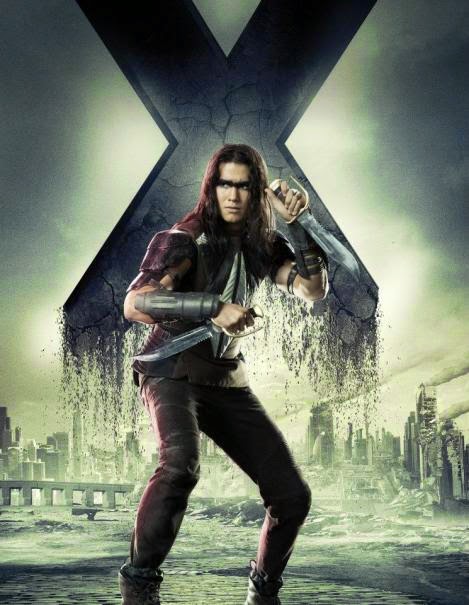
Showing posts sorted by relevance for query x-men. Sort by date Show all posts

Wednesday, June 8, 2016

Rewatch/Newatch: X2: X-Men United + X-Men:Apocalypse

2003 + 2016, d. Bryan Singer

X-Men: Apocalypse is a bloody mess of a movie.  It's an unruly behemoth of disparate ideas barely coming together to make a underwhelming whole.  Like all the X-Men movies since the very first, it's an assembly of disparate stories taken from the comics, mashed with the rampant introduction of too many fan-favourite and B-list characters without enough time or effort to explore them, built around a series of set pieces rather than actual important plot progressions.


Apocalypse isn't nearly as bad as X-Men Origins: Wolverine nor X-Men: The Last Stand because, at the very least, director Bryan Singer is fully invested in these characters and this world they inhabit.    But even as the shepherd of the cinematic X-Men for the past 17+ years, he still doesn't quite know how to get them on the screen in their full glory.  The final moments, where Mystique (of all people) lead a quintet of young, in-costume X-Men in a Danger Room simulation against a group of Sentinels *finally* hints at putting the X-Men we've always wanted to see on screen.

But that's then end, let's go back.

Even prior to seeing the film, I wasn't very psyched for it.  Unlike Days of Future Past -- which has a similar tone and marketing campaign, but also the added benefit of bringing two generations of X-Men together the big screen -- Apocalypse's promotion was dull.  The posters were dull, the costume design looked dull, the action looked dull.  At this stage the threat should be all that's needed to sell an audience on the next X-Men movie, but the ads couldn't even tackle Apocalypse with any grand vigor.  In the comics he's monstrous.  Set photos and commercials showed him as something far less imposing.  The film would have to work at building him up...which it didn't quite succeed at (almost, but not quite).
The collected covers of Empire Magazine presented a better vision of X-Men Apocalypse
than anything else used to sell the film.  Look at that monster of a bad guy that never actually
showed up in reality in the film.

Apocalypse starts well enough, though, with a quite interesting Egyptian sequence spotlighting some of the backstory for the titular villain.  I honestly don't know anything about Apocalypse as a character so this filled in things nicely (whether comic accurate or not, don't know, don't care).  He gets stronger by transferring his consciousness into new mutants, thus gaining their power.  There's some hinky Egyptian/Kirby-esque technology thrust in the mix as part of the process of transference, but it's actually part of the charm.  He also has four key agents amidst his legion of worshippers, wearing elaborate headgear to single them out.  They're his four horsemen of this era, and one can tell they're powerful and feared.  In this sequence you get the sense that a long reign has come to an end (Apocalypse looks old), thus the transference.  There's a logic to much of what we see (and a comic-booky forgiveness to some of the larger-than-life bits). 

After the prologue, we're transported to 1983, and introduced to Scott Summers in high school, just as his mutant powers of optical force blasts are manifesting.  I thought mutant powers came alongside puberty, but I'm not an expert.  Scott's brother Alex (returning from First Class) takes him to see the Professor, where he meets Jean Grey (an outcast among outcasts, because her psi powers are all kinds of freaky haywire).  Jean gets a bit of an extended focus compared to the other kids in this film, primarily because they're setting up the Phoenix Force, totally calling a do-over from the botched Last Stand interpretation, which they can do now since Days of Future Past has radically altered the X-Men cinematic timeline.

Raven/Mystique, now a legendary mutant folk hero, is out tracking down mutants who are being abused, in this case an illegal German fighting ring where they force mutants to fight one another.  Reigning champ is Angel (he's just defeated the Blob as we cut to him), and Nightcrawler is his latest opponent.  Forced to defend himself, Nightcrawler proves capable and singes off Angel's wings on the electric fence mistakenly, for the sole purpose of making him sullen and angry later, and thus suitable to becoming one of Apocalypse's acolytes.

Raven takes a shining to Nightcrawler (I don't remember if she knew Azazel in First Class, but in the comics, Mystique and Azazel are Nightcrawler's parents...I don't think they're following suit here) and takes him back to Charles' school, returning for the first time in a decade.  Hank McCoy greets her, still clearly infatuated with her even after all this time.  Charles, meanwhile, is out researching a tremor felt round the world.  He finds out that his old flame, Moira McTaggart, was in the vicinity of the tremor's epicenter so he and Alex (why Alex? Who knows) go to greet her, noting that Charles had erased her mind of her entire First Class encounter.  Moira fills them in on her research into Apocalypse and for some reason becomes a tag-along part of the entire story, even though she's 100% meaningless to the plot after this.

Magneto, meanwhile, works and lives in a remote eastern block village where he's seemingly happy, living a quiet, trouble free life with a wife and daughter whom you know from the first second you see them exist only to die and fuel Eric with rage.  And so it goes.  Apocalypse recruits Storm, leader of a gang of petty child thieves on the streets of Cairo, and follows it up with recruiting Psylocke, who then takes him to Angel, and finally he finds Eric.  His four horsemen are set and then...whatever.  There's really no purpose to his horsemen.  He enhances all their powers, giving Angel deadlier metallic wings, enhancing Psylocke's psy-weapons, giving Storm greater elemental control, and boosting Eric's magnetic sensitivity.  But beyond having Eric slowly destroy the world, the rest of them aren't really serving him.

When Apocalypse discovers Charles, he knows his mutant power to control others would come in handy, so by about the halfway point the film reveals its plot of "Charles is kidnapped, and Apocalypse is going to transfer his consciousness into him and thus destroy/take over the world".

As you can see it took me four paragraphs to just introduce the cast of this film (and that's not counting the cameos like Jubilee).  It's too much and most serve little to no purpose in the grand scheme of the story.  We all like seeing characters we love represented on the big screen but if you have no time for them, no time to give them character or personality, then what's the point?

And I even forgot about Quicksilver, who's one of the most appealing characters to appear in any of the X-Men films, but again doesn't get much growth beyond where he was 10 years ago (in-movie time) in Days of Future Past.  He arrives in time to save everyone from an exploding School for Gifted Children, well, everyone except Alex (a death that provides no real meaning or inspiration for Scott).  Then Stryker shows up for some reason and knocks everyone out. But he only takes Quicksilver, Moira, Raven and Hank (Jean, Scott and Nightcrawler stow away, hidden by Jean).  They're taken to Stryker's dam/base up north for some reason, experiments I guess (why Moira then?) but we never really find out what for, because the kids let Weapon X loose for an obligatory Wolverine cameo and he wrecks the place.  Those kids aren't nearly as horrified by Logan's berzerker massacre as they should be.

By the time we get to the finale, where they face Apocalypse, it's a completely unearned climax.  Apocalypse is certainly a threat, but it's Magneto doing most of the bad stuff at the moment.  Raven and Quicksilver try to talk him down from his world-ending ways, while the others try to save Charles.  It's not a bad sequence overall, but it doesn't feel properly set up.  Apocalypse and his horsemen should have been raising an army of mutants to survive the world's end and to go to war with any who try to stop them. The fighting also wasn't very smart.  There's not much of a team effort here.  Apocalypse threat level should have meant the end for everyone opposing him almost immediately but it's not quite the case.  He toys with them.  How much better would it have been if the team coordinated an attack while Quicksilver and Nightcrawler were basically helping keep their teammates out of harm's way as Apocalypse retaliates.  How about the characters use their powers intelligently, and as a team?  There's a lot of pointless leaping about and once again a whole "let's all blast him" kind of ending (which was pretty much the end of every Fantastic Four movie so far).

Mystique gets a defining characteristic for the first time in being a Che-like idol and inspiration to mutants. It's perhaps the most earned moment for any of the characters in any of these X-Men movies.  Mystique was never much of a major player in the comics, but simply by being attached to one of the biggest celebrities in Hollywood, she gets some gravitas and purpose, and becomes the leader of the X-Men.  Seriously.  It doesn't follow the comics at all, but it does feel 100% justified.  This movie, if nothing else, did right by her.

The same can't really be said for most of the rest of the cast.  Wasted potential, in almost every case.  The exceptions are Nightcrawler (Kodi Smit-McPhee), who is utterly charming, the relationship between Scott (Tye Sheridan) and Jean (Sophie Turner) is swiftly established (but works, mostly...when they meet, Scott is the boy who can see nothing, and Jean is the girl who sees everything, it's a nice contrast), and Jean really gets to cut loose and show off.  But Psylocke, Storm, Angel, Moira, Weapon X, Apocalypse, Hank McCoy, Quicksilver, even Charles...they don't really get much of anything to do here here.

If this franchise moves forward, which no doubt it will, it needs to drop Charles strictly into the mentor role, it needs to ditch Magneto for a little bit (or give Fassbender a solo film as anti-hero), and it needs to focus on a core cast.  If that is Storm, Quicksilver, Cyclops, Phoenix and Nightcrawler, led by Mystique and Beast, then so be it.  But focus.

The nadir of this film finds a defeated Psylocke (a totally game Olivia Munn in some ace cosplay) sneering at the triumphant X-Men and skulking off...probably never to be seen again...unless she's responsible for the Brotherhood of Evil Mutants in the next movie or something.

Speaking of useless/pointless, 1983 only made sense as a setting because the previous two films were period pieces.  First Class made perfect use of the Cold War, particularly the Cuban Missile Crisis, while Cold War paranoia in the 1970's seemed to only be exacerbated by the idea of mutants as weapons destabilizing global power.  The 1980's here is barely even a style choice.  Beyond some wardrobe or hairstyle touches, there's no impact to the film at all as a result of its timing.  It didn't even go for an 80's aesthetic or pastiche which could have made a huge difference in how the film played out (by going pastiche it could really overplay 80's-style coincidence-driven storytelling).

The film was written by Simon Kinberg, who also wrote the latest Fantastic Four movie, Days of Future Past and The Last Stand.  He seems to be one of those go-to superhero script writers studios seem to stick with, like Fox's version of David Goyer.  They really need to cut that guy loose from writing duties.

But going back to 2003's X-2: X-Men United, the picture is only marginally rosier.  Oh who am I kidding, it's like Casablanca comparatively.  There's so much restraint in X-2, primarily due to budget.  As a pre-show message and end-credits message reminded us on Apocalypse, it took 150,000 people to make the movie, and it's these kind of overblown budgets that lead to exhausting overblown, disconnected spectacles.  In X-2, the smaller budget leads to more innovative and necessary uses of effects.  Fight sequences are more tightly controlled, more intimate, less grandiose, and more exciting as a result.  Despite being over a dozen years old, it's a more impressive film in most ways.

But the story of X-2 is also more personal.  I wasn't a huge fan of it when it first came out (I thought it unfairly focussed on Wolverine yet again, to the detriment of all the other characters more...and I still think that, but it doesn't make it bad outright), but it's a much tighter film, story wise, and it juggles it characters and its cameos so much better.  A screen display gives an easter egg list of mutant names to giggle over, while quick cameos from Colossus and Shadowcat are all that's needed (if just to let us know they're there).

But Rogue, Iceman and Pyro all get a nice junior X-Men position in the film and a meaningful journey.  Rogue's fearful of her powers and what they'll do if Bobby gets close, Bobby's a little less fearful, but frustrated by the situation (plus we meet his mutant-phobic family) and Pyro just can't help but let the fire rage inside and out.  Jean's having difficulty fighting what's inside her, while having to question her attraction to Logan and her commitment to Scott.  Charles has to face his greatest failure as a teacher, and Logan is still digging into his past.  Even Eric gets his moments, where he tows the good/bad line so perfectly well (Sir Ian McKellen is awesome, but we all know that).  And Mystique, while not given the same amount of weight as with Jennifer Lawrence in the role (Magneto provides a bunch of exposition which should be hers, unfortunately) she's a major player throughout this film.  She doesn't get a journey though, but she does get a lot of cool moments.  She's the Quicksilver of the piece.

X-2 is a fascinating watch following Apocalypse, because it's the truly the precursor to it.  It's a film that perfectly highlights why Raven was so important to the different causes Eric and Charles were fighting for in Days of Future Past.  Raven in the current run falls on Charles' side, where she becomes the team's leader, and a hero of their people.  In the old trilogy, she was beside Eric, his lover and chief weapon.  He calls her "my dear" but you never get the sense there's any true love there.  He certainly appreciates her talents but he's got her in his thrall and uses and relies upon her as a right hand, lesser so as a partner.  One doesn't get the sense she has a lot of say in their schemes.

Likewise, it's interesting in X-2 how Jean is treated.  In Apocalypse, Charles needs her to control herself, and promises she will learn how to,  so that she won't be so afraid herself and others won't be so fearful of her.  But Famke Janssen's Jean is older and still afraid of what's inside her, of what she's capable of.  She's not learned to control it, nor has she learned to escape her fear.  But in Apocalypse, set some 20 years earlier, Charles urges a teenage Jean to let go, and the Phoenix force erupts from her.  She challenges and helps defeat Apocalypse, and becomes a changed character as a result.

This aspect of synergy I like more than the actual story of Apocalypse, or X-2, the intentional differences in choices made and actions performed, and how they shape a character.  It's a very X-Men thing to do.

Even Logan, his memories of escaping the Weapon X program in X-2 are different than how it plays out here.  And it's Jean who helps him.  Jean unlocks his cage, setting him free, and then unlocks his mind, giving a piece of himself back that he wouldn't get in the original trilogy until 17 years hence.  I'm curious to see how the next Wolverine movie reconciles the multiple paths Logan has taken thanks to Days of Future Past, but equally interested to finally have that character retired from the screen, allowing the focus to shift elsewhere.

Kelly Hu is featured here as Lady Deathstrike, a badass mutant with extendable adamantium fingernails.  She's a lady Wolverine with a mutant healing factor as well.  Stryker controls her with a serum extracted from his son, so she's completely brainwashed and doesn't speak.  She just stands around looking mean and cool, but has little to do but fight.  See also Psylocke.  The fact that Jubilee also gets excised from both X-2 and Apocalypse (she's referred to by name in the former, but not at all in-costume like she is in the latter) means these X-films have a real problem with their female Asian characters (not to mention not a single non-caucasian male mutant...although Apocalypse does make a joke about how many blue characters there are, which makes it all the more embarrassing for their lack of diversity).

It's time for the cinematic X-universe to let go of it's caretakers, Singer and Kinberg, and let go of some of its regurgitated opposing forces (Stryker, Wolverine, Magneto), and really embrace some of its more wild, comic book inspirations.  Costumes, Danger Room simulations, aliens... hell I'll even take a New Mutants vs. Arcade film if they want to do that.  Let's have some fun, and not be so serious all the time.  I look over the 7 X-Men films to date (I will include Deadpool, because Colossus and Negasonic Teenage Warhead are so awesome in that), and the first one from 2000 is still my favourite because it's so full of promise.  They've had 16 years and a half dozen additional films, and they're only now just scratching at fulfilling that promise.

Friday, March 24, 2017

Moving Comics part 2: once and future X-Men

Logan - 2017, d. James Mangold (in theatre)
Legion - 2017 (Wednesdays @ 10 on FX)
Rewatch: X-Men - 2000, d. Bryan Singer (DVD)

(continued from Moving Comics part 1)

While bland Iron Fist looks bad against a stylish Luke Cage, it has double the misfortune of debuting at the same time that Fox has its two biggest creative and critical successes with its Marvel licensed properties: Logan and Legion.

Logan is the feather in the cap for Hugh Jackman's run as Wolverine.  This, his 9th appearance as the character (and 7th starring vehicle), actually has another Fox-licensed Marvel property to thank for its success: Deadpool.  Last year's surprisingly fun and outrageous R-rated vehicle proved to Fox that adults-oriented superhero pictures actually can be ridiculously successful.  The studio gave The Wolverine director James Mangold and Jackman carte blanche to tell whatever story they wanted to tell, however they wanted to tell it.  Logan, if its successful at anything, it's staying true to its vision (if to a fault).

Using its R-rating to the maximum, the film is set in the not-too-distant 2029, where an ailing and struggling Logan does jobs as a limo driver to keep himself and a mentally degrading Professor Charles Xavier (the impeccable Patrick Stewart returning to the role for a fifth time) safe in their later days.  Their current fates alone is a sorry and depressing state of affairs.  Logan's adamantium skeleton is toxic, and as he ages his healing factor is degrading, unable to fight the poison effectively.  Charles has dementia which means he loses control of his powers when he has his spells and homeland security has labeled him a weapon of mass destruction.  Mutantkind lost their fight for recognition and to be treated as equals, and are all but eradicated on the planet at this point.  But there's a new, young mutant Charles implores Logan to help, a young girl created as an experiment from Logan's DNA.  Logan is saddled with her safety, and ultimately the future of mutantkind.  Lots of claws in the face and through the back of the head ensue.  It's both great and uneasy (particularly when Laura [Dafne Keen] enters the violent melee).

It's a dark, grisly affair, with few (if any) moment of levity, but it's loaded with stellar performances and an unleashed-by-the-ratings-board Wolverine, which I think is what we've all wanted from the character since his 2000 debut in Bryan Singer's game-changing X-Men.  I won't get into spoilers but I will say the ending was not as I preferred, and the general lack of heroes in this film means it's not the greatest superhero movie ever, but it's a damn good film all on its own.

Being set a dozen years in the future allows for a few moments of inspiration and prognostication.  A scene featuring driverless transport trucks and some errant horses is perhaps my favourite moment in the film.  But the film is loaded with great moments, and features an unwavering tone and captivating momentum.  Despite being an utterly bleak coda to the X-Men franchise as we know it, Logan is a triumph on its own merits, a great character study from creators and performers who had an unflinching desire to get something truly inspired out before they left the characters behind.

Legion is an out-of-continuity X-Men story currently airing on FX.  It's the brainchild of showrunner Noah Hawley, the creator of the formidable Fargo TV show, based off a largely unknown and underutilized character from the comics.  There, Legion is the codename for Charles Xavier's son, a mutant with multiple personality disorder, and each one has its own superpower.  Here, Legion is David, who we meet in a mental hospital where he's medicated and unsure of his own reality.

Within five minutes of the first episode of Legion, I was sucked in.  Hawley used music and design to instantly establish a world that was definitely not our own, and editing to highlight the chaos David faces in his own mind.  That asylum set and the wardrobe of the people inhabiting it recall all manner of 70's landmark cinema, from The Shining, to Logan's Run, to One Flew Over The Cuckoos' Nest.  Retro-futurism and surrealism reign, and the sense the we as an audience don't quite know which end is up allows us to sink into David's garbled mind.  At the same time Hawley and company (a terrific team of writers, directors and editors, among other talented crew) cobble David's story together in a most erratic fashion, constructing a narrative like a puzzle, piecing elements of David's past from different times with his present, and then stitching them together with David's memories of the events which could be faulty.

David meets Syd in the hospital, a pretty blonde who keeps her hands inside her sleeves and pulls her track suit zipper all the way up to her chin.  She doesn't like to be touched.  Bad things happen.  It could be trauma (well, it definitely is) but it also recalls Rogue from Singer's X-Men.  We do learn why she doesn't want to be touched and it's not quite like Rogue at all, but it is fantastic.  David and Syd manage to escape their institute, thanks to the help of a mutant liberation group who are fighting a nefarious governmental organization who want to study and control, if not use and abuse mutants and their abilities.

The liberation group, led by Jean Smart's Melanie Bird seeks to free David from the misconceptions he has about himself and his ability.  They assure him it's not multiple personality disorder, but his mutant powers trying to manifest under the cloud of medication.  Unfortunately it never occurs to them it might be both.  They poke around inside David's mind, a form of therapy service thanks to another mutant with the ability to enter into memories, however they discover something nefarious and foreign leeching off David, not just holding him back but clearly traumatizing him.

Stylistic and crazy, playful and dangerous, horrifying and delightful, Legion is the most audacious superhero story yet told on TV or Film.  It's not an exercise in editing, but an actual puzzle story that the audience is presented with, entrusting them to piece it together.  It's intense and trippy, psychologically curious and confounding, and manipulative but never to the point of trickery.   The series opens feeling disconnected entirely from the X-Men source material, but as it progresses it bridges the gap and becomes part of that universe (if not exactly the cinematic X-Men universe). There's dance sequences and body horror, jump scares and trippy astral plain sequences.  Episode 7 is a marvel (no pun intended) in its execution, poetic, dreamy and fiercely intense containing one of the most inspired and harrowing action-but-not-action sequences that the whole show was building towards.  There's a clear "anything goes" direction to the series, but it has a strange internal consistency that grounds it.

It's a short, eight-episode season, but it has a focused drive and no excess.  Given Hawley's massive success with Fargo, FX has allowed each chapter to breath its own breath, most taking a few minutes longer than the traditional 42 minute "hour" slot.  That Legion exists is a gift, but that it seems to be reaching an appreciative audience is even more so (it was announced this week Legion was picked up for a second season).


It's been a long road to get to Logan and Legion from 2000's X-Men, but we've arrived.  The preconceived notion of what a superhero story had to be, whether on TV or in theatres, was pretty much established by Bryan Singer's landmark entry into the genre.  I rewatched X-Men for at least a dozenth time recently and it holds up.  The practical effect and scant amount of CGI have allowed the film to visually age well, and the story is more about character than action which is how it still stands above most of the superhero films that would follow it.

It seemed studios took the wrong lessons from X-Men (including Fox for its sequels) when they just saw leather outfits, shows of superpowers and set pieces.  Far too many movies just stole the surface elements and don't focus enough on the characters or having a meaningful conflict.  X-Men as both a comic and a film, has a double-edged analogy of the awkwardness of puberty (with dealing with sudden onset of supernatural abilities subbing in for hormonal and other bodily changes) and as an anti-prejudice fable.  Singer leaned more into the latter than the former, opening his film with a gut-wrenching scene of young Erik Lehnsherr being separated from his family in a Nazi-run concentration camp during World War II, and his powers suddenly setting in (of which he obviously has no control).  So it makes sense that 55 years later, an elder Erik, now Magneto (Sir Ian McKellan) has only the worst taste in his mouth when a US Senator starts sparking outrage and fear in the public over mutants, and looks to register them and their abilities like they were criminals.   Magneto's stance is militant.  His estranged friend, Charles Xavier is more hopeful in humanity's ability to see all people as equals.  The divide between these two men and their approach to this oncoming crisis is where the film gains its conflict.

What's most surprising is how X-Men resonates as a parable even more today than it did 17 years ago.  Still pre-9-11, it didn't quite have the foresight to predict the dire Islamaphobia propaganda war the far right conservative media and politicians have been serving.  At its time, X-Men was just warning off this kind of prejudiced behaviour in general.  Today it's mirroring Trumps America to a frightening degree.  Bruce Greenwood's sole voice decrying mutants is replicated dozens-fold of anti-Muslim advocates in Trump's cabinet and the Republican-led congress and senate with.  Trump has called for registration lists of Muslims and immigrants in America during his Presidential campaign, and his policies are dividing the left into "hopefuls" and "militants".  If Magneto wasn't already a sympathetic villain, he's certainly become even more of one in today's context.

The fact is, the world of X-Men isn't confined enough, isn't dire enough to treat Magneto and his Brotherhood as rebels.  Instead they're terrorists.  It seems that one just has to wait for the situation to get bad enough to become a hero rather than a villain.

The B- and C- story of X-Men are both equally compelling.  Jackman's Wolverine makes his debut, a loner renegade who has to learn to become part of a team, and to accept that he's found a place where he's accepted for who he is.  Anna Paquin's Rogue is our teenage focal. When her life-energy-stealing powers manifest during a kiss with a boy, she runs away from home.  Wether people know she's a mutant or if they just think she's bad news, life obviously became harsh enough for her that she had to leave.  She winds up in Laughlan City (which is, apparently just a trucker bar) where she meets Wolverine, who's cage fighting for money.  Seeing a fellow mutant for the first time, she befriends him, just as they're attacked by Magneto's Brotherhood.  They're save by Storm and Cyclops and brought back to Xavier's School for Gifted Children, and so the story goes.  Few superhero movies since (Marvel's Avengers and Captain America: Civil War the notable standouts) have managed an ensemble cast so effectively.

It's a truly wonderful film, with great performances, and a fairly firm translation of the comics.  Some prefer X-2 which features more action and puts even more focus on Wolverine, but I find it's less focused and somewhat repetitive.  In fact, that each film in the series has in one form or another been about the conflict between Professor X and Magneto and how they view their struggle, it's a series in dire need of a refresh.  Which is what both Legion and Logan bring to the table.  The struggle mutants face is still a key facet to these stories, but they are character studies in their heart, which certainly helps in investing in them.

Tuesday, September 10, 2019

3+1 Ranty Paragraphs: Dark Phoenix

2019, Simon Kinberg (screenwriter for last few X-Men movies) -- download

**warning: spoilers, cuz I don't have the energy to hide stuff for this one**

WTF. Seriously, WTF. How do you adapt a beloved X-Men comics story (Uncanny X-Men #129-138) into something so... bland. Hell, even if X-Men: Days of Future Past wasn't great, at least I seemed to have enjoyed it. But this did... nothing for me. Again, it was not terrible in execution or craft, but.. oh, I don't know, its just so frustrating, I find myself wishing I had just disliked it, because then I would not just hate it for being so utterly workaday.

Following in the path of the other First Class movies, we are still in the the X-Men's past, pre-Wolverine, under the tutelage of a still young, pre-Jean-Luc Picard, Charles Xavier (James McAvoy; The Chronicles of Narnia: The Lion, the Witch and the Wardrobe) and 10 years after the last movie (X-Men:Apocalypse) and we have the X-Men as the darlings of the US Govt. I guess having saved the world from a mutant wannabe god made them acceptable & likable enough to have an X-Phone (yep, direct line to POTUS) and being beckoned to save some astronauts. While in space, Jean Grey is dosed with The Phoenix Force, which I just saw as a colourful version of Galactus from the original Fantastic Four movies or maybe even Parallax from Green Lantern?? She survives.

Back on Earth, before you can finish a Dazzler bonfire party, Phoenix goes boom. Everyone is afraid! Everyone is worried! Jean is angry! Charles lied! Aliens arrive, and eat someone's dog and become an uncharacteristically alien looking Jessica Chastain -- seriously, she isn't alien looking because she's an alien, but because they made her look like an Emma Frost knock-off. Oh whatever, after confronting a not-dead Dad (Charles lied!), Jean runs to Magneto to help her, bats around some US Army (POTUS has decided the revoke the Bat.. er X-Phone because she made some holes in crappy houses and schmushed some cars) helicopters and then runs off again. Eventually everyone catches up with everyone, some zip bang slash crash pew pew pew, and the soldiers capture everyone but Alien Jessica Chastain.

About the only interesting segment of the entire movie is the train ride from Deadpool 2. The aliens attack and everyone gets to let loose because, you know aliens. Its a fun battle. But they didn't even do the sacrificial attack that climaxed the comics, they just had her pop like a fireworks display. There is a sub-plot about Charles being not-nice, so at the end of the movie he leaves the school in the hands of Beast and goes to Paris to play chess with Magneto. So, technically it all looked good and had some exciting bits (and Dazzler !!) but *yawn* oh-mi-gawd, it had no idea what it wanted to do with the franchise, just milk some rewards from another known X-Men comic story (if you are over 30) and ... move on? Oh, and Jennifer Lawrence definitely moved on, getting killed early in the movie, so I guess we now have to Google "how can Mystique be dead" to find out how the early version of the franchise even starts.

Monday, August 15, 2011

X-Men: First Class


2011, Matthew Vaughn

X-Men: First Class wasn't nearly as stylized as I had anticipated. I was expecting a heavily 1960's spy film-influenced aesthetic, and while there was some of that, it wasn't as all-consuming as I had hoped. That was perhaps my greatest disappointment in the film. I knew January Jones would make a terrible Emma Frost, and as the character I know from the comics she was, indeed, a terrible fit, but as a generic, bouffant-laden right-hand-gal who really didn't have much to say or contribute to the film, she was fine, and the crystalline effect when she changed form was quite well done.

All told, the entire film was quite well done. Despite the disappointment mentioned above (which is actually what I was looking forward to the most) I actually wound up liking this latest installment in the X-Men franchise even more than I expected, and more than any other in the series.

Vaughn, whose previous films were the adaptations of the comic books Kick-Ass and Stardust, is doubtlessly a comic book enthusiast with a genuine interest in making a cinematic representation of a comic book on screen, and this film is the closest I've seen in years to achieving that in the superhero milieu, even if it's not yet perfected. Vaughn does it without any real overt or stylistic references to the act of reading a comic, like the "panel transitions" in Ang Lee's Hulk (which I loved) or the slow-motion action framing of Zack Snyder's Watchmen. Vaughn, unlike the rest of this year's crop of comics-to-film filmmakers, actually has a passion for the genre he's working in and it shows.

For starters, First Class is an origin movie, but unlike other such films it's not the origins of any of the characters in question, but the origins of the group. At this point Charles Xavier, Eric Lehnsherr, and Raven/Mystique have had three movies that have explored their characters, their motivations, their differences, so there was little need to rehash conversations already had here. Instead we're provided insight into how they came to be friends and what drove them apart. Throughout the film we learn the origins of all sorts of geeky things, like where the Blackbird came from, how Xavier got crippled, where the school for gifted youngsters came from, where Magneto got his helmet and more, but they're not the focus of the film, and for the most part they're not winking asides, but actually a necessary part of the story.

And there is a story, which draws even further upon the comics but also wraps it into the real world. This film introduces us to Sebastian Shaw (Kevin Bacon) and his Hellfire Club, which is a literal club in this case, and his plans for global annihilation followed by mutant rule. Shaw is playing both the USSR and the USA against one another in an attempt to drive them into nuclear war to carry through his plan, culminating in the Cuban Missile Crisis. Shaw's plan is silly, over-the-top and pitch perfect comic-book villainy. It's a big enough threat to warrant a movie, and just tangible enough, tied into the real-world scenario to add some weight to it, dampening the silliness.

It's also Shaw that draws everyone else together. Moira McTaggart (Rose Byrne) is transitioned into a CIA agent for the film, and is hotly investigating the Hellfire Club. When she discovers its mutant secret, she enlists Charles Xavier (James McAvoy), fresh from receiving his doctorate as a geneticist, to help her figure out exactly what's going on. On the CIA's first raid of Shaw's yacht, Shaw gets away, but they encounter Eric (Michael Fassbender) who has been searching years for Shaw (who has ties to his past in a concentration camp), facets of a Nazi-hunting espionage fable played out nicely by Vaughn and company in the film's early goings. The two big mutants together, through some solid comic-book style script work they find more mutants to hopefully help control their abilities, including Darwin, Havok, Angel, Beast, and Banshee.

There's a solidly executed b-story, a budding comic-book style romance between Beast and Mystique, the latter just looking for acceptance, the former convinced he will never find it. There's a kinship that they share, hiding their mutant deformities, and how their relationship ultimately plays out is deliciously tragic, and far less melodramatic than it could have been.

Fassbender is the breakout star of the movie, trying on a number of different languages and in general being a total badass while also having a softer side. At the same time, you can totally see how he ages into the determined and malicious Ian McKellen. McAvoy's Professor X is charming, playful, very intelligent with fits of wisdom, though showing his inexperience and limitations often. His journey to Patrick Stewart is less obvious, but not impossible. Jennifer Laurence is no Rebecca Romijn in that she can really, really act. She's not as long and lean and sultry, but she's not supposed to be. Here, Mystique is bashful, self-conscious and full of yearning and fear. Her youthful, sibling-like friendship with Charles Xavier came as a surprise but played out very nicely with an exceptional payoff. Romijn was never given much opportunity to develop Mystique (she was pretty much the Emma Frost of the X-Men trilogy, add a hint of sex with nothing much to say) so Laurence had a pretty clean slate to work with and did a great job. I would love to write "Bacon's Shaw was pure ham" but Bacon gave the character a simmering nefariousness without resorting to Nic Cage theatrics. Everything about Shaw was subtlety, except when he needed to make an impact and Bacon held it all in nicely.

Now, it's not perfect, not by any stretch. The whole Shaw-busting-in-to-recruit-the-recruits was well executed but poorly conceived. Angel's character became pointless and Darwin's death (and lack of subsequent resurrection) equally so. As well, the speech Shaw gives in this scene is virtually repeated by Magneto at the end. It would have been far more interesting had Angel stayed hesitantly on the side of the good guys and logically switching sides with Magneto at the end. But I can get past that.

This installment generally ties into the rest of the X-Men film series' continuity nicely without being overwhelming and overt about it. There may still be more than a few questions raised by how certain things conflict with the comic book folklore, but then that's to be expected from at this point. Yet, its detachment from certain characters and actors, allowed the Magneto, Mystique and Professor X to grow in different hands and in a different time period that gives the series a fresh start. As well, I should point out that this film takes place during at time before the first issue of the X-Men was ever published gives the movie an even more unique place in X-Men lore.

I would love more other-era X-Men films. A 70's blacksploitation-style or late-70's disco era with Dazzler would just be dy-no-mite.

Thursday, October 23, 2014

3 Short Paragraphs: X-Men: Days of Future Past

2014, Bryan Singer (The Usual Suspects, Jack the Giant Slayer) -- download

That issue of The Uncanny X-Men, that one with the cover, that one this is inspired by! There was something about Wolverine with the gray in his sideburns and the crossed-out X-Men. Dystopia! Internment camps! Killer sentinels and time travel! That comic was one of the key points in building my fascination with dystopias. Also, one of the points for establishing my 'body count means plot weight' opinion. You would think I would have a lot invested in seeing the film adaptation. Maybe it was for that reason, that I was very meh about the coming of this movie. Or maybe it was my already deep seated meh for First Class that contributed. That said, I had no interest in seeing it in the cinemas and thus didn't suffer the usual anguish when I was forced to download it.

In Days of Future Past Bryan Singer returns to the franchise to connect the prequel First Class to his pair of X-Men movies. In a dark future where mutants are hunted down or thrown into detention camps, the remaining X-Men all embittered and determined, need to make use of a new power being used by Kitty Pryde, to send someone into the deep past and change history, thus eliminating this Darker Timeline. Of course, Wolverine is the best choice not just because he was there in the time period they need to go to, but also because his powers allow his to recover more quickly. And thus, with the help of Professor X (a completely unexplained, returned Patrick Stewart), Wolvie is sent back to talk with younger Professor X (James McAvoy).

Well, I'll be damned but this movie was a lot of fun. And its meaty, relying on the already established characterizations from the first three as well as the rebooted prequel cast. Its like they finally are finished with establishing movies and can just riff on their versions of characters I have known for thirty years or more. McAvoy and Fassbender are incredible together, the pain and anguish of each man's failings played out well against the confirmed dark future. And the flash forward battle scenes between morphing Sentinels and new/old X-Men is just ... colorful. With Wolverine tying the two stories together, a little mixed up but pretty much the same in each timeline, he pretty much plays observer as much as we do. If I can fault the movie for anything, it is the annoying bloodless PG ratings attached. Seriously, why have claws bone or metal, if you cannot spray blood as you delimb every foe you run into. He's too violent a character to revert to a cartoon version, in a movie that has such emotional weight to it.


Tuesday, May 21, 2024

1-1-1-KsMIRT: May I have another...

K'sMIRT is Kent's Month in Reviewing Television, where each month (or mebbe twice each month?!?) I step through the TV series I completed watching each month in the 1 Great-1 Good-1 Bad format.  These are shows I finished (or was finished with) in the past few weeks.  

This month:

Ripley Season 1(?) - Netflix 
Sugar Season 1- AppleTV+ (8 episodes)
X-Men '97 Season 1- Disney+ (13 episodes)
Extraordinary Seasons 1 & 2 - Disney+ (8 episodes each)
Star Wars: The Bad Batch Season 3 - Disney+ (15 episodes) 
Star Wars: Tales of the Empire - Disney+ (6 episodes)

---
Ripley
 Season 1(?) (8 episodes)

The What 100: A new adaptation of Patricia Highsmith's novel The Talented Mr. Ripley, set in the 1950s, finds small-time New York con artist Thomas Ripley sent to Italy to try and convince Dickie Greenleaf, son of a shipping magnate living the life of leisure, to return home to his parents. When Tom presents himself, Dickie finds Tom curious and brings him into his life. Tom becomes entranced by both Dickie and his lifestyle, and eventually takes both for his own. But some people find Tom totally suss....

(1 Great) Holy crap does this show every look capital g Gorgeous. Shot in black and white, every single scene is lit perfectly to accentuate the light and the shadows. The night scenes have a particularly ethereal quality to them, with a backdrop of light seemingly far in the distance that makes everything so crisp. Or the scenes of Ripley on a ferry between Italian islands, the images of the water are mesmerizing in their inky blackness. Plus the costuming is such finely tailored Italian 1950's leisure wear, and oh, those Italian villa settings, even all those stairs. It's all just so sumptuous.  I don't have a background in Fellini or the other Italian new wave directors who seemingly inspire so many filmmakers to venture into black-and-white endeavours in the country, but I've never seen it look this good. It's all around a pretty good series, but the filmmaking, the style, the look is what makes it so worthwhile.

(1 Good) I've read the book and seen, a few times, the 1999 Matt Damon-starring version of this story. I don't know that the story needed to be padded out to the roughly 8-hour running time of this show, but it all still works. It's what I'd call "patient television", or even "patient cinema" as it is extremely cinematic. It is a change of pace, it is methodical, it is very interested in composing a scene and living within it for as long as possible. What the pacing does is really ratchet up the tension as we know, very very early, that Tom Ripley is a fraud, not a good guy, and that sense of danger that Maude senses in him is what attracts Dickie to be around him (and us to watch him). He is an cunning parasite, Mr. Ripley is, and, what's more, he's not particularly that charming. He truly is an off-putting person (Andrew Scott, despite playing a character at least 10 years younger than his actual self, inhabits the role and is brilliant in his very controlled mannerisms) and yet, the amazing feat of the show is how it makes you both despise him and root for him at the same time (it's something inherent in the story but still a challenge to pull off). You know a person like that needs to be stopped, he needs to be found out, and yet, you also want him to get away with it. You want him to develop, to become more appealing, to become almost superpowered in his ability to get away with things. It's a nasty trick to play on an audience. 

(1 Bad) I would have to say that it is, indeed, too long. Especially since the tone of the series, which is really foreboding and intense for the first four episodes, starts to lean into Highsmith's jet black humour in the second half. Both Dakota Fanning and Johnny Flynn are really good in their roles (Fanning, particularly, as Dickie's girlfriend Maude, is so great at making Maude so average as to be inoffensive, but her spot-on distaste for Tom somehow makes her very unlikable...it's a crazy tightrope she walks flawlessly) but the show ignites when Maurizio Lombardi playing Inspector Ravini arrives in episode six and it's the very flame that the show was clearly missing all along. It really needs to compress the first half to get to Ravini faster.  The pacing won't be to everyone's liking, and may be the reason many bow out, but wow is it ever a rewarding series.

META: We watched the first two episodes in a row, then watched the next five week-to-week, because I really couldn't take the intensity of pacing more than one episode at a time.  That is, until Ravini came on the scene.  I am 100% on board for more Andrew Scott as Ripley if Netflix should consider further seasons adapting the other novels, but, man, oh man do they ever need to spin off Lombardi's Ravini into his own series. What a charm machine that guy is with a sense of humour so dry you need to apply lotion afterwards.

---
Sugar
 Season 1 (8 episodes)

The What 100: Henry Sugar is a private detective who finds missing people. He is brought on board a case where a Hollywood mogul's granddaughter has gone missing. She was an addict in the past and had disappeared before, but this time is different, her grandfather says. So why does the rest of her Hollywood Elite family not seem to care, and in fact seem to be working against Sugar's investigations? 

(1 Great) I have to say, I think Henry Sugar is a wonderful character. The first episode of the show I was absolutely floored by how decent a human being Sugar is. He's just the most grounded person, a guy who connects with people, who looks them in the eye, and listens when they talk. He thinks in film noir, as if they're his frame of reference for life, but as much as he admires movies, they sort of teach him how not to behave. Sugar's last resort is violence, and more than anything tries to avoid it, but when he must, well...he certainly can inflict it. Colin Farrell has gone from being someone I reluctantly appreciated for his talent to someone I greatly admire for it. He is such a deep performer, one of the best of his generation, quietly so.

(1 Good) The tone of the series is modern noir, and it works within that milieu quite well, until....

(1 Bad) The ending, if you were ever in doubt, has Sugar finding the missing girl. But with the investigation seemingly wrapped, there's still one thread left untugged. And once Sugar starts tugging on that thread, the show starts falling apart for me. It's the end of the series and things should have wrapped up, but no, they have to start connecting the case to something much more personal to Sugar and it is so ham-fisted how they just smush in the setup for a second season. It was perfectly poised to have a sweet ending with a sense of closure, but they blow it wide open with a Kool-Ade Man level of energy busting through the wall that the show did not need at all.

META: Neither good, nor bad, at least for me, was the secret revealed in the sixth episode. I was forewarned by another TV critic (ha! like I'm a TV critic) that such a twist was coming, and so I was prepared for it. In fact I had already sussed out the twist by I think episode two, or three at latest.  As such I wasn't surprised, nor put off as many people had been. The clues were all there.  It's not a successful reveal and I definitely understand why viewers were kind of repulsed by it. But frankly I found the sort of Shyamalan-esque twist in the finale much, much more off-putting. 

One other really off-putting aspect of the series is its woozy handheld camera style that leads to some really abrasive edits and whole sequences which are kind of repulsive to watch. I really greatly dislike this style of film and/or television production, and when paired with that ending, I'm not really looking forward to any more of the show, despite liking the character.

---
X-Men '97
 Season 1 (13 episodes)

The What 100: X-Men was a cartoon that ran five seasons from 1992 through 1997. X-Men '97 picks up where it left off, as if it were the very next season of the series. Charles Xavier is dead, and mutantkind has received a sudden burst in sympathy because of the sacrifice he apparently made. Cyclops is burdened with running the school (which isn't really operating as a school) and leading the X-Men. He's being a total whiny baby about it. He was plotting a life away from both with pregnant Jean and now he's stuck, and upheaval after upheaval follow.

(1 Great) Episode 5 has an absolutely Earth shattering moment of undeniably nuclear superhero animation proportions that left I, along with many other fanboys and fangirls with their jaws on the floor. It was a brassy storytelling move that will probably upset any children that might find their way to this continuation of a 90's kids' programme.

(1 Good) I really hated the animation of the old X-Men series. It was taking Jim Lee, Whilce Portacio, Marc Silvestri, and Rob Liefeld's very detailed and line-heavy art and designs and trying to simplify it to repeatable animation with clunky and disastrous results. I found it borderline unwatchable. But this series, the animation is so much cleaner, crisper, tighter, and the action sequences are so dynamic with a touch of anime thrown in.  At times you can tell different animation studios were handling chores of different sections of the episode as certain segments get so much more dynamic than others.  I even think the animators for the first episode or two tried to replicate the clunkiness of the old series and ease into the newer animation style.

(1 Bad) Holy crap does this series ever burn through storylines at a breakneck speed. It doesn't spend any time lingering on any event or plot for much longer than an episode. It feigns interest in the idea that these stories have some sort of impact on the characters, but it never explores them to any satisfactory degree. It's all American animation shorthand and platitudes. It's like it's trying to race through the past 25 years of X-Men stories from the comics as fast as they possibly can, like they need to get through them all or they're doing something wrong.  What has made the X-Men such a popular entity for 60-ish years isn't the action, but the characters and their evolution as a result of the drama and the melodrama. I'm not sure this show captures that effectively.

META: As I said, I really couldn't stand the old cartoon. Lady Kent and I, for a lark, watched a random selection of episodes of the series one evening, and after maybe five or six episodes, around two hours worth, we tapped out. What we liked the most were the episodes that didn't really feature the X-Men at all, the ones where the story detours into a different era and focuses on characters other than the main ones.  The main cast of this series, to me, are an utter drag.  I find Cyclops, Jean and Xavier to be insufferable characters, and I roll my eyes at almost every spoken line of dialogue they have. 

The vocal performances are, somewhat, stuck with what came before by and large, and I always disliked the voice work on the old show. Comparing the voice work of X-Men to the Bruce Timm animated DC series (Batman, Superman, Justice League, Batman Beyond) is like comparing pop music to elevator music. Both are made by skilled professionals, but one has a power the other just does not. One had Andrea Romano as casting director, and the other did not. The voice work here is not terrible, but it's not great either.

Is this better than the old X-Men series? Absolutely. But did I enjoy watching it...? I found it to be a curiosity. I turned in week to week to puzzle over the decisions made and the many, many, many opportunities lost for dramatic interest. Yes, the action is pretty wild (and so fast-paced!), but I found myself yelling at the TV far more often than clapping with excitement or joy.  A hearty "not for me".

---
Extraordinary
 Seasons 1 & 2 (8 episodes each)

The What 100: It seems everyone in London (and maybe on the planet) was granted superpowers...well, almost. Jen is one of the few who either does not have a power, or it has not revealed itself. She is roommates with her best friend, Carrie who can channel dead people (including Jen's father), and Carrie's boyfriend Kash who can turn back time a brief amount. Demure Carrie is trying to establish some authority in her life, while unemployed Kash wants to start a superhero team. Then they take in a stray cat, whom, for reasons, they dub Jizzlord, who turns out to be an amnesiac shapeshifter.  Season 2 delves into Jizzlord's past, Kash and Carrie (ha!) start new lives, and Jen goes to therapy.

(1 Great) In a time of superhero fatigue, something like Extraordinary comes along to remind you of the pliability of superpowers as a storytelling vehicle. Not being beholden to any specific property, or shared universe, or expectations allows the show to just do what it will. And what it does is character-based comedy with a few very sharp bits of personal and interpersonal drama. But there's also the sly bit of world building that circles it, that shows all the weird side hustles that people set up using their powers, and the way that some other jobs, and dating, and relationships with friends and family and whatnot change as a result. It's a show that's not afraid of being foul or gross but also has a pretty deep heart as well.  So, what's great is this show. Not perfect, but greatly enjoyable.

(1 Good) I really like all the performers on here, most of whom I'm unfamiliar with (though Jen's mom is played by Derry Girls' Siobhan McSweeney, and her dad is voiced by Father Ted's Ardal O'Hanlon) but it should be Carrie performer Sofia Oxenham who gets the first spotlight. The character of Carrie is so mousy, reserved and unassuming that it's easy to dismiss Oxenham's performance, but when she channels the dead, often a very specific person for a legal case at her law firm, her whole mannerisms change to the nature of the character, and it is transformative. It's not showy at all which is what makes it so effective. The first big spotlight is a Halloween episode where she channels a 1950's cinema sexpot who then completely takes over Carrie's body, but there's usually a new example each episode.

(1 Bad) I honestly have no complaints about the show. They even get most uses of superpowers right (at least right enough for a comedy program). I guess if anything I just want more of it. Two seasons of 8 episodes each was just too easy to consume.

META: There's so much to like about this show, but it does character development very well. There is definite growth to every main character of the show from the first episode to the end of the second season. The story arcs are pretty fun and they're more full-bodied in the second season. Jizzlord's ____ entering the picture leads to a lot of wild sitcom moments, while Jen's therapy visits in the second season are conceptually very stimulating.  Jen is a difficult person, which can be off-putting to some when starting the but it is a series that's endeavouring to show her potential to be better, while still letting her darker nature get the better of her for comedic effect.

Each season also ends with a pretty ripping cliffhanger. The first season was easy enough to deal with as we already had the second season on tap. The second season, though, is a big "woah" and we're going to have to wait for...whenever it is a new season is coming (not likely until next year, boo).

Also, I love to just say Jizzlord in Máiréad Tyers's Irish accent, just at random for no reason... "jizz-lahrdh".

---
Star Wars: The Bad Batch
 Season 3 (15 episodes) 

The What 100: Omega has been captured by the Imperials, in the same protected facility as Crosshair. Together they escape, but now she is perhaps the most hunted person in the Galaxy and nowhere is safe. Crosshair and his Batch 99 brothers have an uneasy reunion, and reestablishing trust proves hard. The team's objective is to keep Omega safe, but Omega insists that they find the uncharted planet of Tantiss and go back to the facility to rescue all the other imprisoned clones and force sensitive children that are there.

(1 Great) I have to say that the coda of The Bad Batch season 3, episode 15, was maybe my favourite moment of the series. It's not just that it takes a jump forward in time to show a few of our surviving characters where they are when the Rebellion against the Empire is in full swing, but it let me know that I really care about these characters, and really wanted to know what happens to them in the Star Wars time line going forward and what role they may have played in, or around future events than depicted elsewhere in the series.  I think the path for the 99 crew did run its course, those soldiers deserve their rest, but Omega has become such a unique, creatively cunning and talented character that she should definitely have a place retrofitted for her in later Star Wars adventures.

(1 Good) I think Star Wars, in the wake of Marvel's success, fell a bit to hard into the self-referential, shared-universe side, and in the process many of its stories and series lost site of the trees that make up the forest. The first season of The Bad Batch maybe traded a bit too much on being a Clone Wars spinoff, but certainly this, it's third and final season, it found its lane where it really had a story to tell and an objective it wanted its characters to achieve.  Even with a cameo from Governor Tarkin or Assajj Ventress, they're not overshadowing the overall story or character journey, but flow into them and help them progress.  Even if the backdrop of this show was around cloning and potentially tying into the stories of The Mandalorian  or even The Rise of Skywalker it never got specific about it, it never fully tied those threads together, because it wasn't what it was ultimately for. 

(1 Bad) This was the tightest scripted season of The Bad Batch, much like how Star Wars: Rebels got increasingly tighter as it progressed through its four seasons. If anything I think this season is the tightest of any of the Star Wars animated series so far, which just makes me wonder why the prior seasons needed to be so much looser, why Filoni has this strong desire for so much table setting that's as much navel gazing as it is establishing characters or environments.  So, the "bad" is not really about this season, but what it reveals about prior seasons and Dave Filoni's show construction in general.

META: There needs to be a Rebels prequel movie that doubles as a Bad Batch crossover

Why is the Bad Batch action figure situation such a shit show? Hunter and Crosshair were the first Bad Batch figures released in The Black Series back in the early pandemic times, in a wave that was short shipped due to such disruptions. I eventually got a Hunter (thanks to GZ for finding it for me at an American convention) and I had to settle for Crosshair in his second release Imperial costume. Then the other Bad Batch lads (and Omega) were seemingly everywhere, easy enough to get. But then newly designed costumes for season 2 came out only as Wal-Mart exclusives except Omega who was available everywhere. The hell was that all about?
And with the Vintage Collection, they released a Hunter figure last year...and that's it. It's baffling to this toy nerd how they decide these things.

---
Star Wars: Tales of the Empire
 (6 episodes) 

The What 100: Star Wars: Ahsoka villain Morgan Elsbeth gets an origin story set during the Clone Wars when the Night Sisters were massacred. Then Morgan finds herself tested by Admiral Thrawn, before landing in place where we found her in The Mandalorian Season 2. Plus, former Jedi turned rogue assassin turned convict, Barriss Offee is recruited to the fledgling Inquisitorus, where she has to fight to the death other disillusioned Jedi to earn her place. But she finds the job she is tasked with well beyond what was called for, and seeks her own form of redemption.

(1 Great) I know not everyone has been as hot on the Inquisitors as I have (as many as stuck on the idea that Vader himself tracked down every remaining Jedi or force sensitive creature and killed them), but I've been a fan ever since they debuted in Rebels. I've been trying to track who all the Inquisitors are (as I know there are at least 14 brothers and sisters) and this Barriss Offee tale just provides more insight into them and their culture, but, like Reva in Obi-Wan Kenobi doesn't necessarily mean they are all completely Dark Side force users, and many have their own motivations. I can't say I was itching to find out what had happened to Barriss after the events of Season 5 of the Clone Wars, but I really, really, really like her journey here. In fact, I think Episode 6 of this series (the third in Barriss' arc) is an incredible piece of Star Wars storytelling, right up there with some of the best animated stories Filoni has produced. Kevin Kiner (with Sean and Deana Kiner), of course, doing stellar work as always.

(1 Good) I like this Tales of the... "series" as a construct. Tales of the Jedi came out in 2022, highlighting Ahsoka and Dooku but was less structured than this. Here it's taking a smaller-exposure character and using three quick (less than 15 minutes each) episodes to step them through their journey from either what happened after we last saw them, or what their journey was before we found them.  It works so well, an improvement upon Tales of the Jedi for sure.

(1 Bad) Because of timelines, Tales of the Jedi felt more disconnected, where Tales of the Sith seems more closely tied to The Clone Wars and The Mandalorian (and Rebels), but it just highlighted that these Tales of the... stories so far have mainly been playing in the Filoni-verse of Star Wars characters (Dooku being the only character to begin life as a live action). I would like to see Original Trilogy and Sequel characters get the treatment.

META: Why is this only 6 episodes covering these two characters? Why not 12 episodes covering four characters, or 18 episodes covering six characters? I would love that they do this with...well, any character of any significance. Give us a Lobot story or a 4-LOM story or a Balen Skol story or a Pelli Moto story or a Holdo story, or. or. or.... It's enough for these tertiary characters to just give them a little spotlight like this, ones that can both help with character building and galaxy building.

Wednesday, July 16, 2014

X-Men: Days of Future Past

2014, d. Bryan Singer

"Days of Future Past" is considered one of the greatest X-Men stories in their near-50-year history.  Comic nerd I am, of course I've read it, but long after it first came out and in the thick of its lionization.  Truth told, I wasn't that impressed with it.  It was shorter than I thought it would be (it's really only a 2-part story), and it doesn't work so well as a stand-alone story out of the context of the ongoing series at the time.  Written in the early 1980's by Chris Claremont and illustrated by John Byrne and Terry Austin, it ran as issue 181 and 182 of the Uncanny X-Men, and the main story is interrupted by scenes of B- and C-plots that Claremont was seeding for the future of the X-Men soap operatic, as was the storytelling style at the time.  What it had, rather than a great story, was ideas, interesting ones at that, most of which were left unexplored due to the space constraints.

So in adapting it to a feature film, the latest in the long-running X-Men series, there wasn't enough material to work with to fill a two-plus-hour screentime, nor was there much within the story that would service the characters of the film series past, since the films have not followed any story track laid out by the comics.  Changes had to be made.  Which is to say that rabid fans of the original story shouldn't expect to see much resembling the comic up on screen.


The film Days of Future Past serves many purposes.  It acts as the third sequel to the original X-Men franchise, and first sequel to the series reboot, X-Men: First Class and then it acts as a bridge between these two series by featuring the teams and characters introduced in both, despite the fact that they exist in different eras.  Since the original X-Men film's début in 2000, and even since First Class in 2011, the bulk of the series casts are monster celebrities now.  Hugh Jackman, Patrick Stewart, Ian McKellan, Halle Berry, Ellen Page and Shaun Aston from the original series return to reprise their roles, while Jennifer Laurence, Michael Fassbender, James McAvoy and Nicholas Hoult return in theirs, with Peter Dinklage thrown in as an opposing force for good measure.  Next to an Oceans 11 film, this is about as top-loaded a cast cinema has ever seen, and in a blockbuster superhero franchise no less.

The advertisements and build-up for the film were highlighting the cast of actors as well as the ever-expanding roster of mutant characters brought to the big screen, and both were highlighting the two time periods in which the film was set: one a bleak dystopian future where machines meant to defend humanity against any mutant threat have deemed all of humanity an eventual threat, and the mid-1970s where Wolverine has psychically travelled in the past to try and stop the threat before it's even created.  One was made to think that the two timelines would share the screentime and story weight, and that this monster cast would be put to full use battling Sentinels in two timelines, but it's just not the case.


It's a bit of a bait and switch.  The reality is that the future sequences are minimal, a few set pieces and a couple of action sequences, meant to establish just how dire things have gotten and how important going back to the past and changing the future is.  Since the bulk of the film takes place in the 1970's it's much more a direct sequel to First Class.  It delves into the fallout of the events of First Class, taking place a decade later, Charles Xavier moribund faith in humanity, his friends and himself has left him addicted to a power-suppressing injection created by Hank McCoy (Beast), who now acts primarily as Charles' caretaker.  Meanwhile Magneto is in a specially designed prison (the reason for which is an absolute delight to discover, and the further spin on it even moreso) while Charles' foster sister, Mystique, is on a dark path to becoming a master assassin and the person responsible for instigating the implementation of the Sentinel program.

It's up to Wolverine to wrangle these disparate and desperate people, to rebuild Charles' failth so that he can rekindle his friendship with Magneto so that together they can find Mystique and put her on a different path. Things don't go as planned, Magneto being the wild card that he is, and the tense history between the various characters not so easily buried. If anything, things may accelerate and the Sentinel program may start even sooner.

It definitely wasn't the movie I was expecting, given the marketing and hype, and for a moment I lamented the lack of screentime/action/purpose for Ellen Page or Halle Berry or Ian McKellan, but the 1970's story arc for the First Class crew wound up being a thoroughly unpredictable one, leading to a wild ride of emotional, political and corporate intrigue alongside a host of exciting displays of phenomenal superpowers.  The film truly centred around Jennifer Lawrence as Mystique and the assassination of Dinklage's Boliver Trask, creator of the Sentinels.  Whether her years with Charles and his faith in humanity would win out over Magneto's insistence that humans and mutants were already at war (and that she was a soldier) would supersede all is at question.  She holds the future in her hands, and the betrayals she has experienced have left her tremendously conflicted and more than a little scarred.  It's a surprisingly meaty role for what would otherwise be conventionally thought of as a dumb blockbuster.  But that's just one part of what makes Days of Future Past such a truly incredible movie in the mix of the big summer movie.


It is a big movie for sure, with that cast and all the superpowers and special effects and giant robots, it's got a big meaty story with weight and importance (at least in the context of the characters and the series), but it thrives best on the character drama, the inner turmoil of Charles and Mystique and the lack of turmoil for Magneto (though he relates far more later in life), as well as the tumultuous relationship between all these characters.

One of the main criticism's laid against the film is that Mystique's journey, as the centrepiece, is not a strong one.  It's charged that she's not in control, that she's just seen as an object of desire, being pulled every which way with no capacity for making her own decisions, that she's not a strong character.  Having rewatched First Class shortly before seeing the film, the status of the relationships between Mystique, Magneto, Charles, and Beast are all consistent with where they left off previously.  Charles laments regrets losing his sister, for not providing her the reassurance she needed.  He looks upon her with such regret and familial love, not romantic.  Magneto, meanwhile, is an ex-lover, but sees her as a tool, a useful ally more than having any genuine feelings for her.  Beast, meanwhile, still harbors the crush on her he had in First Class, and sees in her someone who has accepted herself in a way he has not yet accepted his own mutation.  Wolverine, meanwhile, doesn't seem to care one way or another, he just has a horrible future to prevent, a job that needs to get done.

I quite enjoyed how Jackman, in his 9th turn as Wolverine (you have to count the cameo in First Class, as it's called back here) sinks into the background rather than taking control of the screen.  He's the biggest star, character-wise (arguably Jennifer Lawrence is the biggest star in the movie), but he logically doesn't have much to contribute to the relationship dynamics of a group of characters who don't know him (yet) or fully trust him (yet).  While there are leaps in story logic, the character logic throughout is so satisfyingly sound.

As for the action, what you expect from a superhero blockbuster like this, the film delivers in surprising ways.  The early future sequences feature a quintet of heroes Iceman, Blink, Colossus, Warpath and Bishop facing off against a batch of incoming Sentinals at their safe-home.  They put of a valiant (and impressively orchestrated) fight, but they are all murdered in shocking fashion that just punches any comics fan right in the gut.  It's a fake-out thanks to time travel comic book science, but it's not the last time it happens and it's no less potent when it occurs again.  Blink's portal generating powers particularly make for some of the most inventive and mind-blowing fight sequences ever on screen.

In what is easily the film's high-point, the team tracks down a friend of Wolverine's (or, rather, he will be a friend, later), a teenaged super-speedster Peter Maximoff (aka Quicksilver from the comics) to help them break Magneto out of his prison 5 miles down a concrete bunker in the center of the pentagon.  How the film captures not only Peter's super-speed powers, but the effect it has on his personality, is so very entertaining.  When we actually get to see Peter in all-out action, manipulating the kinetic energy around a room with bullets locked in time and metal kitchen ware hanging in the air, it's a thing of beauty, worth the price of admission alone.

The final showdown, as well, is great, if only because it doesn't end with a big, messy, SFX spectacle.  It does feature some combat, but it's climax is an emotional one rather than a physical one.  It doesn't strive to outdo any other action sequences from earlier in the film or any films prior, it delivers an engame that feels right for the story.  The need to constantly ramp up the visual spectacle for a big messy CGI-fest is one of the more annoying trends with blockbuster movies (and it happens with most of them) that an ending like this is so refreshing, on top of being satisfying.

The films coda is a sweet one, giving a send-off of sorts to the original X-Men franchise of characters (and so many cameos) while the end-credits teaser promises an even bigger threat to come for the younger iteration of these heroes.  Honestly, I can't wait for more.