Showing posts sorted by relevance for query flanagan. Sort by date Show all posts

Sunday, December 15, 2024

KsMIRT: ...into November (part 2... or.. better late than November)

 K'sMIRT is Kent's Month in Reviewing Television, where each month (eh..?) Kent steps through the TV series he completed watching each month in the 1 Great-1 Good-1 Bad format.  The last post was getting pretty long, so I broke it into 2 parts (why haven't I thought to do that before?).

Also This Month:
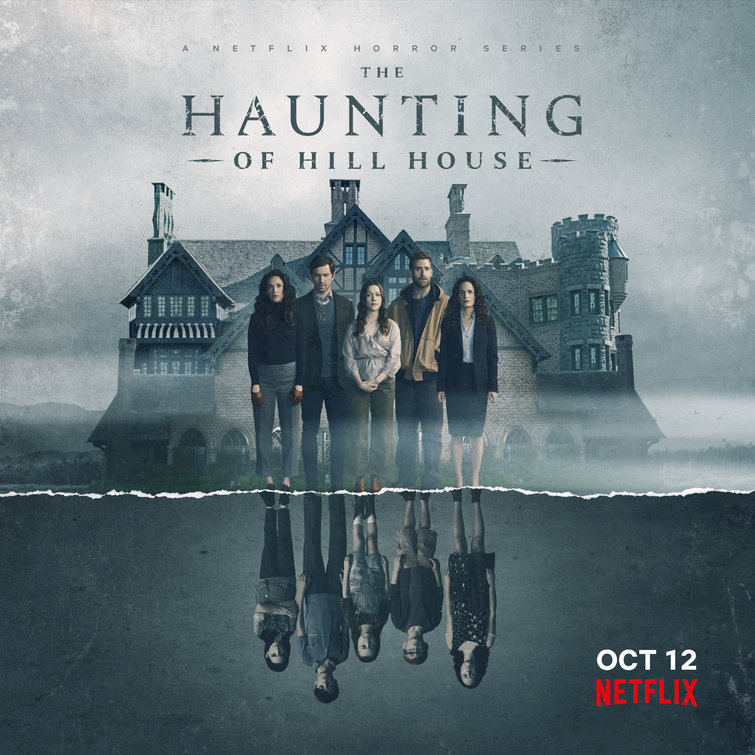
The Haunting of Hill House (2018, Netflix, 10/10 episodes) Creator: Mike Flanagan
The Franchise (2024, HBO max, 8/8 episodes) Creator: Jon Brown
Interior Chinatown (2024, Disney+, 10/10 episodes) Creator: Charles Yu
A Man on the Inside (2024, Neftlix, 8/8 episodes) Creator: Michael Schur

---

The Haunting of Hill House 

Created by Mike Flanagan

The What 100: The Crain family moved into Hill House for a few months in the early '90's with the intent of renovating it and flipping it for a wild profit. What they didn't know but would soon enough learn, is the house was not only haunted, but some kind of place of holding for the afterlife. In the present day, the surviving members of the Crain family are still processing what they went through in their younger life, some in denial, some willfully ignoring, and some trying to forget. But Hill House isn't done with them yet.

(1 Great): Unlike Midnight Mass, which came out of the gate with one of the best first episodes since Lost, The Haunting of Hill House was a much slower burn. It took about three episodes before I settled into the rhythm of the series as each of the first five episodes dedicated its focus to one of the five Crain children.  The absolute best of these was episode five, which follows the youngest sibling Nell through her childhood traumas, and simultaneously explains her mindest as she got older. Her family never really understood her, and the previous four episodes painted a very different picture of Nell than what we get here. It's a devastating, beautiful, clever, and horrifying episode that builds so well off of what we were shown before.

(1 Good): The way in which the series jumps back and forth in time is largely a subject of point of view, and as such the truth of what is happening both in the past and in the present unfolds as a result of the shifting points of view. The result is a series that keeps peeling layers off episode after episode, and although it takes a couple episodes to really get going, it does fully sink you into those layers.  As usual, Flanagan takes his conceits of ghosts and psychic connections and builds a very human world around it, zeroing in on characters and their relationships to one another, and that becomes as much, if not more what's worth sinking into that the questions of what happened (both past and present).  The sixth episode, taking place at Shirley's funeral home, brings the family together with their estranged father for the first time in a very long time, and it's a doozy of an emotional roller coaster from airing of grievances, but also has plenty of enticingly creepy moments. It's like the first four episodes culminate in Episode 5, the events of which gives way for Episode 6 which acts as the slingshot that propels the series forward over the next four episodes.

(1 Bad): I could harp on Flanagan's penchant for monologues, but it's just something he clearly likes to do and his audience either needs to get over it or just move on from his work. I'm really not ready to do either. But I think for me the least enjoyable part of the series was the Dudleys (Annabeth Gish and Robert Longstreet), whose family were the longtime caretakers of Hill House. They were such background characters whose presence never much made sense to me. I guess I just am not familiar with such a concept of estate caretakers.  I felt like they either should have been incorporated more, or excised completely. A lot of their presence in the show did seem extraneous and when we finally get their story, also quite tragic, it felt very deus ex machina.

META: Were I to hazard a guess, just looking at the timing, Flanagan was working on The Haunting of Hill House at the same time as he was working on the adaptation of Stephen King's Doctor Sleep, and the influence of Doctor Sleep really shows.  In many ways you could easily tie Hill House into the same universe that Doctor Sleep inhabits. Theo has a psychic ability (as did her mother) which could just be the Shining. The way that Flanagan employs ghosts is very similar to how they are employed in Doctor Sleep, and Hill House has a very similar vibe to the Overlook Hotel, and the way that Flanagan explains the Overlook in Doctor Sleep as almost a living entity is so similar here. Flanagan does tweak the concepts enough to not make the connection fully work, but it seems very much like Flanagan was enamoured with the ideas within Doctor Sleep and just wanted to play with them in a totally different context. Fair enough.

Flanagan's stable of performers are present, but it was the younger cast that impressed me, and shocked me with how many familiar young faces there were. Julian Hilliard who played young Luke (Oliver Jackson-Cohen played older Luke) was Tommy in Wandavision. Violet McGraw played young Nell (played by Victoria Pedretti in her older form) was also young Yelena in Black Widow and was in M3GAN and Doctor Sleep. And of course McKenna Grace playing young Theo (played in her older self by Kate Siegel) is one of the standout performers of the entire Hill House series and is also the star of the modern Ghostbusters franchise.  The young-old casting was uniformly great, and I especially liked how patriarch Hugh Crain was played so consistently by Henry Thomas and Timothy Hutton...it was a real performance in tandem.

---

The Franchise 
Created by Jon Brown

The What 100:  A satirical look behind the scenes on a big-budget superhero movie that is the latest in a Marvel- or DC-like franchise that is past its glory years and  trying to maintain relevance. The center of the series is Himesh Patel's first assistant director Daniel Kumar who seems to be the only one who legitimately cares about the property being filmed and is trying his damnedest to keep the machine functioning amidst the great many inflated egos, the war between the director and the studio heads, and trying to keep the energy up on an overtaxed crew. And then the studio sends his ex-girlfriend in as his new producer/boss.

(1 Great): You can't go wrong, I think ever, with Richard E. Grant, who plays an egocentric thespian who is too good for the material he's working with (but not too good for the money he's getting paid). He's largely background colour, but he pops every time he's on screen, as he is wont to do.

(1 Good): There are a few other great secondary character that are just joke machines, including Lolly Adefope as Dag, Daniel's Second A.D. (she really doesn't give a shit about any of it, but is ready to work her way up the ladder), Billy Magnussen as the heroic lead of Tecto:Eye of the Storm, Adam Randolph (whose ego is the thinnest sheet of glass, standing precariously on its edge), and Darren Goldstein's studio exec Pat Shannon (just swinging big dick energy everywhere, and teeters so close to reprehensible but comes out as one of the series' brightest spots).  But the series doesn't work at all without Patel shouldering the whole thing, and, let's face it, the guy is a star, and he does carry the whole thing on his back. He's likeable, vulnerable, but also flawed, and Patel has to do so much hiding of the character's true self putting on a different face for each of the other characters, with only spare moments to let his guard down and reveal the sensitive family man and old-school comic book nerd with ambitions and desires of his own.

(1 Bad): I enjoyed a lot of The Franchise but as a whole it just didn't fully click with me. I wondered, as a fan of the MCU (still) whether I was just being a sensitive fanboy at the jokes it was clearly making at its expense. But no, I'm not that sensitive a fanboy, and I liked a lot of those jokes. Largely I think this series --in exposing franchise filmmaking as a rather callous cold-hearted, profit-centric machine -- is missing exactly what it needs, which is heart. The people in this production largely don't care about what they're doing, and they don't care about each other, and that makes it hard as an audience member to care about it all as well.

META:  I can honestly say that any of the satire and lampooning of franchise filmmaking here is probably pretty accurate, if exaggerated, but this series isn't made with love, it is full on a barbed critique. It's a series that clearly dislikes the whole franchise filmmaking venture, and thinks of it as an entirely miserable experience for all, from start to finish. There's next to no room here for affection, with only the slightest glimmer of it in Patel's character, but its not put in front of the audience enough to care. 

It's also really hard to give us a 200 million dollar movie in a show whose operating budget is a small fraction of that. Tecto looks like an off-brand superhero movie from the '90's and doesn't ever feel like something that could even remotely be a successful movie. 

---

Interior Chinatown
Created by Charles Yu

The What 100: Willis Wu (Jimmy O. Yang, Love Hard) is a busboy at his uncle's Chinese restaurant who dreams of something bigger in life, but seems resigned to his constrained fate...until he witnesses the kidnapping of a nail salon worker. The kidnapping brings the bright, shiny, quippy, dynamic police detectives of Black and White to Chinatown, where Willis can't seem to get noticed beyond a few cursory questions. But then a hot new detective (Chloe Bennett, Agents of S.H.I.E.L.D.) joins the scene as a Chinatown expert, and she not only takes notice but puts Willis to work as his man on the inside. There's strange dealings going on in Chinatown, and at the precinct, and it all connects back to the disappearance of Willis' older brother.

(1 Great): This show is a trip. A legit trip. The premise, if not clear above, is that Willis is a background characters in a Law & Order-style TV series set in the late 1990s. The show blurs the line between its interior reality and the reality of a TV show as to be somewhat indistinguishable except that there are very blurry dividing lines between the two. There are times where the characters in a scene transition seemlessly into the background (and sometimes the foreground) of a commercial break, promoting a hard seltzer or stylish watch then resuming conversations. The visuals will often cut to a television set which then shows characters from the reality of Interior Chinatown as characters within Black & White or a  commercial or something else.  It is the wildest series I've watched since Mrs. Davis, another show which obfuscates its reality quite adeptly.  

(1 Good): I particularly loved how it flipped the dynamic of the background characters being the foreground protagonist and pushing the two detective characters into flimsy archetypes. But the reality of these characters, and other characters, whether lead or background, all start to shift as Willis starts infiltrating spaces he's not otherwise meant to be.  There are "awakenings" in a way, where the extras, or single-line supporting players start to find a voice within their reality, and my favourite exploration of this was with the Black & White leads, Detectives Miles Turner (Sullivan Jones, a complete unknown to me but comes alive in the series second half) and Sarah Green (Lisa Gilroy, who I know only from the Comedy Bang Bang podcast but really breaks out here). Turner starts to question everything about his surroundings, and eventually just breaks free of them, while Green wants nothing more than to embrace everything about her trappings, to succeed, but she can't stand the cost of doing so.

(1 Bad): There wasn't really anything bad about this show. I was invested from moment one, and continued to be absolutely glued to every moment of the show as it played out. But if there was a critique, it would be that the main characters, Willis, his best friend Fatty (the always sarcastic and enjoyable Ronny Chieng, Shang-Chi), his mother Lily (a soulful performance from Diana Lin) and even Bennett's Detective Lana Lee all spend so much time apart from one another in their own story lines. Willis' distance from these other characters all has narrative context, and metanarrative context, and it's employed quite well. The disparate threads do all come together in the final episodes quite successfully, so I can't complain too much, except that I liked Yang and Chieng's dynamic together (with Chau Long's sweet doofus Carl as an interloping third in the duo).

META: It's all very, very meta. The narrative is clearly the lack of representation of Chinese Americans in American television and cinema. There's a total lack of respect, and a total disinterest in the mainstream to telling their stories, and letting them tell their stories. The narrative drive here is Willis taking ownership of his story, of exposing the systemic racism that has been holding him down, and along the way commenting on how, even outside of the entertainment industry the immigrant populaces are either ignored or targeted for displacement via gentrification, their culture subverted by the whims of capitalism.  It's a damn enjoyable series for its unique weirdness, but it's so much the better for having the underpinning of cultural criticism.

I freaking loved this show. One of my favourites of the year.

---
A Man on the Inside
 
Created by Michael Schur (Brooklyn Nine-Nine, The Good Place)

The What 100: Charles (Ted Danson, Becker) is a widower and former professor who seems to be floating through life. He's got his routine, but it's unfulfilling, and he's emotionally distant from his only daughter (Mary Elisabeth Ellis, It's Always Sunny in Philadelphia) and her family. Julie (Lilah Richcreek Estrada, Chicago Med) is a private investigator tasked with finding out who stole her client's mother's necklace - a family heirloom - in her nursing home. Julie needs a senior to be her man on the inside, and puts out an ad in the paper, the only place she can be sure to find her target audience. Charles, a big fan of John Le Carre, jumps at the chance to do spy work, and for lack of other viable options Julie is stuck with him. 

(1 Great): Fucking Ted Danson, man. The guy has been at it on television for almost 50 years and in the past five or so years he's just hit his peak. The Good Place gave him the best role of his career, but with A Man on the Inside he's at his most soulful and vulnerable.  

Danson plays Charles as a man carrying deep pain but incapable of addressing it. His wife had dementia and died suddenly from complications, and the experience was traumatic for him, but he didn't know how to process it. So he floats, navigating his daily routine that offers little surprise but little possibility for hurt either. In taking the job with Julie and coming to Pacific View, he doesn't just find work and purpose, though, instead he finds a community of contemporaries, and connections to people and passions and memories and experiences that awaken him from his fugue state. The work forces him out of his protective shell and in inquiring into other people's lives it opens him up to sharing his life back, and finding the pain he experienced is not unique. Danson sells the stoic nature of Charles, the giddiness of playing spy, the tenderness he has with a Pacific View patient with early signs of dementia, and ultimately opening up and connecting with his daughter Emily (in an episode where Charles visits Emily and her family following a loss at the retirement home, it finds Charles playing video games with his three grandsons and breaks down in that moment...it's both beautiful and devastating, and one of Danson's best-ever performances that makes me cry just thinking about it).

(1 Good): Brooklyn Nine-Nine veteran Stephanie Beatrix plays Didi, the manager of Pacific View. The first few episodes Didi is a very peripheral character, which seemed odd given Beatrix's core cast role in Schur's previous series. At first Didi seems suspicious of Charles' behaviour, and it seems like its setting something up, but by the end of the third episode Didi has locked her suspicions away, like Schur was pivoting on what his initial intent for the series was (from this odd detective comedy series, to longer form sitcom in a retirement home), But Didi gets a spotlight episode just past midway through the run which demands a lot from Beatrix, and she delivers so powerfully as a woman who cares for people, even within a corporate structure that really only cares about money. It's leadership, and forming a team of people who follow that leadership, it's not just a job.  And when Charles is eventually outed, the hurt from the deceit is experienced by many, but it is Didi who is the most devastated by it, and Beatrix makes you feel that so deeply, even though you are sympathetic to Charles. His intent was never to hurt anyone, but it happened despite the best intentions.

(1 Bad): No bad here. A little wonkiness in the episode-to-episode consistency. I don't know if it was the series who had unsteady legs, or if it was just me as a view and the expectations of what I thought the plan for the series was.  It's not a conventional narrative, and Schur uses Netflix and its lack of ad breaks to play around with TV sitcom structure in a way that doesn't always work fully, but never actually fails to deliver the showrunner's intent. I think the most awkward part of the series was the cutaways to Emily and her family, which seemed so outside the narrative of the rest of the show. And yet, Lady Kent and I felt so seen by modern parenting, and the way kids behave so distinctly from the way we behaved, it's hard to say it shouldn't belong (even if it could maybe be a whole other series). These moments with Emily and family are especially important though for when we get to that powerful scene of Charles with his grandsons. I don't think it would have worked half as powerfully if we hadn't gotten to know these kids before hand.

META: Strangely Michael Schur's first, and probably biggest success was The Office, a show I cannot tolerate to watch. I've tried, twice, and I find it unpalatable. Parks & Recreation on the other hand, after it ditched its Office clone vibes, became one of my all-time favourite comedy series. And everything Schur has done since then has been right up my alley. There are few other comedy creators that I trust as much as him, because his track record has proven himself (Bill Lawrence, maybe? Tina Fey and Robert Carlock possibly). And A Man on the Inside makes good on that trust, and shows how Schur continues to evolve as a creator. His interests are of a deep and curious nature as to different facets of human existence. In this case he's looking at people in the final years of their life who are in an establishment that, perhaps, people see as a place where they go so they can be ignored and forgotten about. A Man on the Inside shows there's still vitality there, a need for connection as much, if not more than a need for care. In some cases these are places where people where "put", but the point here is that for some it's a chosen place, a home and community where there's new shared experiences and connections. It's really quite beautiful. 

Another of my favourites this year.

Tuesday, October 1, 2024

KWIF: Wolfs (+ a double dose of Flanney)

KWIF = Kent's Week in Film. TV has exploded with great new and returning shows, so filmic viewing has dwindled in its wake. These are what I managed to squeak in within the past two weeks.

This Week:
Wolfs (2024, d. Jon Watts, AppleTV+)
Doctor Sleep - Director's Cut (2019, d. Mike Flanagan, Blu-Ray)
Oculus (2013, d. Mike Flanagan, Netflix)

---

What a terrible poster
Marvel has been picking out directorial talent from the most random of places for over 15 years now. I don't know if Swingers or Elf were really telltale benchmarks foretelling a successful Iron Man movie. Kenneth Brannagh on Thor was a surprising choice. Joe Johnson on Captain America: First Avenger was pretty logical. The Avengers seemed to be the thing Joss Whedon was born to make (besides inappropriate passes at women). But then the Marvel machine took over, Alan Taylor, James Gunn, the Russo Brothers, Peyton Reed, Scott Derrickson, Ryan Coogler, Anna Boden and Ryan Fleck, and on and on. None of these directors really had "tent pole action/sci-fi spectacular" notable in their background. Certain directors figured out how to work within the machine and thrive, others were swallowed by it. With few exceptions (Gunn, Taika Waititi and Sam Raimi primarily, and maybe ChloĆ© Zhao) the voice of the director gets buried under the spectacle.

Jon Watts did three (dare I say it?) amazing Spider-Man movies. But what stands out to me about those Spider-Man films is not the action or special effect, but the characters, the performances, the pathos and the comedy.  Sequences don't stand out to me because of super-powered action, but instead because of character engagement, how people are relating to each other in a scene. Watts' gifts as a director aren't necessarily striking visuals, but drawing out fantastic performances from his actors, having young talent hold their own in the same scene as heavyweight veterans.

So Wolfs, being sold as a George Clooney/Brad Pitt reunion, has two such heavyweights, but it's the tertiary lead, Austin Abrams (from the spectacular Xmas teen romance Dash & Lily), is the absolute scene stealer of this film. This kid (playing "Kid"...he's actually 28) dominates every scene he's in, which is kind of hard when you're dealing with such sexagenarian handsomeness on screen.

The premise is the Kid is dead, and the politician who was with him when he overdosed (the everywhere-these-days Amy Ryan, Sugar) calls for help in cleaning it up. Enter the Wolf, Jack (Clooney). He's seen everything, and knows how to handle it. Nothing to worry about. Until there's another knock at the door. Enter the Wolf, Nick (Pitt), called in by the hotel. Two cleaners? Complicated things get even more complicated as a stash of heroin is found, and the Wolfs are charged with working together to find the owners and return it, lest the heat catch up to them. Doubly complicated things get even more complicated when, it turns out, the Kid isn't dead after all, leading to an incredible and hilarious foot chase that had me giggling nonstop (Abrams' verbal noises and the sound design of his sock feet slapping the pavement are just incredible).

It's all framed in a "one crazy night" cinematic fashion, going from location to location, one strange or tense encounter after another, as the odd couple start to find kinship with one another, and even start taking a very unprofessional shining to the Kid.  It's a tried-and-true formulae, and it works really well here. Clooney and Pitt have a very easy chemistry with one another, and even when they're not supposed to like one another there's a playfulness to their rivalry. 

Written into the script is the fact that both these men are aging. They have wounds and aches and problematic parts which plague them, and as fit as they are, they're still hovering around six decades on this earth. They aren't ready to leave it just yet, but there is a weariness about the life they're leading. It's used for humour, sure, but it's also used (mostly silently) to provide context. Jack specifically looks at the Kid and every time you can read into Clooney's eyes that he will probably have to kill this kid, and he really doesn't want to.

It's a fairly lightweight, breezy watch. There are no Spider-Man vibes to it at all, but Watts draws out a surprising amount of depth from what could have been two very cookie-cutter lead characters.

[I'm choosing to sidestep any particular discussion about Brad Pitt, as it didn't really impact my reaction to the film. There's a recent hit piece on him in Slate poking at the cracks in his well curated image if you want to explore it.]

--- 

Toasty is a big Mike Flanagan fan, and has said so on multiple occasions, and more than once has inquired with me if I have been exploring the Flanagan fundamentals. But, not being the horror guy Toasty is, I haven't had the impulse to dive into his various Netflix shows of the past half-decade. His films work all came out pre-2020 and haven't had the same groundswell of cult support that the works of, say, Ari Aster or Ti West has. 

Independent of Toasty's provocations, the Blank Check podcast crew have very much championed Flanagan's adaptation of Steven King's Doctor Sleep. I wrote off King years ago (quickly: full of ideas, consistently terrible endings that frequently ruin the whole story), and I thought a faithful adaptation of King's sequel to The Shining would be full of King's sour grapes stemming from the Kubrick film.  But these Blankies, these titans of film nerddom, kept bringing it up...for years now. There must be something to it... specifically denoting the Director's Cut being the superior rendition.

So I wound up with a Director's Cut of the blu-ray of Doctor Sleep earlier this year and stashed it for a rainy day. I didn't realize that I needed to set aside over 3 hours to watch it, but was pretty happy I did, almost immediately.

Flanagan's TV storytelling sensibilities from The Haunting of Hill House very much infected this film it seems. While it isn't episodic, per se, it is told in "chapters", and the juggling of a cast set in three different locations from each other (as well as flashbacks) until basically the final hour of the film feels more television than movie. 

The story starts in 1980, first with Rebecca Ferguson, who looks flat-out gorgeous in a sort of bohemian aesthetic but is also scary as shit as her character Rose the Hat sacrifices children so her and her coven (including prominently Zahn McClarnan, a Kent favourite) of nomadic, ageless, psychic vampires suck their "steam" and get high. Theirs is a tale of addiction, and the desperation they have in acquiring their hits.  At the same time, Danny Torrence and his mom (Alex Essoe, doing a very uncanny valley impersonation of Shelly Duvall) are attempting to recover from the fallout of their time at the Overlook Hotel. It's not going great, but Danny's still learning things from his Shining pal, Dick Hallorann (Carl Lumbly, taking over from Scatman Crothers), despite Dick being dead.  It's sort of a force ghost thing.

30 years later Danny's living the life of a junkie (not unfamiliar ground for Ewan McGregor), barely scraping by, when he finally abandons his hedonistic, addictive ways for a small town life, where he settles in comfortably. A few hundred miles away, a young girl named Abra has been exploring her powers, and she may just have the most powerful Shine of anyone. Unlike Danny, she's not afraid of it.  She connects with Danny remotely and they become pen pals, of a sort.

8 years later, Danny is clean and sober and stable, and though the "weird girl" at school, Abra is generally comfortable and confident in life. But when she sees Rose and the crew sacrificing a young boy to steal his Shine, she can't let it stand and gets Dan involved.  From there it's a cat and mouse game between all the players, the advantages ever shifting.

For the film, Flanagan takes King's sequel novel in earnest and also makes it a sequel to the Kubrick film via visual reference: Danny's parents are visual cues (Henry Thomas is made up to look like a haggard Jack Nicholson and the sort of confusing uncanny valley of it all is deftly used), and Flanagan reshoots some of the Overlook Hotel sequences as they suit certain narrative purposes in the story but serve to only remind that this lives in the shadow of greatness. In some respects, I felt the film at times leaned a little too heavily on the references, repeating things where there could have been more invention, and Essoe's impersonation of Duvall I found highly distracting.

But Doctor Sleep could live outside of the Shining, outside of needing it as a reference, at least in the Director's Cut.  You'll have a head start if you're familiar, but it does fill in the gaps if you're not. 

It's remarkable to me how sinister Ferguson's Rose is, how credible a threat she and her coven feel, and yet the peril that young Abra could face never actually materializes. Where Danny has cut himself off from his powers for decades, Abra has been exploring, and she is powerful. She is so powerful that Rose, as dangerous as she seems, is barely a credible threat to her. So it falls upon McGregor to be both the protector and the prone, he's the one most susceptible to the villainous troupe, but as the adult in the situation he's also responsible for protecting Abra from these vampires.

I really dug this world of "shine" and "steam" as fleshed out by King and Flanagan. I understand why some may see any form of sequel to Kubrick's masterpiece as blasphemous, but it's a pulpy story with a lot of world building around these superpowered individuals so it makes sense why I keyed into it so readily.  It feels like a space that has rules and boundaries, and different levels of access. If the logic isn't overtly presentd on screen, then it seems for damn sure Flanagan has it all figured out in his head. 

But it's not just about the flights of fancy. At the core of Danny's story is the cycle of abuse, trauma and addiction. The supernatural elements do undercut the potency a bit, but it is a key element to the story and generally it cohabitates well.

Doctor Sleep isn't a horror movie. At best it's a supernatural suspense film in the guise of a legasequel (it fits all the earmarks of one), but has a quite satisfying ending (is it King's ending or did Flanagan refine it).  I don't doubt that King has an Abra novel in him that will go bonkers-wild in exploring the world of Shine in the modern day (whether it gets made into a halfway decent film or not).

[Toastypost - we agree]

---

do all of Flanney's posters have a 
"hands over the eyes" thing?
With my first venture into Flanagan territory exceeding my expectations, I immediately wanted to dive into another. Ouija: Origin of Evil was not available on any of my streaming services but Oculus was... and, what? Karen Gillan? Katee Sackhoff? Yes please!

If I'm being perfectly honest, I do remember when this was coming out. My crush on Gillan was already on firm foundation, but my disdain for stupid-sounding horror movies was stronger than whatever libidinous impulses might draw me to watch a particular performer in a film. An evil mirror? Come on....

What I *just* realized whilst watching Oculus is that most, if not all horror movies sound stupid if you distill them down to their most basic premise. It's all in the execution.

Oculus takes place over two time periods following siblings Kaylie and Tim. The younger versions, around 12 and 10 respectively, have just moved with their parents into a new home. Their prosperous father, Alan (Rory Cochrane) has deferred to his wife Marie's (Sackhoff) decorating tastes, which is largely antiques. A gorgeous, massive wood-framed mirror is the centerpiece of Alan's home office. 

In the modern day, Tim (Brenton Thwaites, Titans) is just being released from an institution where he's been in its care since childhood, having shot his father and experience severe trauma. Kaylee (Gillan) is there to pick him up, and immediately throws him back into the fire. They had made a promise as children and now she intends they keep it.

In their old vacant family home she has set up an elaborate, controlled scenario, with once again the mirror as centrepiece to the experiment. Cameras positioned everywhere, with timers set to go off reminding them to eat, drink, change out data storage, etc, and should all else fail a massive homemade swinging anchor set to a timer that will bash the mirror to bits should they be unable to.  

This tantilizing scenario, elaborately, painstakingly detailed by Kaylie, poses the question for the audience: what is this all about? Certainly it's personal for the two of them, but Tim's time in the facility has reshaped his understanding of their shared history. The memories of that horrible time just a manufactured trauma response to the ugliness of an abusive father who killed their mother.

But the film jumps back and forth in time, revealing the "truth", or as much of it as the mirror's distortions will allow. And therein lies the problem for our protagonists, just as it was a problem for them and their family as children... the mirror's evil deceives, spreads lies into the mind, makes one think they're seeing what's not really there.  

Flanagan's deft use of his two time periods comes to a head in the third act when the lines between them literally blur. Adult Kaylie might cross her 10 year old brother, or Tim might be running down a hallway just as 12-year-old Kaylie slams a door he's running past. At certain times it's unclear which time, which reality we're in or whether the time periods have merged. Flanagan's use of deceit is pretty masterful here, even if the conclusion is all but inevitable. 

As far as horror goes, it's not far afield from the James Wan camp, dark, but playful, in structure here rather than tone. The finale feels like a bloody homage to Rod Serling, a real downbeat ending that also seems like the only place it could go. 

I'm definitely in for more Flanney! 

[ToastyPost - we agree]

Monday, November 18, 2024

KWIF: Hundreds Of Beavers (+4)

KWIF = Kent's Week in Film, which in this case is actually Kent's Week in Film two weeks ago and then again this past weekend. Assuming I finish this post this weekend.

This "Week":
Hundreds of Beavers (2022, d. Mike Cheslik - Tubi)
Cast a Deadly Spell (1991, d. Martin Campbell - HBO)
Absentia (2014, d. Mike Flanagan - AmazonPrime)
Hush (2016, d. Mike Flanagan - Tubi)
Emilia PĆ©rez (2024, d. Jacques Audiard - Netflix)

---

A lot of movies have tried to emulate zany cartoon energy in live action. It so rarely works. Whether they're taking inspiration from Tex Avery or Chuck Jones or they're trying to put live actors into a Hanna Barbera or Jay Ward property, the results have mostly been of the "not great" sort. Outside of films that blend human actors with animated characters (again, more misses than hits), the only flat out successful humans-as-cartoons production I can think of is Stephen Chow's masterpiece, Kung-Fu Hustle.

Hundreds of Beavers (surprise! It's not porn!) isn't quite that level, but as an independent production it is quite ambitious and remarkably clever in its aping of animated forms. The film's creators, director Mike Cheslik and star Ryland Brickson Cole Tews, credit the slapstick of the 20's and 30's silent and black and white era of cinema as inspiration, but it's hard to not see the Loony Tunes influence painted all over the first act, especially as characters pop in and out of rabbit holes that join different points of the terrain.

The film opens with a merry melody that spells out the disaster that befell our applejack-selling protagonist, a drunkard name Jean Kayak. Left with nothing in the dire 1800's winter wilderness, Jean is forced to learn how to hunt and trap in order to survive, and square off against the ingenuity of the wild animals he cohabitates with.

He finds the trading post where he can exchange his hides or fish for goods that will level up his trapping ability. The trading post also houses a fair belle who can skin a carcass in record time, and their flirtatious connection in the lonely wilderness is much to the chagrin of her father. 

The "animals" of the film -- beavers, wolves, racoons, rabbits, even a horse -- are just people in cheap mascot suits, but in washed-out black-and-white contrast, the cheapness has kind of the perfect effect.  Especially early on, it's the suits as much as anything else that establish the surreal world of the film.  

The environments are snowy and vibrantly white, which gives director/editor/effects creator Cheslik all he needs to disguise his deceptively rudimentary effects. As much as the film takes inspiration from slapstick and cartoons, it's also feeding off of video game structures at their most primal level. Feeling much more "Commodore 64" than "X-Box One", Hundreds of Beavers finds over it's hero levelling up and level restarting constantly over its 108 minutes, until its final act which goes full-blown Super Mario as Jean Kayak must navigate his way through the massive and intricate fortress the beavers have constructed. There's a Temple Run chase, a Frogger-like crossing, there's map discovery and puzzle solving of the try and try again variety. 

The film's title card doesn't really emerge until the 30-minute mark, complete with another song and credits, but it feels like it should be at the point where a cartoon with this kind of energy would normally end. Yet it keeps going for [time check] another 75 minutes. From what we've seen to this point, it doesn't feel like there's enough juice to sustain another 75 minutes, but it's a clever switching of gears, changing the pace and rooting down into the silly character drama, establishing relationships and rivalries and running gags that, quite astonishingly, actually sustains the enjoyability and fun of the production.

I should also note the film is completely silent, or at least, there's no spoken dialogue (what dialogue there is we see on olde-style screen cards). The score, from Chris Ryan is absolutely essential to the success of the film, and it's flawless. It's doing so much heavy lifting in a film where every element is pulling more weight than it should bear.  To me it felt like Terry Gilliam drawing Looney Tunes but directed by Guy Maddin. It's irreverent, pushing boundaries, but also reverent towards old cinema styles. It's a film that shouldn't work at all, and that it not only works, but works resoundingly well and manages to sustain it's total running time is an absolute feat (even if I think shaving off 20 minutes would have done it some good).

Dam fun and dam enjoyable.

---

Cast A Deady Spell is a fantasy-noir set in an alternate 1940s where everyone seems to have some capability to use magic. It's a film that stars Frank Grillo precursor Fred Ward (Remo Williams: The Adventure Begins) as former cop, now hardboiled P.I. Harry Philip Lovecraft, a good detective who refuses to do magic.  A case comes his way to recover a stolen book, the Necronomicon, which leads H.P. to a swanky club owned by his former partner, an ex-dirty cop also named Harry (Borden, as played by Clancey Brown, Highlander). Singing at the club is Borden's girlfriend, H.P.'s ex, Connie Stone (as played with full femme fatale sultriness by Julianne Moore, Boogie Nights).

There's undead henchmen, gargoyle spies, deadly magic, and clever tricks, not to mention the looming threat of a Lovecraftian elder god. It's a film full of special effects, extensive prosthetics and make-up, not to mention being a period piece, so it's all quite stylized.  Martin Campbell, not yet the man behind Goldeneye, or The Legend of Zorro, or Casino Royale, but he's been in the game for 20 years at this point and shows off all the skills that would put him at the helm of some truly great action and genre pieces [and, to be fair, some not so great ones *cough*Green Lantern*cough*). While not the most lush visual production, everything work quite well in unison. There are no flat beats, no wrong notes, it builds its world adeptly, leaning both into its fantasy and noir influences (it's far heavier on the noir, and it abandons any real attempt at the horror side of Lovecraft).  

So I have to ask... why have I never heard of this before? I know all manners of sci-fi, horror and fantasy films from the era, including a broad range of low budget, direct-to-video garbage (now on Tubi!) but I've never heard of this film from a known director of some renown, with a handful of quality (and, in Moore's case, A-list) actors, with really good special effects, and a thoroughly enjoyable production. 

The answer comes back to the same problem we're facing with streaming: movies that don't go to theatres get lost. They get no promotion, and so there's no awareness of them. They don't get a second life on video, so there's no secondary "new release" push. They just live on in the archives to be randomly discovered. Oh, here's a Jennifer Lopez sci-fi movie I've never heard of, or a hanful of Chris Pine action movies that nobody knows existed, or movies starring Chris Evans we've watched and all forgotten about. Without being released to theatres where it would reveive even a modicum of marketing push, there's no sustaining a movie in the consciousness. They just disappear, a faint whisper of a memory when playing a movie trivia game.

Even now, at the end of this write-up, I've already forgotten the name of this film and had to scroll back up to read it.

[Side note: there is a gay and a trans character in this film who are a couple, and I'm not certain how I feel about their representation. H.P. drops casual slurs and gets physically rough, which I feel is to the detriment of H.P.'s characterization. At the same time, I feel like the couple are treated sweetly and sympathetic by the filmmaker and script, and their fate is tragic which may fall into the "kill your gays" trope, but also so many people die in this thing...so Idunno. Is it inclusive or exploitative?]

---

As noted on my previous post, I'm all aboard the Flanagan train, and I'm wading knee deep in the Mike Flanagan waters, but I'm starting to worry it may be too much too soon.  After watching Midnight Mass, I started trolling Toasty's Flanagan reviews past, and I decided to hit up a personal favourite of his, Absentia. Both Midnight Mass and Doctor Sleep impressed me so much I really needed to go back and see Flanagan's beginnings.

Watching Absentia reminded me of watching the films of Benson and Moorehead, The Endless and Resolution... just supremely well executed small-budget indies that intone much grander conceits and ideas without needing any real budget for it.

Here, a woman is in the final stages of having her husband declared dead in absence of a body after 7 years. She's pregnant, having become close to an officer on the case, and she's looking for a new start on life. Her sister, fresh out of rehab from heroin addiction is there for the mutual support feedback loop. 

A couple weird things happen to the sister, and then the husband returns. Questions are asked, emotions are heightened, and the whole world seems to go pear-shaped. The sister's maybe relapse-fuelled investigation yields dozens of disappearances in the neighborhood in all recorded record. There's something going on here. It only gets worse from there.

It's an early example of what Flanagan seems to do exceptionally well, which is set up a supernatural scenario, maybe even a horrifying one, and then let his characters live in that world, getting really intriguing reactions from them as they try to psychologically rationalize what is happening to them, or get a little off kilter from the realization that their understanding of the world is completely upended. Flanagan also likes to toy with religious themes as well as ideas of perception, and with the sister's substance abuse history, her view of what is actually happening is perhaps distorted.

I liked the film a lot, but it's let down by many of its performances. I've noted that Flanagan enjoys giving his characters a monologue (we've watched The Haunting of Hill House since I watched Absentia and that show is absolutely rife with them). It's a stylistic choice of his, as he must know it's utterly unnatural for people to monologue like that in the presences of others. What has made it tolerable in most of his productions is skill of the actors in delivering their speech, but here, these indie, probably novice actors, can't quite get there, and they come off pretty clunky.  Also, the only "name" actor in this is Doug Jones, and I would have loved to have so much more of him.

I tried to watch Hush immediately after watching Absentia but it's a film starring a deaf character (unfortunately not an actual deaf performer, instead co-writer and Flanagan's wife Kate Siegel) and I was multitasking so I couldn't track the subtitles and had to stop early on. What I didn't know was that within 15 minutes there's no more sign language and most of the film is pretty wordless.

The gist is Siegel plays a deaf writer who is terrorized by a serial killer. The killer has murdered her neighbour and now is outside her home holding her hostage, toying with her rather than going straight for the kill.  It becomes a tense cat-and-mouse game as the killer waits to see what his victim will do, only she starts incrementally getting the better of him, though not without taking a few hits herself.

I don't like home invasion thrillers/horrors. It's a definite thing that causes me anxiety, so movies like this, even when they're not particularly very good, are still pretty effective in raising my blood pressure, and that's really all Siegel and Flanagan are banking on here.

It feels like a small, contained indie production, like Absentia, but with much better cameras and lighting. It looks good. And if you don't think, like, at. all. about it, it's pretty intense. But the more you start looking at it, the more the flaws become apparent. 

The mask the killer wore had a texture of melted flesh, with a slight smirk on it, which gave the killer a cockiness that made sense when he decides to toy with her. But he very quickly reveals his face and the threat level drops sooo many notches once he does.  Something about that mask really brought out the angry, misogynistic alt-right white kid vibes that dissipate once we see John Gallagher Jr.s face.

There's also not much, if at all, in this home invasion/hostage thriller that utterly necessitates the lead character being deaf, except for the gruesome opening murder scene in which Siegel's bloodied neighbour is banging on the patio glass with Siegel completely oblivious. It's not an essential element to the story, or really, the character.

Siegel does a very good job at alternating between afraid, in pain, and steeling herself to do something probably stupid or brave or daring. She's the defacto final girl by nature of being pretty much the only girl in the cabin in the woods.

Overall, I was entertained but it felt like it was maybe a 30-40 minute short film stretched out into a feature length, and it's easily the weakest and least Flanagan-esque of his works I've seen so far.

---

It's been a stressful few weeks at work with time being eaten up by demands in the off hours, so while I was working on a volunteer project I did so with Hallmarkies as a backdrop. I got three of them in before I finished by project and once complete I needed something ... not so trashy and mindless to watch.  I had clocked that Emilia PĆ©rez was available on Netfilx and it was one of those titles I had stored in the back of my brain, even though only had a vague memory of what it was.  What I knew was it was boldly a musical about a drug kingpin who is a trans woman and wants to transition. It also won the Jury Prize at Cannes.

What I also learned, less than a minute into the film, is it's set in Mexico, almost completely in Spanish and stars Zoe Saldana (as well as Selina Gomez, of the familiar names), all from a white, cisgender French director.

Saldana is, Rita, an exceptionally competent lawyer overlooked by her superiors because of racism. She's approached by drug kingpin Manitas in secret with the promise of untold riches if she can help source out his transformation. Manitas tells her his whole life is a condition of his circumstances and as wealthy and powerful as he is, he cannot live this life anymore. He would commit suicide, if not for the desire to first live life as she truly would like to live it, to experience the world as her true self.

Manita's wife (Gomez) and children are escorted to Switzerland by Rita, while Manitas undergoes her surgeries, and Manita's death is faked and reported on television. Satisfied with the job, Rita is set free, with her riches, to live her life. 

Except, four years later, Rita, now living big shot lawyer life in London, meets Emilia PĆ©rez, and Rita soon fears that this is a spectre from her past coming to kill her. Instead Emilia once again wants her help to bring her family back to Mexico, under the guise of being Manitas' beloved aunt.

While settling in, Emilia and Rita meet a woman searching for her son, who has been missing for 10 years. Emilia knows through old connections she can find out where the body is buried, and does. Emilia soon finds a path for her wealth and atonement for past sins, in trying to uncover the whereabouts of the hundreds of thousands of missing persons, all likely a victim of the drug cartels of which, in a past life, she was a part.

It is indeed a bold film, weaving between its criminal elements and its trans elements, it's attempts to be both an ally to trans women and innocent victims of the drug trade in Central America, all while jutting in and out of song and dance numbers that, more often than not, never fully flourish, or feel complete. The lyrics dip in and out of singing and dialogue in a way that's largely unsatisfying. Some tunes that have catchy hooks never play out in full song. I never thought about pulling up the tracks on Spotify because they never felt like whole songs.  

The nature of this hesitant musical is intriguing in its own right, and I found myself drawn to its rhythms, its beautiful costuming, its lush colours...even its dingy settings were captured so perfectly. But all the while  I was feeling uneasy in my gut with how it was portraying its transness, its victim advocacy and its conceptualization of the drug trade.  It all felt... at least to some small degree... exploitative.

I never truly got a sense of the characters in the film, what they actually were feeling. In a musical, emotions are supposed to come out in song, but the emotions presented seemed beside the plot of the film. I didn't connect with these characters like I wanted to, and every turn that sent the plot in a new direction seemed to put more distance between me and them.  I think the performances throughout were fabulous, but the material let them down.

I came out of the film feeling like I watched something very unique, but I didn't feel enriched by it. I didn't feel like the film ever really dealt properly with the material it was presenting. I was entranced, but not enlightened.

In watching the film, I was reminded of Annette, another askew musical by a French director that couldn't be more different, story-wise, and yet tonally felt so much the same.  Probably a very fucked up double bill to explore one night.

[I'll come back to all those Hallmarkies mentioned at the top of this review another day]


Saturday, October 23, 2021

31 Days of Halloween: Doctor Sleep

2019, Mike Flanagan (Gerald's Game) -- Netflix

So many movies blur together when doing this month of watching, not just the movies I am watching for this year, but clearly the movies from previous years. While I enjoy the whole endeavour, enjoy the bad with the good, even enjoy the standard structures of the heavily "meh", I have to say I do love when some things emerge so strongly, stand out so much, that I am left thinking about them after.

Gone are the days from when I was the Stephen King fan (I bet you thought I was going to mention having been a movie fan again, didn't you?), and would have read every single one of his books as soon as the hardcovers hit the shelves. I knew this book was the sequel to The Shining, but I could not conceive of a continuation of the story that could be satisfying. This one definitely does it, takes the world that King introduced and expands upon it, moves it from one occurrence to a world of astonishing and terrible possibilities.

And yet, this was not a world present in the original Kubrick film. While I will never lose my absolute fascination for the movie, it is not something I am often eager to watch again. Its an impactful movie, somewhat too much for me. I think it really, truly represents fear for me. And yet, I cannot claim it did justice to the world King established, as Kubrick's film is less about Danny's shine, and more about Jack Torrance's utter collapse into insanity by way of an evil hotel.

And yet, Flanagan takes what we know from Kubrick's film, and adds back in all of the King magical realism elements. This is not just a world where a haunted house drove his father to madness, but a world where Danny "Doc" Torrance's supernatural powers both protect him and utterly endanger him. Its not just one kid, and one old man, but a world of people with powers, and monsters that prey on them.

The movie begins with Danny barely escaping the trauma of the hotel, especially since it follows his mother and him to Florida. But the spirit of Dick Halloran appears to give Doc a few tricks to protect himself. Alas, while he may be protected from the evil that the Overlook spawned, he is not able to escape his shine. And it haunts him constantly, driving him into the bottle. Eventually his running away takes him to New Hampshire, where he meets a kind man and a kind doctor, and they coax him into an AA meeting where he is saved. He also meets a nice little girl named Abra who lives far away, but not far enough away to stop her shine from being so bright that she can chat with Danny.

Alas someone, something else catches scent of her as well.

If there are those who shine bright, there are those that desire it. They are monsters, proto-vampires, humans that have learned to sup upon a particular byproduct of fear & pain that those who shine produce. They call it steam, and it feeds them, giving them long life. They may have once been people, but that time is past. They are boogeymen, the slayers of children with the shine.

Flanagan does not so much as make a horror movie, as he does a thriller about people with powers, good and evil, fighting it out. As I have commented about Flanagan's Absentia, there is a layer of heroic adventure behind the story. This was epic Good vs Evil, where the Good side does not shirk from its responsibility even when all can be lost. I absolutely loved that King and Flanagan could be so on the same page on how to present the next chapter for The Shining.

The Good here is Danny and Abra, two very bright shines. The evil here is called The True Knot, a group of wanderers in rotting RVs and camper vans, channeling the Travelers of UK infamy, especially so with their leader Rose (of the Hat) lilting a touch of an Irish accent, and displaying the affectations of Roma (Gypsy) folk. She is old, but some of her band are even older, maybe thousands of years old. But she is the most powerful and decides that she has to take Abra, for Abra's steam will be strong enough to sustain them for a very very long time. Rose and her people are not bad folk, but they are evil through and through, though I doubt they see it of themselves.

The movie does a full circle back to the Overlook, now abandoned, and to defeat the monster Rose, Danny has to release the monsters from the Overlook that he caged up all those years ago, with the help of Dick. Rose may be powerful, but she cannot stand to the utterly pure Evil that the hotel represents.

This movie was over two and a half hours long, but I didn't feel the time pass. It kept me attentive, but usually Ewan McGregor can do that. And Rebecca Ferguson as Rose, is just so beautiful and so dangerous, and so charismatic. They played off each other so well. I have heard there is a three hour version out there, and now I have seen the primary release, I shall endeavour to find and view this other Director's Cut. But not soon, I have much to let settle in.

Monday, October 15, 2018

31 Days of Halloween 2018: The Haunting of Hill House (the rest)

2018, Mike Flanagan (Absentia) -- Netflix

I make no qualms about my love of Mike Flanagan's work and my inability to articulate exactly why. I covered that confusion in the last post about this series, something that I absolutely, unabashedly and loudly loved. It was both what I expected from him (depth & expansion on horror tropes) and so much MUCH more.

The first episode ended with a revelation and a jump scare. From there it gathered the family to deal with Nell's death, their own estrangements and the looming terror of that house they fled so long ago. And then it ends on a surprising, incredibly touching tragic note.

I was floored.

Despite this series being one of those that tried to be memetically popular (telling us that people would be too scared to watch the next episode...) I never actually got wrapped up in the jump scares and the ghostly nightmare. What I tethered to was the damaged family and how despite their trauma, and their desperate attempts to avoid admitting what had happened to them, they were still so very strongly tied to each other. Love is hate, and hate is love.

The Man on the Bicycle stares at the screen-memory-hologram. It won't matter how much he pedals right now, as this image is fading. There are some bright colours, some scents emerging from the screen, but the rest is foggy and dissipating. With a sigh, he pedals a bit faster to allow him to watch what he can, while he can.

With the initial scare out of the way, Flanagan can ease us into the stories of the Crains. We start with Shirley, tense and strict, who runs a funeral house with her hesitant husband. Of course, Nell's funeral is held there. Flashbacks provide us more background, to the kids and to the house itself.  Theo is emotionally distant, living in Shirley's shed/guest house and hiding intimacy behind a pair of gloves. Luke, well poor lost Luke is an addict. And nobody likes to talk about dear old Dad, except with the greatest of venom.

The show spends a lot of time filling in the blanks, but hesitates in telling us exactly why the family had to run away from the house but refuses to tell us what happened and why mom never came with them. But it left them all severely damaged. And now, in the current day, it seems that with the death of Nell, the house wants them to come back. And that is where the real terror comes from -- the impending doom.

There were a couple of stand out episodes, the primary being the "all one take" episode. Of course, its not entirely a single take, but the continuity of the story telling, as the family gathers at the funeral home, is utterly stunning. The increase of emotional tension, the furtherance of the Crains being actually, truly haunted (by ghosts and by tragedy) all lends itself to a perfect episode. The frosting on this cake is how Flanagan takes the familiarity of a "one take" episode and, when it dives into the flashbacks in the house, uses its motif to accurately represent the geometry bending attributes of the haunted house itself.

Another was the introduction of how exactly the house traumatized small, meek Luke. In an episode that contrasts adult Luke trying to get sobre, we get younger Luke haunted by one of the scariest ghosts in the whole series! Sure, we are in an age of tall, thin, slender men but Luke is so tiny and that fucking thing is so tall ! Does he even need to float inches above the ground? Of course, the ghosts of the Hill House are its victims, so the real man who died is not as nearly scary as the image seared into Luke's young mind, one that obviously alters him forever.

The Bicycle squeaks to a slow pace, needing oil but only finding the blood and sweat running down the Man's legs. He looks over his shoulder. The door is there, the one his bicycle extends from. Beyond is supposed to be the haven he will get when he finally gets to stop pedaling, but right now, all he sees is the silhouette in the doorway, a tall, slender man, and The Man begins pedaling ever more frantically. Not that he can get away... ever.

In the end, I found myself rather impressed by the show. But not by the scares, but by the emotions it left in me. It doesn't take much for me to get in touch with sadness, and maybe that is why I can so easily connect to Flanagan's work. Maybe he knows sadness and let's me touch someone else's for a brief time, so I can let go my own. We are all haunted by something, I guess.

Tuesday, October 28, 2025

1-1-1: Fall of the House of Usher

2022, 8 episodes - netflix
created by Mike Flanagan

The What 100: Roderick and Madeline Usher were the bastard offspring of the CEO of pharmaceutical corporation Fortunato. Left nothing, the siblings work their way into the Forunato company on their own merit and climb the ranks, though a secret from their past gave them a decisive leg up. Roughly a half-century later, all the Usher's successes that seemed to have been unimpeachable actually have a bill that's come due, and the cost is the entire lineage of the Usher family.

(1 Great): The story of The Fall of the House of Usher, is told by Roderick Usher (Bruce Greenwood, Star Trek) to US Attorney Charles Auguste Dupin (Carl Lumbly, M.A.N.T.I.S.), the man who has been trying to prosecute him all these years for Fortunato's many crimes against society and humanity.  The story takes place in multiple times periods, with the "present day" - in which a grieving, repentant Roderick making his final confessions to a long-time nemesis - acts as framing sequence to the series.The late 1970s era find Roderick (played by Zach Gilford, The Purge: Anarchy) picking his path in life, pulled towards being an honest, if maybe poor man but loving husband and father, or a cutthroat businessman with Madeline (Willa Fitzgerald) pulling the strings from behind. There's also the weeks set before Roderick and Auguste are having their dark-and-stormy night chat, where each episode one of Roderick's six children face their horrific and untimely demise.  I love a good non-linear story, and Flanagan here constructs it masterfully. It's jumping from time to time, further expanding multiple different narratives, all while teasing right up until to the finale what the actual deal that Roderick and Madeline made with the mysterious figure (Carla Gugino) who is present at each of the kids' deaths. There's so many little mysteries that Flanagan teases out over the eight episode that make for compulsive viewing, once one episode is done, you want to dive right into another. As well, the premise of an awful family of uber-rich assholes each meeting a pretty grim end (each very loosely based around an Edgar Allen Poe story), makes for absolutely delightful viewing. 

(1 Good): Roderick himself was personally responsible for the development and exploitation of highly addictive, highly profitable painkiller Ligodone upon which he built an empire. He has hundreds of thousands of skeletons in his closet. I've seen Greenwood in many, many productions, and he's always a solid player in every appearance, but I don't know if he's ever been given a role like this which requires so much gravitas and control. Roderick is a man who is haunted, both literally and figuratively, and Greenwood plays both so perfectly. This is the story of a man recalling the glory and regrets of his past, a man trying to, in some small way atone for his sins, while within his story, he is a most assured and devilish man. Greenwood needs to work through an entire emotional spectrum with this character, all the while it has to feel appropriate and consistent to his character. He has the toe the line of being so evil that there's no chance we could like him, and then have Greenwood present little aspects of the character that show there's humanity underneath (we still don't like him, but there is a bit a sympathy, and even pathos among all the schadenfreude). The writing is largely fabulous, the performance is even better. 

(1 Bad): The only bad in what is otherwise delightfully grizzly October-friendly viewing was a few moments in the conceit of the framework. Some of the back and forth between Auguste and Roderick felt...forced, unnatural, often as the show was using the framework to jump between its time periods and narrative tracks and the attempts to direct the narrative through this dialogue felt shaky at points. In teasing out the history that Roderick and Auguste have, it makes investing in this face-to-face a little more difficult. But it's a really small quibble in an show that had me squealing and squicking in equal measure.

META: Flanagan has his ensemble of players that he uses again and again, and I'm of two minds about it. There's an aspect of it that's kind of fun, like how Hallmark just kind of mixes-and-matches their leads across their dozens of seasonal offerings each year, you kind of get to know and like these performers and look forward to seeing what roles Flanney decides to put them in.  But at the same time I also feel like it may be limiting the performances, that maybe by only casting familiar actors, he's maybe not getting the best performances that he could. But that reservation only holds water if I feel like any of the performances didn't deliver, and I couldn't really find flaw with almost any player. And it's not like Greenwood, Mary McDonnell, Lumbly, and Mark Hamill were regular players in the Flanney troupe prior to this, and they're all quite astonishing additions. Love to see them all in great roles.

One other thing about Fall of the House of Usher that deviated from usual Flanney tropes... there weren't the usual monologues that Flanney has a penchant for, but much of the face-to-face between Auguste and Roderick was monologue, but it's also narrative, so it made a lot more sense and felt more natural that it often does in Flanagan's shows.

[Toastypost - we agree!]

Wednesday, October 7, 2026

31 Days of Halloween: Carrie

2026 - Amazon

How do I write about TV again?

Every year, at least one TV show appears near-to or during the season. This year, we get at least three, which are automatically on the slate: Yaga which starts at the end of the month, the Newfoundland shot and based monster-in-the-water series Below that starts tomorrow on Netflix, and this one, the latest from favourite Mike Flanagan.

Insert Fanfare Emoji

There have been a lot of Carrie adaptations, the debut novel from Stephen King, going all the way back to the 1976 De Palma / Sissy Spacek movie. Then there is its "sequel", the terrible The Rage: Carrie 2 in the 90s, and the 2013 version with ChloĆ« Grace Moretz, and there was also a 2002 made-for-TV movie written by Bryan Fuller; it was meant to be a backdoor pilot, but that never happened. I will also mention there were two stage productions, but I refuse to even dig into them.

This is Flanagan, whom we love love love, but I have to admit... I had no great anticipation for this one. I might have to admit no great fondness for the King story, despite it being his first. It was likely my fifth or six of his books. I might have soured on it due my own high school drama; nothing involving buckets of pig blood, but I do not look fondly back on those years. But I will watch it, and I will enjoy it despite getting in my own way.

It begins with the death of Carrie's father (Tahmoh Penikett, Dollhouse), a construction worker, but more importantly, a prep'er and anti-government whacko who kept to himself. Nobody at work knew him at all. It continues with the authorities finding Carrie(ta) and her mother (Samantha Sloyan, Midnight Mass) in the closet. Nobody knew they existed. But, I should say it begins with the simul-cast preamble, interviews with people regarding the incident that started in the high school gymnasium during prom, and ended with the entire school burned down, and most of the town. The same interviews explain that, pending funds being setup for the now widow and her daughter, Carrie (Summer H Howell, Night of the Reaper) has to go to school and mom has to work.

Smart move from Flanagan, as most people watching already know the story behind Carrie in that a young girl with powers gets a bucket of pigs blood poured over her and she ... explodes, taking everyone with her. Not literally, but powerful telepathic response. So, we know the ending, but do we know the story.

The setup is familiar enough. Carrie is new to this world, pretty much all of it. She's weird but resilient, open to every new experience. High school girls are demons, cliques within cliques. New people are fodder, new & weird even more juicy. Her first few days of homemade clothing, sexual awakening, popularity machinations and her first school shooting drill do not go well. We also see that there is an emerging conflict between Carrie and her mother, as Carrie begins to understand how much she has been kept from.

The episode ends as the torture begins. Carrie gets her first period, something her mother neglected to prepare her for ("my daughter is a child...") and the other gym class girls go wild on her, throwing feminine protection at her, while filming her confusion and panic. The episode truly ends with the introduction of something new, an Xavier style school of other girls with psychic powers, one who is sensitive to Carrie's awakenings.

Like all Flanagan, we begin with characters, good and bad, slow burning our way into a story. He's brought only a few of the usual suspects along so far, but I suspect more will come along.  Its a sold opener.

Monday, October 10, 2022

31 Days of Halloween: Some TV

The Midnight Club, 2022, Netflix

Werewolf by Night, 2022, Disney

Life and Thanksgiving overtook most of our available time, so the last three four nights have just been watching our new favourite Mike Flanagan series, The Midnight Club, and chuckling at the one-shot Special, Werewolf by Night. 

I have already fessed to being big fans of Flanagan, so it was no surprise I was in for this latest series. I do like that Netflix is invested enough in him that they have dubbed it the Flanaverse, but also, that's kind of lame. This one sets itself once again in a haunted house, this time a hospice for terminal teenagers, a bucolic estate in the countryside where they can live their final days out in comfort and support. But, of course, something else is going on.

This is based on a YA series, to some degree, and that is present in the conceit of the show, in that The Midnight Club is where the kids come together each night to tell horror stories, and to address a pact they have made, in which when they die, they will do their best to send the rest messages back from the other side. But again, something else is going on in that house, because... well, there always is. Stories within stories seems, to me, to be prevalent in YA fiction.

The first handful of episodes have been, as Flanagan is wont to do, setting up the stories. We meet the kids, understand their motives and predilections, getting to like some and dislike others. I am not as wrapped up in their stories as much in previous series by Flanagan, and I am also not as keen on the continuous jump-scares. I know he likes them, but I guess due to the demographic audience, there was a need to up the ante on them. And as before, as we reveal more of the story and more about the kids, you get more wrapped up in the intermingling stories. 

We are trying to not binge it, but also want to get back to the now-once-again-full queue of downloaded horror movies. Watch what we already had from previous years? Sure, but watch from a growing list of even newer downloads? SURE. (insert the Drake meme image)

Meanwhile over on Disney, they added Halloween to the MCU by giving us an all too brief exposure to some of the monsters in its universe. Marvel has always had some proper monsters in its world, including Dracula, Frankenstein (they drop the apostrophe-monster), Man-Thing, Ghost Rider, etc. They have even brought them together in cross-over comics, such as Midnight Sons. And some have even reached over to the screen, including the much derided Morbius and Ghost Rider and even Hellstrom which is about the Son of Satan. And this time, we get the Werewolf, my favourite of monsters!

I loved Werewolf by Night, the comic, when I was a kid. It was right down my alley of a superhero comic that was not about straight superheroes. I always liked a twist to the usual. They definitely modelled his look from The Wolfman, the Universal monster movie, giving him a sort of Hulk-like appeal, even always leaving him wearing (purple?) pants. I don't recall any of the stories, but the supernatural would get mixed in, and he was a typically tortured soul character.

The show comes along not explaining anything, which is perfect for One Shot Specials. We are introduced to a group of monster hunters, founded around leader Ulysses Bloodstone, and his prodigal daughter Elsa. The monster hunters, a colourful cadre of Z-grade characters from Marvel, are vying for control of the stone, by hunting a monster, and each other, in a maze of Bloodstone's design.

The monster they hunt? Marvel knows its viewers well enough that they are a mix of old fans and new fans, so they hide the monster's identity for a while, eventually revealing Man-Thing (squeee!) and that one of the hunters is not hunting him, but is his buddy Jack Russel, i.e. Werewolf by Night. Their interaction makes it sound like a run of a Team Up comic run. Soon after the reveal, Russel is unmasked as monster, not monster hunter and captured. But not for long, as they invoke The Moon and ... well, slaughter ensues.

It was a fun romp for about an hour. They have a lot of fun playing with the tropes and the style of the show, it mostly being shown in black & white, with overtones of B level monster movies, as well as the buddy-cop motif showing up in more MCU shows of late.

So, what if they were to do a proper Midnight Sons or Legion of Monsters? Morbius was a dud, so many they can recover him? Ghost Rider could be done again, and we know there is already is a Blade movie in the works. So many options!

Friday, October 9, 2020

31 Days of Halloween: The Haunting of Bly Manor: S01E01: The Great Good Place

 2020, Mike Flanagan (Absentia) - Netflix

Flanagan is doing something rather unexpected with "season 2" of "The Haunting". In fact, it's not Season 2 of anything, but a new series, about a new family, about a new house. Like an artists who paints the same imagery over and over, exploring and re-exploring their ideas, to see where they lead, Flanagan is doing a series with the same tone, and some of the same actors, as the first series but set elsewhere, elsewhen.

Spendid, perfectly splendid, to quote Flora.

I am sure someone more versed in Gothic literature would be able to state to me, the first tale where a young woman is sent to a mysterious manor house in the English countryside, to take care of some eerie children. It is a staple enough of a plot that I am sure I could hunt the archives of this blog series to find at least a couple of examples, as long as we ignore The Boy. But, like in said movie, Dani is an American in the UK, who has answered an advertisement (saying it UK style plz) for an au pair position at Bly Manor, to take care of Flora and Miles. They lost their parents, and then they lost their last governess (suicide) and no else is answering the ad. Their uncle (Henry Thomas, E.T.) hires Dani (Victoria Pedretti, Amazing Stories) to take care of the children.

Dani comes with her own ghosts in tow.

I usually find slow and plodding a drag, as 1.5 hr movies often just repeat old tropes, interspersing them with jump scares, and familiar imagery. Flanagan does use the familiar, and there are some mild jump scares, but they are meant as setup, not baseless misdirection for the sake of someone pulling their toes up onto the sofa. But it's all that is unsaid, that is supposed to be unsettling, and this, he does well.

Once again the house is a primary character, large and lovely on eeries grounds, with mists and shadows and scary waters. Inside she seems larger than on the outside, with wings and halls better left unexplored. But really, who does want to explore them. Something is haunting this house, something that obviously drove the last governess to her death, but we don't know what yet. Yet, the children do know, as knowing children usually do.

Pedretti is not Nell this time, nor should she be. Her Californian accent is somewhat jarring, as are her frumpy 80s mom jeans, but she settles so easily into the role. Walking around the edges are Owen (Rahul Kohli, iZombie) the affable cook, Mrs Grose (T'Nia Miller, Years and Years) the caretaker, and gruff gardener Jamie (Amelia Eve, Enterprice). Everyone knows what happened to Miss Jessel, but no one's talking.

And we are set.

Saturday, October 13, 2018

31 Days of Halloween 2018: The Haunting of Hill House S1E1

2018, Mike Flanagan (Occulus) -- Netflix

If you are going to write reviews (?!?!) about things you should never admit you might not be the best at articulating why you like something, or do not like, for that matter. As I have mentioned before, in one of my never-ending inward looking paragraphs as to why I do this thing, I mentioned that I find it hard to consider these posts are reviews and just more as blog posts. That excuse allows me to ramble on about nothing in particular and be forgiven. You forgive me, right?

Also, I never claimed to be good at this, but I continue to do it as much or more for me, than for you Random Anonymous Reader. Reader? OK, fine just me. And occasionally Kent.

So, I like Mike Flanagan. We have enjoyed almost all of his movies. But when I think about why I like what he does, nothing concrete comes to mind. I like the way he builds characters -- in that it reminds me to lofi Stephen King from the 70s & 80s when his books were as much, or more, about characters than they were about the scary situations they were in. And yet, in paradox, I cannot say that his characters stand out. He does not intend them to be flamboyant or have characteristics beyond their role in the movie, as King did, and thus they don't exactly stay in the memory. But I do remember that as he establishes them, I am attentive and interested. Which is more than most horror movies ever accomplish with backstory.

The Haunting of Hill House is a horror staple. There was the novella from 1959 and the two movie adaptations, one faithful one not so much. Flanagan does not attempt to be faithful to the exact plot (people investigating a so-called haunted house) but re-works the story and characters in two time periods: a family being haunted by the house, and the family's return due to tragic circumstances, many years later. He takes the names and makes the family his own.

The Crain family, with dad Hugh (Henry Thomas / Timothy Hutton) have moved into infamous Hill House. He and his wife are house flippers, renovating difficult spaces and re-selling them. His wife Liv (Carla Gugino) has the architectural eye and Hugh manages the reconstruction with a convincing, "I can fix it..." The five kids tag along. But, as expected, Hugh cannot fix what is wrong with this house.

At first things are fun, as the house is massive with all kinds of rooms and stuff for the kids to explore. But then we jump to That Last Night, where Hugh is waking his kids and demanding son Steven get them to the car, now !! We get a car full of kids screaming, "Where's mom?!?!?" but we get no answer as he speeds away.

Flip to the future. Steven is a writer, who made a hit off a novel about That Night. Shirley runs a funeral home, Luke is an addict, Theodora wears elbow length gloves and picks up strangers in bars (always short hand for trauma on TV), Dad is estranged. What about Mom? Nell ? Steven returns home after a long day, home to an apartment, not his wife's house, and finds Nell there, quiet and in the corner. And then dad calls, "I am at the house, Nell is here, she is dead." Jump scare.

Flanagan does a wonderful job establishing something horrible has happened in their past, and it left an imprint. And it was centred around mom. Immediately the house is a villain, which is obviously from the gothic depiction and details. Immediately we see the events have imprinted themselves on the family forever. The tension builds, and the jump scare is almost a release. I knew I was in for a good ride.