Wednesday, March 9, 2022

3 Short Paragraphs: The Guilty

2021, Antoine Fuqua (King Arthur) -- Netflix

I watched this one because... well, Fuqua. I am of middle ground about the director. While I enjoy what he does, I more often don't end up highly praising the choices he makes with his movies. So many of late have been lacking. And yet, I will probably watch whatever he creates, as he is a comfortable old paperback of a director for me, familiar and easily digested. Meanwhile this is Jake Gyllenhaal not being safe at all, putting on his Producer suit (hopefully not purple), grabbing the rights to a 2018 Danish flick with a challenging topic. This is a pandemic film, a bottle film and one that doesn't shirk away from a white cop doing what we see white cops doing these days -- killing young black men.

Joe Baylor (Jake Gyllenhaal, Enemy) is an angry cop, a stressed out cop forced to work the 911 dispatch line while he waits for his hearing over a shooting. We learn he is likely covering something up, and the thin blue line is there to help him along. And then Jake gets that call, from the scared young woman who cannot give him all the details, abducted and within earshot of her abductor. So, as cop and as 911 operator, he begins to figure out how to find her and save her. And all of this is pandemic driven, almost single room, with few supporting cast members who are not just voices on phones. This is all Jake.

Redemption arcs. Maybe this is what the movie is about, but I saw it more about sudden realizations. Baylor is forced to be on the phone, confined to the actions he can take while on the phone, while he enlists other agencies to assist his caller, or calls in favours in order to get his own way. He is obviously a man used to taking things, and lives, into his own hands but it is the curtailing of that personality trait that allows him to come to a realization of his own failings. Gyllenhaal does a brilliant job of displaying the control, and the lack thereof. While I am not sure if the movie gave as important a window into the subject matter as it wanted to, it was still pretty decent.

Tuesday, March 8, 2022

Trouble In Paradise

1932, d. Ernst Lubitch - Criterion Channel


I have a sizeable gap in my cinematic viewing, where most films pre-1970 have escaped me save but a few.  I know very little about the auteurs of the time, and even after 40 years of film going, I'm still discovering names like Ernst Lubitch, who was cited recently on one (two, actually) of my regular podcast listens as one of the original masters of the romcom.

This one popped up on Criterion Channel this month, their only Lubitch offering, so I decided it was time to jump in.

The first thing I noticed was, as usual with early talkies, the score is overwhelming at times, and the establishing pacing is pretty slow, but once the characters are established, the dialogue picks up steam and it's just a light delight from therein.

While obviously limited technically, Lubitch has fun with both camera placement and editing.   There's a clever pan around a building (probably technically impossible back them) in which the camera pulls out of one window and pans into a shadow-covered edit, allowing for panning across a model of a building exterior, to another shadow edit and a zoom into a window on the other side of the building.  It made me smile. There are also two montage sequences here, and a two minute extended sequence just looking at a clock with dialogue carrying over as the time shifts.

There's a playfulness with language (and languages), and despite exclusively occurring in the world of high society, it's clear that this is a lampoon of it and that the filmmaker is aware of outside considerations and critiques, particularly given the post-crash ills of the era.

As a comedy, it retains so much of its humour today (taking pot shots at the rich never ages) and it has some winning performances, but the romance never really takes...the characters say they're in love but I never felt it. The artifice of the dialogue gets in the way of letting any chemistry build. The actors have to keep on talking that there's no time to just let them use their physicality to sell that side of the story. To the point that the last act complication to the established plan feels disingenuous, and forced upon by the story.

But mostly it's very pleasant viewing. Yes, more Lubitch for me please.

I do have to wonder if this was the genesis of Frasier Crane or if this particular brand of high society put-on is just a lasting comedic trope.

Monday, March 7, 2022

Double Dose of DeBose

(Double Dose is two films from the same director, writer or star...or genre or theme...pretty simple.  Today:  grieving people becoming vigilantes, but in a non-superhero-origin or action movie capacity) 

West Side Story (2021) d. Steven Spielberg - D+
Schmigadoon! (2021) d. Barry Sonnenfeld - AppleTV+ (created by Cinco Paul, Ken Daurio)

What it just might come down to is I don't like musicals. I never thought I disliked musicals. Although I've never been much of a purveyor of them, I always thought myself open to them. I mean I quite like an animated musical... well, sometimes.  I loved Encanto, and just thinking about it makes me desperately want to rewach the Triplettes of Belleville, but yeah...I mean, I turned off La La Land after less than an hour and have no compulsion to go back. But that's La La Land...like, whatever, right? I mean, I bounce along joyfully to "Rogers:The Musical" in the post-credits of Hawkeye.

I've seen a bunch of stage musicals and yeah I've generally liked those experiences, and even film versions (or, well, Hamilton) still are energizing. But this West Side Story, I dunno, it just didn't move me.


Right, yeah, I started watching this on my phone. I picture Spielberg, sitting in his mansion pondering Indiana Jones, starting to suddenly cry inexplicably. I'm sure it happens every time someone presses play on on West Side Story on their phone. But instantly I could tell this was shot for the big screen, and no other presentation will really do. The second thing I noticed was the colours...good god the colours. I haven't seen a movie shot this vividly in...I don't recall the last film that was this vibrant that wasn't a cartoon. Even on my phone, prepping dinner, (oh yeah, that too, the movie didn't even have my full attention on my phone...Spielberg just uncontrollably sobs) I was wowed... just stunned by the visuals and production values. This looked great...better than great, outstanding, dazzling, beautiful.

I got through the first hour before dinner was ready. I was really enjoying the eye candy, but I was having a very, very hard time investing in the film, a film whose structure has been cliche for hundreds of years and whose exact story has been cliche for another 60. Sure, Tony Kushner brings some modern, progressively-aware sensibilities to some (but not all) of the story, but Spielberg, I think, can't let go of his fondness for how the original was told and so it all still feels so....staged, and stagey.

The songs, the singing and the dancing, while technically proficient, feel dated. Everything feels dated. It's a period piece, but it shouldn't feel of the period. But maybe that's just my lack of experience with musicals. Does this happen in all of them? Should the fight scenes still feel like dance numbers? Isn't fight choreography the new cinematic dancing?

I don't know West Side Story intimately. I get the sense that Spielberg and Kushner admirably bolstered the Puerto Rican contingent of the story (not subtitling the Spanish was a great choice), and deepened the resonance of systemic, inbred, American racism. But in that, the sympathies for the Jets is almost nil (as it probably should be), but it leaves for a love story that just sets your teeth on edge. Tony is bad news Maria... just run.

This film doesn't work for me, but I think much of it comes down to how little experience I have with cinematic musicals and how perhaps they just haven't evolved in a way that I've learned to appreciate.

What I did appreciate was the scene composition, the sets, the costuming, the lighting... all the technical elements working in precision with one another and it all looks fantastic.  I also appreciated the performances. Rachel Zegler as Maria is explosive, just a powerhouse who contains and incredible voice in her petite frame.  She's captivating and handles hope, sadness, affection, anger, adoration...basically any emotion asked of her, magnificently.  She is absolutely magnetic in her first on screen performance.

Comparatively Ansel Elgort, putting his very public personal problems aside, doesn't quite have the same charisma.  He's not completely devoid, but I don't feel a much affection towards that character, and Elgort has difficulty selling the uncontrollably-in-love element of Tony.  He is quite good at selling the need to escape the life that put him in prison for a year (it's almost the same requirement as Baby Driver, but that's my only other familiarity with him, so I may just be conflating the two), but I don't ever really get the simmering danger underneath that I think this character is supposed to have.  Tony *could* have depth, but there's not enough time to explore it (this whole story takes place in just over a day and a half).

Mike Faist as Riff is fantastic, his high-pitched nasal 50's greaser tough guy act is so very full of menace instead of the cliched cartoon which that kind of role is usually delivered.  He really pops in the way you  think Elgort should, but doesn't.

Rita Moreno is back, subbing in for Doc as his widow, and she gets the only moment that actually did move me, a solo performance that contains the soulfulness of a performer with over 70 years experience under her belt and in full control of every moment of her song.

But I figure we should talk Ariana DeBose since I did name this post after her (mostly because it sounded cute in it's rhyme, and not necessarily because I intended to focus on her to any great degree).  DeBose has, like Moreno before her, received an Academy Award nomination for Best Supporting Actress this year for her role as Anita.  After appearing as a contestant on So You Think You Can Dance, DeBose she quickly graduated from regional and touring theatre to Broadway in increasingly prominent roles, landing the title role in Summer: The Donna Summer Musical in 2018.  

Now, I have no first hand experience with any of this history.  She had a short stint in the original ensemble for Hamilton (and returned for the Disney recording of it), but she doesn't have any breakout moments there.  No, my first experience with DeBose was earlier this year when she hosted Saturday Night Live.  It's rare for SNL to bring on a host who doesn't have name recognition, and in the cases where it's someone I don't know, it's typically a sports figure. By bringing her on as host, SNL was effectively saying that, based on her performance in West Side Story, she was someone ready to become a star.

Now, SNL has long passed its king-maker days.  It's producing a lot of talent who go on to do modestly successful projects (which is a step up from fading into obscurity), but it hasn't made a Bill Murray, Eddie Murphy or Will Ferrell in quite some time.  The show itself is, week to week, pretty middle of the road, each episode usually having highs and lows, but the sketch highs are rarely that high anymore, and tend to be just as forgettable as the low sketches.  What does tend to transcend are performances, and DeBose put in one of the best hosting performances in the past decade.  She was just so game, enthusiastic, and energetic.  She brought her decade of live theatre experience to live sketch and, somehow, at worst, matched, but usually exceeded the ensemble of live sketch performers at their own game.  It's not like she was funnier, but her energy levels were vastly different from practically every other host in recent memory.  

DeBose has a wide, toothy, infectious smile and an spark in her brown eyes that only a special few lifelong stage performers have, a raw energy that seems to come from an endless well, backed up with both singing and dancing aptitude that she can put it all into.

But I don't think DeBose got SNL randomly.  She worked with current cast member Cecily Strong on the 2021 AppleTV+ mini-series Schmigadoon!, which, if it wasn't obvious, is specifically a play on the musical Brigadoon.  The mini-series was produced by SNL's Lorne Michaels, so it's almost a guarantee that Michaels took notice of DeBose on that production, and then, noting her star-making turn in West Side Story, found the opportunity to promote her as a host.


I'm not familiar with Brigadoon, but a quick synopsis of it notes that two American tourists stumble upon the mythical Scottish town of Brigadoon which only appears once every 100 years.  This isn't a direct lampooning of that musical, but borrows from it (as well as many of the tropes from '40's and '50's-produced musicals...most of which I'm also largely unfamiliar with.  

In Schmigadoon!, we follow Melissa and Josh (Cecily Strong and Keegan Michael Key), first through their meet cute three years earlier, then to their modern day as a stuck-in-a-rut couple, potentially at odds, taking a group camping trip that further cements their divide, only to get lost in the fog and encounter Schmigadoon, a quaint village of group singing and dancing that is inescapable.  They come to learn that it's got very "old-fashioned values" around the roles of men and women, and really backwards perceptions of how people should behave.  Most of this is policed by the staunchly conservative, pursed-lipped Mildred (Kristin Chenowith, naturally) whose gang of town elders ensure that nothing ever changes.

To leave this unbelievably backwards community, Melissa and Josh need to find true love, which is hard considering the fractured nature of their relationship.  Before the first night is through, they've broken up, and their subsequent days are spent very differently.  Josh is solely focussed on getting out, finding his true love by checking with every woman in town, including the school marm, played by DeBose, who wants no part of Josh initially, and more than anything dreams of a different life that Schmigadoon can't give her. Meanwhile Melissa instead bares down and tries to affect some positive change in this brutally repressed environment, encouraging the town's closeted mayor to be true to himself, teaching an elderly couple sex positivity, and practicing medicine as a woman.

It's a definite vehicle for Strong who hasn't had much of a spotlight outside of her SNL work, and she is an enjoyable presence.  We know from her sketch comedy that she can sing, and she is an versatile actress as well, the dancing seemed to be a bit more tricky for her, but she's game.  Key, on the other hand, refuses to sing or dance, although I've seen him do both on Key and Peele (see Aerobics Meltdown at least for his impressive corrodination), and he leans into the Josh's emotional shut-down as the relationship gets rocky, which is such a guy thing, but he comes around.

Chenowith is always a welcome presence in anything, and never anything short of a delight to watch, even when she's being despicably authoritarian about her backwards "values".  Alan Cummings likewise seems to be having a blast in the Mayor's coming-out story.  Then there's Aaron Tveit as the town's perfectly alright ne'er-do-well, who just can be tamed until Melissa sleeps with him, thinking he's the perfect guy for a rebound one-night-stand, only to have him singing a much different tune in the morning, much to her horror.

Of course DeBose is a very bright spot here, even though her character almost has the most weight underneath her.  Of the main cast she seems the most at home in her role, and her character, and her performance.  She has a seemingly natural ability to make any role feel like they are lived in, that they've lived a life and have much more going on than just what we see and hear them say.  This was my second experience with her, watching Schmigadoon! after her SNL hosting stint (and not even knowing she was in the show) and was very happy to see her. Much like Chenowith, she seems to have the touch that her presence enriches whatever she's in.  I feel like I've been watching her for years, when I've only seen her in three or four performances. 

Schmigadoon! is fully directed by Barry Sonnenfeld who is the master at bringing artifice to life.  The Addams Family movies, Men In Black, The Tick, Pushing Daisies, A Series of Unfortunate Events... all movies or shows that really layer on the facade, living in heightened surrealities that he seems to easily draw you into, rather than keep you at a distance from.  Schmigadoon!, in replicating 40's and 50's musicals aesthetics, looks like a vibrantly coloured set, with painted backdrops and sound stage lighting.  But Sonnenfeld, and the story, all play into it.  First by calling attention to it, acknowledging the artifice, then living within it, having the characters and the audience become habituated to it together.  It surprised me at first to see Sonnenfeld attached but very quickly it made perfect sense.  Plus, in the editing and production, Sonnenfeld opens each episode with a flashback to Melissa and Josh's relationship in the real world over the prior three years, which in the wrong hands could hinder the show, drawing the audience out of the artificiality, but each of these vignettes provides important emotional context for what's happening within the show.

As a musical, it is definitely satirical, poking fun at the tropes from the past.  My lack of knowledge of vintage musicals means I'm missing all the in-jokes and references, but it's not what the show is built on, so it doesn't hinder having a good time.  I really enjoyed this.  It wasn't mind-blowing but it was definitely enjoyable and had an emotional core that was worth investing in.  There were surprises, and plenty of laughs, as well as some really fun songs that feel era-appropriate, winking lyrics included.

So I suppose I'm not anti-musical after all, but I definitely want my musicals to have modern sensibilities, rather than feeling like 2018-era Hallmark movies but with song and dance.


Saturday, March 5, 2022

I Saw This!! What I Have Been Watching: A Long Long Look Back, Pt. C - Rewatch

I Saw This (double exclamation point) is our feature wherein Kent(!) or Toasty attempt to write about a bunch of stuff they watched some time ago and meant to write about but just never got around to doing so. But we can't not write cuz that would be bad, very bad.  Ottawa Freedom Convoy bad.

What I Have Been (or Am) Watching is the admitted state of me spending too much time in front of the TV. But what else was the last few years about? Sure, we got a few breaks from being confined at home, and might have actually gone outside (gasp!) and socialized with (double-gasp!) human beings (faint-dead-away) but we always ended up back on the sofa, flicker in hand, trying to find something to watch amidst the 35 shows we downloaded, and the 5 or so streaming services we are subscribed to.

Part A is here. Part B is here

Star Trek: Picard, 2020, CBS Paramount+ -- download

The new season starts the first week of March (edit: just watched!), so I though I would rewatch. I didn't actually recall much beyond the basic details and that I rather loathed the last episode. I also recall absolutely loving the first episode and being disappointed it wasn't as emotionally weighty throughout. Surprisingly, without all the expectations holding me down, I rather enjoyed the rewatch, including the final episode. Oh, I still think it sucks on so many levels, but I didn't hate it anymore, much like I don't hate all the myriad of terrible episodes in TNG. And honestly, I can be incredibly "meh" about a lot of Star Trek but I will never hate it.

Recap. The Future. Picard has left Star Fleet and retired to his vineyard in Southern California France. Can I just state, that while I understand its predicated on locality, and on a rather nostalgic amusement at where and how the series were shot, it still annoys me that every planet in the Federation looks like southern California. Anywayz, Picard left angrily because the Federation cancelled its plans to assist the Romulans in evacuating their star system before the impending super nova. Remember, it is this super nova that sends Spock and his little whirly gig spaceship into the star, only to fail, and be sent back in time to create the Kelvin Timeline / Alternate Universe. The reason the Federation cancels its plans is because a handful of advanced Synths from the Institute *ahem* Daystrom Institute (sorry, Fallout 4 joke) bring down the shields on the Mars shipyards, causing destruction and the death of a lot of people. In reaction, the Federation bans all synthetic life. A bit of an overreaction, but they are being skillfully manipulated by some Romulans in secret places of power. The Federation never seems capable of not being infiltrated.

Picard gets dragged back into everything when a young woman, who happens to be an android built on reconstituted positronic neurons from Data, is murdered in front of him. Picard is desperate to find her twin, to save her from also being murdered by a mysterious cabal of Romulans. But the Federation says no to his plan (actually they literally tell him to fuck off) and he has to cobble together one from lost connections, and fly out to save the day.

What I noticed keenly during this rewatch was how the failure to rescue so many Romulans, Romulans that were being sacrificed by their own people BTW, was even more on Picard than on the Federation. When his plan was cancelled, he didn't marshal personal resources, break rules and head out anyway. He just had a tantrum, dumped the Federation and went to pout in his estate. He abandoned Romulans, he abandoned friends, and his tantrum tanked the reputation and career of his best friend (at the time) Raffi. And he hides away from this shame for almost 15 years.

Despite all the nostalgia and throwbacks to this series, once I am unfettered from my expectations, much of it felt like a melding of the movies and TNG. It was not as grand a departure from norm as Discovery is was. But it does have fun with the newness. I am no longer annoyed with Picard becoming a Synth in his own right, despite the weirdness of them just giving him his fucking old body, and the remaining lifespan before the brain abnormality and the stress of the impending end of the galaxy killed him, but fuck all that "normal span of a human lifetime". How about just put him back into a body that represents what all people have in their mind's eye. Hell knows, I don't see this pudgy 50ish body full of aches and pains, so why not put Picard in a 40ish body full of vim & vigour and allow him to repair what he could have been doing during those 15 wasted years growing grapes.

Dirk Gently's Hollistic Detective Agency, 2016, BBC America -- Netflix

There are just so many aspects of this show that make me smile, that as we crawled through yet ANOTHER year of a Pandemic, and then fucking not-truck drivers began making fusses over things that a) were not really a right/big inconvenience/impact to "freedom" and b) were not entirely being controlled by the Canadian Federal Govt. But no matter, logic or intelligence did not play into this action, but boy did it bother the fuck out of me. And I needed a mood cleanser, so we sat down and began to slowly re-watch this lovely show.

And yep, smiling ensued.

I never did go deep into the plot the first time I wrote about this, mainly because the plot is so purposely convoluted, which is entirely where all the fun comes from. So, here's a stab.

Todd is an ex-indie band member in Seattle doing his best to earn money for his sister Amanda, who suffers from a debilitating disease, and she cannot often afford meds, and their parents have already been bankrupted by Todd having the same disease. Todd got better and then Amanda got sick. He works at a hotel as a bellhop where he is abused by his dick boss. Dick Boss sends Todd to see what is going on in the penthouse, and has a brief weird experience on the wrong floor, where he sees himself in all sorts of wacky clothing. But then he goes to the penthouse -- death and mayhem abound -- bodies chomped in two, blood everywhere, burn marks that look like bites taken out of the sofa, and the body of one of Seattle's wealthy elite. Todd gets in trouble for just walking through the door.

Back at home he comes across Dirk breaking into his shitty apartment. Disk is weird and that is saying it mildly. Overtly friendly and outgoing, he talks in riddles about how everything is connected and is convinced that whatever case  he is working on (he claims to be a detective, a holistic detective) involves Todd. He decides Todd is his assistant. At first Todd resists, but then the weird things start compounding and Todd starts.... believing.

Meanwhile another holistic practitioner is wandering the roads killing whomever she comes across, because if the Universe put her in front of them, they should die. And she cannot be hurt, because the Universe won't let her be. And her goal in life is to find Dirk Gently and kill him. But she bumps into Ken, who she somehow doesn't immediately kill, so that must mean something. Because everything means something.

Meanwhile there is a weird cult of bald guys and a growly talking chubby ex-zoo worker who claims to be a famous dead rock star, who have a girl who has the soul of a corgi in her, while said corgi is wandering the streets. She is the daughter of the dead wealthy elite guy, and Dirk was hired to find her. And there are two Seattle detectives, working the missing persons case for her, and bumping into all the mayhem.

There is also a van full of hooligans, led by our fav actor Michael Eklund, and yes their van growls. For some reason Amanda is attracted to their weirdness, especially after she has an attack of her disease and they suck the pain off, like so many psychic vampires. Meanwhile, there are a weird pair (lots of pairs in the show) of black ops type soldiers trying to hunt down these hooligans, and Dirk.

And there is Farah, the bodyguard of the wealthy elite dead guy, who has been kidnapped by the cult, and is in turn, through a series of coincidences and circumstances, released by Dirk and Todd, and joins the "detective agency" to figure out what is going on, find the dog, save the girl (not cheerleader) and stop the cult.

Didn't I say there were a lot of moving pieces?

But its how it all comes together as well as watching the gears in this huge crazy machine move, which makes this show so much fun to watch. Performances are over the top, often sometimes insane (I am talking about you, Ty Olsson as tweaker landlord Dorian) and sometimes hard to comprehend. And being shot in the Vancouver environs, the cast is full of the usual Canadian familiar faces. There are just so many lines, and so many manners of delivery that just make me smile, it is a welcome respite in all this chaos we currently live in.

P.S. That was just Season One above, and season two, while still as enjoyable, is not as precisely perfect as the first season, being more all heroic journey into a fantasy fairy tale world grown from the mind of a child, and is somewhat marred by a less than confident Dirk, a surprisingly sociopathic Ken, but raised up by performances from Tyler Labine and Alan Tudyk.

Friday, March 4, 2022

3 Short Paragraphs: The Virtuoso

2021, Nick Stagliano (The Florentine) -- download

I was always fond of the voiceover / narration in that version of Bladerunner. It just felt noir for me. But in that movie, it was added (and then later removed) only to impart the neo-noir style upon the viewer, the tone of this futuristic film, and where Rick Deckard would fit into it. The Virtuoso chooses narration, and in the second person at that, as if our unnamed assassin (Anson Mount, Star Trek: Discovery) was sitting in a comfy arm chair reading his favourite battered crime novel, maybe to connect us to the noir style, which it fails to do in but the thinnest threads, or maybe to just be pretentious as Hell.

Instead, the movie is a by-the-books assassin thriller, with the feeblest attempt at a twist ending. Mount's nameless killer reads to us about how concentration, focus, planning and details allow him to be a great killer; he does not get distracted, ever. Then, he gets distracted, by mistiming a shot, causing a car to veer into an RV that must have been packed with TNT. For a brief moment, I thought the mother playing soccer with her son, the distraction, was the real target. Alas, she is just the pivotal moment so our concentrating, focusing, well-planning killer can become even more distracted by guilt over the collateral damage. His bosses, coordinated by Anthony Hopkins (Freejack), are not happy and present him with a redeeming job via a cryptic note with only a time, place and word/name. 

The place is the middle of fucking nowhere, a roadside diner filled with the usual cast of a bottle movie, except it doesn't take place inside the bottle. Instead these are just the suspected targets that Mount has to narrate all his possible reasons for killing them, or ignoring them. To be honest, I was not as bored as most reviewers, as I did like the tone, and while I knew there had to be a twist coming, the movie was so lacking in skilled execution (some would say, like Mount's character) that I thought it could go anywhere. I also rather liked the way Mount played the utterly bland, clad in blacks & greys, assassin with more than a hint of being on the spectrum. He was not sexy, stylish Bond but more the quiet sociopath redirecting all his awkwardness down one path. Still, the supporting cast is wasted, but for Abbie Cornish (Sucker Punch) who is superb. 

And to be honest, I thought the dog was going to be the twist.

Wednesday, March 2, 2022

Director Set: Contest of Campions

Perhaps my favourite podcast over the past few years is Blank Check with Griffin and David, which finds actor Griffin Newman and critic David Sims covering the entire filmography of a director (one film per episode) specifically those who were given a blank check at some point in their career to make whatever passion project they want.  It's an entertaining, inviting, insightful, thoughtful and incredibly well researched podcast which goes into deep (and sometimes juvenile) conversations about the director and actors and productions of the films they cover, frequently to the point where the podcast episodes are longer than the films.  

They've just closed out covering the filmography of Jane Campion, a director I know primarily by name only, having only been exposed (no pun intended) to The Piano and Harvey Keitel's pecker in a high school art class (at least that's my recollection...I'll need some of the Hartviksen Heavies to chime in on that memory).  It's only been with their recent Carpenter series and this Campion series that I've actually attempted to follow along, watching the films week-to-week before the podcast dropped.  Fortunately the New Zealand auteur's earliest films were available on The Criterion Channel, unfortunately, 3 of her next 4 films, multiple-Academy Award-winning The Piano included, were not readily available for streaming.  As such I will only be able to comment on 5 of her 8 films.  They are:

Two Friends (1986) - Criterion
Sweetie (1989) - Criterion
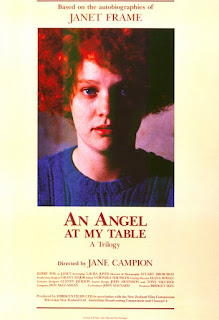
An Angel at my Table (1990) - Criterion
In The Cut (2003) - Netflix
The Power of the Dog (2021) - Netflix

---


Two Friends
 was a TV movie Campion made for Australian television that was screened at the Cannes Film Festival that year. It's the unassuming tale, told reversely in time, of two best friends who became distant.  There's not any major stakes, just the simple falling apart of teenagers as they start taking different paths and pursuing different interests.

What Campion does to liven the proceedings up is both structural and visual. Telling the story in a reverse chronology, opening with the parents of one of the girls attending the funeral of one of her contemporaries, instantly disarms the viewer's expectations of what's happening (did the other friend die? Spoiler, no.)  Campion also tells the story frankly from a female perspective, never delivering anything that could be considered expected or shocking.  It's a grounded tale, to the fault of perhaps being too normal, too unassuming, not dramatic enough.  Campion, with her limited budget, uses space to give her frames visual intrigue, something she does even more in her follow-up, Sweetie.

Being a mid-40s Canadian kid, I grew up on National Film Board-produced films playing on the CBC filling up those Can-Con hours.  They were all of a sort, usually very slice-of-life because that's about all you could do on the meagre budget, with outdated equipment and production values, making for a cheap, unenticing production.  It's clear there's an Australian equivalent to the NFB of Canada, they just happened to have a director with a sensibility that was capable of accomplishing a little more than the budget they gave her.

---


Campion's theatrical debut, then, is Sweetie, an off-beat family drama (though Campion calls it a comedy) about the impact the undiagnosed mental health disorder of the title character has on her family.  Which isn't entirely true.  We don't even see Sweetie, aka Dawn, for the first 25 minutes of the film. Instead we follow her sister, Kay, who is such a grating drag of a person. 

"You're abnormal!" Dawn's boyfriend shouts at her late in the film.
She sure is

"It's your voice dear, it agitates him," her psychic says, referring to her intellectually disabled son. 
Me too.

I understand Dawn. She has a mental illness in a time where such things were still not generally understood and help was not easy to obtain. I understand the stress on mom and dad, and what's happened in their fractured relationship (well, somewhat...not sure I get the dude ranch mom was hanging out at, a very curious aside).

But Kay, I don't understand her at all. She's abnormal, and her voice agitates me.  There's a Kids In The Hall recurring sketch with two characters with drab voices, deep frowns, bad posture and hangdog eyes with the catchphrase "Nobody likes us."  Kay could be their third.

Everyone in this movie is so damn ineffectual, they have such an utter inability to deal with the world around them or affect any meaningful change in their lives.  The characters will tell each other what to do and they'll do it, so long as nobody tells them to do anything differently.  It's no wonder Dawn is the way she is, nobody seems to have done a damn thing about it, they just threw their hands up in the air and said "this is how it is."

There are some good, subversive comedic beats in this film, but they do get lost in these loping cartoon characters.  The dialogue is so very stilted, and that stiltedness is often spotlighted by the edits Campion makes jumping between her oddly-framed portraits. I found the pacing of the film and timing of the actors to be nearly intolerable. But the weird artfulness that Campion brings is hard to ignore.  The spare use of space as she will frame a figure in maybe one eighth of the frame is one of the more captivating elements.

---


Campion's next film is a time-hopping, globe-spanning epic, at least in comparison to her earlier features, as she adapts New Zealand author Janet Frame's three early autobiographies into one film.  

An Angel At My Table is a frequently tedious, often uncomfortable, occasionally upsetting, sometimes uplifting adaptation of Frame's work (each given a chapter designation in the film). Campion's visual acuity is without question, but as a biopic it misses the mark by wanting to cover it all, leading to a film that feels like a barrage of vignettes rather than a cohesive story. I'm not sure it earns its near-160 minute runtime. I came to learn later this was designed for TV, to be presented in 15-minute increments, which really makes more sense to me. Visually it feels cinematic, but structurally it felt more TV.

It seems that Campion, in putting her attention towards trying to relay as many aspects of Frame's life (from childhood to her 30's) lost the ability to draw focus to themes or commentary. Things are presented in an "as they are" way, with little insight or reflection as to why they might be (maybe this mirrors Frame's writing? I can't say). There is definitely a throughline to me made of the detrimental influence of the patriarchy on Frame's life, and how beholden or deferential to it she increasingly becomes to it, but it's never reflected upon. It almost seems incidental, where it really should have been pulled into focus. Perhaps it's because, at least where we leave her, she hasn't escaped it, or even really identified it.

It's hard to convey adequately, even in a two and a half hour movie, the overwhelming impact of an abusive father, the death of a sibling, misdiagnosed schizophrenia leading to 8 years of incarceration and shock treatments, more death, being shuttled from New Zealand to England alone, being domineered by a neighbouring man with ill designs for her, a first time love affair with (presumably) an older man, and yet more death. The only time I really felt the weight of all this upon Frame was when she actually experience joy or happiness or elation in spite of it, otherwise the heaviness is present but it's like she's not aware of it.

By the end, despite spending so long with Frame, I still don't feel like I know her, or really, fully understand her motivations, or feel like the film version of Frame understands herself in any way. It's got plenty of memorable moments but ultimately it's unsatisfying.

---


After the massive success of The Piano and the underperformance of her follow up with another period drama, Portrait of a Lady, Campion tried her hand, for the first time, at a modern story.  Not only that, but a psycho-sexual thriller, a notoriously difficult to pull-off genre.  In The Cut bombed hard, both critically and commercially.

In 2003, nobody wanted to see Meg Ryan, America's other, lesser, sweetheart, playing a horny, sweaty, terse professor who gets wrapped up in a string of gruesome serial murders.  Ryan was the rom-com lady, the heart Tom Hanks had to win over.  She wasn't the get drunk, handcuff a detective to a radiator and fuck him senseless on screen vixen.  She got pigeonholed.

As flawed as In The Cut is, Ryan's performance is pretty great.  She's an extremely nuanced character, with tics and curiosities and anxieties.  This was a role originally intended for Nicole Kidman, and it seems exactly like a Nicole Kidman thing to do, but it's only more interesting because it's Ryan, and because she does pull it off so well.  I've never been a Ryan fan, I just have no attraction to her romcom persona, but I thought she was so engaging here.  She's so in control despite being out of control, it's a high-wire act which she negotiates perfectly up until the sloppy final act (which, I learned, is actually very much telegraphed from the beginning, and apparent upon rewatches...but it still feels rushed and messy).

There's a lot going on in this movie. I mean, Kevin Bacon's in it... unbilled!  Mark Ruffalo is the red herring love interest, and the film teases constantly the idea that his detective investigating the murder may well also be the murderer.  Unfortunately this whole tension rests on the fact that Ryan withholds a key piece of information until the climax of the film.  In between, they have a lot of sex and talk a lot about sex and look at gruesome murders and connect somewhat and stuff.  The sex and nudity is more menacing than hot, but it has such a different energy than the usual male-directed or American erotic thriller, there's a comfort and confidence you don't usually see.  Rather than feeling like "aww, Meg Ryan", it was more "good for you Meg Ryan".

Unlike Campion's earlier films with a lot of perfectly framed and positioned shots, here she has a roving lens, getting distracted but also taking in information. My favourite shot of the movie finds Frannie riding in the back seat the detectives' car, having her focus suddenly drawn to a woman darting down the sidewalk and around the corner.  There's a similar moment, just a strong visual curiosity, when Frannie is on the subway, and at a stop stands a bride, groom and some of the wedding party on the platform, the bride's makeup all smeared as if she were crying.  There's dozens more just ancillary shots like this, so many that they intentionally obfuscate meaningful information happening in the background.  Kind of ingenious.

In the Cut is a recent reclamation project for a few critics, and it makes sense.  While its many disparate nuances may not all hang together it's still a really engrossing watch and a great entry in the genre.

---


Going into this film, armed with but one semi-spoilery tidbit of "all is not as it seems", I could telegraph much of where it was going from the onset...which could be a criticism if this were supposed to be a film of twists, but it's not. It's two "surprises" are laid pretty bare if, like Peter, you know how to use your eyes in ways other people can't.

The opening hour is largely establishment, and I admit to being a little distracted during this part, as we do nowdays with phones in hand. But the second hour, once Smit-McFee's Peter reenters the picture, and that crackling "what's really happening here" dynamic sets in with Cumberbatch's filth-lord Phil, it just sizzles with curious tension. I was rapt. 

This is a commentary on identity, as it relates to masculinity, as well as queerness, and how these change and evolve from one generation to the next, yet how often the older generation gets stuck in their perceptions of how things have to be.

I like how Plemon's George knows Phil's whole schtick is just an act, unlike the others he's neither afraid of nor charmed by his brother, but he's also incapable of affecting his behaviour. He seems to know there's a mask his brother puts on but he's not entirely sure how to explain why (or perhaps he doesn't want to admit it), if he did perhaps he could have saved Rose a lot of grief).

Dunst's Rose, unfortunately, gets short shrift here as a character. Fragile and anxious, she succumbs to Phil's psychological intimidation, and has nothing but nerves when it comes to her sudden shift in status. She spends most of her time with her nose in a bottle which only seems to diminish her even further in Phil's eyes. I maybe missed a few tidbits about Phil's relationship with women in the past, unless it was just that bit about his mother getting him a prostitute at a young age, ensuring without a doubt he would be a man, but Phil clearly hates women, and has little use for them.

Campion's lens is back to being so focused here, studying intensely. The vistas and colours are gorgeous. Greenwood's score pulsates, enhancing the uncertainty of what you're seeing, hinting at something moving under the surface, muscles knotting under the skin.

This one's going to simmer in my mind for a while I can tell. As often as I picked up on what Campion was foreshadowing, I still felt the energy of not fully knowing what was happening between these characters. I'm curious if, on rewatch, if knowing exactly where it's going changes how it plays.


Monday, February 28, 2022

3 Short Paragraphs: Black Friday

2021, Casey Tebo (Happy Birthday) -- download

I must have downloaded this around Xmas time as an alternate pseudo-Xmas seasonal flick with curiosity on how they were going to blatantly rip off Bruce Campbell's Evil Dead style monsters, while also having Bruce Campbell star. Did it look terrible? Oh gawds, incredibly so. But remember, so did James Gunn's Slither and that still remains one of my favourite schlock creature features. Both begin their rampage via a meteor crashing to Earth infecting some hapless bystander, but alas this one lacks the guts to think outside the gift box.

So, yeah, alien symbiote thing from a meteor infects some shoppers and staff during the Black Friday weekend, at a parking lot big box store called We Love Toys. The thinly veiled metaphor of violent zombie shoppers on America's largest shopping day is there, of course but the meat of the movie is in the defending min wage workers fighting for their own survival, and only somewhat for their job's survival. The team forced to work this weekend is "led" by Ken (Devon Sawa, Nikita), the divorced dad who thinks his "why work?" attitude makes him cool, but is really self-deluding, including believing he has a chance beyond bored flirtation with the much younger Marnie (Ivana Baquero, holy crap its the little girl from Pan's Labyrinth) and managed by lifer manager Mr. Wexler (an almost entirely wasted [not drunk; opportunity] Bruce Campbell, Bubba Ho-Tep) along with a bevy of bored, not-really-having-any-choices-in-life retail wage slaves.

Zombie shoppers begin morphing into aliens, via the weird pink (yeah THAT pink shade) light at the centre of the store, monsters that go one step further (again, ala Slither) by combining into a giant, single kaiju entity. I wish there was more to say about the plot, but there isn't, and while its not entirely z-grade, as it doesn't try too hard to take itself seriously, its not going to lead to the director being the creator of some of the most creative movies & TV in a decade.

Saturday, February 26, 2022

I Saw This!! What I Have Been Watching: A Long Long Look Back, Pt. B - Gems

 I Saw This (double exclamation point) is our feature wherein Kent(!) or Toasty attempt to write about a bunch of stuff they watched some time ago and meant to write about but just never got around to doing so. But we can't not write cuz that would be bad, very bad.  Ottawa Freedom Convoy bad.

What I Have Been (or Am) Watching is the admitted state of me spending too much time in front of the TV. But what else was the last few years about? Sure, we got a few breaks from being confined at home, and might have actually gone outside (gasp!) and socialized with (double-gasp!) human beings (faint-dead-away) but we always ended up back on the sofa, flicker in hand, trying to find something to watch amidst the 35 shows we downloaded, and the 5 or so streaming services we are subscribed to.

Part A is here

When I talk about my streaming services, I always refer to the ones I pay for, like Netflix or Disney+ or Amazon Prime Video. And on occasion, one of the Amazon add-on's like StackTV -- I will get to that utter loathing another day. But SmartTVs give you apps, and some apps let you watch stuff for free, like Tubi or CBC Gem. Sure, they have limited choices and usually add in ads, but you can find some *ahem* gems in there, to watch.

Coroner, 2019 - 2022, Netflix/CBC

One of the WFH days, I was looking for something I could watch without Marmy, something I could start and stop and not worry about. Click click Crime TV ! I was caught up on the FBIs and waiting their return, so I started the Toronto-situated Coroner, based on the Jenny Cooper books out of the UK. Cooper (Serinda Swan, Inhumans) is the titular coroner for the GTA, who returns to work after her husband unexpectedly died. The show has her dealing with his loss, as well as the legacy of her sister's death when they were kids, and how they both contribute to how she handles cases, for if she didn't get personally involved in each and every death, we wouldn't have a show.

The death of the week was always fascinating from viewing the morphed geography and culture of Toronto (e.g. one of the episodes is about the owner of my fav Dumpling House on Spadina being murdered, and its relation to Chinatown being gentrified), but what really caught my attention were the creative choices the show made. I caught myself constantly saying out loud, usually to Marmy in the kitchen, "Wow, I love the direction that just took. In an American version of this, it would have..." The two main characters, Jenny the coroner, and Detective McAvoy (Roger Cross, Eureka) become close, but the two never become a couple; in fact, the show makes definite choices in the first two seasons to show how strong their friendship grows, as just friends. The police always focus on disarming situations and gun play is limited. The diversity in Toronto, and the still existing constant challenges, is at the forefront.

The show also tackles current affairs rather well, from the realization that the previous coroner was regularly cutting corners, putting the rulings on many cases into question, to the handling of the COVID-19 pandemic. The latter is rather curtailed, thankfully so, as it arose during the pandemic fatigue stage, but the episode on Jenny bagging bodies in long term care homes is heart breaking, more than news exposure ever could reveal. 

Alas, the show seemed to lose its way after a couple of seasons. Its that typical desire to constantly repeat the key tropes that make the first season popular: Jenny dealing with the loss of her husband (they kill off her new boyfriend), Jenny being haunted by her sister's death (panic attacks and hallucinations), Jenny dealing with challenges of work (Jenny returns from leave to find another coroner strong arming the office). I prefer to let shows evolve, not always having to return to the beats that make the first few seasons popular.

The Great British Bake Off / The Great British Baking Show, 2010 - current, CBC Gem

And then there is a format that they can repeat over and over for more than a decade and I love it over and over and over. 

We have been watching the show here and there, when it pops on, from PBS to CBC, but never putting any concerted effort into watching. That is, until we found it on CBC Gem. More accurately, Marmy found it, and began binging, and it was on every time I walked into the TV room. For weeks, I would saunter in, get caught up filling in the gaps for my favourite seasons and favourite home bakers, even seeing most of a season I had never caught at all before. And every single time, I was provide the urge to try baking that, and this, and that and that and THAT !

I didn't bake a single thing in response.

For those who don't know, Bake Off (called Baking Show in North America because of copywrite issues) is a British series created by (more than a little pompous) bread baker Paul Hollywood and legendary baker Mary Berry. Each season, a group of home bakers are presented a bunch of challenges to bake/cook, most often having a chance to practice at home, but also provide surprise "technical challenges" that are supposed to stretch their skills to the limits, providing limited instructions and ingredients. Every challenge is judged on appearance, taste and the adherence to the heart of the recipe. Along with the judges, we get a couple of hosts who walk the bakers through the stages, and provide colour commentary. As episodes end, some people are sent home, and the season ends with a winner chosen from a final three.

Most of the styles of baking are traditional British and French baking staples, with some classics from the past reaching in, as well as the occasional nearby European classic item. But as seasons progressed, other things started creeping in, and even on occasion, popping in a North American style baked good. Never was I more aware of the difference between North America and baking across the pond than I was when Paul judged cookies/biscuits.

Along with seeing all the delicious food, you also cannot help but find favourite bakers each season. And unlike American style competition shows, you might get annoyed by the occasional baker drama antics, but you are never expected to dislike anyone. This show is not about Good Guy vs Bad Guy or manufactured upset. This is about good baking and people doing something they love to do. Some of my favourites were Rahul, though his lack of self confidence became tiring when binging the season, the Ruby's and whatever endearing grandmother showed up for the season. To be honest, its hard to choose "favs" as it was all about the moments.

And the hosts. Originally comic duo Sue Perkins and Mel Giedroyc, they went through a few changes, including my favorite seasons with Noel Fielding and Sandy Toksvig. Paul was always presented as a stodgy, unforgiving baker short on his compliments and strict on his expectations. The comic hosts surprisingly had great leeway to play with his cranky character creating some rather surreal and down right weird cut scenes. But despite Paul's grumpy nature, every single contestant sought out the signature Paul Hollywood Handshake, that identified exactly how impressed he was with a baked good.

And now I want to go bake a cake. But I probably won't.

Wednesday, February 23, 2022

3 Short Paragraphs: Resident Evil: Welcome to Raccoon City

2021, Johannes Roberts (47 Meters Down) -- download

Movies from video games get a bad rap and most warrant it. They are either bare bones adaptations banking only on the game's name (I am looking at you, Doom) or take such liberties with the franchise, they become their own thing. This adaptation of the popular horror video game series tries to remedy what was already done (subjectively, badly; ala Milla J) by being closer to the core of the game. From what I recall, from my Playstation 1 days of turning on all the lights in the apartment and pulling my toes up off the floor, the game was meant to be fucking creepy and unnerving, but also full of gorey, nasty Japanese style body-horror monsters. This adaptation draws in much more of the feel of the game, and the characters, but really just ends up being an incredibly lackadaisical creature feature. While you can play lots of "oh, that's in the game!" I don't think fans will be satisfied.

So, evil Umbrella Corporation basically owns a town in... the Pacific Northwest? Its the 80s, Claire Redfield and her brother Chris are in the corporate orphanage. Just as she being taken away for experimentation by the Evil Doctor she escapes. Years later, the 90s, she is returning home but unbeknownst, something has escaped from the Umbrella labs, and before Claire can finish her strained reunion with her brother, the town is locked down. Meanwhile Evil Doctor is trying to ferret his own family out of town before his own bosses lock everything down, or do worse. There are overt hints that Umbrella has been using the town as an experiment, which proves true as the people begin converting into zombie-like horror shows. Meanwhile a bunch of named characters from the games played by Canadian staple actors either go investigating scary things happening in an old house, or try to defend the town police station from the growing horde outside. Things go bad for everyone, including Evil Doctor who in turn infects himself with whatever experimental drug he has been working on for decades, converting himself into a monster full of eyes and giant features and eyes. And eyes. Most characters, named or otherwise, die and a few escape before the town is pseudo-nuked. Insert nod to a possible sequel scene.

If the recap is uninspired and boring, its because the movie was. Doing a faithful adaptation of all the beats and aspects of a video game does not make for a  good movie. There are hints in this movie of something decent that could have been created if it wasn't trying to jam in all the "faithful" elements. The individual parts were decently done, mostly, but as a contiguous whole, it was just terrible. Sure, the Paul WS Anderson / Milla J ones were as well, but they were a terrible monster-combat romp with a kitschy sense of style, that I have watched multiple times. Beyond core fans of the original games gleefully pointing out not-easter-eggs (an egg is usually hidden, not overt) from the games, nobody is going to enjoy this more than one tired attempt.

I Saw This!! What I Have Been Watching: A Long Long Look Back, Pt. A - OK, Not So Long Back

I Saw This (double exclamation point) is our feature wherein Kent(!) or Toasty attempt to write about a bunch of stuff they watched some time ago and meant to write about but just never got around to doing so. But we can't not write cuz that would be bad, very bad.  Ottawa Freedom Convoy bad.

What I Have Been (or Am) Watching is the admitted state of me spending too much time in front of the TV. But what else was the last few years about? Sure, we got a few breaks from being confined at home, and might have actually gone outside (gasp!) and socialized with (double-gasp!) human beings (faint-dead-away) but we always ended up back on the sofa, flicker in hand, trying to find something to watch amidst the 35 shows we downloaded, and the 5 or so streaming services we are subscribed to.

Ahem. I exclaimed to Kent the other day that I had abandoned writing about TV, in order to actually have some handle on writing about movies. With a simple, "Aww I like your What I Am Watching parts A through X posts," I suddenly felt validated (yes, it doesn't take much) and here we are.

On that note, I will be doing my best to go backwards, back to the date of the last time I wrote something with the watching tag. I will miss some, but I will get to most. And considering the volume, I will likely try to write very little about each, just to give a sense of how much I actually waste in front of the TV.

Peacemaker, 2022, HBO Max -- download

Of course, we start with Peacemaker. I did threaten to basically say, "Just go read Kent's post," as we pretty much agree on every single thing he said.

For those not in the know, or didn't already read the aforementioned post, Peacemaker is a spin-off series from James Gunn's Suicide Squad movie. He takes one of the characters, an ultra-violent, sociopathic "hero" who believes in peace at any cost. He will kill any man, woman or child who gets in his way. The series picks up after he has killed a Good Man and suffered a near fatal wound. After months in a coma, he is once again recruited by Amanda Waller, to do what he does best.

I too was hesitant in my expectations -- the character was a walking, talking asshole without a redeeming quality to his name, and the funny-asshole idea would get tired pretty quickly. I was wrong. This was Gunn, and he far, FAR exceeded my expectations, not only with what he could do with this character, but what he could do with another ensemble cast and full eight episodes. This is likely going to be my favourite thing of the year.

But about the music. It sucked. No, I don't mean that the music wasn't precisely used, didn't fit the tone of the show perfectly and was (on occasion) catchy AF. But ohmigawd, I hated it. From the European hair metal bands that my coworker was crazy excited to hear, as he knew every single band mentioned, to the retro shit from my high school days that I am rather embarrassed to say I listened to back then, having been the D&D nerd who hung with the metal-heads. But they were like Xmas carols at Xmas time, when you are walking through the mall or baking gingerbread cookies -- totally appropriate for the moment.

And, of course, I did exactly what Gunn wanted, and watched each and every opening with a sense of glee, finding every growing amusement when I caught that every main character had a bit in that dance number, even before they appeared in the show.

Again, go read Kent's post.

Reacher, 2022, Amazon Prime Video

Speaking of violent assholes with their own warped sense of justice, we pretty much binge watched Reacher. I was actually a fan of the first Tom Cruise movie, but for the rather cliché ending, right down to a fight in a construction site. The second movie was a toss-away enough that I don't recall much of it. The series adopts the first Lee Child novel The Killing Floor. Child wrote the series in conflict with your standard noir/crime/detective style in that he is not an alcoholic, not a broken man, down on his luck, just barely scraping by. Reacher is a clear headed, confident, brick-shithouse of a man, a massive ex-military type who chooses to be a drifter, chooses to step aside from modern life. The series sets him up as he was in the books, not the lithe, compact Tom Cruise depiction, and Alan Ritchson (Titans) is a perfect choice.

IRL, I would hate the kind of man Jack Reacher is. In our polarized world, we can easily see him having strong opinions on gun advocacy and government oversight, opinions I would probably dislike. Then again, in the topsy turvy way of looking at things right now, real life is more polarized, allowing for fictional characters to be more... grey. Anywayz, Reacher is the kind of guy who likes big guns, and has no qualms against killing as many of the Bad Guys as he can, before they cause more harm, even going so far as to shoot them in the back. He's less the LG Paladin hero, and more the Chaotic Good Ronin ready to do what needs to be done.

Plot-wise, Reach arrives in the small town of Margrave, Georgia and is about to eat a lovely piece of peach pie, when he is promptly arrested by a flurry of sheriffs and deputies. There has been a murder in this quiet town and who else could it be, but the hulking, intimidating stranger. Of course, it wasn't him, and despite the evidence to the contrary (footage of him getting on a bus at the time of the murder), he is still sent to the holding prison, wherein he is misplaced into general population and almost immediately tagged to be murdered. This kicks off a LOT of violence and death and corruption and a deep conspiracy that involves pretty much every official in town. It only ends after Reacher and friends essentially kill everyone involved.

The plot is pretty typical crime TV, but the way the three main characters are handled is what kept our attention. Oscar Finlay (Malcom Goodwin, iZombie) is the Boston detective, a fuddy duddy in tweed who came to Margrave to disappear, but nobody likes him. His deputy is Roscoe Conklin (Willa Fitzgerald, Scream), a stalwart, upstanding citizen who never needs Reacher to save her, despite his numerous attempts. Together, the three batter away at a conspiracy that most of the town would rather ignore, as it has funded their dying little community for years. But bad guys need killing, so they get to it.

So, yeah much of the show is about the violence required to move the plot forward, but the interaction between the characters, the banter and the straight forward, admirable if oft an asshole way, Ritchson plays Reacher is the charm of the show. He is not a big dumb brute, but he can be brutal, and brilliant, when required.

The Watch, 2021, Amazon Prime Video

The trouble with having chosen to go down this "write about TV" path is that I have to actually remind myself what shows I have started (and abandoned), are currently watching, and which series I recently completed. Yes, we watch enough for me to forget how much. We recently binged through the final third of this series, even after being rather "meh" about the first few episodes. Admittedly, I am rather "meh" about Terry Pratchett's Discworld series. I have tried to like it a few times, but it never clicked. I also admit, the D&D snob in me generally doesn't like mixed genre fantasy or fantasy/comedy. The greatest thing that stops me from watching D&D livestreams, or listening to all the D&D live-play podcasts is that they are all dominated by comedy. Sure, my own games always had a dose of funny in them, but it annoys me to no end when everything has to be funny. Pratchett was, at least, doing straight parody, so I forgive him.

Anywayz, Discworld was a genre mashup of modern tropes, fantasy world tropes and social commentary. In the large fantasy city of Ankh-Morpork there exists the City Watch, or The Watch. Hinging on the D&D trope of the city watch doing the policing, The Watch is the defacto police force (badges, station house, etc.), but unfortunately, also in a city where most crimes are legally allowed to happen. The Thieves Guild is allowed to steal, as long as they leave a receipt, and the Assassins Guild can kill who they are  contracted to kill. That, along with all the political machinations leaves the Watch pretty much in a farcical existence. Leading them is chief farce, Sam Vines (Richard Dormer, Fortitude) a drunken weirdo, who is obsessed with arresting a cute puppy who constantly pisses on him. He has a partner who is a troll (think Korg from Thor:Ragnarok), and a werewolf, a human raised by dwarves and transgender forensics officer. The latter was originally written as a dwarf dealing with challenging gender identity issues, but they have dispensed with the species for a character with more familiar identity challenges.

There is a LOT to unpack for the plot of this show, as it is convoluted and filled with tons of Discworld background material, but suffice it to say Vines and crew are investigating someone from his past, and his connection to a large, shadowy dragon that keeps on attacking the city. Along the way we explore the city's use of magic, punk music, nobility, the social progression of goblins, Death's obsession with being appreciated, and much much more. Its wacky and weird in a Who-vian style but once I got over myself, I enjoyed it more. And Dormer's over the top portrayal of Vines is just begging for him to appear in another Pirates of the Carribean flick.

Monday, February 21, 2022

We Need To Talk About Cosby

2022, d. W. Kamau Bell - Showtime


In 2014, comedian Hannibal Buress was performing on stage in Philadelphia, and started joking/shit talking Bill Cosby, calling him out both for his grumpy old man antics of patronising black youth, and for being a rapist.  The former critique had been levied against Cosby by many for his then decade long crusade at critiquing segments of black culture with a sanctimoniousness and piousness that he felt he'd earned because he was rich, famous and successful at being a comedian.  The latter accusation was not new, but it was a perfect storm of social media relevance that the unauthorized phone-cam recording of Buress' routine exploded all over the internet and mainstream news.  

Survivors of Cosby's druggings and sexual assaults started coming forward, it seemed like every week for a year there was another.  With the first half dozen it was already hard to ignore the truth. Once the testimonials reached over 60, it was impossible to deny (for most people).  Cosby is a rapist.

Like pretty much every North American Gen-Xer, I grew up on Cosby.  The Cosby Show was as formative to my childhoold as Star Wars, DC Comics and He-Man.  Cosby for nearly a decade was called "America's dad", and I think the Huxtable family was the most idyllic family on TV, back when there was such a thing as an idyllic family.  Cosby was one of the first stand-ups I had seen, and his book "Fatherhood" was one of the first non-children's books I read.  

It's important that kids grow up to see their parents as human, not infallible matriarchs and patriarchs.  It's also important not to idolize blindly, to recognize that artists, writers, performers, athletes...for all their talent, they're human and capable of human things, great or monstrous.

But we're human too.  Our emotions, our history, our nostalgia sometimes cause us to think without rationalizing, to shut out any doubt or possible injury, to deny the truth.  Despite the overwhelming number of women who have come out (and, sadly, the likelihood of many many more who haven't) there are deniers, Cosby supporters who refuse to engage with the stories of Cosby's victims and blindly have faith in "America's dad". 

This four-hour, four-part documentary from comedian W. Kamau Bell isn't a product of that doubt -- although it addresses it -- it's more for the believers.  It's for those of us who have been wrestling with the conflict of this once cherished figure and the truth of the deeds he's been committing since at least the 1960's and across his entire career.  I didn't want to watch this, to be confronted with the horrible deeds of this man, but, as the title suggests, I needed to.

Bell doesn't just focus on the bad, but he gives a very thorough and wistful assessment of Cosby's groundbreaking rise in comedy, then as an actor and public figure in the 1960s, his activist roots in the 1970s that led to a passion to teach the kids who maybe weren't getting the same quality of education based on their demographic or didn't have teachers who looked like them.  As he had so broadly appealed to adults in the 1970s, he entrenched himself in the lives of young Black (and beyond) children through Picture Pages, Fat Albert and more.  The 1980's brought Cosby to new heights of fame with The Cosby Show, inarguably the biggest show of the decade, and he maintained his wholesome image throughout the 1990s up until he became so preachy about the Black culture his wealth and celebrity had detached him from.

But for all the many achievements that Bell and his broad roster of talking heads - including other comedians, college professors, journalists, sex therapists, and Cosby's victims - cite, it can't help but come back to what else Cosby was up to while he was achieving these accolades: compulsively drugging and raping women, and then either gaslighting them or intimidating them afterwards.  Even his image --the clean-cut, trustworthy family man, educator, America's teacher, America's dad -- Bell and others posit, was in service of making his ability to lure his victims easier, and to make seeding doubt in their mind afterward possible.

It's a thorough documentary that, even after four hours, still struggles with the question of what do we do with Cosby and his legacy.  He did so much, but he did so much while committing (and often in service of) his horrific deeds.  He changed the face of what Black people could be both in front of and behind the scenes, and how people saw Black culture following the civil rights movement, but that doesn't give Cosby a free pass for sexual assault.  Nothing gives anyone a free pass for sexual assault, except a patriarchal system that refuses to believe women and punishes them for speaking out, rather than their assailants for committing the assault.  

Cosby himself, Bell points out -- with documented interviews Cosby gave, comedy set pieces he would tell, subtext within his TV shows, and stories written in his books OVER DECADES -- had a deep-rooted obsession with the concept of Spanish Fly, of "loosening women up", of a miracle pill that made "gettin' it on" easier.  It's damning, and disgusting to see the comedy set from the late 60's and then Cosby talking to Larry King about the same thing in the early 90's.  The key point in the end of the documentary is noting that Cosby doesn't believe he did anything wrong.  It's not that he's denying what he did (as he did admit to it in a sealed deposition, which after being unsealed and used in court was ultimately what got his conviction overturned), it's that he believes that he's allowed to do what he did.  

I  have had a difficult time with Cosby since shortly after his sanctimonious shit started up, but since 2014, it's been cemented that I am done with him.  Though I found myself laughing at clips of Cosby's comedy routines and The Cosby Show episodes featured in this documentary, there's no way for me to go back to them, to separate the art from the artist.  With some artists, sometimes I can... most times I can't.  Yes, he's got some amazing work in his past, some stuff that remains funny in spite of his revealed character.  The man's undeniably talented.  He was good at what he does. Including raping women.  

Saturday, February 19, 2022

Hawkeye

2021, d. Rhys Thomas, Bert & Bertie - 6 episodes - Disney+
Series created by Jonathan Igla


I tend to write big, long posts about superhero movies and TV shows, in case you hadn't noticed.  To paraphrase a certain toy reviewer, they're my bread and butter.  But sometimes I don't have an immediate take.  Sometimes months pass and I still don't have a lot to say.  And sometimes I'm just need to sit down and write but I don't because I'm lazy and I get caught up in playing some dum-dum game on my phone for hours on end, a bad habit which seems to have had undue influence over my life for the past half decade.

Anyway, since I've caught up to No Way Home and just laid the pipe on Peacemaker (whazzat?), I figure I should just get everyone's least favourite Avenger off the docket, and it would only be too fitting to cram him into a 10-for-10 but I'm certain I have more than 10 minutes worth of writing to do.

Yes, it's Hawkeye, but, I have to say, I've been looking forward to a Hawkeye movie or TV series for years

Have  I particularly loved Jeremy Renner's performance as Clint Barton? Not particularly. Renner's an amusing performer but his Clint has never really inspired any real reaction, love or hate.  He's just kinda there doing his thing.

Am I a lifelong, die-hard, deep-seeded fan of comics Hawkeye? No. No no no. I've always prefered Green Arrow if we're talking comic book archers, and really don't think I read a comic that featured Hawkeye with any prominence until the 2000s, by which point I'd been reading comics for 20 to 25 years.  I don't think I was missing much.


No, all my desire for a Hawkeye movie or series came out of one of the best runs of superhero comics ever(!), which would be Matt Fraction and David Aja's Hawkeye run from 2012-2015 which pairs Young Avenger Kate Bishop with old Avenger Clint Barton as they defend Clint's New York apartment building from the Russian Tracksuit Mafia.  It's a gloriously entertaining story that redefined both Bishop and Barton and made them favourite characters of mine, Bishop even more so since, despite being the junior player, she showed far more competency in being a superhero than Barton.  Smarter, faster, more talented, wittier... Barton is only made more interesting by not being the best at what he does.

From the first collected volume (of four) of Fraction and Aja's Hawkeye I wanted to see it on screen. But by the end of the series in 2015, it looked far more unlikely, as 2015's  Avengers: Age of Ultron introduced a whole family of supporting character for Clint Barton which made him owning a New York low-rise apartment building and living a lonely, sad life a lot less likely.  

Clearly Marvel struggled with the same desire, and when Disney+ came along and content was needed, a Hawkeye mini-series was one of the first to be announced, shortly followed by casting for Kate Bishop.  They were doing it, and somehow, some way, they were going to shoehorn this MCU Hawkeye into that Fraction/Aja framework.

I've written 8 long, rambling paragraphs already and haven't talked about the show.  Would it pull it off, would it bring Fraction and Aja's masterpiece (it literally is) to life? 

Not so much.

Here's the thing, we comic nerds really, REALLY need to stop wanting comics translated direct to the screen.  If a comic book is great, it's great because it's a comic book, if that makes sense.  The medium is the message.  The story told in a comic is different than if told in a novel than told on TV than told in a movie or video game.  And if something is perfect in one form, it's an impossibility to literally translate into another form without losing much of its magic.

So that's what happened here. What I wanted, I could never get, because I already got it.  But, what Hawkeye delivered was a fairly entertaining series that used elements of the Fraction/Aja run to further expand the MCU, which, as I pointed out in my Peacemaker review, is both part of the charm of the Marvel tv and movies, but also leads to less immediate gratification. 


With this series we're introduced to Kate Bishop, who was a tween when the invasion of New York  happened (from Marvel's The Avengers) and she got a first-person eye-view of Clint Barton in action and decided being a hero like him was her destiny. Ten years later, she's an prize winning martial artist and archer, but also headstrong and unapologetic, getting kicked out of school and antagonising her high-society mother (Vera Farmiga). When she gets embroiled in stopping a robbery of an underground metahuman paraphernalia auction, she comes face to face with her idol, Clint Barton (on a trip in New York with his family before Christmas) and insinuates herself into his life.

The dynamic between Barton and Bishop in the show is the reverse of that in the comic.  Bishop is the one whose life is a mess, and Barton is the one who is (for the most part) in control.  Clint is still dealing with the loss of Black Widow and the physical impact of the life he's led, including hearing loss.  One of the best issues of Fraction and Aja's comics run was a completely silent issue told from the perspective of Lucky the pizza dog, a stray pooch adopted by Bishop.  I was hoping that the series, by giving Clint hearing loss, would somehow emulate this issue in an episode, however, Only Murders In The Building beat them to the punch with a brilliant episode told from the perspective of a deaf character.  Instead of singling out a single episode, it used Clint's affliction adeptly as a challenge that he could persevere through, accentuated by introducing and interacting with the Marvel character Echo, a deaf assassin, as an antagonist allied with the Tracksuit Mafia (bro!). 

Along the way the dual Hawkeyes find themselves in a murder investigation and criminal conspiracy which Kate's mother and her new fiance, the sword-obsessed Jack Duquesne, may be involved (it's Vera Farmiga, I haven't trusted her since Up In The Air), and somehow shoehorns in the recently introduced Black Widow Yelena Belova into the affair, which adds poignancy to the grief still afflicting Clint.

There's a lot of moving pieces to this 6-part mini-series, but it negotiates them all quite adeptly, and all the various story elements are welcome, even if they don't all exactly gel together seamlessly.  While the series is called Hawkeye, implying that it's Clint Barton-centric, it's even more about the new Hawkeye, Kate Bishop and its success rests entirely upon casting.  

I've liked Hailee Steinfeld as an actor since her early feature debut in the Coen Brother's 2010 remake of True Grit, through to her role in Pitch Perfect and thought she really stood out as the lead of the surprisingly good Bumblebee Transformers movie. While she wasn't exactly Kate Bishop of the comics in my mind when her casting was announced, she owns this MCU version from moment one, and she leads this series to the point that Jeremy Renner is almost a supporting player, rather than co-star.  Steinfeld proves herself here to be one of Hollywood's finest young actors (I've since started watching Dickinson on AppleTV+ which has only served to validate this perception).  The meeting of Steinfeld and Florence Pugh shows that the talent in the next wave of the MCU is very, very bright.

Renner, for his part, really, really shines.  He delivers the pithy lines perfectly, while still carrying the weight of an man haunted/burdened by his past, the losses he's sustained, and the frustration of being separated from his family.  He knows his responsibilities, but he doesn't have to like them.  He sees Kate Bishop not as someone to mentor, but rather someone to protect.  She's his daughter, she's Natasha, she's his wife, all capable badasses, but all people he's lost and he can't handle it happening again, and none of this is spoken, but it lives in Renner's performance.  

That Hawkeye takes place at Christmas is only kind of a bonus.  While not overly festive, it's a "Die Hard is a Christmas movie"-type Christmas story which only kind of heightens its appeal.

I put on the first episode as background while I was writing this and I'm completely sucked back in again.  It's not that the story itself that I find enthralling, but rather the performances, the characters and their dynamics with one another all just crackle with a lively energy.  While I think that the LARPers, Echo, and Yelena are all slight distractions from the main plot, as I said, they're all quite fun, purposeful and welcome additions.

It's not the Fraction/Aja series, but it's also not trying to be.  It succeeds at its own story on its own terms. Hawkeye may not be anyone's favourite Avenger, but after this series, he, or she, is no longer at the bottom of the list.

(The only bummer about this series is that Aja wasn't fairly compensated for the series' adoption of his design aesthetic for both their credits sequence and advertising).