Showing posts with label video game. Show all posts

Wednesday, October 1, 2025

31 Days of Halloween: Until Dawn

2025, David F Sandberg (Lights Out) -- download

Starting in 2011 we (Marmy and I, as Kent is not much of a horror fan) began celebrating the Halloween season (all of October, of course) by watching too many horror / Halloween related movies, most of them bad.  2012 had a few flicks but not the full month. Un/Re-employment killed 2013. Apathy slayed 2014. But we returned in 2015 with a full run. 2016 had a good start, but stalled in the last few days, likely due to work life. 2017 almost started with a fizzle, but then I remembered, "It's October 1st !"  It still fizzled. Life abounds. And in 2018, almost the entire year was Halloween *ahem* as in the year of posting was mostly October. 2019 did alright for itself, considering I went off to Las Vegas sometime in the month. 2020 was it's own horror fest, and I am not kidding or being pithy in the least; the horror movies we watched were almost a relief. 2021 was in full form, some good, most OK and some great/terrible. 2022 gave us a full run, counting in the TV we watched, which we did. Also, I absolutely love that Kent jumped in with some themed movies and even a We Agree(ish). Aaaand 2023 had a pretty good run, even if it was interrupted by Vegas Redux. I am not sure 2023 was a Good Year for horror, as we didn't have a whole lot lined up. I came into 2024 with at least half the movies already cued up, but somehow, some reason, left a lot of them sitting there, including some of the big hits of that year. It was a decent run with only a few inserted in after the fact (am I supposed to admit that?) which brings us to 2025, another year of real-life-horror both south of the border and at home. The hopper is filled to the brim both with leftovers and things I have been adding all year, and we haven't even researched anything.

OK, Lights Out was done in our 2016 run, and I recall liking it a bit, but don't recall a bit of the plot. That's the trouble with binge watching horror as a genre; very little seeps into long term memory.

Wait, this was a video game adaptation? Until the credits rolled and Sony was smacking me in the face with their PS logos, I had no idea. I have never been much into horror games, probably inspired by that night Marmy came home to find Mukey and I engrossed in Resident Evil being played on the PS1 she bought me for my birthday. The apartment lights were all on and our feet were tightly packed under us in case a Licker crawled out from under the sofa. But yes, the game is a horror game about a bunch of stupid kids surviving a night, but unlike the movie, the game is not a time loop.

Yes, a time loop. But not time loopy enough to become a Loopty Loop post. I think the movie screen writers & producer knew they writing something based on a game and wanted to recollect the idea of Loading from Save Games, i.e. coming back from Death and trying something different. The game itself didn't play that way, and strongly focused on you dealing with the consequences of your actions -- it was its entire gimmick, actually. But no matter, the movie is about a bunch of kids stuck in a house (mostly) where, after they all die, it all starts over again. The goal is to survive Until Dawn.

It starts off fun enough, really embracing the tropes -- the country road, the helicopter/drone shot, kids with trauma going on a trip, a creepy guy in a road side gasbar (i.e. The Harbinger as Cabin in the Woods named him) and the road ending at a rather quaint and picturesque visitor centre. The hint that the kids are (being) trapped is that the centre is in an "eye of the storm", a calm clear spot amid a raging storm. There is even a "wall of water" separating the calm spot from the storm. We know they are being caught, as we saw trailers, but... 

The first night they are all stalked and killed by a masked slasher. Then the sand dial resets and it starts all over again. The movie hints at a "new type of horror trope each loop" but... seems to abandon it? There is too much stink of producer interference and likely Sony interference, as it tries to steer the plot back towards the video game's plot of a town of miners, cannibalism and typical over-thinker Japanese horror plot stuff. I think if it had just stuck with the "different kind of monster" for each loop, it could have had a lot of fun, but... then again, in doing such, how could the kids learn enough to survive a loop? Even so, I was instantly annoyed when the movie hinted very heavily at "next up, werewolf!" (full moon, one character's nails growing weird) only to abandon it entirely for ... let's skip past a BUNCH of loops and speed run to the weak explanations of what's going on and how they are going to survive... until dawn.

It was still kind of fun and a lot of budget was tossed at it for effects, practical and otherwise. I just wish it had stuck with one thing or another. Also kind of fun that Peter Stormare comes back to play the Evil Bad Guy he voiced in the game.

Saturday, April 26, 2025

1-1-1: Black Mirror Season 7

created by Charlie Brooker

It's been almost two years since the last season of Black Mirror, which, truthfully, isn't so long ago but also feels like an eternity (Brooker really needs to write an episode about how our perception of time changes as we get older...but, you know, with technology). We got spoiled in those early Netflix years where Brooker cranked out three seasons of six episodes (and a special) over four years. It's probably for the best he hasn't maintained that pace. Black Mirror can be an intense show, and we probably need a longer refractory period before we thrust back into the technological trauma of Charlie Brooker's demented mind.

Except Black Mirror isn't just about exploring technology's ugly downsides or worst-case-scenarios, not anymore. Starting with "San Junipero" in season 3, an oasis of loveliness in an otherwise sea of dread at that point, Booker usurped expectations as to what the show could be. He continues to do so, and it's not just once per season. He's really adapted over the past three seasons into big tone shifts, from playful to comedic to suspense to creature feature to existential horror to romance and on. Every episode is not an absolute nightmare, and every episode is not about the twisting of the knife. 

One still has to brace themselves for each episode of Black Mirror to present to them something discomforting or even upsetting, but the show hasn't so much as lost its edge in today's nightmare world as its ceded being edgy for the sake of sustainability. I think if the bleak worldview of the first two seasons persisted, the show wouldn't have sustained its mass appeal. Brooker has ventured much deeper into science fiction territory over the years, stepping back from horror and terror. From the beginning he's balanced high concept world-building storytelling with character-based storytelling very effectively, but his character-based episodes have evolved to let the characters set the tone of an episode rather than the technology or the "twist", such as they were.

Season 7 is the next evolution of Black Mirror, with Brooker connecting new stories with past stories, sharing technology between stories but in different contexts, and even dropping a direct sequel to a past episode. unconstrained by time commitments (there are two feature-length episodes here), this season is varying in quality from episode to episode, but I think none are particuarly bad, some just are subjectively better than others.

---

SPOILERS BELOW

---

Common People
d. Ally Pankiw

The What 100: Mike and Amanda are a couple very much in love, and completely devoted to one another. They have a very comfortable life together, until Amanda falls ill with a previously undiagnosed brain tumour. Enter Rivermind, a company that says it will be able to fix Amanda, and for free, with a daring new technology that replaces the damaged sectors of the brain. But this new lease on life comes at a cost of a monthly subscription that Mike and Amanda can barely afford, not to mention other limitations like "service areas". The enshittification of human brains begins to wear on their once happy life.

(1 Great) The chemistry between Chris O'Dowd and Rashida Jones playing Mike and Amanda is everything for this episode. It's pretty heavy handed in its messaging so it all rests upon these actors to sell the emotional component of the story.  In the background is a couple who have built a very loving life together, remaining strong after a series of miscarriages, and, even in its current trials with Rivermind, you can sense the frustration but the love is not lost. When the idea of this brain-segment replacement is proposed, I immediately knew what the progression of the story would be, but it's the characters' journeys navigating this life-saving, but also life-crippling technology that matter.  O'Dowd and Jones are pretty effective dramatic actors, but they know comedy too, so the tone capably switches in and out like in the situations when Amanda is forced to say "contextually relevant" ads out loud that are both hilarious and terrifying.

(1 Good) Frankly, I found the marriage of tackling the burden of for-profit medical systems, the non-stop upgrade cycle of cellular service, and the progression of every service becoming a subscription to actually cohere pretty well in this story. It's not subtle in the slightest, and it need not be. Subscriptions services suck as do for-profit medical systems. The lack of humanity involved in capitalizing on other people's ill fortune seems to only be getting worse in our ever-dreadful capitalistic society.

(1 Bad) There's a tertiary aspect to this story about how, when societies start to crumble, the first thing to go is our sense of empathy. We start to feel better about our own situations by observing the misfortunes of others, whether it be putting them into a gladiatorial pit or watching them denigrate themselves for money. This story has a side-hustle on-line "only fans"-inspired website called DumDummies where people go on to humiliate and/or abuse themselves for the meagre spend of others. It's a very Black Mirror concept, but it's also a bigger concept than is given time to be explored here. The DumDummies side plot tonally interferes with the pathos of the episode once it starts becoming a more relevant part of the story. It's also conceptually unpleasant, not quite "The National Anthem" level but still, clearly, Brooker hasn't completely grown out of that gross-out sensibility.

META: The end of Season 4 had an episode called "Black Museum" which intoned that there was some connective tissue between episodes in the series, and ever since Brooker has been adding more connective tissue between different episodes. It's clear that not all the realities are the same realities but a lot of them are, or at least adjacent (we'll cover this more with the next episode's "meta"). This episode, tonally, felt akin to "Be Right Back", but the brain technology used in this episode we haven't seen any logical antecedent to (at least not yet). However, Amanada is a school teacher who has been teaching her kids about the mechanical drone bees that were introduced in "Hated In The Nation", so they're possibly in the same reality.

---

Bete Noir
d. Toby Haynes

The What 100: Maria is a successful food scientist for a snack food company who has her world turned upside down by Verity, whom she went to high school with, who joins the company. Verity was not a popular kid in high school, and her sudden emergence in Maria's life makes her uncomfortable. Within short order, Maria gets the sense that Verity is there to sabotage her career, and not only that, either she is going mad or somehow Verity is changing reality.

(1 Great) This exploration of the effects of confabulation is an amazing starting point for a Black Mirror episode. What if suddenly things aren't quite as you remember them? Little things like the wording of an email, or the name of an old fast food chain... especially if it keeps happening. Bound to drive you mad, but what if it all correlates with the sudden re-entrance into your life of someone whom you bullied in high school? Would you think they were fucking with you? But they can't just rewrite reality, can they...?

(1 Good) ...In effect, yes they can. This story introduces to the realm of Black Mirror the idea of parallel realities, and the character of Verity has developed a quantum computer that has allowed her to shift reality around her on the press of a button an a whim. The power one can exude with such a device is enormous, and the episode touches upon that, but also the dissatisfaction of having a "cheat code" to life, and one's inability to escape one's trauma. Instead of therapy, Verity built a device where she could jump realities.

(1 Bad) I quite enjoyed the episode, but if I were to quibble, I would have liked it to sit even more with the terror of Maria feeling like her reality was crumbling around her. The thing is, it seemed like Booker's script was sort of on-board with Maria getting some sense of comeuppance. Was Brooker bullied as a kid?  I did guess that Maria, despite being our protagonist, was the villain of the piece, and while that didn't fully come true, she's not the innocent victim either. Had she had any outward sense of complicity or remorse (you could tell in Siena Kelly's performance there was some internal struggles and repression of her past misdeeds) then I think we would have been far more sympathetic towards her, and her terror would have hit harder, but this wasn't what Booker was after.

META: Spinning on the idea of Everything Everywhere All At Once and tapping into alternate realities, Brooker has opened up the concept that Black Mirror is a multiverse (Oh no! Multiverses are so 2023). As I mentioned above, he likes to loosely thread these pretty much stand-alone tales together in their own ways, but the only way to truly connect them would be as a multiverse, since some of the stories or technologies clash with known elements of other stories and technologies. I don't sense any grand architectural scheme out of this, I don't expect any sort of "Black Mirror Avengers Endgame" upcoming where worlds start colliding and crossing over. I think Brooker may be just playing with the concepts quantum dimentions or the theoretical powers of quantum computing (the series Devs used it to, in its own way, "time travel" through digital prognostication).  

---

Hotel Reverie
d. Haolu Wang

The What 100: The 1940's black-and-white classic "Hotel Reverie" is going to be remade, so to speak, but through the proprietary technology from ReDream where they've rebuilt the entire world and environment of the 1940s original, as well as its cast so that they can insert superstar Brandy Friday as the romantic protagonist of the piece. During the "filming" Brandy will enter into the digital simulated reality of the film, performing against legendary actress Dorothy Chambers, or an AI simulacrum thereof. Brandy must complete the film's prescribed journey or face potentially being trapped in the world forever, but, when an accident disrupts the system, and Dorothy obtains self-awareness, Brandy isn't sure she ever will want to leave anyway.

(1 Great) Emma Corrin as Dorothy Chambers delivers a very believable, era-specific performance that asks her to be a character in a 1940's film but also gain an awareness of that fact, and also understand that she was also a real person, not just a character in a film. Dorothy learns who that person was (mainly through digital news archives) and gains a sort of sentience as result, and Corrin plays that awakening so well. Corrin also is able to show how the character's real-life struggles influenced the performance in the film-within-the-film but also connect it to the story at hand. It's a really skilled juggling exercise which she handles impressively well.

(1 Good) The romance between Brandy (Issa Rae) and Dorothy was the heart of "Hotel Reverie" and it is a lovely heart at that. I liked the idea that Issa Rae as Brandy Friday could step into a 1940's reality where nobody would care that she was a black woman who winds up falling in love with another woman...nobody would care beyond the context of the story itself where there's a jealous husband involved, that is. For all the aspects of Rae's performance in the film-within-the-film that didn't work for me, the connection between Brandy and Dorothy really did.

(1 Bad) The conceit of this story does not work for me at all. "Remaking" a classic black and white movie, beat-for-beat, scene-for-scene just with a modern actor in one of the roles will not be a success. A curiousity, yes, but not something that would a sustainable vision for film releases going forward. Especially from what we see in this episode, the results of sticking a modern actor in a classic movie are not at all pretty, especially when you can't have multiple takes and your star is stunned or surprised by so much of what's going on around them.

META: The gang over at The Weekly Planet podcast suggested that the story here is not bad, but the reason for the story is, and I wholeheartedly agree. This could be a technology where *anyone* (with enough money) could get inserted into a movie and live out their dream of being part of the picture (could you imagine getting to play, say, Han Solo in a technological dreamscape where the Star Wars galaxy feels real and not a set? It's a real fantasy to be sure). Have the episode be it's expensive and some regular person has scrimped and saved only for the the experience to go a bit haywire, and this romantic thing happens as a result... it seems even more Black Mirror that way if it's a technology that the masses can access, even if it's somewhat out of reach.  I felt like this conceit could have tightened the narrative and slimmed the episode down, making for a more sweeping romantic tale.

I also thought, at one point, is this going to wind up being the origin story for the San Junipero technology ("Juniper" is mentioned both in this episode and in "Common People" and "USS Callister: Into Infinity" as well), but no, not really(?)

---

Plaything
d. David Slade

The What 100: A dishevelled man walks into a convenience store, tries to steal a bottle of liquor but is stopped by anti-theft automations at the store. When the police arrive they find out the man is also a DNA match for a cold case murder from the 90s. Taken in for questioning he tells his history of being an awkward, nervous, social outcast and gaming nerd. He worked for a video game magazine and was assigned to preview the latest offering from legendary programmer Colin Ritman, Thronglets...an anti-game about raising and nurturing a digital civilization of creatures that start to grow beyond their parameters. The unfolding of the story bridges past and present, and holds the key to the future in a very Black Mirror fashion.

(1 Great) Peter Capaldi holds the reigns of this episode from his first moments on screen and just carries it through. A lot of it is the knowledge his character Cameron has that nobody else (including the audience) does, but Capaldi is so charming and effective as a nervous tick of a man who has only somewhat outgrown his nerves with some very specific confidence. I never really did watch Capaldi as Doctor Who, but I don't think there's a performance of his that I've seen that I have not enjoyed.

(1 Good) Most Black Mirror episodes are very well directed but David Slade's episodes (previously "Metalhead" and "Bandersnatch") are standouts. The X-Files, Hannibal and Breaking Bad director has a history of making visually striking episodes of television, something which hasn't necessarily translated into a bold cinematic career, but damn does he make TV look good. This episode is set in the same world as "Bandersnatch" (the Black Mirror "interactive film" where the user can choose the direction of the story as it progresses) so much of the visual style was established with that production, but here Slade carries that style forward and has to juggle a second time period. It's all within an aspect ratio that doesn't seem to be standard widescreen, nor classic 4:3. And that interrogation room, the angles are just insane and captured perfectly. And, of course, Slade has real fun with Cameron's acid trips.

(1 Bad) I was anticipating a Bandersnatch sequel, and this isn't that, which is probably for the best.

META: Of all the Black Mirror episodes, Bandersnatch is the one I've returned to the most...for obvious reasons. It's a wild pick-a-path style story that is super fun to puzzle over all the alternate realities that it presents, and the way it lets you reset to "save points" (just noting that "save points" are mentioned in "Hotel Reverie") and back up to pick a different option to the abrupt story's end. As far as I know, there is no "true path", and so doing a direct sequel to Bandersnatch would entail ascribing one to that story, which would ruin it, so it's best they didn't.  

Brooker used to work as a video game reviewer for PC Zone magazine, so it's tempting to say there's a bit of himself in this one, but there's probably not much beyond having the same job as Cameron in the 90's.

---

Eulogy
d. Christopher Barrett, Luke Taylor

The What 100: Phillip is called up by a service called Eulogy to see if he would provide his recollections of a woman whom he once dated and has recently passed away. The service entails him interacting with a virtual assistant who steps him into the photographs he has of the era and helps him draw out his memories which would then be shared with those in attendance at the funeral. It's an emotional journey about the fluidity of love and memory.

(1 Great) 90% of the time Black Mirror is about the terror of technology, how invasive it is or how it can spin out of its intended use into something nefarious, but sometimes Brooker crafts an idea that finds technology providing something so beautiful as helping someone to remember the past. The start of this journey takes a distant trauma and reawakens it for Phillip (Paul Giamatti in all his masterful, jowelly power), as he hesitates to fully recall this woman from his past, and slowly transitions into needing, more than anything, to seeing her face again, only he has no photo reference of her.  The episode powerfully builds up the sensations of recollecting beauty and pain and longing and regret, amongst other emotions on a truely beautiful roller coaster ride.

(1 Good) The visual effect of the AI assistant bringing Phillip into the pictures he's looking at was absolutely terrific and I would 100% love to be able to explore photos like that. I loved how it could visualize only what was seen in the picture and any details it had to assume were kind vectored in, looking surreal and unnatural. I could watch any number of stories with this device in any number of genres.

(1 Bad) We find out about halfway through that the AI interface is a representation of the deceased's daughter. I struggle with whether this is a good choice or if it would have been more resonant if the digital assistant were actually connected to the deceased's daughter, to provide a new emotional connection between people, even if a short term one. Otherwise, no notes. A new Black Mirror favourite.

META: The temple device is back! I cannot remember all the places where the temple device is used (it's used again in "USS Callister: Into Infinity"), but it's one of the regulars of the world of Black Mirror. It's the device that connects one's brain direct to technology (although unlike in "Common People", it's easily removable) and it's one of the show's mainstays. The question to ask is every use of this technology in the same world, or is each use of it a deviation and thus a parallel reality?

---

USS Callister-Into Infinity
d. Toby Haynes

The What 100: Black Mirror's first true sequel picks up a few months after "USS Callister" left off. Their abuser Robert Daly is dead both in the real world and in the game, "Infinity", and having escaped his pocket dimention and into the full scope of the open world of the game, the digital clones aboard the USS Callister find they've left one sadistic abuser behind only to find tens of millions of others who will kill them in a digital heartbeat. Needing the in-game currency to survive, they're forced to ransack players for their credits, only their activities have set off alarm bells in the real world that something may be wrong. Where clone Nanette has become a confident leader, Nan in the real world is riddled with anxiety, particularly having been present in Daly's apartment the night he died. She takes on the role of finding the in-game clones, but corporate head honcho James Walton just needs them out of the game as fast as possible, and death will do just fine. Except Walton is hiding a very big secret about the heart of the game which the crew discover is their only way to escape their grim fate.

(1 Great) The longest episode of Black Mirror yet (by 1 minute over "Hated in the Nation"), "Into Infinity" is the episode of Black Mirror that most feels like a proper movie, epic in both scale and adventure with a big, big denouement and some very exciting, effective and weighty action sequences throughout. It's full of consequences and big moments which never feels like its being careful. Let's put it this way, I watched the first 3 episodes of Andor Season 2 the same night, something I had been buzzing in anticipation for a couple years now, and frankly I enjoyed myself more with "Into Infinity" (though still feeling a lot of love for Andor). 

(1 Good) It's been almost 7 1/2 years since "USS Callister" led Black Mirror's fourth season, and in that time, wow has the (American) cast kind of exploded. We've seen a lot more of Cristin Milioti, Jesse Plemons, Jimmi Simpson, and Billy Magnussen in the years since (sadly Michaela Coel did not return for the sequel) and so their increased profile lends much more to the sense of scale of the production, and they're all great playing duel roles in the "real world" and cloned versions of themselves.

(1 Bad) Did "Into Infinity" introduce anything new on top of the story of its predecessor, thematically at least? I mean, the visualization of "Fortnite"-style gaming into a "real life" setting was pretty great, but there was only a nominal commentary on the enshittification of MMORPGs. It hits the "corporate greed" and the toxic evil of the rich button much more than the first, but doubles down on toxic masculinity and white male entitlement (if you find yourself saying you're a "nice guy", ask yourself, do you actually respect women or are you just afraid of them. The answer will determine whether you're really a "nice guy"). 

META: I've had Galaxy Quest on the brain since the Blank Check podcast released a Special Features commentary on it this past weekend, and this episode felt not far off from Galaxy Quest. They're both satires of Star Trek with a meta story involving characters who are forced into a reality they did not ask for and step up to the roles they're asked to play. Honestly, I feel like this episode could have been a Galaxy Quest reboot/legasequel as much as a Black Mirror episode.

I also think Brooker did a pretty great job of sequelizing "USS Callister" without necessitating a re-watch. Most of the background to this episode is delivered in episode. And it's fun! 

Wednesday, September 11, 2024

3 Short Paragraphs (Or Not): Borderlands

2024, Eli Roth (Death Wish) -- download

It seems I have been doing this a lot lately, this being watching a movie that has been fraught with trauma in its creation and wondering whether I should just do a deep dive into that trauma instead of pondering on why the movie sucked so badly. But, my source is The Internet, so the research ("I did my research!!") will be tainted by the content creators itself; there will be no unbiased journalistic take anymore. So, maybe just a bit, nothing too deep.

We can skip right past the Development Hell for the last ten years. I mean, its a movie based on a video game; that's a built in challenge. And then 2020 comes. Cate Blanchett likes to comment on how it was The Lockdown that influenced her to accept the script, but I get it, she was feeling cooped up, a little mad, and the idea of a big, flashy, scifi actioner could have been appealing. But is it her brand? I mean, she did look like she had a grand ol time in Thor: Ragnarok, so ... maybe? Why she was chosen for the role is no matter, as I imagine they tossed it out to a bunch, but she accepted and age doesn't really matter in character roles like this. The only casting I question is really Kevin Hart as Roland, but that's my own personal bias against him. But the telling issue is that the primary shooting completed in 2021.

And then the shitshow. Eli Roth stepped away so Tim Miller (of Deadpool) could handle the reshoots. Gone are the days where we could get some real insider info on what happened, but Roth claiming he wanted to focus on a (probably even more terrible than this) horror movie focused on the Thanksgiving holiday seems suspect. Ten writers later, the original screenwriter telling them to take his name off it, and Things Do Not Bode Well.

And it shows. Fuck it shows. If there was anything that was clear to me in watching it was that I was ... bored. The movie just flows from one setup to the next at a breakneck pace like it was just hurrying to get to the end. Shoot bad guy, shoot bad guy, quip quip quip, shoot bad guy, shoot bad guy. Its almost like they were playing a video game, but no, let me finish... like they were the most disinterested Player playing a the most banal shooter without taking any time to actually enjoy the game.

So, the story.

But do you really want to go through the "story", i.e. your usual recap and whinging?

No, I don't. The story to the games was always simple enough, basically D&D With Guns, as in a bunch of adventurers are drawn to the planet Pandora in search of the mythical Vault. What's in the Vault? Untold Riches, i.e. nobody knows but it does involve some ancient alien beings and the technology they left behind. The characters are part of the fun and over the games included a bunch of typical yet fun archetypes: the soldier, the assassin, the character with mysterious powers, etc. Even the NPCs were well fleshed out and eventually iconic, such as Tannis the Mad Scientist (Jamie Lee Curtis, Freaky Friday), Tina (Ariana Greenblatt, 65) the insane bomb obsessed adolescent, and Moxxi (Gina Gershon, Emily the Criminal), the sexified bar owner. The world of Pandora is Mad Max meets scifi, with the planet covered in scrap, and populated by an endless supply of "psychos" -- colourful mask wearing gun-toting nutjobs who love making mince meat of any Vault Hunters they come across. Oh, and monsters, lots of weird monsters. Remember, D&D With Guns.

The plot was probably supposed to be a wacky romp, finding a reason to jam together the bunch of weirdoes, which they had a lot to choose from, so they did a mix of actual Player Characters and NPCs, and then have them Vault Hunt. And that is what it is, but.... they seemed to have effectively sucked the fun out of everything? 

I originally intended on actually crawling out to see it in the theatre, on my own as Marmy couldn't imagine sinking money into seeing it, but it bombed so badly it showed up on Downloads rather quickly. On the small screen, it still looked lovely. You can see the attention to detail they applied to the movie and it LOOKED incredible, from the colours to the backgrounds, to the set pieces to all the junky elements. But the flow just ... died.

I don't care about the characters. Even Blanchett's attempts to put some gravitas on her character Lilith (Cate Blanchett, Don't Look Up) was just ... wasted. And I was constantly distracted by what appeared to be an immense amount of Botox, smoothing out her skin to a plastic level consistency, but this could have been a mass amount of makeup or digital effects.

Final Boss Battle ! Big climax? Why are we here again? Oh yeah, the Big Bad Atlas (Edgar Ramirez, Jungle Cruise) has been manipulating everyone so he can get into the Vault. But we knew that from scene one, so there is no reveal, and yet ... they try to? Also, who is that obviously iconic Bad Guy in the background? Players of the game will know, but he played zero role in the movie until he is kicked into a hole in the final fight. The stakes in this final battle scene feel empty, and once they get into the Vault, we ... see nothing. There is nothing tangible to call Treasure. I don't even remember if they had some mystical mojo alien technology that they decide cannot get into the hands of Those Who Cannot Be Trusted With Power.

Again, I repeat, maybe I need another viewing to find some mild charm in the movie? I mean, there were things about it I liked as I watched, such as Tiny Tina and 50% of Jack Black as CL4P-TP (Claptrap), and the look & feel, but... yawn.

Friday, June 28, 2024

The Dark Year: Rampage

Because we never have enough projects in this Blog, I am creating one of my own, wherein I indulge my desire to rewatch a movie (because sometimes a rewatch is easier than absorbing a new movie) but also fill in a blank left by the Great Hiatus of 2018. It will be more interesting to me to see what I will be willing to rewatch, than see what I missed writing about.

2018, Brad Peyton (San Andreas) -- download

In Googling to see if I wrote about this one, I see Kent did, but I did not. Surprisingly Kent liked it, but then again, not surprisingly consider our shared fondness for kaiju-ness. And this movie has a giant ape, a giant-er wolf and and even more gigantic gator thing.

The movie is based on a video game. But not just any video game, but a rather obscure 80s arcade game. I say obscure because few people I know, from the 80s, even remember it, but apparently it was a big success. The premise is 80s arcade game silly. Three people transmogrify into giant monsters: George the Ape, Lizzie the... Lizard, and Ralph the big werewolf thing. From there, you climb buildings, do the smashy smashy and eat food... and people, if I recall correctly. Oh, and fight the military. 

This is not the kind of video game that is dear to the pop culture nostalgic heart, so I have no idea why they thought it needed to be adapted into an action-thriller ala Transformers. But whichever Purple Suit green lit this idea, I want to hug them, cuz I absolutely love this stupid, silly, utterly ridiculous movie. I even went so far as to grab a 4K copy, cuz whatever format I watched it in 2018, was lost to a HDD crash. If I was still adding to The Shelf, it would definitely be there. 

Why AREN'T you still adding to The Shelf? And don't use the lack of media outlets as an excuse.

The ISS, an experiment gone wrong. A bug ugly spiky rat thing has killed all but one of the scientists and astronauts. She is desperately trying to get to the escape pod, but Evil Boss Lady (Malin Akerman, 27 Dresses) yells, "No! Get the experiment first and then you can escape." She does, barely getting into the pod before the rat thing eats her, the space station exploding around her. Alas, rat thing is blow into the pod and his scratchy scratch claws compromise the pod and soon its burning wreckages is falling down over the US, three of the experiment cannisters crashing into: the everglades, hills of Montana, and a zoo in San Diego.

Intro act. Ex-military guy Davis Okoye (The Rock, Moana) is a primatologist working at the San Diego Zoo, and is best friends with big albino ape George. George is intelligent, knows sign language and is a bit of a joker. Davis doesn't like people, despite all the girls swooning over the bald head and all the muscles. His assistants are basically plot exposition -- fill in some details as to the character of Davis.

Also, at least three people in this movie are in "The Boys". Casting agency? Some connection to Kripke?

The night after our introduction is when George finds the experiment cannister in his compound. The next morning, George is a wee bit bigger, like 9 feet high bigger. And aggressive. Apparently he killed a grizzly. WTF George!! What did the mean bear ever do to you? They sedate George but... he's still growing and the next morning he breaks out and escapes. 

Oh yeah, mention grotty scientist lady, Dr. Kate Caldwell (Naomie Harris, Miami Vice). Grotty because she used to work for Evil Boss Lady's corporation, but was fired and now sleeps in her own filth, and is now trying desperately to get her bastardized experiment back. She ends up with Davis and Big George, claiming to be there to help him. She's lying. Davis doesn't like liars.

Grotty. A bit harsh maybe? She is depicted as the completely-focused STEM type who doesn't have time for proper sleep schedules and ... hygiene. I actually envy being so enthralled with something that all normal human action takes second place. No really, I do. I have never had any such level of passion. When people talk about "Doing what you love!" I wonder if sitting, staring into space can be a passion.

Anywayz, the Acronym Police (Jeffrey Dean Morgan, The Losers) show up and arrest George. I am not sure what Davis and Caldwell did to also be arrested, but sure, whatever. Also, George is stuffed into a big C17 plane. Davis says he doesn't like planes, and In the Air (Phil Collins drum solo) is not exactly the best place for a big (BIG!), angry gorilla but Acronym Police Guy has to take George away. That's alright, they have George sedated.

Of course, George wakes up, goes ape-shit (really?) and kills pretty much everyone onboard but Davis and Kate. Also, David saves Acronym Police Guy. The plane crashes. They survive. So does George. Of course he does.

Interlude. Evil Boss Lady and her Lesser Evil Brother (Jake Lacy, Girls) have hired some military goons to capture a wolf-creature that shows up in Montana. It doesn't go so well.

Davis and Kate are once again incarcerated unfairly by the military who have taken over control of the op from Acronym Police Guy. But he ends up helping them escape, steal a chopper (which Davis can fly), and head to Chicago, because that apparently is where George, and his new best pal, Ralph the Wolf (does anyone actually call him Ralph in the movie? Wikipedia seems to think so....) are headed. Kate postulates something about bat signals and Evil Boss Lady's headquarters being there. 

Inner voice tangent. I commented the other day, to myself and to Marmy, that Jeffrey Dean Morgan plays a lot of "acronym police" types in movies and TV -- guys in black & white suits working for a government agency, either as the Bad Guy or as the Grey Area Guy. I said that seeing him appear as a new character on this season's "The Boys". And here he is playing exactly that kind of character.

Chicago. Its being evacuated. The monsters have arrived, drawn to the signal on the big tower. Military types are not having much luck shooting the monsters. They also don't, as expected of military types, don't know how to stay OUT OF ARM'S REACH !! At this point, the movie just glosses over the fact that George, the big albino galoot with a weird sense of humour, is murdering dozens of people. That's alright, he's been roofied.  Also, this is a big, dumb, action-thriller so I am not sure why I would ascribe human morality rules here.

Davis and Kate arrive, seeking to break into Evil Boss Lady's tower to steal.... a cure? I mean, really all Kate wants is to be validated in her research and also separate herself from what it has become. Davis just wants George back. While the monsters are munching and chomping and crushing things outside, Lizzie shows up via the Chicago River. The military is sending in a MOAB (mother of all bombs). 

Evil Boss Lady interrupts Kate and Davis stealing cures, which turns out not to be a cure at all, but it will inhibit the aggression the monsters are feeling, and shoots Davis. They then make their way to the roof where their escape chopper is, but also, the signal attracting the monsters? You'd think they might think it better to install that signal on another tower? Also, why are they attracting the monsters? Something about getting some aspect of the "successful" experiment from their corpses? They will, of course, blame it all on Kate who was fired after all. And then sell the monster making formula to the higher bidder.

Lesser Evil Brother is a bit of a knob, under the thumb of his sister. And he's a bit of a nerd, as we can see in his big, glass office. He has the actual Rampage arcade game console in the office, as well as a few others. He also has some collectible figures on his desk: a dragon, and a pair of robots/spaceships that I am having no luck identifying, not even with the help of the Interwebz.

There is a bit of a kerfuffle on the tower roof, helicopter pilot is tossed away, chopper damaged, and Kate convinces George to eat Evil Boss Lady, along with the vials of "cure". Davis reappears, shot but not dead, and devises a plan to ride the broken chopper down the collapsing tower. Oh yeah, because Ralph and Lizzie have been smashing their way up the tower, its gonna collapse. It does. They ride the "wave" down and ... cough cough... grey dust everywhere... survive. BUT SO DO THE MONSTERS !!

Buuuut the "cure" has kicked in and George is now back cracking bad jokes to Davis via sign language. Dude, much inappropriate? Together, he and Davis get the monsters fighting with each other, Lizzie kills Ralph and George has to duke it out with Lizzie. Meanwhile Kate is convincing Acronym Police Guy to call off the MOAB. George finally kills Lizzie and the bombing run is stopped at the last second. And George dies.

No, not really, George is being a dick, pretending to be dead, so we can have some comic relief at the expense of Davis. The city has been saved, the evil monsters killed and George made not-evil. To accentuate that point, as we pull back, we see George the Giant Ape helping some guy from the second story of a ruined building, letting him do the Faye Ray thing and ride his palm to the ground. If I was that guy, I would still be pretty traumatized and not willing to step into the palm of a giant freaking ape. But you do you, Grateful Guy. Maybe he speaks American Sign.

An utterly ludicrous, immensely stupid, big bombastic movie. But I love it. Almost as much as I dislike the taking-themselves-far-too-seriously Transformers movies. I am not sure where Peyton went wrong with Atlas considering it had the opportunity to do the same here -- ride of the tail of other movies in the same vein, but do something big and stupid and fun. I mean, Atlas was big and stupid, but a lot of the fun was milked out of it. Not sure how though...

Wednesday, May 29, 2024

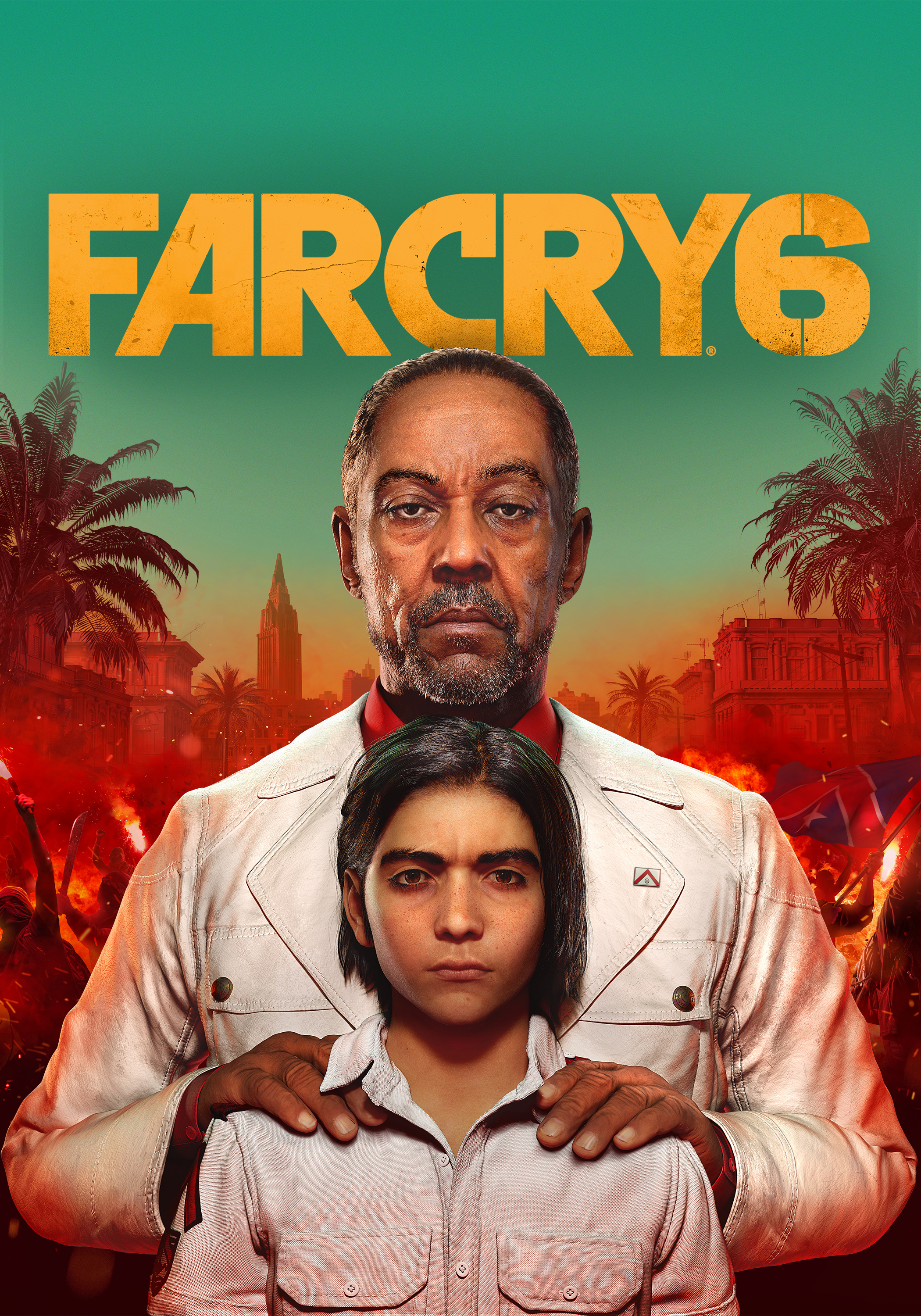
Alt Media: Far Cry 6

2021, Ubisoft

This was a replay, as the last one was. Sometimes I just want to shoot bad guys... 

Unlike all the previous games in this serious, you are not given the choice -- the Bad Guy is a monster and you acknowledge it down to the last second. But, you also have to acknowledge that you also are one. But isn't every main character in video games that has to slay hundreds if not thousands of people?

The island of Yara, Cuba analog but with a Spanish-background dictator ala the Reagan era action movies in tropical places. He is the son of the last dictator deposed in the 60s revolution. A few years before the game takes place, the son Antón Castillo is democratically elected and soon after, his Yara becomes more like the one his father ran: a rift between the Outcasts and the True Yarans, disappearances, conscripted work in the country's tobacco fields, an overreaching military present in all aspects of life, etc, etc, You are Dani Rohas ("fútbol is life") who are initially trying to escape the island but watch Castillo kill everyone onboard the boat, except his own 13 year old son who was trying to escape as well.

Dani is now forced into a role in the revolution. They (you can play either gender) are themselves ex-Castillo military, an antisocial natural killer who was ousted for assaulting an officer. They are the perfect pawn for the leader of the revolution -- Clara Garcia, and her supporter, Juan Cortez, a classic Far Cry sociopath trained by the Americans and sporting a manifesto on how revolutions are to be fought. And a knack for kludge-ing together fantastical weapons. Dani is tasked with meeting and uniting three diverse factions of anti-Castillo forces, because only united under Clara can Yara hope to be free.

The tropes of the franchise are present. Castillo has invented Viviro, a wonder drug, said to all but halt cancer. He intends to sell it to the world, so Yara can enter the First World as a saviour. The drug is "grown" in Yaran tobacco, which is fumigated with a bright red gas that encourages the Viviro to form within the plant. The gas is also a poison and a hallucinogen. Castillo conscripts people to work his fields. 

The islands are covered with military bases and outposts, which you are expected to liberate and bring to the revolutionary cause. They are also littered with poverty stricken villages and the dead his soldiers leave behind as they intimidate, murder and torture indiscriminately. 

As you progress your legend grows, one of skilled and ruthless killing and more than once you are called out for being as much a monster as Castillo. You don't deny it. But you are not heartless, for a number of key points in the story, you are presented with chances to kill Castillo's son, but you don't. He is only a boy, and still has a chance to learn right from wrong, to not become his father, and not become  you. 

Castillo is a classic dictator, convinced he is doing the best thing possible for his country despite racking up countless dead as he strives for "progress". His propaganda machine is everywhere, his speeches constantly play from speakers and radios. His key allies are his psychotic generals, scientists, public security minister, PR manager, and an amoral "yanqui" investor, a Trump analog who happens to be Canadian.

Of course, the game is beautiful. The tropical island, with a number of ecosystems, is lush and vibrant, full of animals (which you can hunt for resources) but it is also decrepit and shows its poverty stricken state. The radio is playing a wide variety of Latino music, from Mexican traditionals, to Cuban rap, to folk songs, Caribbean dance music, to Ricky Martin, Camila Cabello and Pitbull. You can listen here. By mid-way, I was humming along, while my character would actually sing along to the radio.

Unlike previous games, you know there is no point to thinking Castillo might have a point. Oh sure, he might have a cancer wonder drug, but you know these games, you know their misdirection, you know he is playing a shell game, and while it delayed his own cancer, by the end of the, the ravages show on his face. Not even he can lie about his own failures. He leaves only ruin, and death, and thousands of dead bodies at your hands.

Why do I play these? Because I like action movies, I have nostalgic recollections of the simplistic plots of the 80s, and sometimes, after a rough day at work, I just need to shoot someone.

Monday, April 22, 2024

Watching: Fallout

What I Have Been (or Am) Watching, or now shortened to Watching, for what is life but for Change, comes from when we, admittedly, spend too much (almost all?) time in front of the TV. This time round, I will catch up in reverse-chronological order as I finish seasons of a show, as individual posts, not the usual kaiju-post broken into Parts. There are likely to be some collective posts, where I comment on incomplete seasons, or British panel shows, or whatnot. Herein ends the explainer paragraph. It will be resurrected only for said collective posts.

First up... 

2024, Amazon

Of course I watched this series, and pretty much binged it, against our better judgement. I usually try and stretch these things out a bit longer. I love the game, and I like what Jonathan Nolan does so I didn't have many worries this show would satisfy me.

So, a bit of background that you would glean from the show but also may be a bit confused by. Its an alternate reality, one where atomic power took off but all the other 50s style and technology became stagnant. Its not trying to make a lot of sense, but atomic power, robots, suits of power armour, old timey music, pinup posters, gelatin desserts, vacuum tubes, etc. And a Big Bad -- China. And China does Drop the Bomb all but devastating the US and the world. But people survived, both on the surface and in deep underground vaults, which were large scale fallout shelters meant to house entire societies, who would emerge to take back the world once the radiation levels had diminished.

Lucy McLean (Ella Purnell, Army of the Dead) lives in one such vault -- 33. Her vault trades goods and people with Vault 31 and Vault 32. After 200 years isolated underground, you have to spread the blood around or... well, you know what happens when cousins fuck. Lucy is perky, has high test scores and is the daughter of the leader of her vault, Overseer Hank (Kyle MacLachlan, Sex and the City). I was really disappointed her father's name wasn't John. 

The show begins as Lucy is meeting her husband to be, so you know, they can have sex and make babies. Exceeeeept, the people who come through the vault door are not vault 32 folks but raiders from the surface. Vault 33 is decimated and Hank is stolen away. Lucy has to get her father back, against the wishes of the interim overseers. So yeah, the entire show is her quest to rescue him but is also wrapped in a mystery to Uncover the Truth (!!) a truth Lucy doesn't know needs uncovering.

On the surface, pretty much everyone Lucy meets is trying to kill her. And her perky, all about manners, be polite and friendly and helpful demeanour is not helping things. She meets The Ghoul (Walton Goggins, Maze Runner: the Death Cure), a 200 year old man (from before the bombs dropped !), essentially a wandering cowboy with a big gun and the face of a desiccated corpse. And she meets Maximus (or Knight Titus as she thinks he is for much of the show; Aaron Moten, Emancipation), a member of the Brotherhood of Steel, militaristic zealots in power armour. And she briefly meets a scientist (Michael Emerson, Person of Interest) from some society or another that seems to have weathered the apocalypse rather well, considering his technology and white lab coat. He implants himself with a rice grain sized macguffin which has everyone chasing him. I said briefly, because he almost immediately dies, and Lucy ends up either carrying or chasing after his head. What's in the head is important to everyone.

Its a rather fun show, full of violence, gore and black comedy galore. The lore is probably basted on pretty thick but there is enough exposition to explain things to non-game-players, and soooo many easter eggs to make fans (real fans, not the whiney fanboys who will debate every inconsistency that comes with adaptations) squee. Of course, the entire season is setting up the world and the characters, with a juicy amount of pre-war background establishment, so the real meaty stuff can take place in later seasons. That is the way of TV these days.

Friday, November 10, 2023

3 Short Paragraphs (Or Not): Gran Turismo

2023, Neill Blomkamp (Chappie) -- download

The recently watched Demonic was Blomkamp's first movie since 2015 and was atypical for the director. This not-adaptation-of-a-video-game movie might be considered even more a departure from his aesthetic (action, scifi) except you can see his signature all over the movie. Oh, it is about a video game but more the bio-pic of Jann Mardenborough and his rise to motorsports racing fame from the GT Academy, a partnership between Sony and Nissan to make actual drivers out of players of the video game Gran Turismo. The movie is a very very good depiction of the "against all odds" trope that sports dramas rely upon. It took a guy like me, not at all interested in anything to do with watching loud cars go around in circles, and actually piqued an interest in motor sports, and the drama of it all. 

Of note, I watched this movie bit by bit, in airports and on planes, to and from Las Vegas. While I was there, the city was in the midst of preparing for its own motorsports extravaganza, a coming F1 race. The streets were being rerouted, massive grandstand seating structures are being built and tons of people were being inconvenienced. The locals are not happy, and everyone is hinting that sales are low. Should be interesting to see how it all plays out.

Jann is a teen living in Wales, at odds with his dad because all he wants to do is play his video game. He's a serious Gran Turismo fan, with his own race car rig, but also pretty renowned at the local video game parlour. He also can drive pretty well in real life. And then he sees his name on the screen, where he is invited to participate in the GT Academy qualifying race. He defies his dad to participate, easily wins, and is invited to the actual camp where pit boss Jack Salter will put the kids through rigorous training sessions. Nobody is convinced that a bunch of kids good at playing video games would make good drives in the real world.

Of course, Jann comes out on top. 

The rest of the movie is a trope laden escapade through Jann's rise, fall and return, to become a celebrated driver that completely defied all expectations, including his own. And I was right there for it the entire way. Blomkamp may be using his familiar kit bag to enhance the movie, adding in all kinds of CGI overlays and augmented realities for us, the viewers, to become further immersed in the movie, but it was the straight-up Hollywood-isms of an "overcoming odds" sports movie that had me. These are the reasons well-crafted movies end up in the Should Watch bin, and while I don't think this will be Oscar contending material, as few people will relate to the situation, it was incredibly well done. It had me actually wanting to watch a race IRL. I also need to watch a couple of the other Oscar nodded racing movies to see where this one may lie. I hope it gets Blomkamp enough attention to fund some more of his passion project movies.

Saturday, October 28, 2023

31 Days of Halloween: Five Nights at Freddy's

2023, Emma Tammi (The Wind) -- download

<inserted into the timeline after the fact>

I know very little about the survival-horror video game upon which the movie is based, but I do recall the fans being rather rabid about its production state, constantly nagging Jason Blum (Blumhouse Productions) on Twitter.

In my mind, the "movie based on the game" has already been made, and we saw it, and it was called Willy's Wonderland and for some reason, I never mentioned the connection. Also see The Banana Splits Movie for another take on "animatronic mascots go evil". Obviously, there is enough people who think those giant singing, talking, jerkily moving cartoon animals are fucking evil that it's in the horror movie psyche.

ANYWAYZ.

Mike (Josh Hutcherson, The Hunger Games) is not doing so well. He's a rather haggard looking mall security guard who tackles a guy over a child abduction misunderstanding. Mike has history with the topic, having lost his younger brother when they were kids. It obviously was the downfall of their family, as Mike is now stuck taking care of his little sister, and the parents are nowhere to be seen.

Mike's employment counsellor (Matthew Lillard, Scooby-Doo) suggests something that is a bit of a challenge, but Mike needs any job to retain the guardianship of his sister, before his evil Aunt Jane (Mary Stuart Masterson, Daniel Isn't Real) takes her away -- become the overnight guard at an abandoned themed pizza shop. Sounds easy enough.

I had always assumed the premise of the game was that you had to survive five nights to reap some sort of reward or be freed or whatever. But no, the idea is just that the main character survives the five nights. You would think nobody would want to stick around inside a creepy pizza place with homicidal animatronic creatures, but... I guess you need a job. In the movie, Mike sticks around in order to get paid, but really only becomes aware of the murder rampage in the last night.

For some reason, Blumhouse went with PG13 for the movie, which actually reduces the amount of expected.... well, horror. The focus of the movie ends up being more about Mike trying to use the situation to learn more about his brother's abduction, and the murderbots, while prevalent, are ... secondary to the focus of the story? The rest is just passable: acting, set design and action, and the jump scares are weak.

Friday, May 19, 2023

Alt-Media: The Consumer - Pt A

Despite this blog, for me, being about Movies & TV, I have written a handful posts about video games (yes, that's the Tag, not just the posts about video games proper). But I don't believe I have covered much of other media. I read at a snail's pace, and usually only when commuting. My days of actually sitting in a corner and reading are gone the way of That Guy, and reading before bed causes immediate zzzzz's. I am also not that properly versed with podcasts, them being (in my old man voice) a rather new media that The Kids are listening to. But, given the Ken't description of this blog being about us sharing consumption habits with each other, why not a mixed media post?

Far Cry 5, Ubisoft - video game

This is a re-play. I play(ed) all the Far Cry games as they come out, often taking a few days to ... watch it download. Yah, before I updated my Internet, I constantly forgot that pretty much every game ends up downloading an update, that on my old speed, took pretty much an entire afternoon. But THIS one, took about 20 minutes. Not even sure why they include games on the disks at all, if the bulk of it comes from the cloud.

Anywayz, in each game you are set down a path towards a choice -- defeat the Bad Guy or admit he had a point. I always choice the former, but because I have played this game before, I am curious how I will choose this time round. You see, this game, came with a quick-on-the-heels mini-sequel, which takes place in a post-apocalypse world, because the Bad Guy.... was right?

But I am getting ahead of myself. Five takes place in the US proper, in an isolated county in Montana where a doomsday cult called the 'Project at Eden's Gate', led by charismatic Joseph Seed, and supported by his two brothers, and a sister, emerges from the background to take control of the county. The game pretty much hand waves away Internet and Phone connectivity, cutting the area off from the rest of the country.

The game begins with you as a rookie deputy sent in to support a US Marshall who has a warrant for Joseph Seed. But the cult won't let him be taken and the helicopter crashes, every one else being captured but you. The powder keg is ignited and the cult start very publicly & violently taking the county, and it is up to you to build up a resistance against them.

This game was done in 2017-18, during the height of Trump's rise to power. Its very much influenced by right-wing politics and conservative populism. This is redneck country and even the people you are working beside are likely Republicans, which slyly works in your favour, as this is a FPS game so an abundance of guns, BIG guns, is required. But as the game would have it, there is a difference between the conservative "value system" and downright evil of the PEG-gies, as the locals call the cult. Everywhere you go in the game are the set pieces of capital E Evil, as locals, and their dogs, are slaughtered so the cult can take what was theirs. And not just murder & mayhem, as the cult also traffics in a narcotic made from flowers, called The Bliss, which causes very very strong mind alteration, as they dose everyone and everything with it. Its very clear that Joseph Seed and his cult have to fall.

But as with previous games, it also seeds (pun intended) the game with hints that Seed may be forward thinking, that something much much worse than who is president (Trump) is coming upon the country. And he is heaping the worst of the worst upon people to prepare them for it. As the game ends, it does happen -- a limited nuclear exchange. I cannot recall whether you know it was instigated by him, or just that he truly did foresee it, in a drug induced, possibly god-given vision. Whatever the reason, he was right -- the world did end.

Alas, our world is not going the quick route to such Evil. We are chipping away at the foundations of decency, at least here in North America. Trump may no longer be president, but his followers, some would say his cult, are still standing strong, and dismantling 50 years of progressive improvement to North American lifestyles. But as I constantly say, its not just what they actively do, but that they have encouraged it to be considered acceptable, and so all the rest of the fucking lunatics come crawling out of the woodwork. Racist crime is up, sexual crime is up, mass shootings are a daily event now and the Internet's loudest voice is a cess pool.

So, why did I play this game in such a climate? For one, less than savoury reason -- so I could shoot some evil motherfuckers in the face with an automatic weapon. Come on, did you expect me to say otherwise? I have commented before on my fondness for violence, in cinematic/fictional veins at least, and I think that as long as I hold it down to a game controller, I am OK. But yeah, call it what you will, but some mental release in this fucked up world, along side my own stresses, and this is ... release.

Horizon Forbidden West, Guerilla Games - video game

Prior to the above game, as I had been out of the console loop for some months, I played a newer game, which was a sequel to something I played a few years ago. It is just as violent, in its own way, but is set in a distant post-apocalypse world dominated by machines that appear as animals, and a number of human factions living amidst the ruins of a world destroyed by an evil AI. Most of the violence is against the machines; not entirely, but most.

This is a beautiful game, visually and setting. You play Aloy, a young woman who in the first game, discovered she was a clone of a woman from a previous age who tried to save the world, but couldn't, and instead left a powerful AI (GAIA) behind to foster the planet into a rebuilding era, via the machines that replaced the lost animal life. Alas, a signal of unknown origin begins corrupting the machines, forcing Aloy to investigate her origins and save the planet, as her predecessor tried so long ago. All through the game, you travel and fight through a world taken back by nature, the ruins of our old world covered in the green and growth. Despite hostile machines and violent humans, there is beauty everywhere.

The first game ended with her defeating an evil rival AI to GAIA. But the signal that activated it is still unknown, and into the Forbidden West she travels seeking its source, before it can once again corrupt machines and the environment, bringing about the proper end of the world. She meets other tribes of people, already mixed up in a civil war, and has to gain trust of the many different cultures, so they can come together, to defeat the new enemy, the source of the original signal.

This is a violent game, like all "shooters", but it retains its beautiful primitive-ism. Her primary weapons are bow & spear, but supplemented by an holographic augmented reality tool that lets her see the Old World as it was, connecting with databases and logs, providing history and exposition. All the while, Aloy is still struggling with what she is, a clone born of no mother, but of a machine. She stands apart from all other people in what she can do and what she is, but uses that to rise above expectations and belief systems.

Its an inspiring game.

Of note, Lance Reddick passed away while I was playing the game, so seeing (hearing?) him appear again mid-game came with a certain bitter-sweetness.

Kaiju Perseveration Society, John Scalzi - e-book

Scalzi wrote this novella, as I learned in the author's note, because The Pause derailed his attempt to write a much darker, more serious book. Eventually, even post-COVID, he had to admit to his editor that the promised book would not be coming. But this one came along instead, and with ease.

Its a short, adventure story about a young woman who is laid off from her UberEats type company, just as the pandemic kicks off, and just before the shithead CEO sells his company to UberEats. She ends up as a driver for said company, because any money is some money. But that is interrupted by a job offer from a college acquaintance, an offer to Lift Things. But its not what the job that matters, but where. She will go to an parallel universe, another Earth where kaiju actually exist and dominate, to join a team that studies them, and she will be grunt labour.

Much of the book is purely devoted to the fun of world building such a world. For example, this universe is the universe that spawned a very real Godzilla back in the 40s, during the US's nuclear bomb testing. Such nuclear events weaken the veil between universes, and in this instance, to the kaiju universe, allowing one such lizardy monster to pass over and cause havoc. The KPS was established to keep this from happening again, and to foster the whole 'so mind-blowing it cannot be real' belief system that hides it from the public.

And I love this, though in glancing at a Reddit thread about the novel, not many other people did. 

Lock In, John Scalzi - e-book

I have been doing Google Surveys for a couple of years, garnering 10 cents here and there, until I have enough to buy an e-book. Noticing I had not spent it in a while, I grabbed these two Scalzi books in one shot, reading them one after the other. The former was a one-shot popcorn read, the latter is the first in a series, a noir style crime novel set in a world with a very distinct difference. There was a different pandemic than the one we had, one that left the majority of the people in coma like states, but still very much alive and aware inside their bodies. They are paralysed entirely, but lucid -- locked in. The novel takes place decades later, after technologies have arisen to deal with the after effects of the disease, that like ours, can be controlled but will never really go away.

One such technology is "threeps", as in C3POs, a pop culture nickname for the humanoid robots that people with Haden's (the disease) can pilot. People pilot such devices from their beds, and are able to live lives much like others. The main character of this novel is a rookie FBI agent investigating the death and possible murder via an offshot of this technology, but where the "threep" is replaced by a human who caught the disease but did not become locked-in; they are called Integrators and the wealthy make use of them in limited fashion. 

Its another Scalzi novel about world building, familiar structures & beats (noir) and the exploration of ideas, and their impact on the world. Are Haden's suffers victims, or just a new aspect of humanity? Do they need to be cured, because they rely on a technology, or can they just be as they are? The novel starts as laws protecting & funding the support of people with the condition are being struck down, leaving a much more capitalistic era to come, one that can be exploited and profited from. Its fun to ponder the questions while also just dealing with a murder mystery, but I am not yet quite sure if fun enough to pick up more in the series.

Friday, June 24, 2022

What I Have Been Watching (Kent Edition) - sitcomedies, sit

Toast's latest hat-on-a-hat-on-a-hat entry pulling more of our subfeatures together than ever before (or ever recommended) made me laugh but exposed that many of our subfeatures have a tendency of overlapping.  So I'm stripping out a lot of the other subtitles and just going with the What I Have Been Watching feature (which is a feature all about the admitted state of spending too much time in front of the TV.  There are too many streamers, too much content, and it drives me bonkers just even thinking about it anymore.  Here's some of what I saw in the comedy category in, let's say, the past year of television)

This is a grammatical nightmare.

In this edition:
The Kennedys (1 season, 2015) - amazon
Murderville (1 season, 2022) - Netflix
The After Party (Season 1, 2022)- AppleTV+
Grand Crew (Season 1, 2022) - Global/NBC
Reservation Dogs (Season 1, 2021) - d+/star
Our Flag Means Death (Season 1, 2022) - Crave
Mythic Quest (Season 1, 2020) - AppleTV+
Kids in the Hall: Death Comes To Town (1 season, 2010) - AmazonPrime (rewatch)
I Love That For You  (Season 1, 2022) - Showtime
----


The Kennedys
 seems to be a British take on, like, The Goldbergs or Fresh off the Boat or Everyone Hates Chris or Young Rock, a period-set sitcom that takes a look at a real person's amusing childhood experiences and family life, but, you know, turns them into sitcom fodder thus wearing away most of the autobiographical sensibilities that the show is premised upon.  In this case, it's actress and comedian Emma Kennedy telling tales about growing up in the late 70's in the Jessop Square subdivision.

Young Emma is played by Lucy Hutchinson who at about 12 years old has some pretty impeccable comedic timing.  As the series lead she's surprisingly capable and naturalistic.  She doesn't feel like she's acting or putting on a performance and she convincingly feels of the era, talking about Star Wars and whatnot.  Her mother,  Brenda (played by the IT Crowd's Katherine Parkinson) is the show's powerhouse, though.  A rampant feminist but still unaware of her own trappings in the patriarchy, she's defiant to a fault of her role as mother and homemaker.  She's a boldly entertaining character, both for her lack of hubris, but also not lacking in love or kindness.  Patriarch Tony Kennedy (played by Dan Skinner) is kind of an oblivious lunk, never quite sure what anyone is saying to him or why.  Not stupid, just not always present in the moment.  The family is best friends with the unwed couple Tim (Toast of London's Harry Peacock) and Jenny (Emma Pierson), the former a womanizing drunk, the latter a preening mess of a woman, unsure of what she wants out of life.  

Most of the episodes take place within the neighbourhood and over its six episodes starts to build up familiarity with its surroundings for the audience.  The comedy is multifaceted and quick, with a lot of wordplay, as well as utilizing the sort of late-70s naivety as a hindsight joke machine, and then a whole bunch of non-sequitur side-swipes, which seem to be the fashion of this nostalgiac subgenre of sitcom.

I was shocked to see that there were only 6 episodes in this series.  It's quite funny, well-produced, and exceptionally well acted with recognizable faces.  It's not innovating anything but it's rocksolid in what it's trying to do, and that's usually good for two or three seasons, at least in British terms.

---


I don't want to talk about Netflix as an entity.  It's too complicated for this space.  But lets just say they've spent a lot of money trying stuff, most of which is forgettable and didn't work.  The odd thing is transcendant.  Murderville is somewhere in the middle.

It's a fully plotted, largely improvised comedy about a bumbling homicide detective who keeps getting a new partner each week and has a murder mystery to solve.  The partner is a real world celebrity (in this case Conan O'Brien, Marshawn Lynch, Kumail Nanjiani, Annie Murphy, Sharon Stone and Ken Jeong fill the role), playing themself, coming in cold to the situation and having to act along.   The episodes that pop are the ones in which the performers are actively playing along, versus the performers who are lost, sitting back, and just watching things happening around them.

Leading them along the way is Will Arnett as Terry Seattle, who is in the midst of a divorce with his precinct Chief (Haneefah Wood) and is, most apparently, living out of his office.  Seattle drives a pristine looking El Camino (so awesome) which seems to be the only light in his life.  He still mourns the loss of his partner (who is only ever seen in a photo hanging on the wall as Jennifer Aniston) 15 years ago, and puts his grief and anxiety upon the unsuspecting rookie.

Surprisingly the show, for all its improvisational set-up, has an arc.  It's not necessarily a thoroughly satisfying arc but it's surprising that they even attempted it within the format.  It's an enjoyable show, with even the lesser episodes still providing some good laughs within.  It's certainly strange, and unlike anything I've seen done before, but I could see some refinement of the formula into something that's consistently great fun.

---


The one series I was most looking forward to on AppleTV+ when I started the service this year was The After Party.  It's the brainchild of Christopher Miller, one half of the great Lord and Miller comedy directing/producing team known for their ability to exploit genre tropes adeptly and shrewdly for maximum entertainment value (see Clone High, Cloudy with a Chance of Meatballs, the Jump Street movies, The Lego Movie).  

This series I was hoping would be the next great one, a murder mystery in which each episode takes a look at one of the accused but from a different genre standpoint.  It sounded fantastic, and the cast, featuring some of the most underhyped comedic talent going (Sam Richardson, Ilana Glazer, Ben Schwartz, Ike Barinholtz, John Early) all held down by Tiffany Haddish's under-the-gun detective.   The crux is superstar Xavier (Dave Franco) is murdered in his own home during the afterparty following a high school reunion.

Well, I mean, I liked the series, quite a bit.  I enjoyed tremendously the performers, and I liked the characters, and I enjoyed the murder mystery angle certainly enough to eagerly come back from week-to-week, but my expectations of the genre-busting Miller were not quite lived up to.  True, each episode did focus on a different suspect, and leaned towards a specific genre/subgenre/storytype (like a Fast & Furious Movie, highschool drama, musical, animated comedy, psychological thriller) but the realities of trying to uphold a single story through these different genres meant the genres couldn't be exploited to their full potential.  So the show, while fully entertaining, doesn't hit that next level I had hoped for.

Season 2 is in the works.  I'll be there.
---


You can't really rely upon network television to deliver anything innovative or surprising.  They are hanging on for dear life in this era of the streaming wars, and know that their key to survival is reality competition shows and programming that appeals almost exclusively to the Boomers, doling out of-the-week dramas in every possible high-stakes professional situation.  At this stage network comedies are life support, and even the mighty Chuck Lorre's laugh track adherence is failing to save them.

So when something like Grand Crew sneaks out quietly, and just as quitely maintains a consistent tone of hilarity and fun, well, it's always a shock.  Brooklyn Nine-Nine was the last great network comedy, and Grand Crew has the potential to be the next.  It's a dead simple premise, a group of Black friends hang out at a wine bar when not living their lives.  It's basically a modernisation of Cheers and Friends  but a lot less dependent on that single situational environment.  It's also thoroughly a Black-led and run show, from creator Phil Augusta Jackson, but it's also inherently accessible as any network comedy should be.  It's a Black-centric show, thus many jokes are very specific references to of Black culture, and I'm a middle-aged white guy so I may not catch all these references, aptly so, but being hyper-specific in comedy is always the correct way to go.  When I do get the references (which is more often than not), they are gold, so I can only imagine how good the deep cut ones I'm not getting are.  But the general sensibility of the show's humour is straight-up character silliness, like Brooklyn Nine-Nine or Happy Endings.  It really leans into the characters goofball traits, and their unique personas for the majority of the humour, and it's great.

The cast is tremendous.  Echo Kellum (Arrow) is the lead of the ensemble, a flitty, hopeless romantic who just broke up with his girlfriend and is learning to live without love for a while, despite his impulses.  His sister Nikki is played by Nicole Byer, a hypersexual alpha who's also a realtor.  Carl Tart plays the perpetually unemployed, always calculating, boisterous Sherm while his roommate Aaron (Anthony Jennings) is the buttoned-down professional accountant who has to be the responsible yin to Sherm's yang. Then there's married friend Wyatt (Justin Cunningham) who is a stay-at-home husband (and still uncertain how he feels about it).  They make a new friend who works at the wine bar in Fay (Gracie Mercedes), who is relatively new to L.A. but still uncertain about her place there.

This is very much an episodic show, with only a little bit of character and/or relationship development happening from episode to episode.  They're a tremendously fun crew, some might say "grand".  Even when the show tackles the impact of yet another tragic murder-by-police shooting of a black youth, they still manage to find some levity within the resonance without dipping into "very special episode" terrain.  A second season is on its way, thankfully.  The current 10 episodes just isn't enough.  Grand needs a nice long life.

---


Reservation Dogs
 is a comedy in the vein of vanity projects like Atlanta, Master of None, or [edited...let's not go with that suggestion, apt as it was].  Normally "vanity project" has a negative connotation, but for creative performers like Donald Glover, Aziz Ansari and [redacted] their vanity projects give them a chance to hone and showcase all of their skills, including writing and directing, as well as delve deeper into more thoughtful exploration of subjects that aren't explored elsewhere, and certainly not with their point of view.  These projects take on their own rhythm, their own style, even though they're of a type together, they feel the impact of their creators' visions in letting creativity be the star.  Episodes tend to feel more like mini-movies than serialized television.

With the support of producer Taika Waititi, Reservation Dogs was given life at FX from director and sketch comedian Sterlin Harjo, but unlike many a vanity project, Harjo remains off camera and uses the platform as an showcase for Native American performers, writers and more (both Ansari and Glover, though, it should be noted, use their platforms to elevate others too, but the talk of those shows is still centers so much around them).

The show is a comedy (but also has some weight behind it) about life on an Oklahoma reservation, following the "Reservation Dogs" crew, four teenage friends who steal shit to make money for a good cause, getting the fuck off the reservation and going to California.  They recently lost one of their crew to suicide, and the loss haunts them each in different, sobering ways. Things get further complicated when the NDN Mafia, a rival quartet of teens arrives on the scene and start taking shots at them.  What could have been a very straightforward series based off the setup quickly reveals itself within its first three episodes as something much more contemplative than that.

The episodes all vary in tone and subject matter and even who is starring in them, but they're all amazing, exploring so many different facets of res life, Native heritage and culture.  While there are some amazing guest stars (Gary Farmer, Zahn McClarnon, Jon Proudstar, and Kaniehtiio Horn among may) throughout the season, the stars are the four young members of the Dogs.  Devery Jacobs is Elora, the de facto leader of the crew, and the one who maybe feels the most outwardly motivated to leave the res.  Her spotlight episode finds her attempting yet again to get her drivers license only to get embroiled in her instructor's whole side deal.  Bear is played by D'Pharaoh Woon-A-Tai, an awkward young man who needs the gang to bolster his sense of confidence and masculinity (but he also has a bold but equally awkward spirit guide, hilariously played by Dallas Goldtooth).  Bear's spotlight episode finds his estranged father, a successful rapper, returning to the res for a charity event, and Bear's mom tries to brace him for disappointment, but he starts spending the California money to try and look a big shot for his dad which raises tensions with Elora.  Willie Jack, played by Paulina Alexis, is tough-talking and hard-as-nails but is very connected with her family and was hit hard by her cousin's Daniel's suicide.  Her spotlight episode finds her going hunting with her father, but flashing back to memories of hunting trips with Daniel, and it's a very emotional journey that explores the problems of depression on the res, and the lasting impacts they have.  The final member of the crew is the youngest, Cheese (Lane Factor).  Quiet and laid back, he gets on with everyone and just kinda of seems to tag along with the dogs with no personal agenda.  Cheese's spotlight episode is actually more a spotlight for McClarnon's Officer Big and a showcase for the town as he has the young man as his ride-along partner for the episode.  

As many shows have keyed into over the past decade, you get a lot of mileage out of building out the population of your environment.  What used to only be seen as a thing in prime time animation (The Simpsons primarily) has now become a staple for all the great network comedies in recent years, and the same occurs here, with the res feeling full of interesting and fun people.  

It's a fantastic series. 

---


While Waititi only served as producer (and co-writer on the pilot) for Reservation Dogs -- thus his influence is limited -- Our Flag Means Death is a Waititi production through and through, catering much more to the comedic writer/director/performer's goofier sensibilities.  Here he has developed a semi-epic, 1700s-set, pirate comedy that kicks off with a soft, upper crust man abandoning his family for a life of skullduggery on the high seas.  It is a life for which he is ill-equipped, using his money to buy his ship and hire a crew of largely inexperienced scalliwags.

Taking to the seas, Stede Bonnett (Rhys Darby) and his ensemble pretty much immediately are boarded by the Royal Navy, led by an acquaintance from Stede's aristocratic past. Stede kills him accidentally, but it's unknown to the crew, and he earns at least a little of the respect that was missing from his men.  Stede's general management style and general world outlook could be considered progressive (adopting a lot of current managerial philosophies) but this all seems counterintuitive to a pirate crew, and the general amount of high seas piracy, kidnapping and murder is kept pretty much to a minimum.  Things like forced vacation days, a flag-making competition and a talent pageant, not to mention bedtime storytime (in which Stede reads the crew a story) all seem kind of...soft...for the lifestyle.  Stede gets nicknamed The Gentleman Pirate, which isn't meant as a compliment, despite how he takes it.

Things get more complicated when the Revenge encounters Blackbeard's ship.  The crew is direly intimidated by the men of Blackbeard's crew, and of course, of Blackbeard himself (Waititi performs the role).  A strange turnabout happens, however, when Blackbeard takes a shining to Stede's erudite lifestyle, moreover he wishes to escape the pirate's life and live a more humble existence in the world of high society. Stede offers to teach him about high society in exchange for lessons in piracy.  A deep kinship is borne, much to the dismay of Blackbeard's grizzled right hand, Izzy Hands (Con O'Neill).  Izzy conspires against the pairing only to his own detriment, as the rest of Blackbeard's crew start to glom onto Stede's way of leadership.  Of course, the Royal Navy is pursuing Stede with ruthless abandon, and things come to a glorious head in the final three episodes after threatening an amusing status quo.

This is, on top of it all, a large ensemble piece, which includes Ewen Bremner (Trainspotting), Samson Kayo (Truth Seekers), Vico Oritz, Christian Nairn (Hodor from Game of Thrones), Nat Faxon, and many more, with guest appearances from Rory Kinnear, Leslie Jones, Fred Armisen, Claudia O'Doherty, Kristen Schaal, Nick Kroll, Kristen Johnson and Will Arnett among others.

The crux of the series, though, comes down tot he different ways people express love to each other, and particularly the relationships between men and how they show affection for one another, whether it's platonic, idolisation, as brothers-in-arms, or as lovers.  It's not dissecting these with any great zeal, but it seems that love, and how people care for each other, is the great unifier of most of these episodes.

I don't have a great affinity for pirates, but Waititi's style, as upheld by his writing staff and his remarkably unique cast of performers, helps the adventure of it all go down smoothly.  It's kind of telling that the bits that take place on land (like at Spanish Jackie's pub or Stede and Blackbeard imprisoned at the Royal Privateering Academy) were my favourite parts of the series, thought he finale where Stede returns home to his family was easily the best episode for its wildly unexpected twists.

---


After basically writing it off after its initial announcement as another dumb workplace comedy on a topic I have little investment in (MMORPGs), it took all of one episode for AppleTV's Mythic Quest to hook me in.  It's a damn funny show.

From Always Sunny in Philadelphia creatives Charlie Day and Rob McElhenney with Megan Ganz (writer on Community, Always Sunny, Modern Family), and starring McElhenney as the self-aggrandizing creative head of the Mythic Quest Massive Multi-player Online Role-Playing Game, I was expecting a tepid retread of The Office but with more nerd shit.  

I'm not a devoted follower of Always Sunny but from what I've seen of the show (a couple dozen random episodes) I shouldn't have been surprised at how whip-smart Mythic Quest is, and how it knows how to present an egomaniac as a fool (Always Sunny is basically a show about watching a crew of sociopaths get their come-uppance episode after episode).  What's also most immediately surprising is how tailored the show is as an ensemble piece and not a solo showcase for McElhenney.   Even as the creative head of Mythic Quest, his Ian (pronouced, annoyingly, "eye-ann") is still not the top dog.  He has (unseen) corporate overlords that he has to appease, an ineffective middleman to patronize in stammering beta David (David Hornsby), and he of course needs the support of his hyper awkward development lead Poppy (a transcendent Charlotte Nicdao).  Then there's the borderline psychopathic head of monetization, Brad (always great to see Dany Pudi), David's full-on psychopathic assistant Jo (Jessie Ennis),  the head writer, legendary 70's award-winning, over-the-hill sci-fi novelist C.W. Longbottom (F. Murray Abraham doing great work...at least on camera), and repping hard for the female gamers, game testers Rachel (Ashly Burch) and Dana (Imani Hakim).

The show quickly eases into its status quo.  It finds its groove rapidly in its first two episodes, and it feels like it's going to have a nice long life of great nerdy jokes (with a full understanding of the world it's operating in), great character conflicts, and gentle world building (its game, the economy and society that surrounds it, and the meta world around Mythic Quest as a company and property).   But by episode t it rapidly upends any expectation of what it should be.

Episode 5 is a full detour in the life of a female game developer and her relationship with her boyfriend-turned-business partner-turned-husband.  The episode is a mini-movie spanning three decades, starring Cristin Milioti (Palm Springs) and Jake Johnson (Stumptown) as the lead couple in this romantic comdey-drama that really takes you through a tour of the highs and lows of video game celebrity and evolution.  It has an impact on the world of Mythic Quest but in a way that is not immediately apparent, and takes some time to reveal its ultimate point within the show.  It's a special thing, though.

Following that episode, Mythic Quest emboldens itself to actually embrace some dramatic storytelling within its otherwise riotous framework.  There's a gutpunch of an episode that introduces Ian's son, and a COVID special that stands as one of the best snapshots of what the first wave lockdown really felt like.  

There's something tremendously special about Mythic Quest, as such I haven't binged it like I normally would a series I enjoy this much... I savour its episodes, and they root down in me with the time that I give them to breathe.
--- 


Amidst the new Kids in the Hall series appearing on Amazon and my ongoing rewatch of the original series (plus the recent acquisition of Brain Candy on blu-ray) I thought it time to revisit the Kids' 2010 serialized mini-series Death Comes to Town.

I caught a few episodes of the series as it aired originally but its scheduling on CBC was a mess as it was interrupted by the Winter Olympics, and I had to purchase the series on Apple in order to watch the rest.  I don't recall loving the series and had little desire over the past dozen years to revisit it.  But with time comes fading memory so I was going into the series with near-fresh eyes.

And a rapid 175-minutes later, I did not come out with triumphant adoration for the series.  It does not feel unfamiliar to Kids in the Hall (more akin to the tone of Brain Candy than sketch comedy), but at the same time it lacks a specific drive.  It's effectively a murder-mystery, but it's a murder-mystery that's kind of disinterested in the fact that it's a murder-mystery.  It really wants to build characters and build a character out of the town of Shuckton, but with the death of its mayor (who everyone seems to idolize) in the first episode, Shuckton loses the one thing that really seems to define it.  As much as the series wants to build characters, it has a much harder time with building relationships between the characters.  Sure, it finds connective ties for the characters to share with each other, mostly as comedy, but few of the characters have any real, defining traits to their relationship with other characters beyond forgetful delivery lady Marnie (Kevin McDonald) and disgraced hockey wonderkid Ricky Jarvis (Bruce McCulloch), now obese and housebound.

Scott Thompson takes the ill-advised role of Crim Hollingsworth, adopting a Native Canadian patois, and adorning himself in style and symbology of, supposedly, Ojibwe culture, of which Crim puports to be 1/16th heritage.  I'm not sure why Thompson, of all the kids, tends to be the one in brownface all the time, but there's a trend.  It's an uncomfortable pattern.  While it's not necessarily mocking any culture, and there is the sense of trying to develop a character, it never seems the right thing to do, particularly inexcusable for 2010.  Likewise the amount of fat jokes and sight gags about Ricky Jarvis seem like they should have ended with Fat Bastard in Austin Powers.  And then there's the weird references to trans people, in a way that seems to be meant to be inclusive, but is edited with comedic timing to be a punchline.  This stuff has aged poorly and in much faster time than most KitH sketches.

There's plenty of silliness and a lot of conceptual comedy within Death Comes to Town but it does tend to be overshadowed by the sheer lack of laugh-out-loud comedy within.  Besides their post-Brain Candy
disbanding, this is a real low point for the troupe.  Not embarrassingly bad, but certainly not meeting up to expectations (even when they're low).
---


And if this wasn't a long enough post already, we ploughed through I Love That For You with reckless abandon.  I didn't want to.  I put it off for some time.  I mean, I liked Vanessa Bayer as an SNL cast member and have enjoyed her in her cameos in other things like Barb and Star Go To Vista Del Mar and Brooklyn Nine-Nine, but the setup for this series felt just...too...cringey for me to want to sit through.

Created by Bayer (and Jeremy Beiler), the story of I Love That For You finds Bayer as Joanna Gold, a lifelong fan of the SVC home shopping network.  She would watch religiously as a child while going through chemotherapy for leukaemia, and as a remarkably awkward adult, she seems her most comfortable and confident selling people seemingly worthless things.  She's always had a manipulative streak in her, but it's not malicious so much as a coping mechanism for her trauma.  She finally gets her shot at an open casting call for SVC and absolutely nails the audition.  She's elated to find she's gotten the job, only to blow it on her first on-air showcase.  As she's getting fired she blurts out that she has cancer, and there are dollarsigns in  network owner Patricia's eyes.  Joanna is suddely the new "it-girl" at the network, to the delight of some, like her idol Jackie (Molly Shannon) and to the chagrin of others she's displacing, like the preening, self-obsessed Beth Ann (Ayden Mayeri).

The show then has to deal with Joanna going deeper and deeper into her lie, and what should be unbearably cringe is somehow, in Bayer's hands, nearly effortlessly watchable and just straight up amusing.  Bayer has always been fantastic at being uncomfortably awkward in her performance without being cringe about it.  She does this by way of acknowledging she's aware of her own awkwardness, and Bayers one of the few people who can do this with just a look, but she's also equally clever at delivering lines that highlight how aware she is of her own social ineptitude.  Even within the show, this winds up endearing Joanna to her colleagues more than alienating her, but it never lets her off the hook for her lying, and she knows she's not capable of keeping it up forever.  It's more of an "I'm in too deep, and I don't know how to get out" kind of situation.

I enjoyed the show, even though I found the whole cancer-ploy of Joanna really held the show back from being a proper workplace sitcom.  It's a time bomb just waiting to go off, and so you can't ever rest or rely upon the dynamics as they're set up.  When the bomb goes off in the penultimate episode you have to wonder how the show could possibly set up a second season given what the fallout *should* be.  Yet, it does its thing, and finds a way, and things are perhaps more awkward for Joanna than ever as the season closes out.

The show struggles with it's shopping network within the show.  It doesn't know whether it should be lampooning hope shopping channels and the products they sell, or if it should be earnestly presenting something possible, something real.  It often wavers between the two in a gentle fashion, and it never feels comfortable.  When the hosts start being goofy or unprofessional on camera (and they all do it), it really diminishes what Joanna initially got fired for and thus betrays the whole crux of this first season.  At the same time, when the sales pitches are completely po-faced, it's not very engaging and I want them to move faster through those parts.

There's a solid supporting cast, topped by Jennifer Lewis as the no-nonsense Patricia is credibly intimidating but gets the best through-line in the show, and Punam Patel as show producer Beena develops into a complete scene stealer with both her micro- and macro-agressions (and her beautiful Bernese Mountain Dog who's always at her side).

It was a pleasant surprise of pleasantness, especially give to how easily it could have been full-bore cringe.