Showing posts with label travel. Show all posts

Tuesday, February 28, 2023

KWIF: Tootsie, plus Do Revenge (+3)

 Kent's week (or two) in film #5:
Tootsie - 1982, d. Sydney Pollack - Criterion Channel
Do Revenge - 2022, d. Jennifer Kaytin Robinson - Netflix
Caro Diario - 1993, d. Nanni Moretti - Tubi
Tampopo - 1985, d. Juzo Itami - Criterion Channel
Sharper - 2023, d. Benjamin Caron - AppleTV+

---
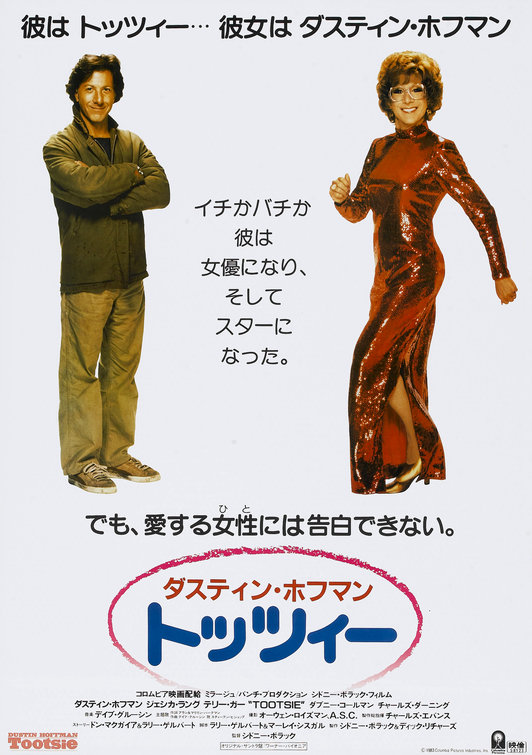

From moment one, something didn't sit right with me about Tootsie. I mean, it's Dustin Hoffman, an actor I've never particularly cared for, playing a character that is recognizably Dustin Hoffman the actor, ergo a very difficult person nobody wants to work with (I'd forgotten about the multiple accusations of sexual predation which makes the irony of the film's intent even more distasteful). That unease I started into the film with never left me throughout the viewing.

It's the early 80's, and there's still a battle of the sexes going on, and Sydney Pollack wants to tackle it head-on by putting a womanizing, arrogant, self-involved actor in the shoes of a woman, in order for him to play a female character role on a soap opera, because the actor thinks he can do it better than any woman could. Throughout the film, Hoffman's character uses his disguise as armour while he performs his perception of a tough (but not in a manly way), independent (but not in a manly way), no-nonsense (but not in a manly way) woman. In the most unbelievable reach of the film, Pollack asks us to buy into Hoffman going off-script on a soap opera on.the.regular. They wouldn't have lasted a day in reality. One warning at best before they were turfed.

In its day I'm sure its very binary perception of gender roles and gender politics seemed progressive, but at the same time we had "nerds" who were "revenging" on the cool kids by having non-consentual sex with women for comedy. This is an equally unamusing and toxic film. 

The binary perception of gender roles here cannot sustain with a modern lens, and I cannot turn off my modern lens in watching it. There are trans, drag and other queer lenses this film is unintentionally filtering through, and since I don't think for a moment Pollack had them in mind, he's not addressing these demographics in any satisfactory way. Nor is he even having the characters reasonably question their own roles and identities, at least not beyond a knee-jerk-reactionary homophobic/transphobic-for-comedy way. It's ugly. But also, it's the 80's, so ugly is expected. So of course we wind up with a story about a cisgender, heterosexual white male who lies and uses pretty much everyone around him and succeeds as a result. It's probably the most truthful thing about the film.

Taken even at just a base, binary comedy with a love story sub-plot, it fails. I don't want Jessica Lange to be with him. I want her to despise him and let him know that he abused her trust, her dad's trust and the trust of everyone they work with for his own selfish gain, and that his love means nothing to her. There's nothing he can do to repair that trust except to respect her wishes and leave her alone. But who am I, a cis-het white man to tell another cis-het white man what the woman he's writing should or shouldn't do with her love life.

Really, kinda fuck this film, y'know. The soundtrack and score are godawful, it's not funny, it's certainly not romantic, and I just don't buy into it. But also fuck this film mostly because it's pretty insidiously watchable despite everything I said...but maybe I kept watching just hoping for a comeuppance that never really happens because 1980s.

---


With Do Revenge, I found myself with mixed feelings watching upper-crust high schoolers "do revenge" on one another, in what could be an expanding whirlwind of destroying people's possible futures and trajectories in life. It can happen so simply. But at the same time these are the asshole kids of rich asshole parents (parents we never meet or see) who generally cannot see past their own wants, amusements and ambitions. They are, as reiterated numerous times, sociopaths, and it's hard to feel sorry for them for having to experience any sort of complications in life.

So the film relies upon us seeing these charismatic leads (twenty-something-year-old stars from Riverdale and Stranger Things) as complex people, not just snobs or psychos (though they are respectively each that), despite their Strangers on a Train-like bargain.

Camila Mendes' Drea, despite being the "poor kid" at school, has entrenched herself as a queen bee academically and socially, but her boyfriend Max (Dash and Lily's Austin Abrams)-- the most elite of the elite offsprings attending the school-- coaxes her into sending him a cam vid which he then shares with everyone. But, being the elite of the elite, he successfully spins himself as victim leaving Drea an outcast. During summer tennis camp she meets Eleanor (Maya Hawke), an outcast lesbian who will be transferring to Drea's school in the fall which means she will encounter the girl who maliciously branded her a sexual predator a few years earlier. The plan is to do revenge on each other's offenders.

Though we recognize Drea's elitist, selfish tendencies, we see what she has done to survive, thrive and elevate herself above her contemporaries, with none of the resources they have. She's an inspiring figure, though one clearly having lost perspective and empathy as a result of their status, but earning our support as victim of what is an actual crime. Yet her casual ability to just destroy mean girl Sophie Turner at tennis camp is a really frightening side to her personality. Eleanor has developed anxiety and keeps herself at a distance from most people so it seems like a real coup for her to befriend Drea, but the unease sets in when she becomes too comfortable blending in with Drea's old crowd. Are they a bad influence on her? Is Drea? 

The film doesn't sit with these questions for too long as it has a few tricks up its sleeve, as the revenge they do don't go so according to plan, and they have unintended consequences... but not enough for my liking. This film is entertainment, not a morality play, but I wish there was more fallout to the events at hand. Even nth degree shitheel Max, upon receiving his comeuppance, will probably just wind up backpacking around Europe with his camera (likely coaxing many European women into nude photography that he'll share without their permission) and dad's money and (unfortunately) be just fine.

Both Drea and Eleanor provide voiceover during the film, but its used inconsistently and not always effectively, and I wonder, if I actually paid attention on a rewatch, if these POV shifts would actually break the film.

Do Revenge is fun, surprising and quite engrossing, but I question if it is smartly using its elite-class setting or if it just thinks it is.

---
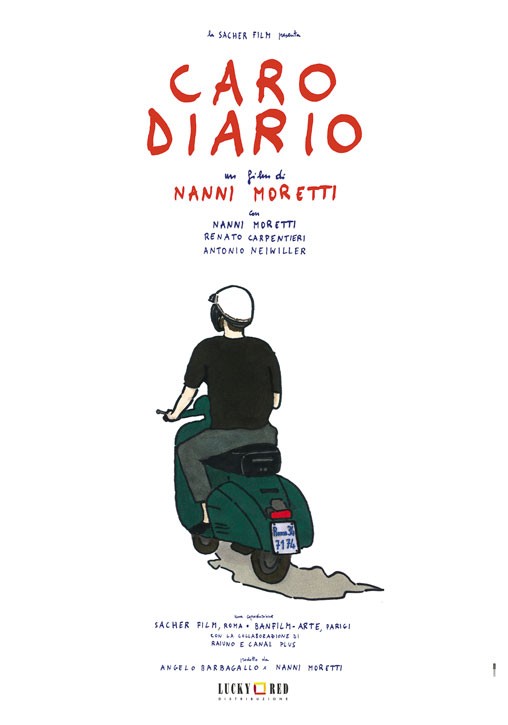

I thought for the longest time that Caro Diario was a film I first watched on the Canadian cable channel "Showcase" back in the late-90's.  It's a small Italian film with no real narrative, just kind of a travelogue/slice of life, and I really connected with it back then.  Rewatching it on Tubi (of all places), I had a potent sense memory of sitting in the theatre watching certain scenes and realized that Caro Diario was one of the movies I watched at Thunder Bay's first film festival held by the North of Superior Film Association (which I'm happy to see is still a thing) back in 1994.

'94 was a big year for me in film. It's when both Clerks and Pulp Fiction hit and my brain exploded, realizing there was more to movies than I ever thought or new, and the NOSFA film festival was another big part of that awakening. Caro Diario holds a special place in my heart and brain as a result.  

It's a sweet, often funny picture that finds director/writer Nanni Moretti playing a version of himself as he, through narration of his diary entries, first, rides his Vespa around Rome, contemplating architecture, dance and cinema, and having a chance run-in with Jennifer Beals.  His second diary entry finds him trying to find escape to focus on work, jumping from one island to another, never to find peace (but with comedic results).  The third entry is more serious and personal as he finds himself sleepless and itchy only for it to take a year of medical examinations before a cancer diagnoses is given. This isn't documentary, it's not a drama or comedy, but somewhere in the center of the venn diagram of these.

It's not the monumental, life changing picture I remember it being, but I'm not in that same place or time I once was. It's a charming, often amusing, and serene picture that doesn't ask much of the audience except to try and enjoy the world as Moretti sees it.

--- 


Directors du jour The Daniels (Kwan and Scheinert of Everything Everywhere All At Once) have cited Tampopo as having a direct influence on their filmmaking style, which I guess we could call an "anything goes" style.  But "anything goes" undersells the craft of actually selling the "anything goes" style, of telling a story where "anything goes" but within the frame or context of the story so that it all hangs together.

Tampopo is, as far as I know, the sole entrant in the subgenre of "ramen western", and I think that label does the absolute best job, simply so, of describing what this movie is. It's set in an unnamed city in Japan in its current-day 80's, following a truck driver who inadvertently becomes "sensei" to a ramen shop widow who wants to figure out what she's doing wrong and become the best ramen shop she can.

This is a food porn movie before food porn was a subgenre, but it maybe invented it? There are interstitial scenes, disconnected from the main plot, that feature bizarre eroticism involving food (among other, non-erotic adventures in enjoying one's meal), including one particular moment where an egg yolk is sensuously(?) passed from mouth to mouth between two lovers until the female climaxes from the sensation, breaking the yolk's membrane and dripping yellow goo everywhere.  But it's mostly about finding the ramen recipe, the Japanese noodle soup I can not partake in due to onion and wheat sensitivites (one makes me barf, the other I break out in hives). In total, it's about the pleasures of food, but with a spaghetti western pastiche. (Disclaimer, there are scenes of a turtle and prawn being killed on screen but for the purpose of food preparation...still, rough stuff).

---

If the opening sequence, "Tom", were a stand alone short film starring Justice Smith and Briana Middleton, it would be a pretty compelling piece. The attractive leads have great chemistry but also there's a sense of "why are we watching this" that just underlines the whole thing. Knowing the basic plot of the film from trailers, it unfortunately cuts this seemingly stand-alone bit right off at the knees. And there's a reveal, a reveal you know is coming from almost moment one as this type of film has you questioning everything you're seeing all the time. 

Sharper stars Smith, Middleton, Julianne Moore, Sebastian Stan and John Lithgow, which is a curiously intriguing cast. If you know nothing about the film and have not seen a trailer, and this cast does curiously intrigue you, maybe stop reading, and go watch it.. as I think it might play fairly well if one watches with no prior knowledge.

Buuuut...[now spoilers] even then, once you catch onto what the film is, which is a movie about grifters who are just scamming, scamming, scamming one another, it becomes somewhat obvious to see where it's going. It's the inevitable flaw in a film about grifters, it becomes a very binary picture where you either trust everything you see on the screen or you trust nothing. After its first three acts (of five), the film has taught you not to trust anything about it and so whenever it tries to surprise you, you're never surprised because you're already anticipating it.

It's a really good, often great looking film (director Caron, comes into his feature debut after working on expensive and ambitious TV projects like Sherlock, The Crown, and Andor), often cloaked in hard black shadows contrasting against the fairly spare and flat aesthetic of the nouveau riche.  The contrast between Tom's cozy bookstore and his father's sprawling, contemporary, sterile apartment are so telling of the differences between the characters. It's got an interesting structure, but the nature of the story makes it hard to invest in almost any of the characters (save Tom who disappears for a long stretch), and thus makes it difficult to really enjoy the film.  Caron surely will have much better features in the future.

Tuesday, April 19, 2022

I Saw This!! What I Have Been Watching: A Long Long Look Back, Pt. F - I Suppose It's Only Occasionally a Long Look

I Saw This (double exclamation point) is our feature wherein Kent(!) or Toasty attempt to write about a bunch of stuff they watched some time ago and meant to write about but just never got around to doing so. But we can't not write cuz that would be bad, very bad.  Freedumb Convoy bad.

What I Have Been (or Am) Watching is the admitted state of me spending too much time in front of the TV. But what else was the last few years about? Sure, we got a few breaks from being confined at home, and might have actually gone outside (gasp!) and socialized with (double-gasp!) human beings (faint-dead-away) but we always ended up back on the sofa, flicker in hand, trying to find something to watch amidst the 35 shows we downloaded, and the 5 or so streaming services we are subscribed to.

Part A is here. Part B is here. Part C is here. Part D is over there. Part E is there.

Travel Man, 2015-2019, Amazon Prime Video / CBC Gem

This is more a Marmy show, than a Toasty show, but I walked into the room enough times and sat through a couple of episodes, as she binged the entire series on Gem and Prime, that I have some words to share.

So, premise. Richard Ayoade (the host at the time; The IT Crowd) and a celebrity guest travel to a tourist destination city for 48 hours. Most of the time, the idea is to pack the two days with as many of the local attractions, and food, as they can while still being budget conscious. I assumed the idea worked because Europe is small enough, and diverse enough, that you can travel from the UK to just about anywhere pretty quickly, but that idea is blown apart in season 1 by visiting Iceland and Marrakesh, which are not nearby whatsoever. The other idea is that Richard generally doesn't like to travel, hates sun, hates water, hates new food, etc. So the idea of a celebrity guest, usually a British comedian, following around thus curmudgeon's itinerary is where the funny comes in.

Most guests don't handle Ayoade's weird, dry, grumpy comedy very well but some play off him very well, and some even surpass him, giving him more than a bit of his own medicine back in return. But really, its the locations that shine. Even in such small doses, the places chosen, even the far out there ones, are just fascinating. I have always said, that if I was to travel, that I would prefer to stay in a single place for an extended time, like a month or more, to learn about the places the locals know, to get the feel for the area that is not focused on pure tourism. This show is the opposite, in that almost everything they do is utterly tourist focused, often led by local guides, but they are always about the experience which is typically so purely tied to the area, that even the micro-dose of exposure encapsulates the experience. 

Some of my favs include Richard and IT Crowd alum Chris O'Dowd in Vienna, where O'Dowd seems to be a genuine friend to Ayoade and completely in tune with the humour of the show, and the "tourist" choices they make, one of which is a sewer tour, overwhelming stink and all. Jo Brand in Venice is fun because she is also not quite the traveler but has a wonderful time despite the two being themselves. Paul Rudd cracking wise in Helsinki in a sauna with other half-naked people doing their best to not lose it on camera is hilarious, but I am not sure he and Richard ever meshed well in comedy styles, given that both like to make others uncomfortable; but that could have been the entire point. I might be biased but Aisling Bea was both funny and charming outshining Richard entirely for their visit to Budapest. Jon Hamm and Richard getting absolutely wild custom tailored suits in Hong Kong made the episode worth it.

In the end I was overwhelmed by a desire to travel, but won't, with a large budget, which I will never have. I also think that a show could be created and presented by a guy such as myself, a self described "I have never really been anywhere" but replacing the curmudgeon with just typical anxiety ridden enthusiastic curiosity about everything and everywhere. I know I would love to travel but doing so always drags up such... baggage.

*cough*

The FBIs, 2021-2022, Stack TV / Download

I had the Slot A of this collection of crime shows in a previous edition of this topic, but I only briefly touched on it, really just said "I am watching it." I have continued to watch the show(s), usually waiting for a season to complete before downloading them in large bunches for Saturday morning me-time viewing. But in the winter of 2021, we grabbed StackTV for the access to Hallmarkies and two of these shows were there for the watching -- so I caught up. I say "two" because the third, FBI: International was listed as available, but they would only let me watch the first three fucking episodes. Seriously, fuck StackTV -- you pay for Amazon Prime video, you pay to add on StackTV, they force you to watch commercials, and then they also deny certain shows for bulk viewing, likely due to some sort of rights mis-negotiation. And yet, they still have the gall to advertise the fuckin show as something you can watch, while... you cannot.

But that's alright, it is the least of the three. The Alot A show FBI continues to follow the careers of Maggie and OA, as they fight the good FBI fight in NYC, against serial killers, terrorists, bombers and other criminals. The show has begun to explore the roll the FBI has in the war on terrorism, or more accurately, the war on Muslims. OA is a Muslim so that contradiction has always had a role in the show's current affairs, but more recently he has been forced into difficult situations, bringing in people who have been corrupted by more powerful influential folks. They have also touched briefly on the BLM stories, and explored the societal challenges via two supporting characters, one white and wealthy (he left behind Wall Street when he felt its sliminess lay its hands on him) and one a young, black woman who is challenged by her own community for being a police officer. The Crime of the Week is fine, but I like when the show explores what we are dealing with in the real world.

So yeah, just another, "Yeah I am watching it."

Meanwhile, I don't know what the fuck is going on with FBI: Most Wanted. The first offshoot was focused on a federally mandated recovery team, so kind of like the US Marshalls service but focused on crimes within the FBI mandate. But other than locale, it was pretty much Crime of the Week. It differed in that it had a side-focus on the personal life of their leader Jesse LaCroix, who was raising his daughter with the help of her maternal grandparents on a farm in upstate NY. LaCroix's late wife had been a soldier killed in action, but the fact she was Native American also played a part in the plot, including one of the team being her brother.

LaCroix was depicted as an emotionally reserved individual utterly trusted by his team. Little affected his steely exterior but his daughter. The show started up during the beginning of the pandemic and production was almost instantly impacted by things going on, leading to some major character changes by the end of the season, that just felt... off. LaCroix's brother in law leaves the show, along with his parents, the grandparents taking care of LaCroix's daughter. I am still not sure if something happened behind the scenes to influence the departures, or it was just connected to The Pause, but it changed the dynamic of the show significantly, eventually leading to more departures and new castings.

The Slot C of the show, FBI: International is still rather new, and I did eventually catch up via my  usual of downloading everything. This is a weird one, focused on an FBI task-force based in Budapest, that are supposed to take the reins on crimes with American connections anywhere in Europe. The show barely attempts to play it out exactly as it sounds -- that the local police forces, including Interpol, are barely adequate and not equipped to do anything without American intervention. Its still pretty much the formula for all other FBI shows, where the locals (American small town) have to give up jurisdiction to "the Feds", except its on a wider scale, but the same tension plays out. There is also a weird undercurrent that most of these police forces suffer an immense amount of corruption and local government intervention, which is all kettle black pot territory.

So far, I am not all that enthralled by the cast, but for the re-tasked cadaver dog who came out of retirement to round out the team. Of course, the locales are beautiful, but rather than explore more of the host country's unique natures, much of the episodes seem to have everyone being angry, swarthy men with funny accents. One episode was an exception, taking place in the break away state of Transnistria, in eastern Moldova, the real country, not one of the many (including Hallmarkies) fictional countries with similar sounding names. I had never heard of the place before the episode. And now, with Europe mired in an unexpected war, I wonder how later production, and plots, of the show will depict this turmoil (tragedy, crisis, utter fucking rage-inducing nightmare).

Discovery S04, 2022, Paramount+

My enthusiasm for this Star Trek series is diminishing with each season, and if the previous one left me unsatisfied, this one just left me ... entirely flat. Its like going back to the Next Generation and realizing, the series on its own was not great, more so, it is about the franchise reemerging and the gem episodes that shine. But Discovery is less episodic and more serial, so the entire season plot has to be of interest to me, and it just ain't. Sure, I will continue to watch, but not feverishly so as I did with the first two seasons.

This season moves on from re-establishing the Federation and just tosses yet another full season arc Big Bad. For a culture that had all but collapsed into anarchy with the loss of safe warp travel, they sure recovered in the blink of an eye. Burnham is now captain of the Discovery and is pressed as to her loyalties when Book's home planet is destroyed by some new space anomaly that they very quickly discover is not natural, but manufactured... by some race from beyond the galaxy's edge. Book is rightfully upset and teams up with a mysterious genius to find the BBEG and kill them.

I always forget that everything in Star Trek takes place in a single galaxy, and the edge of said galaxy has always been a crazy purple barrier. But no matter, Discovery is able to bypass any obstacle and needs to reach this "extra galactic" race before Book and his murderous scientist do. And they do, because of course they do.

I don't really have anything in particular I disliked about this season, but.... <in best Vamp Willow voice>, "Bored now!" Burnham and her ever present whisper-talk (curses upon you Kent for pointing this out) doing her best to stay as a reputable captain (instead of running off half-cocked like she has ... for the entire series) while still trust Book to Do the Right Thing. Meanwhile they do some half-baked but admirable attempts to add in some gender politics and mental health stories into the mix but... <yaaaaawn>

I have a feeling Strange New Worlds will fill my interest more than this show, and this season's Picard have.

Thursday, July 18, 2019

Spider-Man: Far From Home

2019, d. Jon Watts - in theatre (x2)

I've expressed many many many many times now that Spider-Man has never been my guy as far as superheroes go.  I can't even truly express why this is the case, but Peter Parker has rarely ever resonated with me.  That said, I loved Tom Holland as Peter in Captain America: Civil WarSpider-Man: Homecoming and Avengers: Infinity War (he's just a blip in Endgame, pun intended) so I had reason to think that Far From Home would continue this new love affair.

Alas.

It didn't excite me the way Peter's previous appearances did, and perhaps that's because there's so much more focus on Peter than there has been until now.  This is the first full-blown MCU Spider-Man movie.  Homecoming had Michael Keaton's Vulture and Iron Man propping up the Peter Parker platform, and lots of supporting cast nods to the larger Spider-Man world (nascent versions of Shocker, Prowler, the Tinkerer, Scorpion), plus it got to liberate itself from the origin story and the Osbornes for the first time in 6 movies, so it felt like a fresh new path, a very distinct Peter Parker/Spider-Man from previous iterations.

Far From Home feels more like a traditional Spider-Man story, one where Peter makes a pile of mistakes, messes up his civilian life, and struggles with both his heroism and selfishness.  These are the familiar notes of Spider-Man and part of the reason I never glommed onto the character...he just keeps doing this shit to himself over an over again as if he never learns.  I think they're meant to highlight that Peter is still just a kid and hammer home that  the "with great power..." adage is a hard thing for a hormonal teen to cope with, but I've always had problems with characters who make decisions (not mistakes) when they should know better, and have little sense of self reflection or self-awareness. 

The film first has to deal with the fallout of Endgame where some people blipped out of existence for 5 years only to suddenly reappear.  I should say that it *should* deal with the blip, but it's more a passing mention and it doesn't truly factor into the lives of the characters in this film at all.  I would think that disappearing for five years would have a monumental impact on people's lives but it's almost as if nothing happened at all.  The bigger fallout from Endgame is the death of Tony Stark.

As established in Homecoming (and Infinity War and Endgame) there was sort of a mentor situation happening between Peter and Tony, so just as Peter's dusting affected Tony in Endgame so to does Tony's death affect Peter here.  Yet, the loss doesn't feel personal so much as it feels like there's a void.  The world's lost Iron Man and now it's utterly vulnerable, and it needs a new Iron Man or everything will descend into chaos. Perhaps this is a failing of both Endgame and Far From Home establishing that maybe Tony has done something/many things incredible for the world during the blip and it truly cannot cope without him, or perhaps it's just my disinterest in Iron Man that still sees him as a B-list superhero.

As much as this is an old school Spider-Man story, the shadow of Tony Stark looms far too large.  Even the origin of Mysterio has its roots in Iron Man, and so much of Peter's life as a superhero is now tied to him being Iron Man's benefactor.  Hell, he now has Happy Hogan as support staff, and access to all of Tony's suit-constructing technology... this isn't Peter making it on his own, or becoming his own hero.  The thrust of this film is all about whether Peter can become the next Iron Man, so when he wins, it's kind of like "yeah, sure he can".

That all said, this is still a pretty fun romp of a movie.  The "European Vacation" class trip is a goofy, classic 80's comedy set-up and leads to the requisite amount of shenanigans as Peter tries his hand at courting MJ.  Meanwhile he keeps trying to dodge Nick Fury, but manages to get wrangled into saving the world from alternate-dimensional beings called the Elementals.  He partners with Mysterio, a hero from another world (part Thor, part Iron Man, part Doctor Strange) with a tragic tale, and finds perhaps another mentor, and a more suitable replacement for Iron Man. 

Of course anyone who has read a Spider-Man comic or watched a Spider-Man cartoon knows that Mysterio is a villain, so there's a sense of waiting for the other shoe to drop.  The movie does a great job in getting you to buy into Mysterio as a hero.  Jake Gyllenhaal fills the air with a fine mist of charisma... it's everywhere.  He's very, very charming, and he sells everything he's asked to do here. 

The film takes off in its second act.  There's a spectacularly Ditko-esque Mysterio sequence late in the second act that rivals, perhaps even surpasses the Ditko-esqueness of Doctor Strange and seeing Peter step up to be the hero others believe in him to be is really the money shot we're all looking for (of course it would be Spider-Man if he didn't take his many many lumps along the way). 

But for all the film does, its comedy, action, romance, MCU-building and special effects, it's all overshadowed by two post credits sequences which are more surprising and exciting than anything in the main feature.  But that's the allure of the unknown, to spark the imagination on where this can go.  The first post credits sequence, in my mind, sets up either a Spider-Man vs. the Sinister Six or Kraven's Last Hunt story (or an amalgam of both) while the second post credits sequence is just a larger MCU tease with no set destination (and perhaps retroactively changes things we've already seen).  Often these teases are just that, but I remain more excited by what I just watched, with a very strong desire to see it again (and maybe again and again), but in this case I'm more excited for the future, and my desire to see Far From Home a second time was almost nil. (I did anyway, at the behest of my daughter...it was her birthday...)

I have updated my "all superhero films ranked" list and Far From home ranks just behind "Ant-Man and the Wasp", which still puts it in the upper echelon of superhero movies, but in the bottom third of MCU films.  It's quite enjoyable, but also kind of inessential.

Tuesday, May 5, 2015

3+1 Short Paragraphs: Hector and the Search for Happiness

2014, Peter Chelsom (Serendipity) -- download

I always want to call this movie Hector and the Pursuit of Happiness but that might just be a documentary on a guy following the late-80s Canadian pop band. Or it might get mixed up with a misspelled Will Smith movie. Alas, this one is the adaptation of a French novel, starring Simon Pegg. If the title doesn't give it away, it is about a man looking for the meaning of happiness. Pegg is a psychiatrist who realizes he is not making his patients happy just dealing with their individual neuroses and issues, and not seeking for overall health. Its because he doesn't understand overall happiness. But he gets the hint he might just not be, even with the perfectly attentive girlfriend, a rather wealthy lifestyle and being respected in his field.

That's the thing about these 'I cannot be happy' stories that always gets my goat. These people who drop everything to pursue a true centre of life, a source of happiness, always have a golden parachute. I am sure they have savings, supportive friends and family and are settled enough in the career of their choice to pick up again. Pegg definitely does. All you have to see is his flat in London at the beginning of the movie, to understand him jaunting off to China and Africa and America is not really going to hurt his lifestyle. The movie reinforces the statement that only the wealthy have the chance to seek out happiness.

Despite not being able to read the platitudes, as they were written in German on my downloaded copy, it was clearly understood these were what Pegg was collecting from people he met -- not statements on how to be happy. He goes from place to place, situation to situation collecting other people's views on the subject. Stellan SkarsgÃ¥rd is extremely wealthy and believes work & money makes him happy. But he doesn't convince anyone. Sex with a lovely young woman may be the key, if it didn't come with so many strings. Tibetan monks find it internally. White Doctors Without Borders, in Africa, find it in helping the needy.  Pegg finds it, and gets it, but it doesn't answer his questions. These stories always end by saying it was in front of you all along.

I will watch Simon Pegg in almost anything. He's roughly my age and as big a man-child as I am. He carries an affable, vulnerable charm that appeals to me. That is his character in this movie, someone who has not allowed himself to mature, to understand you cannot just expect happiness to come to you. If the movie says anything of value, its that, that happiness MUST be sought out and hung onto with teeth and nail. But no, even understanding that doesn't mean I get it. Get happiness, that is.

Friday, January 2, 2015

I Saw This!! The "I've Been Busy With Other Stuff" Edition

I Saw This (double exclamation point) is our all-too regular feature wherein Graig or David attempt to write about a bunch of movies they watched some time ago and meant to write about but just never got around to doing so. Now they they have to strain to say anything meaningful lest they just not say anything at all. And they can't do that, can they? 

In this edition of "I Saw This!!" Graig covers: 

Snowpiercer - 2013, d. Bong Joon-ho - in theatre
A Most Wanted Man - 2014, d. Anton Corbijn - in theatre
Anchorman 2: The Legend Continues - 2013, d. Adam McKay - netflix
Gone Girl - 2014, d. David Fincher - in theatre
The Way Way Back - 2013, d. Nat Faxon & Jim Rash - netflix
50/50 - 2011, d. Jonathan Levine - DVD
Penguins of Madagascar - 2014, d. Eric Darnell & Simon J. Smith - in theatre

---
ok here we go
---

Snowpiercer was a very hotly anticipated feature here at camp Disagree.  David had been monitoring and keeping me appraised of all the ins and outs of the Weinsteins' mishandling of the feature after they acquired the domestic distribution rights.  The film was a smash hit in Korea (where the director hails from) and France (where the source graphic novel was created) and many other places around the world, but the Weinsteins thought that this film wouldn't be palatable to the American market as is and spent a lot of time and money tinkering futilely with its edit.  They were right, though, this is not a film for the general American audience's tastes. But at the same time director Bong Joon-ho's vision is so distinctly his own that you can't successfully tinker with it...there's no American mass-appeal to be found here.

The plot plays out sort of like a video game, as our protagonist (Chris Evans) leads a band of tail-dwellers on a mission to get to the front of the train and take control.  Each step forward reveals a different environment and a different battle.  One is a locked room, another an exposition step, another a brutal melee with axe-wielding guards, and yet another in a classroom.  Everyone on the train is a survivor of an unclear apocalypse which has thrust the Earth into an uninhabitable ice age.  The train, Snowpiercer, contains what remains of humanity, but in spite of the communal struggle for humanity to survive, the class system still exists.  The rich live further up the train, with more space, better food, a comfortable life, while the tail-enders live in cramped quarters, eating rationed black gelatin bricks, and are at the mercy of the front-end establishment.

What makes Snowpiercer so unpalatable to the common North American audience is its tone.  It's an absurd premise which the film takes seriously enough to present its class-struggle allegory, but at the same time the film is all too aware of its ridiculousness and it plays into it with extreme absurdity. Primely, Tilda Swinton represents the voice of the establishment, a wildly cartoonish, buck-toothed, coke-bottle glasses-wearing, Yorkshire-accented matron who proclaims to have the people's best interests at heart in the exact same sneering tone as when she's punishing them (for their own good).  She's a delightfully evil beast.  Meanwhile, the reveal of what exactly that black gelatin brick is made from is comically horrifying, as is Evan's big end monologue revealing his horrifying history (I had to decide whether this speech missed the mark dramatically or was intended to produce awkward chuckles.  I settled on the latter).  The big fight, taking place in the middle of both the film and the train is a brutal marvel, complete with it's unexpected pause in the film's most brilliant moment.

All that said, I was obviously quite impressed with Snowpiercer -- it's an incredibly well made, often visually stunning movie -- but I wanted to love it more.  The anticipation I had leading into the film wasn't met with disappointment, but at the same time I don't think I was ready for what I got.  I had read the graphic novel prior to its release, and it's a rare film that improves upon its source (Le Transperceneige is equally a class allegory, but its journey from the back to the front is a lot less adventuresome, and the characters of the book have no real personality are are only really there as a givers or receivers of exposition...still an interesting book but not as engaging as the film.) but I certainly wasn't prepared for the tonal juxtapositions and the more extreme elements of it.  I think I need to see it again.

(David's Take)

---

I find Cold War era espionage romantic and fantastical, while modern-day espionage is frightening. The modern spy war is more of a one sided effort, with intelligence agencies looking to root out not other spies, but potential terrorists who have infiltrated general society with intent to kill and disrupt everyday life.  This leads to uncomfortable extremes, losses of civil liberties, invasion of privacy, and perpetual surveillance, and that's just for the people who aren't suspected terrorists.

The recent adaptation of John LeCarre's Tinker Tailer Soldier Spy was a brilliant bit of Cold War espionage storytelling.  I went into this adaptation of his novel A Most Wanted Man hoping for more of the same, only slightly disappointed to find it set in the modern day, but otherwise intrigued by the similar themes of political in-fighting that get in the way of agencies effectively doing their jobs, and the turns and double turns of supposed allies that wind up wearing away at the soul of people trying to do the right thing.

Philip Seymore Hoffman, in one of his final roles, surprisingly adopts an accent for the role of German intelligence agent Gunther Bachmann.  He's witnessing the degradation of his department as American intelligence has more and more influence on his ability to do his job, and this current case, following a suspected terrorist illegally immigrating from Hungary, he clutches onto as his last gasp of relevance.  The suspect, Issa Karpov, is potentially innocent, but also potentially very dangerous, and the film yields most of its tension as it attempts to navigate whether Karpov is a victim or a cunning deceiver.

Director Anton Corbijn came to cinema from music videos, like David Fincher and Spike Jonze, but unlike his contemporaries, he doesn't have a distinctively unique style.  He's a steadfastly solid storyteller, but his visual aesthetic is very grey, grainy and dull.  His previous film, the slow-burning George Clooney-is-an-assassin vehicle, The American, dabbled in espionage elements but not nearly to this same level of complexity.

A Most Wanted Man is potent and intense, but at the same time, unfortunately unmemorable.  Hoffman is Hoffman, reliable as always, even in a suspect accent.  Rachel McAdams' accent falters at times (why they didn't just cast a German actress -- Franca Potente maybe? -- I don't know) but she performs well, showing both fear and resolve.  Grigory Dobrygin is amazing as Karpov, providing the perfect amount of nervous energy that could either signify his guilt or innocence.

A slight spoiler: the film ends on a significant down beat, which is entirely apt for Corbijn's cold and dreary production.  Hoffman's unflinchingly dour grimace finds him (and the audience with him) hoping for any shred of victory, but there's a sad-sack, Charlie Brown-ness to him that you just know means he's never going to get ahead.

---

A good friend of mine passed away in mid-2013, the year Anchorman 2 was released.  I mention this only because the first Anchorman was one of his favourite films.  It was a quote machine from which we, and other friends, used to pull from liberally, surpassed perhaps only by The Big Lebowski.  When the media hype for Anchorman 2 ramped up prior to its Christmas release, I felt no small sense of anticipation, but also a great deal of sadness.  The first trailer I saw in a theatre made me laugh and cry in equal measure.

Successful comedies are tremendously difficult to go back to the well to.  More so than any other genre, a great comedy is generally lightning in a bottle.  Subsequent episodes lose a lot of the element of surprise.  The characters become known commodities, the actors more famous, the direction a little more assured and adventurous, and more money is thrown into the mix.  There's not a great deal of successful comedy sequels out there.  Anchorman 2: The Legend Continues has in its core a great reason for existing, a great plot premise that justifies another outing, but it's bloated run-time, its over-reliance on stunt casting, and it's increased budget all hamper it from approaching the original in any meaningful way.

The story takes place a decade after the original, in the early 1980s.  Ron Burgundy (Will Ferrell) and his co-anchor/wife Veronica Corningstone (Christina Applegate) are San Diego's premiere nightly news team, but when Veronica is chosen to replace the evening news anchor, Ron is apoplectic, and duly dismissed.  Their marriage falls apart and Ron falls on hard times and dishevelled hair.  But a stranger susses him out, offering him a position on his new 24-hour news channel, the first of its kind.  Ron re-assembles the team: Champ (David Koechner), Brian (Paul Rudd), and Brick (Steve Carell) all game for a new adventure following Ron's lead.

They struggle with finding a home in New York and at the 24-hour station, pulling the 2AM-5AM overnight slot, until such time as they discover, essentially, the "Fox News" formula of "News Reporting" which is full of open ended questions and speculation rather than any true journalism.  Amid all the off-kilter silliness, there's actually an interesting skewering of modern day television journalism.  It's unfortunate though that the filmmakers chose not to do a full lampoon (though that's been done elsewhere, like Sports Night and The Newsroom [Ken Finkleman's Canadian programme, not the Aaron Sorkin HBO show]) choosing some ridiculous side-plots and diversions, which, while fun, don't lend the movie a whole lot of coherence.

I liked Anchorman 2, but not tremendously so, and I wasn't so entertained that I felt the pull to revisit it over and over to catch those wildly quotable lines like with the first film.  It has its moments (the "Ron goes blind" diversion is probably my favourite part of the film), but the battle royale (a repetition of the first film but amped up tremendously) feels shoehorned in, bloated, and it stops the film cold, and Brick's romance with Kristen Wiig doesn't yield the laughs that it should (Brick should be a punchline machine, not a focal character).

---
(Warning: Spoilers)

Gone Girl feels like lesser David Fincher, clever pulp fiction that surprises in many ways upon first viewing, but would likely yield diminishing returns upon repeated viewings.  Yet, this is a story that requires the guiding hand of a master director, someone who can navigate the viewer through it's many twists, and manipulate the actors through their varying depths in order to tell the story in such a way that it's not mere pulp, in such a manner that it transcends simplistic labels.  Fincher is an exquisite craftsman and despite the genre trappings of its story, it's a masterpiece of storytelling execution.

The opening act of the film is told by cutting between the present, in which Nick Dunne (Ben Affleck) discovers his wife Amy (Rosamund Pike) has gone missing, and the past, as narrated by Amy from her journal.  Initially, those flashbacks feel off, with florid dialogue and almost to surreal details of their courtship, marriage and subsequent relationship troubles.  It's only the reveal at the end of the first act, that Amy has faked her own kidnapping, that the journal's authenticity is called into question.  Meanwhile, Nick is immediately thrust under suspicion, and through the film's first act his innocence is brilliantly called into question.  The story tricks from novelist and screenwriter Gillian Flynn (brilliantly adapting her own material like no author previously has) as well as the visual cues from Fincher and Affleck all build a wonderful tension surrounding Nick, especially as the media begins to weigh in and crucify him.  Is he a brilliant mastermind, or a victim of a smear campaign?  Where most stories would draw this tale out over the film's entirety, by revealing the truth at the conclusion of the first act provides the film a who other, more satisfying direction.

The first act feels almost like a film in itself, but the second act negotiates wonderfully Nick and Amy's separate lives. Nick has to handle the media (a particularly spiteful news channel host, played with full Nancy Grace gusto by Missi Pyle), his sister (marking the brilliant arrival of Carrie Coon), the detective investigating both him and the disappearance (a wonderful Kim Dickens), a secret lover, Amy's Family, and the search for Amy.  To help, he enlists a notorious lawyer (a surprisingly phenomenal Tyler Perry) who is a master of navigating the police, the media, his clients and their families.  Amy, meanwhile, has changed her hair, put on weight and disappeared into lower income middle America, quite please with herself, waiting for the right moment to reinvent herself.  Unfortunately, some things fall out of her control, like desperate neighbours and Nick's brilliant turn facing the media.

The third act weaves a cat-and-mouse tale as Nick tries to negotiate all of Amy's various traps, with the Detective likewise starting to find the cracks in Amy's plans.  Amy starts weaving her own plan by way of an old flame (Neal Patrick Harris) that take a supremely brutal, although perhaps not altogether unexpected turn.  The film's epilogue is a stroke of brilliance, flipping the sensibilities of the opening act cleverly on their head.

The undercurrent of the film teeters perilously close to being dangerous, an anti-woman screed, particularly harmful in a #gamergate environment.  However, with such amazing supporting characters from Coon and Dickens, it holds fast as a singular tale of a particularly brilliant and manipulative person, one who is quite obviously sociopathic.  She reminds me of Alice Morgan from the first season of Luther, which is a disturbing new archetype if more of these types of characters start popping up in the wake of Gone Girl's success.

(Note: now that I've written all this, I want to watch the film again, flipping the sentiments of my opening paragraph on their head)

---

I think pretty much every fan of  the TV series Community was surprised to see our own beloved Dean Pelton, Jim Rash, up on stage at the 2012 Academy Awards accepting an Oscar for best adapted screenplay for The Descendants, alongside writing partner Nat Faxon and director Alexander Payne.  We put people into boxes -- actor, writer, singer, cartoonist, whatever -- and it sometimes takes doing something extraordinary to help them break out.

The Oscar win gave Rash and Faxon their opportunity to break out of their expected comedic actor molds (Faxon has cropped up in numerous sitcoms and comedy features over the past half-decade) and to not just get another screenplay produced, but also sit in the director's chair.  The Way Way Back is the amazing result of that, a coming-of-age movie that embraces all the tropes but handles it with even more maturity.

The film follows Duncan, a quiet 14-year-old who is blossoming in puberty and living completely inside himself.  He's forced to go on a "family" vacation to a summer home with his mom, her boyfriend, and his pretty and popular daughter.  As played by Liam James, Duncan is crawling under his own skin.  His gaze is perpetually to the ground, his face conveying little but utter misery, and his life seemingly outside of his own control.  Pam, his mother (the always awesome Toni Colette) is a dominant presence in his life.  She's a coddler, and Ducan is having trouble breaking free from that, or deciding if he wants or needs to.  Trent, his mom's boyfriend (a great turn by Steve Carell) is already adopting the step-father role whether Duncan or Pam want him to or not.  He's not an outright villain, at least at first, he just seems concerned that Duncan isn't very social, but at the same time, his interactions with Duncan come with no spoonfuls of sugar (the film's opening scene has Trent asking Duncan how he thinks he rates on a scale of 1 to 10.  Duncan says "8" while Trent says "5" and proceeds to explain why.  It's a very judicious scene that allows Trent some level of goodwill while still painting him as a bad guy).

At the cottage, Duncan's mom befriends the party-heavy divorcee next door (Allison Janney, amazing as ever) while Duncan's parental issues gives him common ground with her daughter.  With his mom heavily socializing, Duncan escapes on an old banana-seat bicycle he finds in the garage.  He comes across the vacation town's summer water park, run by Owen (the great Sam Rockwell), a fast-talking charmer who senses the boy's need for escape and gives him a job at the park, helping him come out of his shell.  Duncan leads two lives, his quiet, introverted home life, and his king-of-the-world (at least from a 14-year-old's perspective) life at the water park.  He doesn't want his family to know about his other life, he just wants it for himself, a place where he's given responsibility, he has friends, he's treated with respect, and he even has some authority and control.

Rash and Faxon create a realistic daydream for everyone who grew up like Duncan, quiet and unpopular.  Their direction is supremely confident, if straightforward, giving the entire picture a vibrant life that, even around it's darker, unhappier edges, gives the sense that there' always something brighter around the corner.  Personally, as a step-parent, I was sad to see Trent become more of an outright villain, rather than just a villain-by-perspective.  It's a hard role to embrace, step-parenting, and it really does just seems like he's trying to help Duncan, if in a harsh and misguided way.  But his later actions just dismiss any sense of goodwill the character may have had.  Overall, the films a definite charmer, with a terrific cast (Maya Rudolph, Faxon and Rash all have roles in the water park, and some of the ancillary characters, like Janney's lazy-eyed son Peter and the trio of loudmouthed kids at the park really fill out the world) that is everything I had hoped the disappointing Adventureland (2009) would be.

---

Today's comedies present a much bawdier version of the double act.  In films mostly spawning from the "Apatow kids" -- those who starred in his short-lived yet beloved TV shows Freaks and Geeks and Undeclared -- and Kevin Smith's camp, there's the funny one, who is as often a background character as co-lead, obsessed with sex, genitalia and profanity with no predilection for tact or decorum.  Their outspokenness and profane barbs are regularly surprising since they're so blatantly things people don't say in polite society.  The straight man, on the other hand, tends to be shier, following their more baroque counterpart's leads in any public situation, while at the same time are typically the center of the film, as they are more relatable, and have more "normal" problems with love or career or whatever, which the funny one tends to interfere with (at first) but then winds up helping out with.  Films like Superbad, Chasing Amy, Goon and here, in 50/50, the formula is showing its seams.

50/50 was marketed as a buddy comedy about a young man (Joseph Gordon Levitt) suddenly facing potentially terminal cancer and his best friend (Seth Rogen) who helps him through it.  That's not quite the story, for better and worse, as Rogen's role is background comic-relief-type stuff and not so much faithful companion at every turn.

When Adam learns he has a potentially deadly form of cancer, he finds life radically changing as he sees its potential end.  His distant girlfriend becomes even more distant, his overbearing mother becomes even more overbearing, and his inappropriately outspoken best friend becomes even more inappropriately outspoken.  But Adam finds a bit of sanctuary and camaraderie with two other chemotherapy patients (Philip Baker Hall and Matt Frewer) and an outlet for his true emotions with novice therapist (Anna Kendrick).

As written by cancer survivor Will Reiser, the cancer story is a formidable one, have the sense of authenticity while still managing to be entertaining and not a dour, treacly Brian's Song-type film.  The reality that Adam faces -- not just death, but how others treat him, and how much of a struggle just going about one's day -- is the journey, and whether he dies or survives isn't really at question so much as what does he go through.  As noted, there's not as much Levitt-Rogen bromance as this film was originally sold with, and while there's possibly a more joke heavy/distasteful comedy to be made with that premise, this one balances the genital humour well with the more dramatic moments.

(David Note: David's take!)

---

My 5-year-old daughter has been having difficulty with the cinema as of late.  When we went to see Muppets Most Wanted, she had an epic freak out and I've only been able to get her to the theatre once since (for How To Train Your Dragon 2), where she made it as far as the lobby before she turned around and went home.  I've been trying to get her out to other films that I've/she's been excited about (Big Hero 6! come on!) but to no avail.  Penguins of Madagascar, having seen the innocuous TV show, I knew would be without any real intensity and no true surprises.  It was a known commodity, lacking in any real art, but also harmless.

The big screen version acts as prequel to the series, I guess, it doesn't really matter.  Penguins Skipper, Kowalski, Rico and Private stumble upon a plot by Dr. Octavius Brine (an octopus in a wobbly human disguise, voiced by John Malcovich) to kidnap all the penguins of the world and enact his revenge for their stealing of his aquarium/zoo admirers.  It's thin motivation but the film clings to it, presenting a series of ridiculous hurdles for the Penguins to overcome in order to defeat his evil scheme.  Along the way they team up with The North Wind, a superspy organization manned by polar bear Corporal (Peter Stormare), owl Eva (Annet Mahendru), seal Short Fuse (Ken Jeong) and wolf Classified (Benedict Cumberbatch), who frankly don't think these Penguins are up to the task of saving the world.

The film is, as expected, passably amusing.  The fast-talking Skipper (Tom McGrath) is quite clearly the front man/penguin of the operation and both his speeches and asides are so mile-a-minute that they're really hard to grasp onto fully.  Skipper has a paternal soft-spot for youngest penguin Private, and he continually underestimates Private's abilities as he primarily admires him for his ridiculous cuteness (at least the film posits that Private is ridiculously cute, I didn't really get it).  So the film feature's Private's journey into self-actualization, becoming a real part of the team, like he's always wanted.

It's modestly enjoyable, and imminently forgettable, but on the plus side, my daughter made it through with no freak-outs and no residual after-effects, so it was a win.

---

And finally, I finished my book (mostly finished anyway), Quarter City, in December.  Read it on Wattpad, if you like that sort of thing.


Monday, August 13, 2012

Midnight In Paris

2011, Woody Allen -- netflix

I'm two years out on my "year of Woody" where I attempted to, on a weekly basis, view a Woody Allen production.  I crammed so much Woody into my head in such a concentrated period that I became a little neurotic myself, practiced my own Woody impersonation, and for a short time, took up the clarinet (one of these three things didn't actually happen).  I came to some conclusions about Woody but I'm not sure I effectively captured them.  In 2010 I took a break from compulsive blogging and though tracking my every consumption, so my records are sparse on the matter.  To summarize what would sure be a much bigger conversation in a few short words, Woody's early career was incredibly interesting, his humour was more appealing when he was younger, and he's actually an incredible visual filmmaker.

I kind of stopped my Allen cycle towards the end of the '80's, which many say is for the best.  His output in the new millennium has been, critically, poor, with one out of every 3 or 4 productions getting positive, if not always the most favorable reviews.  With that in mind Midnight In Paris is, as the critics have implied, his best film in recent years, and easily one of his best films ever.

It's the story of Gil Pender, a Hollywood hack desperately trying to find his authentic voice as a novelist in Paris who gets transported, literally, back to the 1920's heyday of the Parisian artistic and literary movement, where he encounters Zelda and F. Scott Fitzgerald, Josephine Baker, Gertrude Stein, Cole Porter and a veritable who's who of cultural legends.  They help guide Gil and mold his artistic vision, both directly and not.  The experience, which repeats itself night after night, awakens Gil's creative spirit which has been stymied within the Hollywood system and a stifling relationship (the ol' Allen special).

Given the setup, the film could have bee outright ludicrous or terribly pompous, but Allen centers the film around the theme of nostalgia, and explores it exceptionally well, especially when the time-travelling starts eating itself in a conscientious, clever and amusing fashion.  He uses his famous personalities as both caricatures and characters, eliciting some marvelous scenes from Corey Stoll as Ernest Hemingway and Adrien Brody as Salvador Dali (*pop*). These larger-than-life character sketches could have taken the movie away into both hilarious and unnecessary, eventually overstretched directions, but Allen does just enough with them.  He gives them their cameos and their moments but they don't outstay their welcome, and it all stays on track, nicely condensed.

The film overall was a huge surprise.  Not that I'd written Allen off altogether, but I'd grown tired of his voice after hearing so much of it in 2010 and began to hear the repetition within it.  Equally strained was the Woody-impersonation that his leads constantly seem to want to invoke.  In this regard, it was a brilliant move on Allen's part in casting an actor like Owen Wilson for the lead, a man whose voice is so distinctly his own that there's no chance he's going to do a Woody impersonation.  I doubt he could if he tried.  In this regard, Wilson is free to inhabit the character as he sees him, not as some Allen stand-in and he gives Gil charm, self-consciousness, a bit of a laissez-fair demeanor, and a boyish sense of awe, wonder and excitement that don't typically scream "Woody".

Top five Allen, easy.

(now read David's take)