Showing posts with label grifter. Show all posts

Monday, May 27, 2024

KWIF: Furiosa (+4)

KWIF is Kent's Week in Film where each week Kent has a spotlight movie in which he writes a longer, thinkier piece about, and then whatever else he watched that week, he just does a "quick" (ha! ahahaha! ha!) little summary of his thoughts. 

This week:
Furiosa: A Mad Max Saga (2024, d. George Miller - in theatre)
Point Blank (1967, d. John Boorman - Criterion Channel)
Purple Noon (or Plein Soleil, 1960, d. René Clément - Criterion Channel)
The American Friend (or Der amerikanische Freund, 1977, d. Wim Wenders - Criterion Channel)
Paprika (2006, d. Satoshi Kon - the shelf)

and, go!

---

Following Mad Max: Fury Road, about as beautifully artistic and mentally and viscerally stimulating a post-apocalyptic action movie as we're ever to get, I was keen to say that Warner Bros. should just cut George Miller a blank check and make another one, whatever way he wants.  I believe it was during the press junket for Fury Road that Miller intoned he had written a full backstory script for Furiosa, the character played by Charlize Theron in the film.  I was more than ready for that.

As time passed, the realization dawned on me that Furiosa's back story would have to be a pretty bleak one, given how in Fury Road she was headed to The Green Place from which she was abducted as a child. Was that something we really wanted to see? The abuses set upon a young girl in a very toxic and masculine society?  We're aware of Immortan Joe and his harem of "wives" (barely more than breeding livestock as far as he's concerned) so it could get real, real dark. Did we want that?

What we really wanted was more Fury Road.

And you know what? That's almost exactly what Miller delivers with his new entry in the "Mad Max Saga".

In this nearly two-and-a-half hour extravaganza, told in five parts, we first meet Furiosa (Alyla Browne) in the fabled Green Place, a beautiful crevasse in the dead center of Australia (for the first time in the "Saga" were given an actual birds eye view, confirming, yes, this is Australia). A couple of marauders from the wastelands have found the place, and Furiosa, along with a younger sibling or friend raises the alarm. She attempts to sabotage the marauder while help comes but finds that, more than anything else in this lush refuge, she is the most valuable prize.  Our first chase begins as Furiosa's fierce mother (Charlee Fraser) pursues the kidnappers through the desert, and yeah, it's relatively bare bones, but also completely intense. Furiosa is no hapless victim and finds her own ways of sabotaging the marauders.  

Furiosa's story is one of tragedy, so things don't go so well against the vast forces of Dementus (Chris Hemsworth, Ghostbusters: Answer the Call). Furiosa is charged with protecting the location of the Green Place, while she is lobbed between Dementus and Immortan Joe.  Realizing what fate has in store for her in Immortan Joe and his creepy family's care, Furiosa (now Anya Taylor Joy, The New Mutants) hides herself, disguised as a mute boy and a mechanic, she listens and learns. She observes the creation of Immortan Joe's first war rig, and sees the glory of its driver, Praetorian Jack (Tom Burke, The Lazarus Project [@Toasty...where's that review?]).  Through a series of events, Jack becomes her new mentor. He's a hard, but kind man who wants nothing more than to help Furiosa be fully capable of surviving their horrid reality.  As the two plot their long-term plan for escape from Immortan Joe, the two get swept into an increasingly urgent and brutal war between Immortan Joe and Dementus, which leads to more and more loss for Furiosa, but gaining an all-consuming thirst for vengeance.

If we look at the prior films in the overall Mad Max "saga" they are all structured differently. The original film is pretty much a series of vignettes, while the second film attempts a more conventional three-act structure (that I can recall). Beyond Thunderdome is more two distinct stories, and Fury Road is basically one long act. I like how Miller keeps you guessing with this series and the only thing you can really expect is to have an epic time with some crazy stunts.

While there was some themes to Thunderdome and Fury Road, Furiosa is pretty much a straightforward action movie. It maybe juxtaposes how different people deal with tragedy differently, but it's certainly not the driving force of the movie. Each of its five acts captures a day or so in Furiosa's life that shows her resolve and willpower in the face of intense combat and overwhelming odds against.

The acting is all exactly what it needs to be. Browne playing young Furiosa for the first hour of the film was unexpected but she was incredible. By the time we meet Joy's Furiosa she's been keeping herself hidden for years so her toughness is very quiet and reserved, until it shows itself in a very raw, emotional form. Praetorian Jack teaches her to control her rage and enhances her skill set, with Burke making Jack a very welcome reprieve from all the letcherous, vainglorious, egocentric and ugly men of the various worlds she's forced to inhabit. 

Furiosa has about as much dialogue in this as Max did in Fury Road, which isn't much at all, so both Bowne and Joy's performance of the character is all in the physicality and the eyes. Conversely, Hemsworth is all words. While Dementus is a dangerous man, he's also a charismatic fool. He leads his people to ruin, but he has the distinct capability to always sucker in more people under him. Hemsworth's charm factor is so high, even when playing this despicable man. He has more dialogue than I think every other character combined, including a riveting monologue in the final act that is the flailing desperation of a thoroughly defeated egomaniac.

I liked how Miller and co-writer Nico Lathouris side-stepped a lot of the world building. Rather than shift its lens off Furiosa, it held tight with her throughout the film. It didn't spend more time with the society of the war boys, and didn't provide an origin story for "Witness Me" or even recycle any of the catchphrases from the prior film. Certainly they are a part of the story, but there is no character there to explore their culture through like Nux from the last film. Been there, done that. We really don't spend time with Dementus' crew as well because, as we learn, Dementus' crew is mercurial.

I found Furiosa: A Mad Max Saga to be a highly invigorating experience. I wanted to throw my arms up and cheers so many times, and I clapped with glee to see the war rig manufacturing process. It's a worthy prequel to Fury Road even if it is not quite its equal. I doubt anything can be.

---

One of my ongoing viewing projects is to watch all the various adaptations of Donald E. Westlake's Parker novels (written under the "Richard Stark" pseudonym). Though I've never read any of the novels, I became a rather immediate fan upon reading Darwyn Cooke's loving graphic novel adaptations.  To date I've only managed to catch the awful Jason Statham-starring Parker and the director's cut of 1999's Payback, starring Mel Gibson.  Of the eight adaptations of various Parker stories, arguably the most famous is the 1967 crime thriller, Point Blank, starring Lee Marvin.

Based off the first Parker novel The Hunter, it finds Marvin's "Walker" (as Westlake notoriously refused anyone using the name without committing to multiple pictures) trying to come to grips with how he wound up in a prison cell with two bullet holes in his abdomen. The answer: betrayal. He got pulled into a job by Reese, a man in desperate need of money to pay off his debts, but the job wasn't a big enough score to pay Walker the split he was promised. Reese, having seduced Walker's wife, Lynn, sets him up for the fall. His only mistake was in making sure Walker was dead. Walker pulls through his injuries and sets out to not so much get revenge as collect what he is owed by any means necessary.

"The Hunter" is the same story Payback was based off of, and the rhythms of the story are almost exactly the same. Some of the characters shift in their personality and story, but inconsequentially. The real difference is in style. Payback is a very 1990's production, Cooke's comic adaptation is very firmly in the 1950's, while here it's so very 1960's Los Angeles, and it's glorious. I have to think everything Quentin Tarantino was trying to achieve visually in Once Upon A Time...In Hollywood stems from this film. I can't exactly put my finger on it, but the aesthetic of this film, from the streets of Hollywood, to every hotel room, office and mansion homestead are so exquisitely of the era, and it all just sings beautifully.

If I had to place the aesthetic it's that in the 1960's technology was just starting it's advancement into commercial sales, hi-fi stereos and phone intercoms, and doors that open and close with the press of a button. The ostentatiousness of the 1960's resulted in such heavy investment in electronics and mechanized devices that there wasn't the same sense of investment in making everything gold or highly ornate. Environments were very much wood framed with the brushed chrome of technology as an accent. Colours were pastel bases, muted, yet still vibrant.  The buttoned down suits of the 1950s gave way to more mod suits in the 60's and the women adopted patterns and colours galore.  There are times when I watch the film and wish I could tour around the setting more. This is a film where I wish I could just dive right in and live there.  

I was about to say Lee Marvin as Walker was maybe a decade too old to play the character, but I just looked it up and he was 43! Five years younger than I am now. And he looks like he's cresting 60 in the film.  Man that era of sunbathing, heavy drinking and smoking was hard on one's looks.  That said, he's almost perfect for the vision of Walker, a big, broad man who can stop you dead in your tracks with just a look.  There's a weird flashback where Lynn talks about when she met Walker, and it shows Marvin being playful and smiling with her, and oh, it threatens to undermine the entire image of the character. It's early enough on in the picture that Marvin has time to rebuild his image, but it takes a bit.  The most immediate thing about Marvin's Walker that seems to deviate from Parker is his code of ethics. It seems at first like Walker is really trying to get revenge, it's not for a while where he really starts hammering it in that he's actually just after his money.

Angie Dickinson (Police Woman) is in the film as Lynn's sister, Chris, and she is everything to this film. She is a love interest for Walker, but definitely not the conventional "love interest" role. She is versed in working hard and doing what must be done, and as much as she wants to resent Walker for asking her to do so, she can't help but see a guy who very much does the same...only he's kind of an emotionless automaton. He frustrates her so much (as witnessed by the incredible scene where Dickinson goes full ham on Marvin until she's utterly exhausted and collapse to the floor) and yet it's clear she's got an incurable thing for him in spite of herself. She plays it so well. Her roles seems beefed up from other versions of this story, but maybe it's just that Dickinson does more with it. She has presence, and her character feels lived in, in a way maybe no other character does.

Boorman and his editor (Henry Berman) do weird collages throughout the film, mostly as flashbacks, which are not unwelcome but seem so ...primitive as a storytelling vehicle. Sometimes they work very well, acting as Walker's inner conscience or a dreamscape, but sometimes they feel like too much.  There's a magnificent scene of Walker walking down a hallway, his ADRed footsteps "clop-clopping" away, setting the rhythm for Johnny Mandel's score to kick in, paired with some of that collage editing and it's just an masterful senses-grabbing scene that has been cribbed so much since, but probably never bettered.

---

Another kick I've been on is watching any adaptation of Patricia Highsmith's Ripley series. I just did an obscenely long look at the 1999 version of The Talented Mr. Ripley in comparison with the new Netflix series, and this drew me to re-subscribing to the Criterion Channel so that I could catch up on two earlier adaptations of Ripley stories.

1960's Purple Noon (not Purple Moon as I keep wanting to say) is a very French adaptation of The Talented Mr. Ripley, starring notoriously handsome actor Alain Delon (Le Samourai) in the title role of Thomas Ripley. I could go into a very detailed list of "differences" between this and the other adaptations of the novel, but I'll spare that in favour of just the broadest strokes.

The first big shift is how the film begins in media res, with Tom and Philippe Greenleaf (changed from Dickie) already best buds and hanging out in Rome. Philippe  is already aware that Tom was sent by his father and Tom seemingly doesn't hide the fact from Philippe his criminal ways. The two are very boys' boys as they horse and pal around and fuck with other people for their fun. They pick up a woman and both make out with her (well it's more Philippe making out and Tom trying to get in on the action). Did I mention this film is so French. Marge likes Tom just fine but her relationship with Philippe seems strained by his cladding about with Tom. Tom covets everything about Philippe, his wardrobe, his carefree lifestyle, and his women.

Obviously this is the second big change. Tom's intoned homosexuality is completely absent from Delon's performance (and the script). When he kills Philippe, takes over his life, kills Freddie and returns to being Tom, he heads back to Marge and they start a relationship, and Tom seems genuinely happy. He has Dickie's life and he doesn't have to pretend to be him.

But as much as the story and performance are absent of any gay undertones, the lens in which we view the film is very queer indeed. The camera isn't in love with Delon, it is obsessed with him. Where in other productions the camera provides us largely Tom's point of view of events, lets us understand the story through his very warped eyes, here the camera is very disengaged from Tom's point of view and instead just ogles him. Though Tom is clearly covetous of Philippe's life, through the lens we see Tom as the ideal. He's much more attractive than anyone else on screen (and Maurice Ronet is not a bad looking guy, but pales compared to Delon) and we can never forget it.

Remember that old Late Night with Conan O'Brien bit "If they mated" where they would take two celebrities and show us what an adult offspring would look like if they shared their DNA? In Delon's case, he would be the "If They Mated" of Zach Efron and Jared Leto in their primes. Just the most piercing blue eyes and carefree floppy hair and fit-but-not-buff body. Just total ah-ooh-gah.  I don't know what makes the lens gay male gaze as opposed to female gaze, but it's definitely feels like one and not the other.

The final big distinction of the various versions is the ending, in which Tom doesn't get away with it. And it's kind of clever and unexpected how they did it. Innocuous, sudden, and yet logical. I understand why in such an era they needed crime to be punished on films, but it does lessen the story, but so does the removal of the homosexual undertones.  It's a very good production overall, but of course it is. As I stated before, the source material is one of the greatest, sure to be adapted over and over.  Yet, it's the lesser of the three productions for not even daring to challenge the norms of the time.

---


I like the story behind The American Friend (not My American Friend, as I keep wanting to say) - the late 70's German-French production from noted auteur director Wim Wenders - almost as much as I like the film. As Wenders tells it, after his first few films were road stories largely improvised from loose scripts, he was looking for a fully scripted story for his next film. He became obsessed with Patricia Highsmith's novels and attempted to option every one of them, only to find they were all unavailable. This caught Highsmith's attention and she met with Wenders and clearly, as he says it, he "passed the test", and she offered him her new manuscript for her third Ripley novel before she had even sent it to the publishers. This was Ripley's Game.

A coup for Wenders, in a way, but also a consolation prize of sorts. Wenders had approached actor-director John Cassavetes for playing the role of Tom Ripley, but he was busy. Cassavetes suggested Dennis Hopper (Super Mario Bros.) to Wenders, and Wenders came to like the idea. But when the time came to shoot the picture Hopper was still sidelined shooting Apocalypse Now. Hopper came off the set of that feature a practical zombie, drinked and drugged out of his mind, barely able to engage with the material and his co-stars.  Bruno Ganz (The Boys From Brazil) was a popular stage actor who had only one screen credit, but Wenders convinced him to take the role. Ganz prepped endlessly and was very invested in the part. A few days into working with Hopper, who was very laissez-faire and freewheeled his lines, the men came to blows. Wenders let them fight it out, which led to an evening of drinking and a mutual understanding with Ganz softening his over-prepared stance and Hopper committing to starting each day prepping with the director.  

It's a wonderful story in a way, I just wish it paid off on screen. Hopper's Ripley, wearing a stetson and cowboy boots most of the time, is certainly not the mind's eye view of Thomas Ripley, not akin to any other interpretation we've seen on screen. But aesthetics aren't everything.  My chief complaint is that Hopper's performance just feels like he's in a completely different movie every time he's on screen. 

Thankfully (I guess) in the first hour of the film, Ripley only has two or three short scenes which seem quite outside the main plot. Ganz plays Jonathan Zimmerman, a framemaker whose wife works at an auction house where Ripley peddles his illicit art wares. When the two are introduces Jon slights Ripley which causes him to spread a rumour that Zimmerman's rare blood disorder is terminal and that he's having money problems. 

This catches the attention of some criminal types who are in a feud with other criminal types. They start to gaslight Jon into believing his disorder is terminal, and convincing him that he should be doing what he can to ensure the stability of his wife and son after his passing.  All he needs to do is kill someone.  It's very Highsmith in a Strangers on a Train but in a fun house mirror sort of way.

The job is done, and it's an intense set pieces that is wonderfully shot (no pun intended). There's a dangling thread of Jon having been caught fleeing the scene on camera but it's never picked up (and I'm not sure why). Ripley later encounters Jon at his frame shop, perhaps to taunt him, but Jon apologizes for his behaviour in their initial meeting and is very friendly. Ripley feels guilty. When he finds out the goons are trying to force Jon into another hit, Ripley tries to stop it before it starts, but ultimately can only intervene and help out. It's a very clumsy, blackly comedic, and similarly intense sequence on a high speed train.

Jon's secrecy with his wife and the weight of his deeds starts fracturing his marriage, but Jon thinks it's all too late. Ripley notes that the bad guys will try to clean up any loose ends, and they're going to have to go on the offensive. The film's final big piece once again plays out unexpectedly, with some irreverent turns that carry just as many nerves.

If not for Hopper, this is otherwise an really great film.  It's not a terrific Ripley story, as the character is largely absent from the first half, but at the same time, given what we see of Ripley in the various adaptations of the first of Highsmith's novels, the character profile of an art dealer with criminal connections seems absolutely fitting. I just wish almost anyone else was playing him, but I think a 15-years-later Delon would have been perfect, as the film ventured between Hamburg and Paris.

---

Paprika is the final film made by Satoshi Kon, and what many regard to be his masterpiece. Having just seen all four in the past month, it's hard to not say they are all his masterpieces.  He was such a thoughtful, incredibly curious and inventive storyteller, and as very much a latecomer to his career, it's still resonates as a huge tragedy that he died still quite evidently in his storytelling prime.

That all said, at least in first watch, Paprika is my least favourite of the quartet. It is so primarily because of my typical reaction to typical anime, which is a flinching revulsion.  Where Kon's prior films seemed to defiantly break from typical anime styles and forms, Paprika seemed to be a sudden dive right into them, as if Kon just caught up on the prior ten years of anime that he had missed.

It's probably an unfair assessment.

And yet I kept wincing as I watched this. It started very simply with the character Paprika's haircut. Something about it screamed so loudly in my face, the way the curl of the hair covers over the cheekbones to both accentuate the jaw and highlight the eyes...almost more helmet than hair. It was the visual equivalent of chewing tinfoil or fingernails on a chalkboard to me. Just set me on edge.

A lot of anime (not a genre, I know, but...) has this thing where its action scenes or often entire stories operate in a stream-of-consciousness manner, because you can do anything in animation. But should you? The stream-of-consciousness side of this entertainment shouldn't bother me (I like Twin Peaks after all) but it's often just nonsense.  Of course, I have limited exposure and so limited experience, but that is my experience and it does not appeal to me.

So when Kon's movie opens with a very intentional stream of consciousness-style dream sequence I was getting itchy, despite being obviously wowed by the director's continued masterful control over transitions, here rapidly transitioning between different dream realms.  I basically bought into the film by the end of the incredible opening credit sequence, but my seatbelt wasn't securely fastened the entire journey.

Paprika doesn't really hold your hand. It may grab you by the shirt sleeve and give you a little tug from time to time, but it's not laying it all out for you, and it never establishes any sort of rules to what you are seeing. It's all very mercurial, dream logic.

Yet the story is nearly quite straightforward. In a near-future world, a company has invented a technology that can record people's dreams, but there's an exploit where people can actually enter those dreams using the technology.  Paprika is Dr. Atsuko Chiba's alias when she enters the dreamscape, her very superheroic alter ego. Except someone else has stolen the technology, entered the dreamscape and is doing some real harm.

As Atsuko and the other heads of the project work with a police detective to try to suss out who is poisoning people's dreams, people start losing their minds in the real worlds and killing themselves.  The news is bad, and the chairman wants to shut the project down, which would leave anyone using the dream recorder exposed to the psychopath.

This is a generalized summary and definitely not 100% accurate...as I said, it's a film that doesn't hold your hand.  I found it difficult to embrace this world without understanding it first. The film talks about the newly developed "DC Mini" but doesn't really set us up for understanding the world as changed by the dream therapy technology that seems more widespread. Maybe they're both the same thing but it doesn't make sense that they are. I dunno, I probably need to watch it again.

The film toys with dreamscape logic, which means that often characters seem to wake up but are still in a dream, and then wake up from that dream to still be in a dream etc. It is a trick dream-based movies have been using for decades before and since. It's as effective as it is annoying.

There's this whole angle to Paprika that's about filmmaking and storytelling and camera perspective and collaboration and regret that seems very personal and personally appealing to Kon, but also is verrrry inside baseball for animators and cinematic storytellers. It's a side trip that ultimately has some leanings into one of the character's back stories but it also feels like an unnecessary tangent that stalls the mid-point of the film.

The character designs in this film in general feel more animated archetypes than in Kon's previous films (as Griffin Newman pointed out, it seems like three of the main doctors were visually designed after Professor X, Toad and the Blob from X-Men, something I picked up on as well, but was likely in mind after a binge of over 100 issues of X-Men comics and the 13 episodes of X-Men '97).  I don't feel like I understood our main protagonist, Atsuko and her altar ego Paprika all that well. I don't really understand why Atsuko was doing call girl-style illicit meetings with patients where Paprika invaded their dreams. It somehow made more sense when the dream world was invading the real world and Paprika became an independent being from Atsuko, but I'm not sure why that made sense.

This wasn't a mind-twist, so much as a mind hurt. Again, maybe upon rewatch it will reveal itself more, and repulse less. I mean, there's an abundance of fat jokes and denigrating of an obese character in this so, cultural biases, along with my own anime biases, all got in the way.


Friday, May 24, 2024

(Rewatch) The Talented Mr. Ripley (a comparison)


 1999, d. Anthony Minghella - the binder

I've seen the Matt Damon-starring Ripley movie a few times, but I sussed out with Lady Kent that the last time I watched it was likely around 2006 or 2007 when we were still dating and I was still in that awesome  phase of "here's a thing I like that you haven't seen so we're going to watch this" that guys in new relationships go through.  So it's been some time.

Partway through watching Ripley on Netflix (a clear passion project from writer/director Steven Zaillian) I started to get the itch to rewatch the 1999 film again. My pop culture tourist brain gets that way, and I'm in full on "Ripley" mode in my brain right now (a re-subscription to the Criterion Channel is likely so I can watch Purple Noon and My American Friend, a couple early Ripley adaptations).

This isn't so much a review of the film, but a sort of comparison to the show, and my vague, vague memories of the novel.  

I will, however, state unreservedly that the film is great. It takes the Patricia Highsmith novel and distills it down to about 140 minutes both retaining much of the same spirit and structure of the novel while adding its own highlights which are definitely not unwelcome.

The biggest difference with Minghella's version is the addition of three new characters to the story. Somehow, even with their inclusion, they don't get in the way of anything, and in a few small respects help the film maintain its pacing and intrigue.  

The first new character we meet is Meredith played by Cate Blanchett (Elizabeth: The Golden Age). She's an upper-crust American who encounters Ripley at the landing port in Italy. Ripley, having already prepared to fake his way into the life of Dickie Greenleaf (Jude Law, The Young Pope), tells Meredith he is Dickie Greenleaf, likely figuring he would never see her again. I wonder if you can ever go wrong with Cate Blanchett, even creating a whole new character for a beloved property or story to slot her into. Like, if they made her Captain Kirk's estranged wife in the next Star Trek movie would anyone complain? Meredith comes back again once Tom has killed Dickie and tries to hide away in Rome. She's the consummate high society armpiece and seemingly a good egg to be around, but she just represents complication (Minghella speaks to how the relationship between Tom and Meredith is meant to mirror Dickie and Marge (Gwyneth Paltrow, Shallow Hal), and it does in a cracked mirror kind of way).  Tom lets Meredith down easy after a close encounter with Marge and Peter (Jack Davenport, Coupling), who we'll get to in a moment.  Meredith makes one last appearance, which we'll also get to in a moment.

The second new character is a real peripheral one, but Silvana (Stefania Rocca) lurks in the backgrounds of early scenes, her fetching short, mod haircut making her stand out.  She's Dickie's side-piece. In the story, traditionally, Dickie is with Maude quite committedly. They are a unit, but here, Silvana shows that Dickie has a more...free-flowing lifestyle, that he's not buckled down.  Silvana kills herself when Dickie rejects her (it's not until after we find out she was pregnant) and it wrecks Dickie, who starts to reexamine his life which means less time for Tom Ripley.

The third new character is the aforementioned Peter. He's a gay friend of Marge and Dickie who Tom meets originally at Dickie's place in Mongibello, but runs into again in Rome with Marge during intermission at the Opera (which Tom-as-Dickie is attending with Meredith). Peter's gaydar certainly pings wildly when he's around Tom.  Peter lives in Venice, so when Tom-as-Dickie finds the heat in Rome too much following Freddie Miles' murder, he returns to being Tom and starts building a life with Peter. 

Much how Tom-as-Dickie's relationship with Meredith is meant to be a cracked mirror of Dickie and Marge, Tom and Peter are yet another mirror. Being a mostly closeted gay man means having to pretend with Meredith, amid all the other pretending he is doing. Being Tom, and being open with Peter, about his sexuality at least, liberates Tom, except for his dark secrets which he can only allude to. But even as much as Tom and Peter mirror the other male-female relationships in the film, even more it holds a mirror up to the relationship between Tom and Dickie.

These new characters are all part of the nature of duality that Minghella is exploring in the movie, and the duality is layered. There's the duality of living in different class structures (Meredith speaks to the behaviour of those who grew up with money but try to shed the image that they care about it at all), and of course the duality of stealing someone else's life, and the duality of being a murderer, but then there's also Tom's sexual identity, of which, it's called out, homosexuality was illegal in Italy at that time the story takes place. Tom's not necessarily hiding his sexuality for criminal reasons, nor out of any sense of religious or social shame, he's really just trying to fit in to his surroundings, to be unnoticed wherever he is. Where the Tom Ripley of Zallion's TV series struggles with his ego, and having people recognize and praise and think well of Thomas Ripley, Matt Damon's Tom couldn't care less about protecting his name, he wants a lifestyle that he doesn't see any other way of achieving, but even more important to him is acceptance.

Silvana is a gateway to Dickie's dual nature, the guy who seems so carefree, nothing will tie him down. Jude Law's Dickie is into free jazz and free love and free time, he explores his passions at his whim without a lot of consideration for others. And yet, he's troubled by the spectre of commitment, to his family, to his girlfriend(s), to his friends, to what he should be giving back to the world for all that it has gainfully given him. Tom fits into his life so easily, because Tom wants that very free-wheeling life in the lap of luxury as well, so Dickie is happy to have a "yes man" to keep the good times going. It's Silvana's death, and the revelation that she was pregnant that causes him to reassess it all, to have his priorities flip. He commits to Marge and in doing so he needs to set his "yes man" free. And it gets him killed. Johnny Flynn's Dickie, in the Netflix show, is a lot more chill. He's not the radiant beacon of charisma that Law's Dickie is, nor is he as judgmental (Law's Dickie is mockingly cruel towards Tom on their first encounter), and rather than Jazz, it's art he's into. Flynn's Dickie is looking for something, something he can contribute to the world (writing and art clearly aren't it) and it's evident that, in both cases, the talents of one Mr. Ripley are greater than those of Dickie Greenleaf.. the difference is Flynn's Dickie is aware of it where Law's Dickie is not.

Peter is primarily a vehicle for exploring Ripley's sexuality. The book, if I remember correctly, doesn't keep it quiet but doesn't have the language to really explore it. Far more than I recalled, Minghella's script puts it right out in the open without being 1990's blunt about it. In Zallion's TV show, Andrew Scott's Ripley is far more taken with Dickie's lifestyle than Dickie himself. Becoming Dickie is a means to an end. In Minghella's version, Tom wants to be with Dickie, and if he can't then he will become him, as a consolation prize. Scott's Ripley is much more of a sociopath, while Damon's Ripley is much more emotionally driven.  Hence his relationship to Peter. It was as much sharing the lifestyle with Dickie that Minghella's Ripley loves, and so, with Peter, he's able to get the reciprocation that Dickie couldn't give him, and together they can share in the luxury in a way that it wasn't ever going to happen with Dickie.

Until the very end, a completely new story element devised by Minghella, where, on a cruise with Peter, Tom runs into Meredith. Meredith is kind of the last person who knows Tom as Dickie, and when they meet on the boat it's in a crowd of Meredith's family and peers. Tom is stuck. He cannot chuck her off the boat (as it's so evident in Minghella's direction that it's what he wants to do), it's far too exposed, but Peter...well, there's not really anyone else who knows they're together because of the very, very quiet lifestyle they're forced to lead. And so killing Peter is Tom's only out of this tense pickle.

One of my few complaints about 1999's The Talented Mr. Ripley is that Tom winds up coming off more like a serial killer than an opportunistic grifter. The intensity of his dispatching of Peter (which is wonderfully done in voice over while Tom sits with his regret) signifies much darker impulses than the more kick-your-heels-up ending where Tom kind of gets away with everything (Andrew) Scott free, with a pile of Dickie's money freely given to him by Dickie's father, and a brand new identity to travel the world, although Zallion's direction there hints at Tom resisting temptation to panic every time he sees a cop or constantly look over his shoulder.

There are a great many differences between the two productions, while still working within the same story housing... same number of rooms, just more guests. As noted in my prior review of Ripley, it's a very decompressed show, very methodical, patient. Minghella's ...Mr. Ripley is breathtakingly brisk, but in being so brisk there are quite a few bits of shorthand that, in comparison to Zallion's show, seem blunt, such as the opening narration from Tom (never to be repeated throughout the film) or the clunky way in which Tom tells Dickie that he's able to mimic people, copy their handwriting etc. (though it does lead to its own smart way of showing Dickie's acceptance).  The shorter runtime is actually more appreciated, but the depth and time spent in the longer production has its own rewards.

Minghella's film is very, very well directed, and it's not a bad looking movie by any means, but it looks like a jar of mustard exploded in a sandbox compared to the luscious black and white, the exceptional wardrobes and flawless lighting of Ripley. 

Marge, played by Dakota Fanning in the Netflix show, is pretty wildly different than in the 1999 film. Paltrow's Marge is immediately friendly to  Tom, and, in bringing Peter into the fray, Minghella speaks to Marge being an early ally to gay men. It seems like Damon's Tom and Paltrow's Marge are friends, something you never even get close to in the show. Fanning's Marge is immediately skeptical of Tom, leery even. She really dislikes him, and he dislikes her. But he tries to put himself in Dickie's headspace and fakes his friendliness.  Once Tom starts posing as Dickie is when Paltrow's Marge starts to doubt him. Fanning's Marge starts to become even more wary of Tom as he tries to juggle being both roles of Tom and Dickie.  But it's in the finale when things really deviate. Andrew Scott's Tom's has woven such an extensive web of lies, Fanning's Marge is completely caught up in it. Tom doesn't know if she's strong enough to break the web, but she is not, and eventually fully concedes to the lies about Dickie. Paltrow's Marge, in the end, is in hysterics, with not a fraction of a doubt about Tom's guilt in Dickie's disappearance, something Dickie's dad hand-waves away.  It's a very interesting inverse character arc for the same character in the same story that yields almost no different result.

There's obviously other differences, particularly in casting. Freddie Miles, as played in the Netflix show by gender-neutral actor/musician (and Sting's kid) Eliot Sumner and by Philip Seymour Hoffman in the film. Sumner carries Freddie with a quiet dignity and a defiantly wicked sense of style. Freddie is alluring and mysterious and attractive, and the plentiful queer vibes just radiate off them. Like with Peter in the film, Tom *should* be attracted to Freddie, but Scott's Ripley detests his very interloping presence.  Here's another man that has a relationship to Freddie and it makes Tom very, very jealous. Plus, Freddie seems to "see" Tom, and tests him with innocuous probing questions that discomfort Tom greatly.

Comparatively, in the film Hoffman's Freddie is a braggadocios American who just slides into Dickie's life and sucks all his attention away from Tom. Freddie, in Hoffman's hands, is the life of the party, but also the guy who sucks up all the energy in the room for himself. He is the epitome of the entitled asshole, and unlike Dickie or Meredith he has no reservations or distaste for his second-hand wealth. He seems like the kind of guy who would consume the whole world if it would give him a moment's pleasure.  Like his TV show counterpart, Hoffman's Freddie picks up on everything that is wrong about Tom and taunts him mercifully for it. He's not shy about it. Where Sumner's Freddie was discrete, Hoffman sees Tom as a parasite and wants to pop that tick right off Dickie's back. The big difference between the two is how with Sumner, you love his Freddie right away, and you don't share in Tom's view of him as a bad guy. His assessment of Tom as something unsavoury is just saying what we've been thinking all along. But Hoffman's Freddie...oh, you just want him dead, and Tom is more than happy to oblige.  Freddie's death in Ripley is a tragedy. His death in The Talented Mr. Ripley is a mercy on us all.

The last thing I'll say about this at this point is Highsmith's The Talented Mr. Ripley has revealed itself as one of the great stories in fiction. Just between these two productions the vast differences in perceptions of the characters, their mindsets, their portrayals... it's a dark, tragic crime story that can be adapted over and over and over again and not feel the same way twice. I'm absolutely itching to get to Purple Moon and, in advance, I apologize for what will likely be a very similar post comparing the three productions.

Tuesday, February 28, 2023

KWIF: Tootsie, plus Do Revenge (+3)

 Kent's week (or two) in film #5:
Tootsie - 1982, d. Sydney Pollack - Criterion Channel
Do Revenge - 2022, d. Jennifer Kaytin Robinson - Netflix
Caro Diario - 1993, d. Nanni Moretti - Tubi
Tampopo - 1985, d. Juzo Itami - Criterion Channel
Sharper - 2023, d. Benjamin Caron - AppleTV+

---


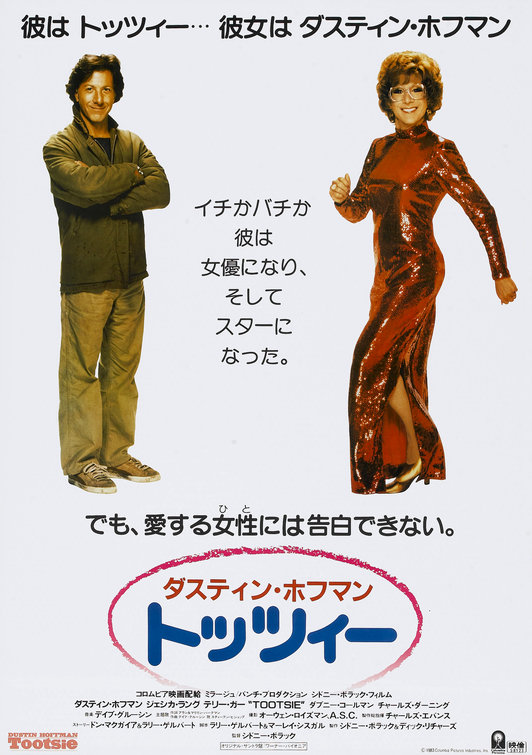
From moment one, something didn't sit right with me about Tootsie. I mean, it's Dustin Hoffman, an actor I've never particularly cared for, playing a character that is recognizably Dustin Hoffman the actor, ergo a very difficult person nobody wants to work with (I'd forgotten about the multiple accusations of sexual predation which makes the irony of the film's intent even more distasteful). That unease I started into the film with never left me throughout the viewing.

It's the early 80's, and there's still a battle of the sexes going on, and Sydney Pollack wants to tackle it head-on by putting a womanizing, arrogant, self-involved actor in the shoes of a woman, in order for him to play a female character role on a soap opera, because the actor thinks he can do it better than any woman could. Throughout the film, Hoffman's character uses his disguise as armour while he performs his perception of a tough (but not in a manly way), independent (but not in a manly way), no-nonsense (but not in a manly way) woman. In the most unbelievable reach of the film, Pollack asks us to buy into Hoffman going off-script on a soap opera on.the.regular. They wouldn't have lasted a day in reality. One warning at best before they were turfed.

In its day I'm sure its very binary perception of gender roles and gender politics seemed progressive, but at the same time we had "nerds" who were "revenging" on the cool kids by having non-consentual sex with women for comedy. This is an equally unamusing and toxic film. 

The binary perception of gender roles here cannot sustain with a modern lens, and I cannot turn off my modern lens in watching it. There are trans, drag and other queer lenses this film is unintentionally filtering through, and since I don't think for a moment Pollack had them in mind, he's not addressing these demographics in any satisfactory way. Nor is he even having the characters reasonably question their own roles and identities, at least not beyond a knee-jerk-reactionary homophobic/transphobic-for-comedy way. It's ugly. But also, it's the 80's, so ugly is expected. So of course we wind up with a story about a cisgender, heterosexual white male who lies and uses pretty much everyone around him and succeeds as a result. It's probably the most truthful thing about the film.

Taken even at just a base, binary comedy with a love story sub-plot, it fails. I don't want Jessica Lange to be with him. I want her to despise him and let him know that he abused her trust, her dad's trust and the trust of everyone they work with for his own selfish gain, and that his love means nothing to her. There's nothing he can do to repair that trust except to respect her wishes and leave her alone. But who am I, a cis-het white man to tell another cis-het white man what the woman he's writing should or shouldn't do with her love life.

Really, kinda fuck this film, y'know. The soundtrack and score are godawful, it's not funny, it's certainly not romantic, and I just don't buy into it. But also fuck this film mostly because it's pretty insidiously watchable despite everything I said...but maybe I kept watching just hoping for a comeuppance that never really happens because 1980s.

---


With Do Revenge, I found myself with mixed feelings watching upper-crust high schoolers "do revenge" on one another, in what could be an expanding whirlwind of destroying people's possible futures and trajectories in life. It can happen so simply. But at the same time these are the asshole kids of rich asshole parents (parents we never meet or see) who generally cannot see past their own wants, amusements and ambitions. They are, as reiterated numerous times, sociopaths, and it's hard to feel sorry for them for having to experience any sort of complications in life.

So the film relies upon us seeing these charismatic leads (twenty-something-year-old stars from Riverdale and Stranger Things) as complex people, not just snobs or psychos (though they are respectively each that), despite their Strangers on a Train-like bargain.

Camila Mendes' Drea, despite being the "poor kid" at school, has entrenched herself as a queen bee academically and socially, but her boyfriend Max (Dash and Lily's Austin Abrams)-- the most elite of the elite offsprings attending the school-- coaxes her into sending him a cam vid which he then shares with everyone. But, being the elite of the elite, he successfully spins himself as victim leaving Drea an outcast. During summer tennis camp she meets Eleanor (Maya Hawke), an outcast lesbian who will be transferring to Drea's school in the fall which means she will encounter the girl who maliciously branded her a sexual predator a few years earlier. The plan is to do revenge on each other's offenders.

Though we recognize Drea's elitist, selfish tendencies, we see what she has done to survive, thrive and elevate herself above her contemporaries, with none of the resources they have. She's an inspiring figure, though one clearly having lost perspective and empathy as a result of their status, but earning our support as victim of what is an actual crime. Yet her casual ability to just destroy mean girl Sophie Turner at tennis camp is a really frightening side to her personality. Eleanor has developed anxiety and keeps herself at a distance from most people so it seems like a real coup for her to befriend Drea, but the unease sets in when she becomes too comfortable blending in with Drea's old crowd. Are they a bad influence on her? Is Drea? 

The film doesn't sit with these questions for too long as it has a few tricks up its sleeve, as the revenge they do don't go so according to plan, and they have unintended consequences... but not enough for my liking. This film is entertainment, not a morality play, but I wish there was more fallout to the events at hand. Even nth degree shitheel Max, upon receiving his comeuppance, will probably just wind up backpacking around Europe with his camera (likely coaxing many European women into nude photography that he'll share without their permission) and dad's money and (unfortunately) be just fine.

Both Drea and Eleanor provide voiceover during the film, but its used inconsistently and not always effectively, and I wonder, if I actually paid attention on a rewatch, if these POV shifts would actually break the film.

Do Revenge is fun, surprising and quite engrossing, but I question if it is smartly using its elite-class setting or if it just thinks it is.

---


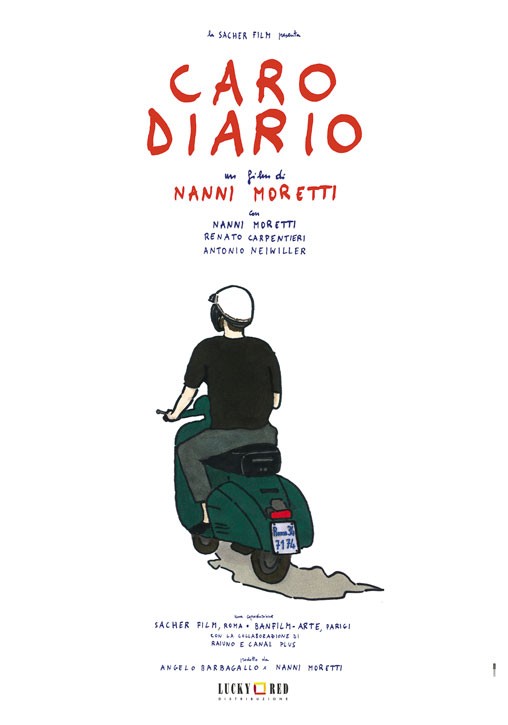
I thought for the longest time that Caro Diario was a film I first watched on the Canadian cable channel "Showcase" back in the late-90's.  It's a small Italian film with no real narrative, just kind of a travelogue/slice of life, and I really connected with it back then.  Rewatching it on Tubi (of all places), I had a potent sense memory of sitting in the theatre watching certain scenes and realized that Caro Diario was one of the movies I watched at Thunder Bay's first film festival held by the North of Superior Film Association (which I'm happy to see is still a thing) back in 1994.

'94 was a big year for me in film. It's when both Clerks and Pulp Fiction hit and my brain exploded, realizing there was more to movies than I ever thought or new, and the NOSFA film festival was another big part of that awakening. Caro Diario holds a special place in my heart and brain as a result.  

It's a sweet, often funny picture that finds director/writer Nanni Moretti playing a version of himself as he, through narration of his diary entries, first, rides his Vespa around Rome, contemplating architecture, dance and cinema, and having a chance run-in with Jennifer Beals.  His second diary entry finds him trying to find escape to focus on work, jumping from one island to another, never to find peace (but with comedic results).  The third entry is more serious and personal as he finds himself sleepless and itchy only for it to take a year of medical examinations before a cancer diagnoses is given. This isn't documentary, it's not a drama or comedy, but somewhere in the center of the venn diagram of these.

It's not the monumental, life changing picture I remember it being, but I'm not in that same place or time I once was. It's a charming, often amusing, and serene picture that doesn't ask much of the audience except to try and enjoy the world as Moretti sees it.

--- 


Directors du jour The Daniels (Kwan and Scheinert of Everything Everywhere All At Once) have cited Tampopo as having a direct influence on their filmmaking style, which I guess we could call an "anything goes" style.  But "anything goes" undersells the craft of actually selling the "anything goes" style, of telling a story where "anything goes" but within the frame or context of the story so that it all hangs together.

Tampopo is, as far as I know, the sole entrant in the subgenre of "ramen western", and I think that label does the absolute best job, simply so, of describing what this movie is. It's set in an unnamed city in Japan in its current-day 80's, following a truck driver who inadvertently becomes "sensei" to a ramen shop widow who wants to figure out what she's doing wrong and become the best ramen shop she can.

This is a food porn movie before food porn was a subgenre, but it maybe invented it? There are interstitial scenes, disconnected from the main plot, that feature bizarre eroticism involving food (among other, non-erotic adventures in enjoying one's meal), including one particular moment where an egg yolk is sensuously(?) passed from mouth to mouth between two lovers until the female climaxes from the sensation, breaking the yolk's membrane and dripping yellow goo everywhere.  But it's mostly about finding the ramen recipe, the Japanese noodle soup I can not partake in due to onion and wheat sensitivites (one makes me barf, the other I break out in hives). In total, it's about the pleasures of food, but with a spaghetti western pastiche. (Disclaimer, there are scenes of a turtle and prawn being killed on screen but for the purpose of food preparation...still, rough stuff).

---

If the opening sequence, "Tom", were a stand alone short film starring Justice Smith and Briana Middleton, it would be a pretty compelling piece. The attractive leads have great chemistry but also there's a sense of "why are we watching this" that just underlines the whole thing. Knowing the basic plot of the film from trailers, it unfortunately cuts this seemingly stand-alone bit right off at the knees. And there's a reveal, a reveal you know is coming from almost moment one as this type of film has you questioning everything you're seeing all the time. 

Sharper stars Smith, Middleton, Julianne Moore, Sebastian Stan and John Lithgow, which is a curiously intriguing cast. If you know nothing about the film and have not seen a trailer, and this cast does curiously intrigue you, maybe stop reading, and go watch it.. as I think it might play fairly well if one watches with no prior knowledge.

Buuuut...[now spoilers] even then, once you catch onto what the film is, which is a movie about grifters who are just scamming, scamming, scamming one another, it becomes somewhat obvious to see where it's going. It's the inevitable flaw in a film about grifters, it becomes a very binary picture where you either trust everything you see on the screen or you trust nothing. After its first three acts (of five), the film has taught you not to trust anything about it and so whenever it tries to surprise you, you're never surprised because you're already anticipating it.

It's a really good, often great looking film (director Caron, comes into his feature debut after working on expensive and ambitious TV projects like Sherlock, The Crown, and Andor), often cloaked in hard black shadows contrasting against the fairly spare and flat aesthetic of the nouveau riche.  The contrast between Tom's cozy bookstore and his father's sprawling, contemporary, sterile apartment are so telling of the differences between the characters. It's got an interesting structure, but the nature of the story makes it hard to invest in almost any of the characters (save Tom who disappears for a long stretch), and thus makes it difficult to really enjoy the film.  Caron surely will have much better features in the future.

Thursday, October 13, 2022

Horror, Not Horror: the trash bin

"Horror, Not Horror" movies are those that toe the line of being horror movies but don't quite comfortably fit the mold.  I'm not a big horror fan (Toast is the horror buff here), but I do quite like these line-skirting type movies, as we'll see. 

In the past few months I've been wading more and more into the underexplored depths of genre cinema.  Some of this has been on my own, at random, and some of it's been prompted by the films discussed by Quentin Tarantino and Roger Avery on the very fun Video Archives podcast (noted by an asterisk below).  These are, to a one, not good films, but the hope is always that, for as maybe limited in budget, or as tossed off as they may have been, they still have something going for them. Oh, but surprise, one of these is a prestige picture that was nominated for Oscars!

---


Hercules Conquers Atlantis
(1961) dir. Vittorio Cottafavi - Tubi
(AKA Hercules and the Captive Women)
What is it? One of the many, many iterations of Hercules in the "sword'n'sandals" genre of action/adventure movies, largely made in Italy throughout the 1950's through 1980's.  In this one Hercules, played by the handsome and beefy Reg Park, is ostensibly kidnapped by his friend and taken on an adventure where he discovers Atlantis, but the place is a nefarious one, and only the might of Hercules can stop their evil plot (whatever it was).
Why watch? I had, on a whim, picked up a copy of the Mario Bava directed "sequel" film to this, Hercules in the Haunted World, so I thought I should just give this one a shot first.
The good? Bava served as a director of photography so there are some pretty nice shots in this.  Reg Park, former Mr. Universe, is really nice to look at.  Bava does this tilt-down/pan-up shot in the cave which is really sweet, and there's a high-up crane shot of.  The shot of Hercules bounding through a courtyard of dead bodies is kinda nuts as is the reveal of the Atlantian elite guard which is a little provovative.  It's impressive seeing Hercules driving a chariot of 10 horses, if only there were a Hercules movie that could sustain that sort of scale.  Hercules being a petty dick was pretty fun, as were all Reg Park's muscles.  Fay Spain's eyes are the best special effect in the movie.
The bad? The audio - dubbing, sound effects, music - is pretty awful most of the time, and seemingly mixed all at the same volume. The action sequences are incredibly clumsy. The story is flimsy nonsense with little internal consistency. The wardrobe and sets waver between spectacular and silly. The envisioning of both ancient Greece and Atlantis is pretty uninspired. The cinematography wavers between impressive and pedestrian.
The trash? Reg Park does this one-armed swimming technique which just blows my mind thinking about it.
Is it horror? No, but there's definitely some little twinges of horror that the film never thinks to exploit.

---

Hercules in the Haunted World
(1961) dir. Mario Bava - BluRay
What is it? Reg Park's second - and final - foray as the demigod hero.  But this one's directed by Mario Bava, and Christopher Lee co-stars.  Maintaining no continuity from the prior film (in which Hercules had a wife and son), here he must go on a quest to retrieve a specific stone in order to cure the madness of his lover.  The stone's destination? Hell!
Why watch?  Bava, of course.
The good? This is a visual feast of nonsense.  I watched it twice.  Bava's innovative craftsmanship and colour sense is so damn impressive.  The visual effects, in many instances, seem so surreal, as if they shouldn't exist.  The big finale features the raising of the dead which is a sequence that would have for sure scared the crap out of me as a kid (but is both fun and silly as an adult watching on a hi definition TV)
The bad? The story is utterly nonsensical.  The Kino blu-ray features an audio commentary from a Bava scholar who identifies that there was obviously a completely different shooting script at one time and that few pains were taken to marry the original story with what they wound up with.
The trash? Very little trash in this one.  It's a really stunning watch.  I guess, the biggest trash is that they dubbed over Christopher Lee's performance. Blasphemy!
Is it horror? No, but it does swerve that way for the climax for a bit, providing a sense of Bava's chops in the genre.

---

*Demonoid: Messenger of Death
(1981) dir. Alfredo Zacarias - Tubi
What is it? A Mexican (but English) horror film about a demonic hand which possesses people to kill. Samantha Eggar stars as the wife of the mining honcho who releases the hand.  It seems to be fixated on trying to get her specifically as it goes from possessing person to person and murdering along the way.
Why watch?  It was a Tarantino/Avery recommendation.
The good? Honestly, it has a pretty solid sense of its own history and the evil forces at play.  It does better than many horror films in that aspect. The acting is surprisingly decent for such a off the beaten path production.
The bad? But make no mistake, this is some cheesy-crust crazy-bread stuff.  The special effects are that special blend of late-70's/early-80's waxy gore with stark red corn syrup blood. I have to wonder if the makers of this took any of it seriously or if they knew it would eventually be considered campy fun.
The trash? They really liked to work their gross visual effects, and we've come so far in making that shit so gross that it's really quaint what they used to be able to get away with.  Oh and gratuitous nudity tied to violence in the first five minutes (seen in one of the trailers even)
Is it horror? Yeah. It's that special type of 80's low-budg horror.

---

*Blind Rage
(1976) dir. Efren C Pinon - YouTube
What is it? The war in Viet Nam has decimated the markets in the Asian Pacific, so the world bank (I guess?) has decided to invest 15 million dollars into the region, to be held at a bank in Manila before dispersing. A man on the inside is recruited by a Black L.A. mobster to pull off a heist of said 15mil, but he's going to do it with ... 5 blind guys!  Because who would ever suspect blind guys of robbing a bank. 
Why watch? Another Tarantino/Avery recommendation.
The good? Umm, this movie real bad, but so bad that I enjoy telling people about how bad it is. It ends with a cameo by Fred Williamson in a bright blue butterfly collared deep-V-neck jumpsuit chomping on a cigar, looking great and being a total badass.  And the line: "It's all going down right now at the International House of Pancakes".  
The bad? There's no protagonist to this film.  There's nobody we follow all throughout the movie.  Is there anyone to really care about if they succeed or fail? No, there is not.  
The trash? This movie is part Blaxploitation, part kung-fu, and part crime thriller, none of which is done particularly well.  Is "Blindsploitation" a genre?
Is it horror? No, nor is it trying to be, though people do be getting shot, tho.  And the script is a nightmare, lol.
---


*Welcome to Blood City (1977) dir. Peter Sasdy - YouTube
What is it? A group of strangers find themselves in the desert with no memory of who they are, and a note each found on their person telling them that they were a killer.  Kier Dullea (2001: A Space Odyssey) doesn't believe a thing.  They're escorted to Blood City by the sheriff (Jack Palance) who doesn't really want to tell them much about how the town operates, but it's basically a place where anything goes, including slavery and murder.  In fact, the more you murder, the greater your status.  But who are the people in a control booth watching all this, and why? 
Why watch? Though Avery and Tarantino didn't necessarily love this, they were generally intrigued by the premise, and cited it as one of the Westworld knock-offs of the era, which intrigued me.
The good? The premise was really, really intriguing.  A group of people with a secret past, possibly filled with murder, but without their memories, are they still the same murderers?  Just one of many questions the film poses, but never answers.  It's rather rife with ideas that don't get explored well enough, and has a mysterious backdrop that gets slowly revealed in a pleasant way (possibly cribbed by Cabin in the Woods) but ultimately doesn't pay off.  And hey, more Samantha Eggar
The bad? The film is either shot terribly, with the active actor partially or fully out of frame most of the time, or else its transfer to video/digital went horribly wrong.  It's actually pretty funny how awful it looks.
The trash? The one female "murderer" is the helpless object of affection and treated like a non-entity by everyone (content warning: off screen rape).
Is it horror? No, but it's certainly playing with dystopian themes which can be scary to some.
---


*The Keep
(1983) dir. Michael Mann - Criterion
What is it? The infamous/forgotten Michael Mann disaster that finds Nazi soldiers in 1941 taking over an old Romanian Citadel only to unleash a terrible, murderous being from its cage.  The being uses Jewish scholar Ian McKellen to try and get set free upon the Earth, by tempting him with revenge upon all Nazis.  Scott Glenn plays an otherworldly savior type who's arrived on earth to stop it, but not before sexing up Alberta Watson, McKellen's daughter. 
Why watch? I caught this film years and years ago on a late night TV airing, and have long been wanting to revisit it.  It's a moody piece with haunting Tangerine Dream synths, that probably was even moodier in Mann's lost original 210minute cut.  This 98 minute hack job by the studios leaves the film feeling disjointed and frequently confusing.
The good?  I love all the strange lighting, the sets, the evil creature, Mann's style is all over this, even in it's chopped up form.
The bad? I have to think that a 210minute version of this would be better as a cohesive story, but still potentially direly boring.  But then again, there are some intriguing character reveals and dynamics that I think may have played out so much better in a longer form.
The trash? Scott Glenn meets Alberta Watson for less then a minute before they start boning.  Does he have Starfox's powers?
Is it horror? I think it's trying to be.  
---


Leviathan 
(1989) dir. George P. Cosmatos - AmazonPrime
What is it? The other, lower-budget undersea movie of 1989 (next to the Abyss), it's basically Alien (with a dash of Carpenter's The Thing) in a sealab.  Starring Robocop, a Ghostbuster, Flash's girlfriend, and Evil-Lyn, so it's 80's to the core.
Why watch? It's been on my "to watch" list since I first spied its tape cover at a video store.  It always looked like something that would be in my wheelhouse.
The good? There's some really great sets and some nice underwater sequences.  It does manage to build a decent amount of attention, but...
The bad? ...you can basically watch as the film's budget starts shrinking the longer it goes on. They try to edit around the budget limitations, but they become painfully obvious.  The budget limitations can't capitalize upon the film's buildup and it's a real wet fart of an ending.
The trash?  The creature, and not in an "oh, it's so gross" kind of way but more in a "really? That's what you're going with?" kind of way.  It's a pretty corny looking beast, and the film does an incredibly poor job with devising any sort of mythology or backstory behind it.  It's basically a perfunctory creature with little to no intrigue behind it.  It's a terrible let down to an otherwise acceptably entertaining picture.
Is it horror? It probably was at some point during production.

---

Nightmare Alley
(2020) dir. Guillermo del Toro - Crave
What is it? The saga of down-on-his-luck crumbum Bradley Cooper who winds up helping out at 1920's-era carnival/freakshow, learning the tricks of the trade.  He effectively steals one man's mentallist act then starts performing for New York High society, pushing the boundaries of good taste and kayfabe.  Psychologist Cate Blanchette starts working with him, if only to ultimately use him for her own purposes, then destroy him for fun.
Why watch? Generally intrigued by del Toro's films, and I share his fascination with carnivals of old.  Oh yeah, and Sid worked on it!
The good? It looks great.  It's a phenomenal looking film in every aspect.  The attention to detail in every scene -- the sets, lighting, costuming, makeup, props - all just eye catching and really attractive.  I also liked how it exposed the sham of mentallists (if only it had more fun with it)
The bad? The film is tedious. It's a long 150 minutes of watching a not great person do not great things. You never really connect with Bradley Cooper, nor with any of his relationships. There's nothing there. You know he's bad news from the beginning, and that sense of distrust never abates. It makes it very, very hard to invest in him. Were he, maybe, more charming, or perhaps if we had some insight into what his goals were, what he's actually working towards, or, mayhaps if he were even a semblance of a good person we could follow him, hoping for his success even as he makes the wrong choices and finds himself unable to stop from going deeper into the darkness. But we know he's shit from the beginning, Del Toro wants us to know that being easy on the eyes will get him far, but for this story, it's not enough. We're rooting for him to fail (and hoping, at least, that he doesn't take others undeservedly down with him)..
The trash?  The last 30 minutes finally pick up the pace but they're kind of the worst moments of the film. Just waiting for Cooper to get his comeuppance, little of which is satisfying, moreover, it all seemed kinda overblown and carny...I mean corny.
Is it horror? Meh, its toes creep over the edge of the deck, but it never really tests the waters, nevermind jumps right in.